
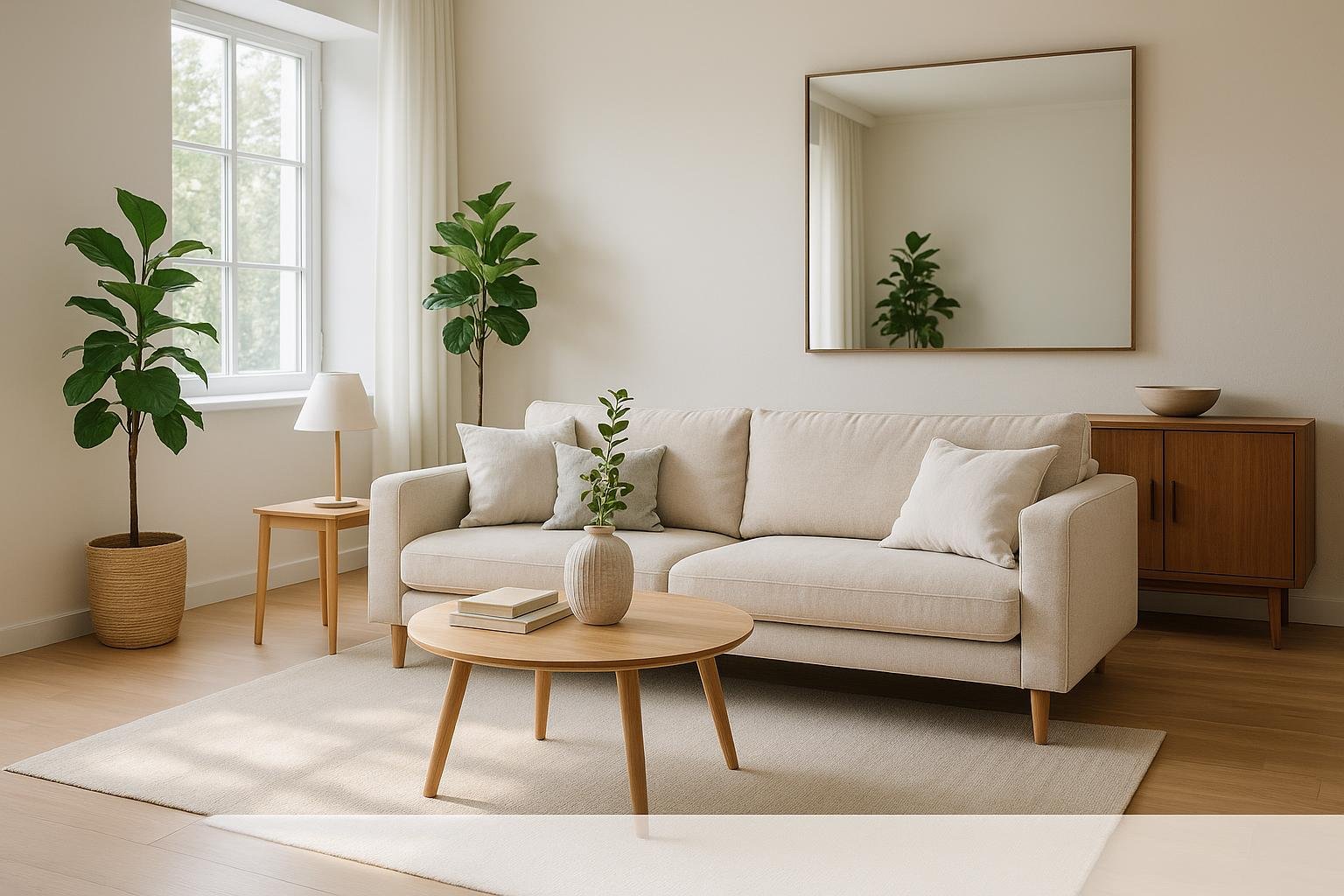
Interior Design Tricks to Make Any Room Look Bigger
Making a small room feel bigger isn’t about painting everything white or getting rid of half your furniture. It’s about how your eye moves through the space. When there’s less visual clutter, clear pathways, and a sense of continuity, any room can feel more open and airy—no matter its actual square footage.
Below are practical, design-forward tricks you can use to make a room look larger, without sacrificing comfort or personality.
1. Start With a Clean Slate: Edit, Then Arrange
Before you buy anything, edit what you already have. Visual clutter is one of the biggest reasons rooms feel cramped.
- Remove extras: Clear out duplicate side tables, unnecessary chairs, and decor that doesn’t serve a purpose.
- Group, don’t scatter: Instead of sprinkling small objects everywhere, style a few intentional vignettes. This creates calm, not chaos.
- Open up the main sightline: Stand at the entrance of the room and ask, “What do I see first?” Clear anything blocking your view of the room’s length or focal point.
With fewer distractions in the way, every other design trick you use becomes more effective.
2. Choose Furniture That Fits the Room’s Scale
Right-sized furniture is one of the most powerful ways to make a room feel bigger. A common mistake is assuming small room = tiny furniture. In reality, too many small pieces can make a space feel busy and cramped.
Favor clean lines and visible legs
- Open bases: Sofas, chairs, and storage pieces with exposed legs allow you to see more floor, which gives an illusion of openness.
- Streamlined silhouettes: Skip heavy, overstuffed arms and ornate detailing. Clean-lined furniture visually recedes instead of dominating the room.
Use fewer, slightly larger pieces
- Anchor the room: One well-sized sofa and a single coffee table often feel more spacious than a tiny loveseat, two side chairs, and three small tables.
- Measure before you buy: Tape out furniture dimensions on the floor to ensure pieces suit both the size and shape of the room.
Opt for multifunctional designs
- Storage ottoman instead of a second coffee table.
- Sofa with hidden storage for blankets or pillows.
- Extendable dining table that stays compact day-to-day.
Furniture that works harder means you can own fewer pieces—and that alone opens up valuable visual and physical space.
3. Keep Sightlines and Walkways Open
Rooms feel tight when your eye and your body have to constantly “stop and start” around obstacles.
Protect the main sightline
- Face key pieces toward the focal point: This could be a window, fireplace, TV wall, or artwork.
- Avoid tall pieces in the middle of the room: Use bookcases and wardrobes against walls, not floating where they’ll cut the room in half.
Create clear, comfortable paths
- Leave enough room to walk: Ideally 30–36 inches (about 75–90 cm) for main walkways.
- Float furniture strategically: In some layouts, pulling a sofa a few inches away from the wall can make the room feel more considered and less cramped.
- Minimize awkward corners: If a piece constantly gets bumped into, it’s in the wrong spot or the wrong scale.
When movement feels effortless, the room automatically feels larger and more inviting.
4. Use Vertical Space to Draw the Eye Up
In a small room, walls are valuable real estate. Using vertical space effectively makes the room feel taller and more expansive.
Go tall with storage
- Floor-to-ceiling shelving: Tall bookshelves or built-ins emphasize height and store more in the same footprint.
- Stacked storage: Use wall-mounted cabinets or shelves above consoles and desks.
Mount lighting and decor
- Wall-mounted sconces: Free up surfaces and floor space that would otherwise be taken by table and floor lamps.
- Tall art arrangements: Hang artwork so the overall grouping draws the eye upward, not just at eye level.
The more your gaze moves up instead of getting stuck at furniture height, the less confined the room feels.
5. Hang Curtains High and Wide
Window treatments can completely change how big your walls and windows appear.
- Mount the rod close to the ceiling: Hanging curtains several inches above the window frame makes windows seem taller and walls higher.
- Extend rods past the window frame: Let curtains stack mostly outside the glass so they don’t block natural light or make the window feel smaller.
- Choose full-length panels: Curtains that just “kiss” the floor elongate the wall; short curtains chop the room visually.
Even in rentals, swapping out basic blinds for well-hung curtains can instantly make a small space feel more sophisticated and expansive.
6. Use Mirrors to Reflect Light and Views
Mirrors are classic small-space tools because they double what you see—light, space, and views.
Place mirrors strategically
- Opposite or adjacent to a window: This bounces natural light deeper into the room and can reflect an outdoor view.
- Behind a focal piece: A mirror behind a console, sofa, or dining table creates a sense of depth.
- Full-length on narrow walls: In hallways or small bedrooms, a tall mirror visually stretches the space.
Stick to simple, thin frames or frameless designs to keep the mirror from feeling bulky.
7. Create Visual Continuity With Color and Flooring
Rooms feel bigger when your eye doesn’t hit constant “stops” in the form of abrupt color or material changes.
Keep surfaces consistent
- Unified flooring: Using the same flooring throughout adjoining areas reduces visual breaks and helps the entire space read as one.
- Match or closely coordinate trims and doors: High contrast on every edge can chop the room up.
Use cohesive wall and ceiling colors
- Color drenching: Painting walls, trim, and sometimes ceilings in the same or very similar color can blur boundaries and make edges recede.
- Light or dark can work: Light colors reflect more light and are forgiving, but saturated or darker shades can make corners disappear when used consistently.
The goal is fewer visual interruptions so the room reads as one continuous, flowing volume.
8. Don’t Automatically Choose a Tiny Rug
A too-small rug can make furniture feel like it’s floating in space—shrinking the perceived size of the room.
- Anchor the main seating group: In living rooms, aim for a rug large enough that at least the front legs of all key seating pieces rest on it.
- Unify zones: In studios or open-plan spaces, one generous rug can connect different functions and feel calmer than several small scatter rugs.
- Mind the border: Leave a bit of floor showing around the rug edge so it feels intentionally placed, not wall-to-wall.
The same principle applies to decor: one or two strong focal points often feel more spacious than many tiny accents competing for attention.
9. Reduce Visible Clutter With Smart Storage
Nothing shrinks a room faster than piles of everyday items everywhere. The solution isn’t to own nothing—it’s to give everything a home.
Build storage into furniture
- Hidden compartments: Coffee tables, ottomans, and benches with storage inside are ideal for blankets, games, and kids’ toys.
- Closed storage in key spots: Use cabinets, credenzas, or sideboards to hide visual clutter that open shelving would put on display.
Use overlooked spaces
- Under-stairs and eaves: Custom or modular storage here can dramatically increase capacity.
- Corners: Corner shelving or cabinets make use of areas that often go to waste.
- Vertical behind-the-door storage: Hooks, rails, and slim organizers clear floors and surfaces.
When surfaces are mostly clear and everyday items are easy to put away, the room naturally feels more open.
10. Layer Light Intentionally
Good lighting changes how big a room feels as much as furniture and color do. Dark corners visually “fall away,” making a space feel cramped.
Maximize natural light
- Keep window treatments light: Sheer or semi-sheer fabrics soften light without blocking it.
- Avoid bulky valances: These can visually lower the window and ceiling.
- Keep window sills clear: Too many plants or objects on sills block both light and views.
Layer artificial lighting
- Use multiple light sources: Combine ceiling fixtures with wall sconces, table lamps, or under-cabinet lighting for an even glow.
- Favor wall-mounted options in tight rooms: Sconces and plug-in wall lamps free up floor and table space.
- Choose warm, consistent bulbs: Mismatched color temperatures can make a room feel choppy and uninviting.
A well-lit room feels larger, more comfortable, and more functional at every time of day.
Putting It All Together: A Simple Game Plan
If you’re feeling overwhelmed, approach your room step by step. Here’s a straightforward order that works for most spaces:
- Step 1: Declutter and edit. Remove extras, clear surfaces, and pull out any furniture that clearly doesn’t fit.
- Step 2: Open the sightline. Rearrange furniture to reveal the room’s length or best focal point and create clear walkways.
- Step 3: Check scale. Replace pieces that are obviously too big or too small; aim for fewer, better-chosen items.
- Step 4: Establish continuity. Consider unifying paint colors, simplifying flooring transitions, and choosing a correctly sized rug.
- Step 5: Add vertical emphasis. Install tall shelving, hang curtains high and wide, and introduce a full-height mirror if possible.
- Step 6: Lock in storage and lighting. Add hidden or integrated storage, then layer lighting so no area feels dark or forgotten.
Conclusion: Design for Flow, Not Just Size
Making a room look bigger is less about its actual dimensions and more about how it feels to move, sit, and live in it. By focusing on continuity, furniture scale, open sightlines, smart storage, and intentional lighting, you can transform even the smallest room into a space that feels open, calm, and inviting.
Start small: clear the clutter, adjust your layout, and hang those curtains higher. Once the bones of the room support a sense of spaciousness, every other design choice you make will look—and feel—better.
Discover More from Didier Lancelot
Amazon Author page: amazon.com/author/didierlancelot
Narmer Store: narmerstore.org
AI and Technology Ebooks
- Creative AI: Animated Drawings, Manga & Illustrations
- Build a Game with AI: The No-Code Guide
- AI Image Generation Made Easy
- Build a Website with AI: The No-Code Guide
- How to Connect AI to Your Blog: The Ultimate Automation Guide
- AI Productivity Habits: Get More Done in Less Time
- AI Avatars Made Easy
- The Book of AI Prompts: 100+ Proven Prompts
- Make Music with AI: Suno, Udio and AI Music Generators
- Click to Cash
- The Automated Edge: Outwork, Outpace, and Outperform with AI
- AI Side Hustle: How to Make Money with ChatGPT and AI Tools
- Work Smarter with AI
Health, Lifestyle and Home Ebooks
- Hidden Superfoods: The World’s Most Powerful Healing Foods
- Spanish Food: The Complete Cookbook for Authentic Home Cooking
- The Science of Happiness Explained
- The Psychology of Success
- The Secret Sauce of Consistency: What the Experts Don’t Tell You About Fitness
- The Complete Home Bartender’s Guide: Link 1 | Link 2
- Natural Beauty, Made Simple: Easy DIY Organic Skincare Recipes
- Garden Made Simple: Easy, Beginner-Friendly Techniques
- The Dog Training Bible