
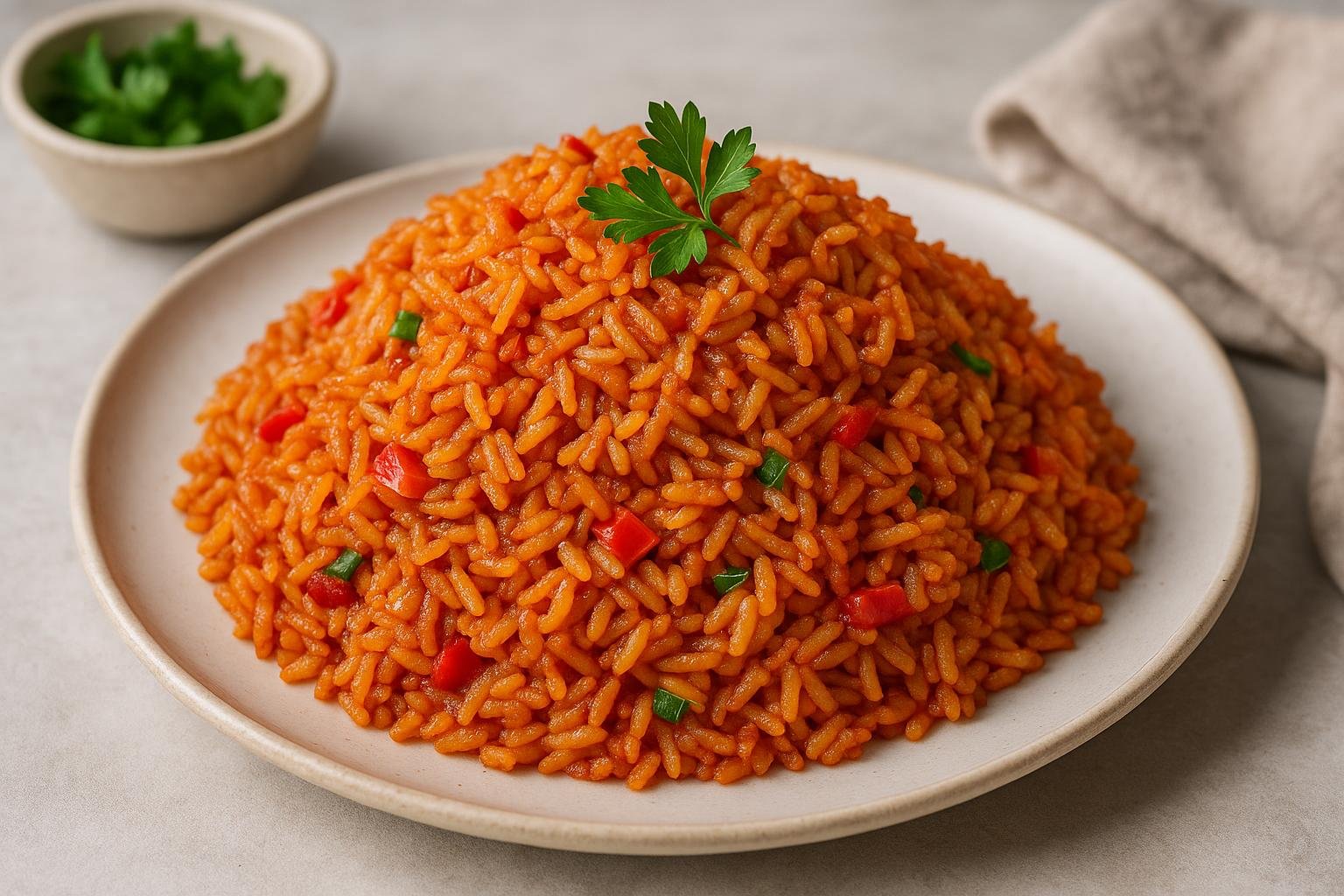
Few dishes inspire as much passion, nostalgia, and friendly rivalry as Jollof Rice. Across West Africa, it is more than a meal; it is a cultural emblem, a centerpiece of celebration, and a unifying comfort food with countless regional expressions. Whether you are discovering it for the first time or refining your technique, understanding its roots, ingredients, and preparation will deepen both your appreciation and your results in the kitchen.
What is Jollof Rice?
Origins and Cultural Significance
Jollof Rice is a one-pot rice dish cooked in a rich tomato and pepper base, seasoned with aromatic spices and often accompanied by meat, fish, or vegetables. Its origins are widely traced to the Senegambian region, particularly the Wolof people, whose historical “thiéboudienne” is considered an early ancestor of modern Jollof. From there, the dish spread across West Africa through trade, migration, and cultural exchange, gradually adapting to local tastes and ingredients.
Today, it is firmly embedded in the culinary identity of countries such as Nigeria, Ghana, Senegal, Sierra Leone, Liberia, and beyond. The friendly contest between Nigerian Jollof and Ghanaian Jollof has become legendary, inspiring debates, food festivals, and even diplomatic banter. Yet beneath this rivalry lies a shared appreciation of a dish that symbolizes hospitality, family, and festivity. It is a staple at weddings, naming ceremonies, religious celebrations, and weekend gatherings, where its aroma signals togetherness and joy.
Key Ingredients and Variations
While Jollof Rice ingredients vary by region and household, a common foundation runs through most recipes:
- Long-grain rice (often parboiled or long-grain rice varieties that hold their shape well)
- Tomatoes (fresh, canned, or puréed) and tomato paste
- Red bell peppers and sometimes Scotch bonnet or other chilies for heat
- Onions and garlic
- Vegetable or palm oil
- Stock or broth (chicken, beef, fish, or vegetable)
- Seasonings such as curry powder, thyme, bay leaves, ginger, and bouillon cubes or powder
From this foundation arise numerous Jollof Rice variations. Nigerian Jollof often emphasizes a smoky, slightly spicy profile, sometimes enhanced by intentional “bottom pot” charring. Ghanaian Jollof typically uses fragrant jasmine or basmati rice and can be richly seasoned with nutmeg and other warm spices. In Senegal, the dish may incorporate fish and a wider variety of vegetables. Some households add mixed vegetables, liver, or smoked fish; others keep the rice relatively simple and serve it alongside grilled or fried proteins.
How to Make Authentic Jollof Rice
Step-by-Step Cooking Guide
Preparing an authentic Jollof Rice recipe requires patience, layering of flavors, and attention to texture. The following method provides a solid framework you can adapt to your taste.
1. Prepare the pepper-tomato blend
- Blend ripe tomatoes, red bell peppers, onions, and a small amount of Scotch bonnet or other chili.
- Aim for a smooth consistency; add just enough water to help the blender run.
2. Parboil or rinse the rice
- If using parboiled rice, rinse under cold water until the water runs clearer to remove excess starch.
- If using non-parboiled long-grain rice, you may briefly parboil it or soak it to reduce cooking time and improve texture.
3. Build the flavor base
- Heat oil in a heavy-based pot.
- Sauté finely chopped onions until translucent and slightly caramelized; this step contributes depth.
- Add tomato paste and fry it for several minutes, stirring often, until it darkens and loses its raw, acidic edge.
- Pour in the blended tomato and pepper mixture. Cook on medium heat, stirring occasionally, until the sauce reduces and the oil begins to separate. This can take 15–25 minutes, depending on quantity.
4. Season and add stock
- Add salt, curry powder, thyme, bay leaves, ginger, and bouillon if using.
- Stir well, then add stock or water to create a robust, well-seasoned cooking liquid. Taste at this stage; the liquid should be slightly saltier and more intense than you want the final rice to be, as the rice will absorb and dilute the flavors.
5. Add the rice
- Stir the rinsed rice into the sauce, ensuring every grain is coated.
- The liquid should just cover the rice. Adjust with a small amount of water or stock if necessary, but avoid excessive liquid to prevent sogginess.
6. Steam gently
- Cover the pot tightly. Many cooks line the lid with foil or parchment to trap steam.
- Cook on low to medium-low heat. Resist the temptation to stir frequently; allow the rice to steam and absorb the sauce.
- After about 20–25 minutes, check the rice. If it is still firm but the liquid has evaporated, sprinkle a little more stock or water over the top, cover again, and continue steaming.
7. Finish and rest
- Once the rice is tender and the grains are separate yet moist, turn off the heat.
- Fluff gently with a fork, incorporating any caramelized “bottom pot” bits if desired for added smokiness.
- Allow the rice to rest for a few minutes before serving to let the flavors settle.
Common Mistakes to Avoid
Cooking Jollof Rice can be deceptively simple, but several common pitfalls compromise texture and flavor.
- Underdeveloped sauce: Rushing the frying of the tomato paste and pepper blend leads to a sharp, acidic taste. Always cook the sauce until it thickens and sweetens.
- Too much liquid: Overdosing the pot with water or stock yields mushy rice. Start with liquid just above the rice level; you can add more only if needed.
- High heat and frequent stirring: Vigorous stirring breaks the grains and releases more starch, while high heat burns the base before the rice cooks through. Gentle heat and minimal disturbance are essential.
- Inadequate seasoning: Because rice absorbs flavor, the cooking liquid must be well-seasoned from the outset. Adjust before adding the rice rather than after.
- Wrong choice of rice: Short-grain or very sticky rice varieties can clump and lose the characteristic separate grains. Opt for long-grain rice that holds its structure during cooking.
Health Benefits of Jollof Rice
Nutritional Value and Ingredients
Although Jollof Rice is a comfort food, its nutritional profile can be quite balanced, especially when prepared thoughtfully. Rice provides a primary source of carbohydrates, supplying energy for daily activities. When long-grain or whole-grain varieties are used, the dish can also contribute fiber and important B vitamins.
The tomato and pepper base is rich in vitamins A and C, as well as antioxidants such as lycopene, which has been associated with cardiovascular and cellular health. Onions, garlic, and herbs add phytonutrients with potential anti-inflammatory and immune-supporting properties.
When paired with lean proteins—such as grilled chicken, fish, or legumes—Jollof Rice becomes a more complete meal, supplying essential amino acids and micronutrients like iron and zinc. Inclusion of vegetables such as carrots, peas, green beans, or leafy greens further enhances fiber, vitamin, and mineral content, making the dish nutrient-dense rather than merely indulgent.
Healthier Preparation Tips
For those interested in maximizing the health benefits of Jollof Rice, several simple adjustments can be made without sacrificing flavor.
- Choose better oils: Use moderate amounts of heart-healthy oils such as canola, sunflower, or a blend, and avoid excessive palm oil or repeated-use frying oils.
- Moderate the salt and bouillon: Bouillon cubes often contain significant sodium. Reduce quantity, taste regularly, and complement flavor with herbs, spices, and aromatics rather than extra salt.
- Incorporate whole grains: Experiment with brown rice or partially substituting with grains like bulgur or millet. These add fiber and improve satiety, though they may require adjusted cooking times and extra liquid.
- Add more vegetables: Fold in steamed or lightly sautéed vegetables towards the end of cooking to maintain texture and color, turning the dish into a more balanced, vegetable-forward meal.
- Opt for lean proteins: Instead of deep-fried accompaniments, serve Jollof with grilled fish, baked chicken, or plant-based proteins such as beans and tofu.
Jollof Rice in African Cuisine
Popular Variations Across Countries
Within African cuisine, Jollof Rice showcases regional diversity while preserving a shared culinary heritage. Although methods and flavors differ, the essence of rice cooked in a spiced tomato base remains constant.
- Nigerian Jollof: Often cooked with parboiled long-grain rice, it is known for its bold, smoky character and vibrant red color. The rice is typically cooked in a well-seasoned tomato and pepper sauce, with a characteristic “party Jollof” flavor sometimes achieved by cooking over open flame or allowing slight bottom-of-the-pot caramelization.
- Ghanaian Jollof: Frequently prepared with jasmine or basmati rice, Ghanaian versions can be deeply aromatic, incorporating spices such as bay leaf, nutmeg, and cloves. The rice is usually cooked directly in the sauce (rather than parboiled separately), yielding a rich, cohesive flavor.
- Senegalese and Gambian styles: Often closer to traditional thiéboudienne, these versions may feature fish, an abundance of vegetables, and a more rustic, layered presentation, with the rice absorbing flavors from the fish and vegetables as they cook together.
- Other West African interpretations: In countries like Sierra Leone, Liberia, and Cameroon, Jollof Rice reflects local spices, chili preferences, and customary accompaniments, proving the dish’s adaptability to different palates and produce.
These national styles illustrate the breadth of Jollof Rice variations, emphasizing how a single cooking concept can evolve into distinctive, regionally beloved recipes.
Jollof Rice in Festive Occasions
Across West Africa and in diaspora communities worldwide, Jollof Rice holds a central place in celebrations. It is almost expected at major social events: weddings, birthdays, graduations, and holiday gatherings. Large pots simmer over outdoor stoves or charcoal fires, filling the air with the unmistakable aroma of tomatoes, peppers, and spices.
In many families, no festive menu feels complete without a tray of Jollof alongside grilled meats, fried plantains, salads, and stews. Hosts often take pride in serving their best version, with carefully guarded recipes passed down through generations. In community events, the dish acts as a culinary common ground, pleasing elders and children alike, and inviting conversation among guests who may debate which country or cook makes the best version.
Beyond private homes, Jollof is also celebrated in food festivals, cooking competitions, and cultural showcases, where Nigerian Jollof, Ghanaian Jollof, and other regional styles are presented side by side. These gatherings not only highlight technical skill in cooking Jollof Rice but also affirm its role as an ambassador of West African hospitality and creativity.
Jollof Rice endures because it is both familiar and endlessly adaptable. At its core, it is a simple idea—rice infused with a deeply flavored tomato and pepper sauce—yet every cook and every region leaves a distinct mark on the dish. Learning to prepare authentic Jollof at home is an invitation into a broader culinary tradition, one that values patience, generosity, and shared enjoyment. Whether you embrace a classic Nigerian or Ghanaian style, experiment with healthier ingredients, or create your own signature version, Jollof Rice offers a satisfying, meaningful way to connect with one of Africa’s most cherished foods.
Discover More from Didier Lancelot
Amazon Author page: amazon.com/author/didierlancelot
Narmer Store: narmerstore.org
AI and Technology Ebooks
- Creative AI: Animated Drawings, Manga & Illustrations
- Build a Game with AI: The No-Code Guide
- AI Image Generation Made Easy
- Build a Website with AI: The No-Code Guide
- How to Connect AI to Your Blog: The Ultimate Automation Guide
- AI Productivity Habits: Get More Done in Less Time
- AI Avatars Made Easy
- The Book of AI Prompts: 100+ Proven Prompts
- Make Music with AI: Suno, Udio and AI Music Generators
- Click to Cash
- The Automated Edge: Outwork, Outpace, and Outperform with AI
- AI Side Hustle: How to Make Money with ChatGPT and AI Tools
- Work Smarter with AI
Health, Lifestyle and Home Ebooks
- Hidden Superfoods: The World’s Most Powerful Healing Foods
- Spanish Food: The Complete Cookbook for Authentic Home Cooking
- The Science of Happiness Explained
- The Psychology of Success
- The Secret Sauce of Consistency: What the Experts Don’t Tell You About Fitness
- The Complete Home Bartender’s Guide: Link 1 | Link 2
- Natural Beauty, Made Simple: Easy DIY Organic Skincare Recipes
- Garden Made Simple: Easy, Beginner-Friendly Techniques
- The Dog Training Bible