
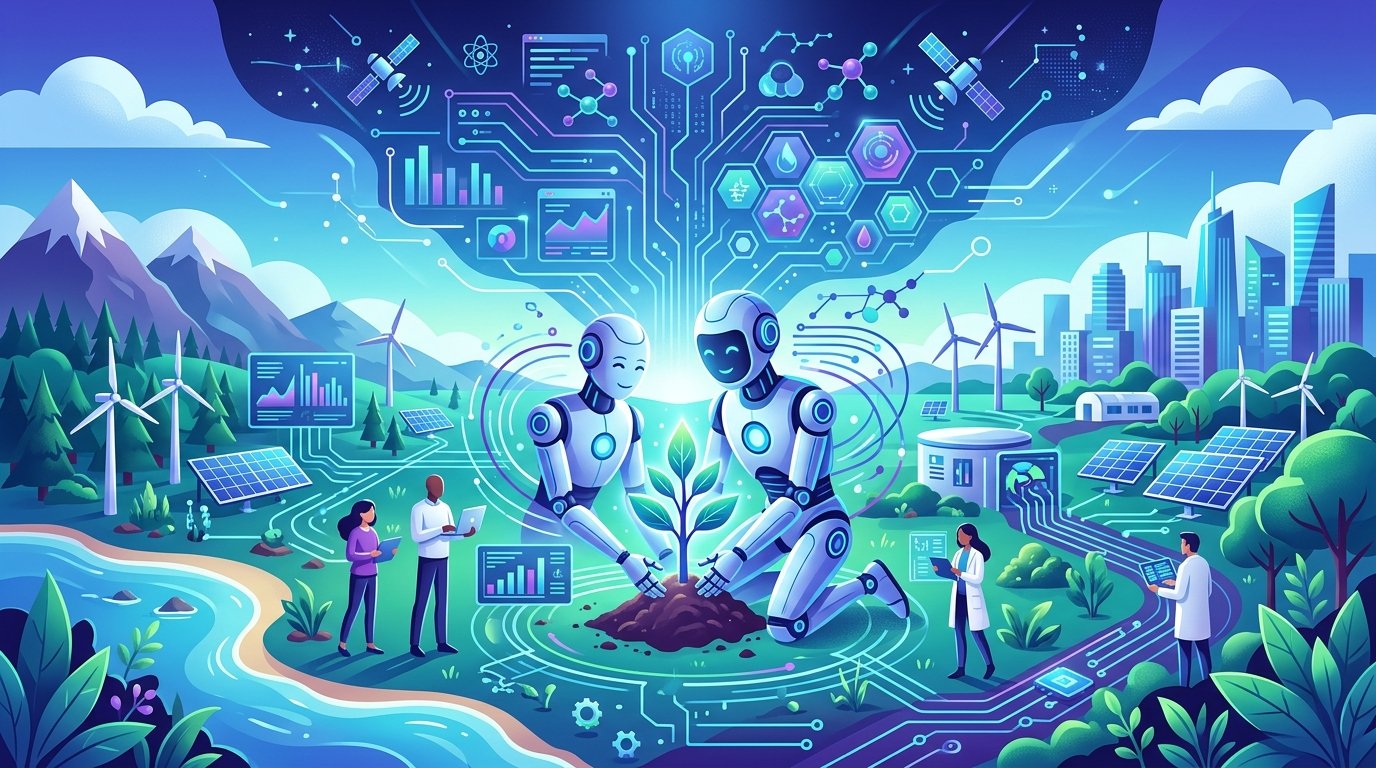
Climate change is one of the biggest challenges humanity has ever faced, and we need every tool available to tackle it. Increasingly, one of the most powerful tools in our arsenal is artificial intelligence — or AI. You might think of AI as the technology behind chatbots or movie recommendation algorithms, but it is quietly doing some of its most important work in a very different arena: helping scientists, governments, and businesses slow down and adapt to a warming planet. From predicting extreme weather to cutting energy waste in our homes, AI is becoming a genuine force for environmental good. Here’s how it’s happening, and what it means for all of us.
Smarter Energy Grids That Waste Less Power
One of the biggest contributors to climate change is how we generate and use electricity. Traditional power grids were designed decades ago, long before solar panels and wind turbines existed. They can be clunky and inefficient, especially when trying to balance the unpredictable nature of renewable energy — the sun doesn’t always shine and the wind doesn’t always blow.
This is where AI steps in. AI systems can analyze enormous amounts of data in real time — weather forecasts, energy demand patterns, and the output from thousands of solar panels and wind turbines — and use that information to balance supply and demand more efficiently. Think of it like a very smart traffic controller, but for electricity.
- AI can predict when a cloud will pass over a solar farm and automatically adjust how much power is drawn from other sources.
- It can forecast peak demand hours and pre-position energy storage, like batteries, to meet those spikes without burning extra fossil fuels.
- Smart home devices powered by AI — such as intelligent thermostats — can learn your schedule and reduce heating or cooling when you don’t need it, cutting your energy bill and your carbon footprint at the same time.
Practical tip: If you have a smart thermostat at home, make sure its learning features are switched on. Over time, it will optimize your energy use automatically.
Predicting and Preparing for Extreme Weather
Extreme weather events — hurricanes, floods, wildfires, and droughts — are becoming more frequent and more intense as the climate changes. Being able to predict these events earlier and more accurately can save lives and reduce damage to communities.
Traditional weather forecasting relies on complex mathematical models that require massive computing power and can take hours to run. AI, particularly a type called machine learning (where a computer learns patterns from large amounts of historical data rather than being manually programmed), can produce highly accurate forecasts in a fraction of the time.
Beyond weather prediction, AI is also helping to model long-term climate trends. Scientists feed AI systems decades of climate data — ocean temperatures, ice sheet measurements, atmospheric readings — and the AI identifies patterns that humans might miss. This helps researchers understand where and when the next climate crises are likely to hit, giving governments and communities more time to prepare.
Cutting Emissions in Industry and Agriculture
Industry and agriculture together account for a huge share of global greenhouse gas emissions. Both sectors are notoriously difficult to decarbonize — meaning it’s hard to remove carbon from the processes involved — but AI is opening new doors.
In manufacturing, AI systems monitor machinery and production lines in real time, spotting inefficiencies and predicting equipment failures before they happen. Keeping machines running smoothly and avoiding unnecessary energy waste adds up to significant emissions reductions at scale.
In agriculture, AI is helping farmers use resources more precisely:
- Precision irrigation: AI-powered sensors and drones assess soil moisture levels and only water crops where and when needed, reducing water use and the energy required to pump it.
- Optimized fertilizer use: Over-applying fertilizer releases nitrous oxide, a potent greenhouse gas. AI tools can recommend the exact amount of fertilizer needed for each section of a field, reducing waste.
- Livestock monitoring: AI systems can track the health of animals more efficiently, which can reduce the environmental cost of raising them.
Accelerating the Search for Green Materials and Technologies
One of the most exciting — and least talked about — ways AI is fighting climate change is by speeding up scientific discovery. Developing new materials for things like longer-lasting batteries, more efficient solar cells, or carbon capture technology (methods for pulling CO₂ out of the atmosphere) normally takes years or even decades of laboratory work.
AI dramatically shortens this timeline. By analyzing vast libraries of known chemical compounds and simulating how new combinations might behave, AI can pinpoint the most promising candidates for scientists to test in the lab. What might have taken a research team years of trial and error can now be narrowed down in a matter of days or weeks.
This kind of AI-assisted research is already being used to explore better battery chemistries, more effective catalysts for clean hydrogen production, and stronger, lighter materials for wind turbines. The breakthroughs that result could define the clean energy landscape of the next generation.
Monitoring Forests and Ecosystems in Real Time
Healthy forests absorb carbon dioxide and are essential allies in the fight against climate change. But deforestation, illegal logging, and wildfires threaten forests worldwide. AI is being used to monitor these ecosystems in ways that were never before possible.
- Satellite images analyzed by AI can detect deforestation almost as it happens, alerting conservation teams far faster than traditional monitoring methods.
- AI-powered acoustic sensors placed in forests can identify the sounds of chainsaws or heavy machinery, flagging illegal logging activity in remote areas.
- AI models can predict where wildfires are most likely to start based on temperature, humidity, and vegetation data, helping firefighting teams position resources in advance.
These tools give conservationists, governments, and local communities a much sharper picture of what’s happening on the ground — and much more time to respond.
Conclusion: A Powerful Partner, Not a Magic Fix
AI is not going to solve climate change on its own. It requires political will, international cooperation, changes in how businesses operate, and shifts in how each of us lives. But as a tool, it is genuinely remarkable — able to process complexity and find efficiencies at a scale no human team could match.
The key takeaway: AI is already working behind the scenes to make our energy cleaner, our weather forecasts sharper, our farms more efficient, and our forests better protected. As this technology continues to mature, its role in the climate fight will only grow. Staying informed — and supporting policies and businesses that use AI responsibly for sustainability — is something every one of us can do.
Discover More from Didier Lancelot
Amazon Author page: amazon.com/author/didierlancelot
Narmer Store: narmerstore.org
AI and Technology Ebooks
- Creative AI: Animated Drawings, Manga & Illustrations
- Build a Game with AI: The No-Code Guide
- AI Image Generation Made Easy
- Build a Website with AI: The No-Code Guide
- How to Connect AI to Your Blog: The Ultimate Automation Guide
- AI Productivity Habits: Get More Done in Less Time
- AI Avatars Made Easy
- The Book of AI Prompts: 100+ Proven Prompts
- Make Music with AI: Suno, Udio and AI Music Generators
- Click to Cash
- The Automated Edge: Outwork, Outpace, and Outperform with AI
- AI Side Hustle: How to Make Money with ChatGPT and AI Tools
- Work Smarter with AI
Health, Lifestyle and Home Ebooks
- Hidden Superfoods: The World’s Most Powerful Healing Foods
- Spanish Food: The Complete Cookbook for Authentic Home Cooking
- The Science of Happiness Explained
- The Psychology of Success
- The Secret Sauce of Consistency: What the Experts Don’t Tell You About Fitness
- The Complete Home Bartender’s Guide: Link 1 | Link 2
- Natural Beauty, Made Simple: Easy DIY Organic Skincare Recipes
- Garden Made Simple: Easy, Beginner-Friendly Techniques
- The Dog Training Bible