
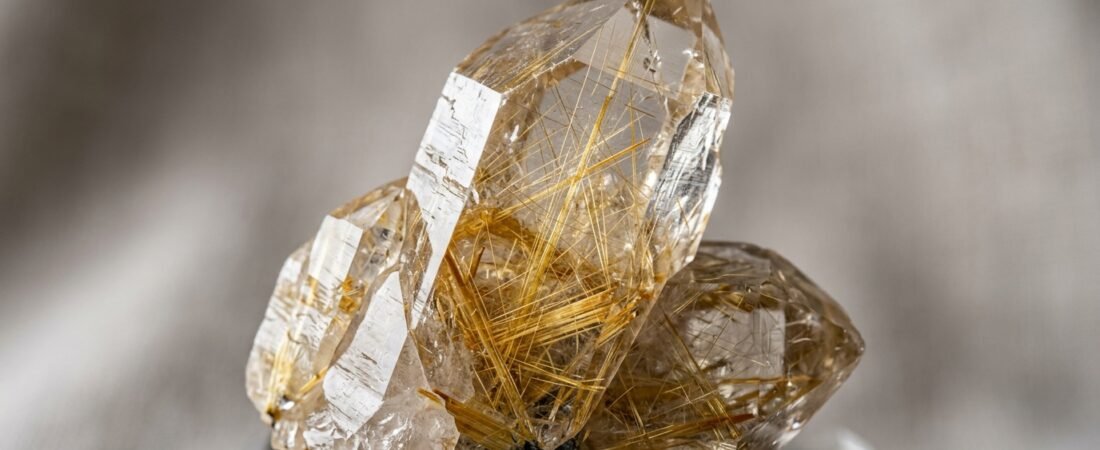
Few minerals captivate the imagination quite like rutilated quartz. With its striking needles of gold, silver, or copper-toned inclusions suspended within perfectly clear or smoky quartz, this crystal looks as though nature itself crafted a miniature universe inside a single stone. Beyond its undeniable visual appeal, rutilated quartz carries a rich legacy of spiritual symbolism, metaphysical tradition, and cultural significance that has made it one of the most sought-after crystals in both the healing community and the gemstone market.
Whether you are drawn to its luminous beauty, curious about its reputed energetic properties, or simply looking for guidance on how to work with it, this comprehensive guide covers everything you need to know — from its geological formation and identification to its spiritual meaning, potential benefits, and practical care.
What Is Rutilated Quartz and How Does It Form?
Rutilated quartz is a variety of quartz — silicon dioxide — that contains naturally occurring inclusions of rutile, a mineral composed primarily of titanium dioxide. These inclusions appear as thin, elongated needles or fibers distributed throughout the host crystal, sometimes in parallel arrangements, sometimes in fan-like or star-shaped patterns. The result is a stone of extraordinary visual complexity that has fascinated collectors, jewelers, and spiritual practitioners for centuries.
The Geological Origins of Rutilated Quartz
The formation of rutilated quartz is a fascinating geological process that unfolds over millions of years. Quartz typically crystallizes from silica-rich hydrothermal fluids deep within the Earth’s crust. Under specific conditions of temperature and pressure, titanium-bearing fluids are present during or after the quartz formation, allowing rutile crystals to grow within the quartz matrix as it solidifies.
In some cases, rutile needles develop simultaneously with the quartz, becoming permanently locked inside as the surrounding mineral hardens. In other instances, the rutile forms first and is subsequently encased by growing quartz. Either way, the inclusions are genuine, internal formations — not surface coatings or artificial treatments.
The most significant deposits of rutilated quartz are found in Brazil, particularly in the states of Minas Gerais and Bahia. Substantial quantities also come from Madagascar, Australia, Pakistan, Norway, and the United States. The color of the rutile inclusions varies depending on the mineral’s iron content and oxidation state, ranging from bright gold and copper red to silver and near-black. Golden rutilated quartz, with its luminous yellow-to-amber needles, is among the most prized and widely recognized varieties.
How to Identify Authentic Rutilated Quartz
Distinguishing genuine rutilated quartz from imitations requires a careful eye and basic knowledge of the stone’s characteristics. Authentic specimens display inclusions that are three-dimensional and internal — meaning they exist within the body of the crystal, not on its surface. When you rotate the stone, the needles appear to shift slightly in depth, confirming their position inside the quartz.
The following features are consistent with natural rutilated quartz:
- Needle-like inclusions: Fine, elongated strands rather than flat layers or swirling patterns.
- Varied distribution: Inclusions are rarely perfectly uniform; natural stones show some irregularity in spacing and orientation.
- Hardness: Quartz registers 7 on the Mohs scale, so it should not be easily scratched by a knife or a piece of glass.
- Cool to the touch: Genuine quartz feels notably cool, whereas glass imitations warm quickly in the hand.
- Clarity of the host crystal: The surrounding quartz may be perfectly transparent or slightly smoky, but it should not appear bubbly or contain the tiny air pockets typical of glass.
Synthetic or glass versions sometimes attempt to replicate the appearance of rutilated quartz using metallic foil inserts or painted inclusions. Purchasing from reputable dealers and requesting certificates of authenticity when investing in high-value specimens is always advisable.
Rutilated Quartz Meaning and Spiritual Significance
Throughout history, rutilated quartz has inspired wonder and reverence in equal measure. Its internal golden threads have led many cultures to perceive it as a stone of divine connection, illumination, and energetic potency. The spiritual meaning attributed to this crystal is as layered and intricate as the inclusions it contains.
Symbolic Meaning Across Different Cultures and Traditions
In Brazilian folk tradition, rutilated quartz is sometimes called “Cupid’s arrows” or “Venus hair stone,” poetic names that reflect the belief that its needle-like inclusions carry the energy of love, attraction, and divine inspiration. The association with Venus — the goddess of beauty and desire — imbues the stone with a romantic and magnetic quality in this cultural context.
Ancient Romans and Greeks believed that quartz formations possessed sacred qualities, and varieties with unusual inclusions were often considered especially potent talismans. The golden rutile fibers were thought to represent rays of captured sunlight, making the stone a symbol of clarity, truth, and enlightened perception.
In various Eastern spiritual traditions, the luminous inclusions within this crystal are seen as threads of divine energy or light — a tangible manifestation of universal life force woven into physical matter. This symbolism aligns closely with the broader metaphysical concept of the stone as a bridge between the earthly and the spiritual, capable of accelerating personal growth and deepening awareness.
Contemporary crystal healing traditions draw on all of these threads, characterizing rutilated quartz as a stone of amplification, intuition, and transformation. It is frequently associated with the illumination of hidden truths, the dissolution of energetic blockages, and the strengthening of personal will and purpose.
Chakra Associations and Energy Healing Properties
Within the framework of chakra-based energy healing, rutilated quartz is considered a uniquely versatile stone because of its capacity to interact with multiple energy centers simultaneously. Unlike many crystals that are associated with one or two specific chakras, this stone is believed by practitioners to work across the entire energetic system.
Golden rutilated quartz is most commonly linked to the solar plexus chakra, the energy center associated with personal power, confidence, and self-determination. Healers who work with this tradition suggest that placing the stone near this area may support a sense of inner strength and clarity of purpose. The solar plexus connection also ties the stone to themes of abundance and manifestation, which contributes to its reputation as a crystal of prosperity and intention-setting.
The crown chakra — located at the top of the head and associated with higher consciousness and spiritual connection — is another energy center frequently mentioned in relation to rutilated quartz. The golden, light-catching quality of its inclusions is seen as symbolic of divine wisdom and transcendence, making it a favored stone for meditation practices aimed at expanding awareness or accessing higher states of understanding.
Some practitioners also associate the stone with the sacral chakra, particularly when working on themes of creativity, passion, and emotional healing. Regardless of which chakra framework resonates most, the general consensus within energy healing traditions is that rutilated quartz functions as an amplifier — intensifying the properties of whatever intention or healing work it accompanies.
Key Benefits of Rutilated Quartz for Mind, Body, and Spirit
The benefits attributed to rutilated quartz span a broad spectrum, touching on emotional well-being, mental clarity, spiritual development, and physical vitality. It is important to approach these claims with an informed perspective: the properties described here are rooted in metaphysical tradition and the personal experiences of practitioners, not in clinical or scientific evidence. They should be understood as complementary to — never a replacement for — professional medical or psychological care.
Emotional and Mental Health Benefits
Among the most widely recognized metaphysical properties of rutilated quartz is its reputed ability to cut through confusion and bring mental clarity. Crystal healing traditions describe it as a stone that helps dissolve fear, anxiety, and indecision, replacing these states with a sense of purposeful calm and renewed confidence. Those who work with this crystal often report that it encourages honest self-reflection — a quality that can be both illuminating and, at times, uncomfortable.
On an emotional level, the stone is believed to assist in releasing deep-seated patterns of thought or behavior that no longer serve the individual. This makes it a popular choice among those navigating periods of significant transition, grief, or personal transformation. The tradition holds that by facilitating emotional honesty and energetic movement, rutilated quartz creates space for genuine healing and growth.
For those engaged in creative pursuits, the stone is said to stimulate inspiration and break through mental blocks, making it a valued companion for artists, writers, and anyone seeking greater imaginative freedom. Its association with the solar plexus chakra reinforces this connection to self-expression and the courage to act on one’s creative impulses.
Additionally, rutilated quartz is considered by many practitioners to be a powerful stone for manifestation work. The belief is that its amplifying qualities strengthen the energetic force of intentions, making it easier to align thought, emotion, and action toward a specific goal. Setting clear, positive intentions while working with this crystal is a practice deeply embedded in contemporary metaphysical tradition.
Physical Healing Properties and How to Use Them
Within the realm of crystal healing, rutilated quartz is traditionally associated with the stimulation of vital energy throughout the body. Practitioners often describe it as a stone that supports the immune system’s energetic framework, encourages cellular regeneration, and promotes overall physical vitality — though these are metaphysical beliefs, not medically substantiated claims.
The stone is sometimes used in healing practices focused on the respiratory system and the thyroid, due in part to its titanium content and its long-standing association with energetic clarity and flow. Some traditions also connect it with the relief of chronic fatigue, suggesting that its stimulating energy may help restore a sense of physical vigor to those who feel depleted or stagnant.
In body layouts — a practice in which crystals are placed on or near specific areas of the body during relaxation or meditation — rutilated quartz is often positioned on the solar plexus or held in both hands to encourage a sense of energetic alignment throughout the system. Combining it with grounding stones such as black tourmaline or smoky quartz is a common practice among energy healers who seek to balance its stimulating qualities with stabilizing ones.
How to Use and Care for Your Rutilated Quartz
Knowing how to incorporate rutilated quartz into daily life and how to maintain its energetic integrity over time is as important as understanding its properties. A well-cared-for crystal is not only more beautiful but is also believed by practitioners to function more effectively as an energetic tool.
Ways to Incorporate Rutilated Quartz Into Your Daily Life
There are numerous accessible and meaningful ways to work with rutilated quartz, regardless of your level of experience with crystal healing.
- Meditation: Holding a piece of rutilated quartz in your hands or placing it on your body during meditation is one of the most direct ways to engage with its energy. Many practitioners begin by setting a clear intention and allowing the stone to amplify that focus throughout the session.
- Jewelry: Wearing rutilated quartz as a pendant, ring, or bracelet keeps its energy in close proximity throughout the day. Given its visual appeal, it translates beautifully into fine jewelry — particularly in gold settings that complement its characteristic golden inclusions.
- Home placement: Positioning a specimen in your workspace or creative area is believed to support focus, inspiration, and the flow of abundance. A polished sphere or point on a desk is both aesthetically pleasing and energetically intentional.
- Manifestation practices: Writing your intentions on paper and placing the crystal on top of the written words overnight is a popular manifestation ritual that leverages the stone’s amplifying reputation.
- Pairing with other crystals: Rutilated quartz is said to enhance the properties of other stones when used in combination. Pairing it with clear quartz can amplify clarity, while combining it with citrine is thought to strengthen abundance-related intentions.
Cleansing, Charging, and Storing Your Crystal Properly
Like all crystals used in energy work, rutilated quartz benefits from regular cleansing to clear any accumulated energies and restore its natural vitality. Several methods are well-suited to this stone.
Water cleansing: Rutilated quartz can safely be rinsed under lukewarm running water for a minute or two. Avoid prolonged soaking, and always ensure the water temperature is gentle to prevent any thermal shock to the crystal.
Smoke cleansing: Passing the stone through the smoke of sage, palo santo, or other cleansing herbs is a widely practiced method that is safe for virtually all crystals. Hold the stone in the smoke for thirty seconds to a minute while visualizing any stagnant energy dissipating.
Sound cleansing: Placing rutilated quartz near a singing bowl, tuning fork, or other sound instrument and allowing the vibrations to wash over it is an effective and non-invasive cleansing method.
Sunlight and moonlight charging: Placing the crystal in indirect sunlight or under the light of the full moon for several hours is considered an excellent way to recharge its energy. Be mindful that prolonged direct sunlight can cause some quartz varieties to fade slightly over time, so opt for morning light or indirect exposure.
When storing rutilated quartz, keep it wrapped in a soft cloth or placed in a dedicated pouch to prevent it from being scratched by harder minerals or scratching softer ones. Although quartz is relatively durable at 7 on the Mohs scale, it is still vulnerable to chips and fractures if handled carelessly. Keeping it separate from other stones also preserves the clarity and beauty of its inclusions.
Conclusion
Rutilated quartz stands apart from the mineral world not only for its arresting beauty but for the depth of meaning and tradition woven into every golden thread. From its extraordinary geological origins to its layered spiritual symbolism and wide range of attributed benefits, this crystal offers something of value to collectors, practitioners, and admirers alike.
Whether you are drawn to it as a tool for meditation and intention-setting, as a piece of wearable art, or simply as a remarkable natural specimen, rutilated quartz rewards attention and care. By understanding its formation, honoring its cultural significance, and working with it mindfully, you can cultivate a meaningful relationship with one of nature’s most visually spectacular and energetically celebrated minerals.
About the Author
Didier Lancelot is an independent author and creator of the Everyday AI Series, with books on wellbeing, natural living, cooking and practical technology. Explore all his books on his Amazon Author page or visit Narmer Store.