
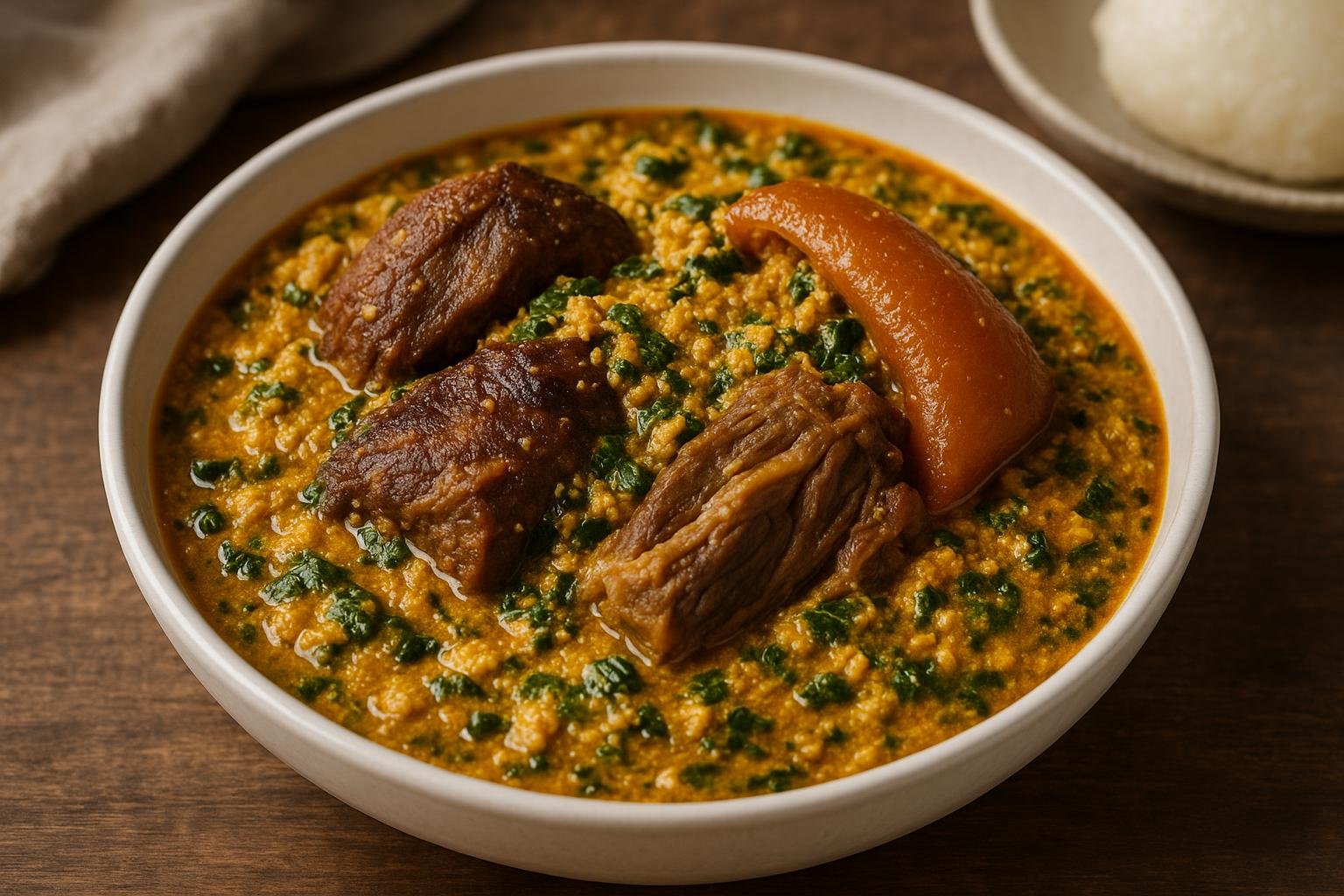
Egusi soup is one of West Africa’s most beloved dishes, celebrated for its richness, depth of flavor, and cultural importance. In Nigeria in particular, it occupies a central place on family tables, festive spreads, and restaurant menus. More than just a meal, it is a dish that reflects traditions, local ingredients, and the social ritual of gathering around food. This guide explores what egusi soup is, how it is prepared, its health benefits, and how best to serve and enjoy it.
What is Egusi Soup?
Origins and Cultural Significance
Egusi soup originates from West Africa, with especially strong roots in Nigerian cuisine. The word “egusi” generally refers to the dried, shelled seeds of certain varieties of melon or gourd, which are ground into a fine meal and used as a thickener and flavor base for soups and stews. Variants of egusi-based dishes are enjoyed in countries such as Nigeria, Ghana, Cameroon, and Benin, each with its own distinctive twist.
Within Nigeria, egusi soup transcends ethnic lines. The Yoruba, Igbo, Edo, Urhobo, and many other groups all embrace the dish, though they may prepare it differently. It is frequently served at weddings, naming ceremonies, festivals, and holiday celebrations, symbolizing generosity and abundance. Preparing egusi soup often becomes a communal activity, with family members sharing tasks such as grinding seeds, washing leafy greens, and seasoning the meat and fish. Through these shared efforts, the recipe becomes an heirloom, passed from one generation to the next and firmly embedded in Nigerian food culture.
Key Ingredients in Egusi Soup
While there are many regional and personal variations, most egusi soup recipes share a core group of ingredients that create its unmistakable character:
- Egusi seeds: The star of the dish, typically from melon or pumpkin-like plants. They are dried, dehulled, and ground. When cooked, they thicken the soup and provide a nutty, savory taste.
- Palm oil: Unrefined red palm oil gives the soup its vibrant color and distinct flavor. It also acts as a medium for frying the seasoning base.
- Protein: Beef, goat meat, tripe, cow skin (ponmo), smoked fish, stockfish, and sometimes offal are common. These elements add complexity and umami depth.
- Leafy vegetables: Bitter leaf, pumpkin leaves (ugu), spinach, or kale round out the dish, adding freshness, color, and important nutrients.
- Seasoning base: A blend of onions, ground crayfish, peppers (fresh or dried), and bouillon or traditional seasonings structures the flavor profile.
- Stock: Well-seasoned meat or fish stock is essential. It carries the aromas of the protein into the final soup and allows the egusi to cook properly.
Together, these egusi ingredients create a dish that is both comforting and luxurious, striking a balance between richness, heat, and vegetal brightness.
How to Make Egusi Soup
Step-by-Step Cooking Guide
Although cooking egusi soup may seem complex at first, the process becomes intuitive after one or two attempts. Below is a structured method suitable for home cooks while preserving the authenticity of the traditional African dish.
1. Prepare and season the protein
- Cut the meat (and optional offal or cow skin) into bite-sized pieces.
- Season generously with salt, chopped onions, and preferred spices or seasoning cubes.
- Add water and simmer until the meat is tender and the stock is flavorful. Reserve both meat and stock.
2. Grind the egusi seeds
- Using a dry mill, spice grinder, or powerful blender, grind the egusi seeds to a fine powder.
- Some cooks mix the ground seeds with a little water or stock to form a thick paste; others add them dry later. Both methods are acceptable and produce slightly different textures.
3. Create the pepper and onion blend
- Blend onions with fresh red bell peppers and hot chilies (such as Scotch bonnet) to form a smooth mixture.
- Keep some sliced onions aside for frying, if desired.
4. Fry the seasoning base
- Heat palm oil in a heavy pot over medium heat. Warm it gently without allowing it to smoke excessively.
- Add sliced onions and sauté until translucent.
- Pour in the blended pepper mixture and cook, stirring frequently, until the raw taste disappears and the sauce thickens. This can take 10–15 minutes.
- Stir in ground crayfish and adjust seasoning with salt or bouillon.
5. Incorporate the egusi
- For a lumpy, “grainy” texture: Drop small spoonfuls of the egusi paste into the bubbling sauce, letting them set slightly before stirring. This yields distinct egusi clumps that many people value.
- For a smoother soup: Stir the ground egusi directly into the sauce, then add stock gradually to reach the desired consistency.
- Allow the egusi to cook thoroughly. It will absorb some of the stock and thicken the soup. Stir often to prevent burning.
6. Add meat, fish, and stock
- Return the cooked meat and any selected fish (smoked or stockfish) to the pot.
- Pour in enough stock to submerge the contents and gently simmer, ensuring all flavors meld together.
- Taste and correct seasoning.
7. Finish with leafy greens
- Rinse and roughly chop the vegetables.
- Add the greens towards the end of cooking and simmer briefly to retain color and nutrients.
- The final consistency should be rich and slightly thick, but still spoonable.
This structured approach to cooking egusi soup can be adapted to different palates and regional styles, while keeping its core identity intact.
Common Variations and Additions
Across West Africa, egusi soup variations showcase the creativity and diversity of local kitchens. Several common adjustments and enhancements are widely practiced:
- Vegetable emphasis: Some cooks use a large quantity of pumpkin leaves, waterleaf, or spinach, creating a greener, lighter soup with more vegetable content.
- Broth-first method: Instead of frying the pepper base in oil first, some versions start by simmering egusi directly in stock, then enriching it with oil later for a subtler, less smoky flavor.
- Addition of tomatoes: Though not universal, a small amount of blended tomato can be included in the pepper base, contributing a gentle tang and a slightly different color.
- Seafood-focused versions: In coastal areas, cooks may emphasize prawns, stockfish, and smoked fish, sometimes reducing or omitting red meat entirely.
- “Egusi Ijebu” style: A notable Nigerian variation, often thinner and more soup-like, made with a higher proportion of peppers and spices relative to egusi.
- Spice and aroma additions: Some recipes include locust beans (iru or ogiri) for a deep, fermented note, or add ginger and garlic for added complexity.
These adaptations allow egusi soup to evolve with changing tastes, while remaining an emblematic element of traditional African cuisine.
Health Benefits of Egusi Soup
Nutritional Value of Egusi Seeds
The health benefits of egusi are rooted in the nutritional profile of the seeds themselves. Despite their small size, they are dense in macronutrients and micronutrients:
- Healthy fats: Egusi seeds are rich in unsaturated fats, which, when consumed in moderation, support cardiovascular health and help the body absorb fat-soluble vitamins.
- Protein: They contain significant plant-based protein, making the soup a valuable protein source, especially when combined with animal or seafood proteins.
- Fiber: The seeds provide dietary fiber that aids digestion and contributes to feelings of satiety.
- Vitamins and minerals: Egusi contains B vitamins, magnesium, zinc, and iron, all of which play roles in energy metabolism, immune function, and red blood cell formation.
In combination with leafy vegetables, meat, and fish, egusi soup becomes a nutritionally substantial meal. It can be part of a balanced diet when prepared with attention to portion sizes and cooking techniques.
Healthier Preparation Tips
Because egusi soup is naturally rich and often paired with starchy sides, mindful preparation can enhance its nutritional profile without sacrificing flavor.
- Moderate the palm oil: While palm oil contributes vitamins A and E as well as characteristic flavor, it is energy-dense. Reducing the quantity slightly and avoiding overheating helps retain nutrients and manage total calorie load.
- Increase vegetable content: Doubling the quantity of leafy greens and including a variety of vegetables (such as pumpkin leaves, spinach, and a small amount of okra) boosts fiber, vitamins, and minerals.
- Choose leaner cuts of meat: Opt for lean beef or skinless poultry, and trim visible fat where possible. Smoked fish can impart flavor without adding excessive saturated fat.
- Control salt and seasoning cubes: Instead of relying heavily on salt or bouillon, deepen flavor using onions, herbs, ground crayfish, and fermented condiments in moderate amounts.
- Balance portion sizes: Egusi itself is calorie-dense due to its fat content. Serving a modest quantity of soup accompanied by a reasonable portion of a starchy side ensures balance.
Such measures allow egusi soup to remain an indulgent yet health-conscious option for regular consumption.
Serving and Enjoying Egusi Soup
Traditional Accompaniments
Serving egusi soup is an art closely associated with the traditional staples that accompany it. In many Nigerian households, it is almost always paired with a “swallow” – a smooth, dough-like starch used to scoop up the soup without cutlery. Common accompaniments include:
- Pounded yam: A classic pairing. Its neutral flavor and elastic texture complement the richness of the soup.
- Garri (eba): Made from cassava granules reconstituted in hot water. It is widely accessible and holds up well to thick soups.
- Fufu: Prepared from fermented cassava or a blend of starchy tubers, offering a slightly tangy balance to the savory soup.
- Semo, wheat, or other cereal-based swallows: Alternatives for those seeking different textures or grain-based options.
Although these traditional accompaniments define the classic way of serving egusi soup, contemporary dining has embraced additional pairings. Some people enjoy it with boiled rice, boiled yams, or plantains, treating it as a hearty sauce. This flexibility allows egusi soup to fit both conventional and modern meal patterns.
Best Occasions for Serving Egusi Soup
Because of its depth of flavor and ability to feed many people, egusi soup is especially well suited to communal occasions. It appears regularly at:
- Family gatherings: Sunday lunches, reunions, and special family visits, where a large pot can sustain conversation and connection for hours.
- Ceremonial events: Weddings, naming ceremonies, festivals, and traditional celebrations frequently feature egusi soup alongside other staples of Nigerian cuisine.
- Festive seasons: During major holidays, it is often part of diverse spreads, appealing to guests with different tastes and dietary preferences.
- Everyday meals: While it is celebratory, egusi soup can also be a weekday staple, particularly in households that prepare a large quantity and refrigerate portions for later use.
Its comforting quality, adaptability, and capacity to bring people together make serving egusi soup a thoughtful choice whenever a satisfying and culturally rooted meal is desired.
Conclusion
Egusi soup is far more than an ordinary recipe; it is a culinary emblem of West Africa and a cornerstone of Nigerian food culture. Built on a foundation of ground melon seeds, aromatic spices, and nourishing vegetables, it exemplifies how traditional dishes can be both deeply satisfying and nutritionally significant. By understanding its origins, mastering the method of cooking egusi soup, and adopting healthier preparation techniques, home cooks can confidently bring this dish into their regular rotation.
Whether served with pounded yam at a family celebration or enjoyed with rice on a quiet evening, egusi soup invites connection, conversation, and appreciation for the traditions that shaped it. Preparing it with care honors those traditions while ensuring that this cherished dish continues to thrive in contemporary kitchens around the world.
Discover More from Didier Lancelot
Amazon Author page: amazon.com/author/didierlancelot
Narmer Store: narmerstore.org
AI and Technology Ebooks
- Creative AI: Animated Drawings, Manga & Illustrations
- Build a Game with AI: The No-Code Guide
- AI Image Generation Made Easy
- Build a Website with AI: The No-Code Guide
- How to Connect AI to Your Blog: The Ultimate Automation Guide
- AI Productivity Habits: Get More Done in Less Time
- AI Avatars Made Easy
- The Book of AI Prompts: 100+ Proven Prompts
- Make Music with AI: Suno, Udio and AI Music Generators
- Click to Cash
- The Automated Edge: Outwork, Outpace, and Outperform with AI
- AI Side Hustle: How to Make Money with ChatGPT and AI Tools
- Work Smarter with AI
Health, Lifestyle and Home Ebooks
- Hidden Superfoods: The World’s Most Powerful Healing Foods
- Spanish Food: The Complete Cookbook for Authentic Home Cooking
- The Science of Happiness Explained
- The Psychology of Success
- The Secret Sauce of Consistency: What the Experts Don’t Tell You About Fitness
- The Complete Home Bartender’s Guide: Link 1 | Link 2
- Natural Beauty, Made Simple: Easy DIY Organic Skincare Recipes
- Garden Made Simple: Easy, Beginner-Friendly Techniques
- The Dog Training Bible