
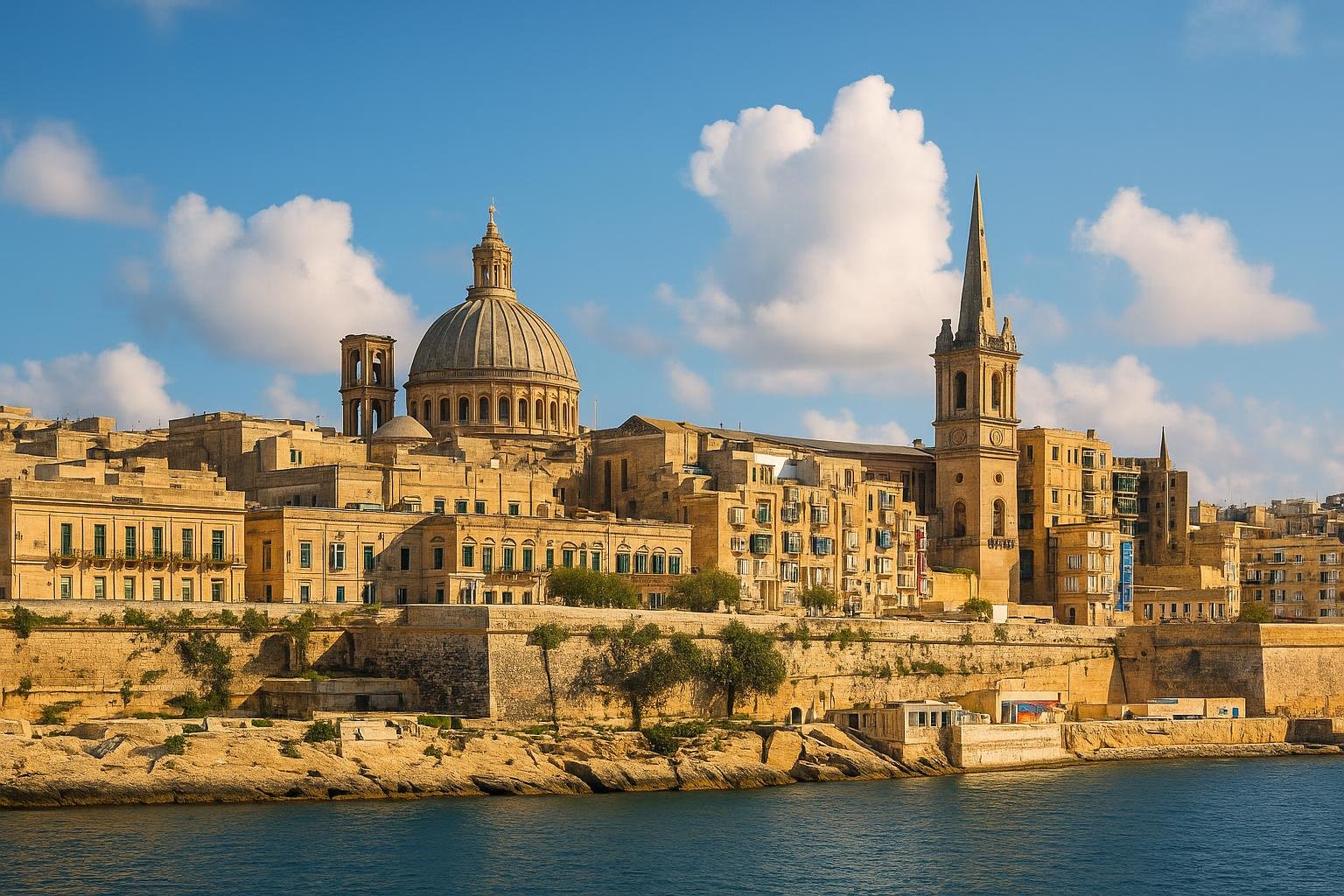
Valletta, Malta’s diminutive yet dazzling capital, is a city where limestone bastions plunge into sapphire waters and every narrow street reveals a layer of history. Enclosed within 16th-century fortifications, this UNESCO-listed city blends Baroque grandeur, Mediterranean light, and an increasingly sophisticated cultural and culinary scene. Compact and walkable, Valletta is ideal for a long weekend but rewards a longer stay, especially for travelers interested in history, architecture, and coastal living with a refined edge.
Best Time to Visit Valletta
Weather Overview
Valletta enjoys a classic Mediterranean climate, with long, dry summers and short, mild winters. From late May to early October, sunshine is almost guaranteed, and sea temperatures are warm enough for swimming. July and August are the hottest months, with daytime temperatures frequently reaching 30–34°C (86–93°F) and balmy evenings that linger on café terraces.
Spring (March to May) and autumn (late September to November) offer pleasantly warm weather, typically between 18–26°C (64–79°F), making them ideal seasons for strolling the city’s steep streets and fortress walls without oppressive heat. Winters are brief and relatively gentle. Between December and February, temperatures usually hover around 12–17°C (54–63°F). Rain falls mainly in short, sometimes intense bursts rather than endless grey days, and there is still a good amount of sunshine, although sea swimming is less appealing.
Peak vs. Off-Peak Seasons
Valletta’s peak season coincides with European summer holidays, roughly June through early September. During this period, the city feels vibrant and busy, cruise ships call regularly, and cultural events spill into the streets. Accommodation rates climb, restaurant reservations become advisable, and popular attractions can feel crowded, particularly during the middle of the day.
The shoulder seasons—April to early June and late September to early November—offer the best balance for most visitors. The weather is comfortable, the sea is often still warm enough for a swim, and the city’s museums, palaces, and churches can be enjoyed at a more relaxed pace. Prices are generally more moderate than in peak summer, and queues at major sites like St John’s Co-Cathedral are shorter.
Off-peak, from late November to March (excluding Christmas and New Year), Valletta takes on a quieter, more local atmosphere. This is an excellent time for travelers focused on history, architecture, and gastronomy rather than beaches. Hotel rates tend to be lower, and it is easy to secure last-minute restaurant tables. Occasional storms and windier days are possible, but the city’s dense concentration of indoor attractions means you can easily adapt your plans to the weather.
Top Attractions in Valletta
Historical Landmarks
Valletta’s compact peninsula is packed with architectural treasures, many of them linked to the Knights of St John who shaped the city in the 16th and 17th centuries. The urban fabric itself—gridded streets, fortified ramparts, ornate wooden balconies—is best appreciated on foot, but several individual landmarks stand out.
- St John’s Co-Cathedral
From the outside, this 16th-century church seems almost austere, but its interior is among the most elaborate in Europe. Every surface is richly decorated with carved stone, gilded details, and inlaid marble tombs that commemorate the Knights. The Oratory houses two masterpieces by Caravaggio, including “The Beheading of Saint John the Baptist,” one of his most powerful works. Audio guides provide helpful context, and a respectful dress code is enforced. - Grandmaster’s Palace
Once the seat of the Grand Masters of the Order and later the British colonial administration, this palace on St George’s Square remains central to Maltese political life. Parts of the building, including the State Rooms and the Palace Armoury, are open to visitors. Highlights include richly painted ceilings, opulent halls lined with tapestries, and displays of weaponry that trace Malta’s turbulent past. - Upper Barrakka Gardens
Perched atop the city’s fortifications, these landscaped gardens offer panoramic views over the Grand Harbour, Three Cities, and the enormous limestone bastions that encircle Valletta. The daily firing of the Saluting Battery, usually at noon and 4 pm, is a theatrical reminder of Malta’s military heritage. The gardens themselves provide welcome shade and a tranquil break from sightseeing. - Fort St Elmo & the National War Museum
Guarding the tip of the peninsula, Fort St Elmo played a crucial role in the Great Siege of 1565 and later served the Knights and the British. Today it houses the National War Museum, whose exhibits span from the time of the Order of St John through to World War II and Malta’s independence. The collection includes wartime aircraft, personal memorabilia, and detailed explanations of Malta’s strategic role in the Mediterranean. - City Gates, Bastions & Streetscapes
The modern City Gate by architect Renzo Piano marks the entrance into Valletta’s historic core, leading past the Parliament building and Pjazza Teatru Rjal, an open-air theatre built within the ruins of the former Royal Opera House. From there, wandering down Republic Street and Merchant Street reveals Baroque facades, churches, and tight side streets where local life continues behind colourful balconies.
Cultural Experiences
Beyond its architectural splendour, Valletta maintains a dynamic cultural identity shaped by centuries of influence from Europe and North Africa. Engaging with the city’s cultural life adds nuance to its historic monuments.
- MUŻA – The National Community Art Museum
Located in the Auberge d’Italie, MUŻA showcases a thoughtfully curated collection of Maltese and European art. Works are arranged thematically rather than strictly chronologically, encouraging visitors to consider Malta’s evolving identity. Expect everything from religious iconography and maritime paintings to contemporary pieces that respond to social change. - Manoel Theatre
One of the oldest working theatres in Europe, the Manoel blends gilded Baroque interiors with a diverse performance programme. Depending on the season, you might attend opera, chamber concerts, or local theatrical productions. Guided tours reveal the theatre’s history, including its role as a cultural hub during British rule. - Valletta’s Festivals & Events
The city hosts an impressive calendar of events for its size. The Valletta Baroque Festival in January draws world-class musicians to perform in the city’s atmospheric churches and palaces. Notte Bianca in early autumn turns Valletta into a nocturnal celebration of art, music, and open museums. Summer sees open-air concerts, harbour fireworks, and village festas spilling into the streets, each with their own band marches and traditional decorations. - Harbour Cruises & Maritime Heritage
A harbour cruise from the Grand Harbour or Marsamxett side offers an excellent perspective on Valletta’s bastions and neighbouring fortified towns. Guides explain the layered history of sieges, naval battles, and trade routes that made Malta strategically significant. For a more intimate experience, traditional luzzu-style or dgħajsa boats sometimes operate shorter trips across the harbour to the Three Cities. - Café Culture & Contemporary Valletta
Outdoor terraces around Republic Square, Strait Street, and the waterfront have become stages for a new, creative Valletta. Artisanal cafés, wine bars tucked into old cellars, and independent galleries occupy reimagined heritage buildings. Joining locals for a morning espresso, a glass of Maltese wine, or an evening aperitivo provides an authentic sense of the modern city.
Where to Stay in Valletta
Best Neighborhoods for Tourists
Valletta’s small footprint means no area is ever far from the main sights, but the character and atmosphere of each quarter differ slightly. Choosing the right base can significantly enhance your stay.
- City Centre (Around Republic Street & Merchant Street)
The heart of Valletta suits visitors who want everything within immediate reach: major landmarks, shops, and many restaurants. Staying here places you steps from St John’s Co-Cathedral and the Grandmaster’s Palace. It can be lively, particularly during festivals or cruise ship days, but side streets often remain quieter. - Upper Barrakka & Castille Area
Close to the Upper Barrakka Gardens and the Saluting Battery, this area offers sweeping harbour views and easy access to the main bus terminus. It is particularly practical for those planning day trips around Malta. Streets here are slightly less commercial, often lined with elegant townhouses converted into boutique hotels. - Lower Valletta & Waterfront
The slopes leading down towards the Grand Harbour and the Valletta Waterfront provide atmospheric stays in older residential streets, many with glimpses of the sea between buildings. The Waterfront itself, with its 18th-century warehouses, has several dining and drinking options overlooking the water. This area feels more tranquil in the evening, yet it remains within walking distance of central attractions. - Strait Street & Surrounds
Once a notorious nightlife district for sailors, Strait Street has reinvented itself as a fashionable enclave of wine bars, cocktail lounges, and small restaurants. Accommodations in this area appeal to those who enjoy nightlife and creative dining in historic surroundings. Noise levels can be higher at night on busier weekends.
Recommended Hotels and Accommodations
Valletta offers a refined selection of boutique hotels, guesthouses, and luxury properties housed within characterful buildings. While specific availability fluctuates, the following types of accommodation exemplify what the city does best.
- Boutique Heritage Hotels
Many of Valletta’s most desirable places to stay occupy restored palazzi and townhouse-style properties. Expect original features—stone arches, patterned tiles, traditional wooden balconies—paired with contemporary comforts and thoughtful design. These hotels often provide intimate service, individually styled rooms, and rooftop terraces with views towards the harbour or domes of nearby churches. - Luxury Waterfront & Grand Harbour Views
For travellers prioritising views, several upmarket hotels and serviced suites command vantage points over the Grand Harbour, Marsamxett Harbour, or Manoel Island. These properties may feature spacious terraces, small pools, or private balconies overlooking the water, making them ideal for slow mornings or sunset drinks after a day of sightseeing. - Charming Guesthouses & B&Bs
Smaller guesthouses dotted throughout the city offer character and good value. Rooms might be more compact than in larger hotels, but hosts often compensate with local insight and personalised recommendations. Many serve breakfast in cosy courtyards or on roof terraces, showcasing Maltese breads, seasonal produce, and regional cheeses. - Self-Catering Apartments
For longer stays or families, self-catering apartments in Valletta’s historic buildings provide flexibility and a more residential feel. Having a kitchen allows you to make use of local markets and bakeries, while living among locals offers a deeper sense of daily life in the capital. Be prepared for staircases and older layouts, as many buildings pre-date lifts and modern planning.
Wherever you stay, booking early is wise, particularly for visits during major festivals, summer months, or around public holidays when Valletta fills quickly.
Food and Dining in Valletta
Must-Try Local Dishes
Valletta’s culinary scene mirrors Malta’s history: a blend of Sicilian, North African, and British influences anchored by Mediterranean produce. Traditional dishes are rustic and generous, often reinterpreted by contemporary chefs.
- Pastizzi
These flaky pastries are a Maltese staple, typically filled with ricotta or spiced mushy peas. Best enjoyed fresh from a bakery or snack bar, they are an inexpensive but essential taste of local life. Look for small, often crowded pastizzeriji where locals queue at all hours. - Rabbit Stew (Stuffat tal-Fenek)
Widely considered Malta’s national dish, rabbit is slow-cooked in red wine, tomato, garlic, and aromatic herbs. The result is tender, deeply flavoured meat often served with roasted potatoes or fresh bread to soak up the sauce. Many traditional restaurants offer variations of this classic. - Aljotta & Fresh Seafood
Aljotta is a fragrant fish soup infused with garlic, tomatoes, and herbs, sometimes enriched with rice or small pasta. Beyond aljotta, Valletta’s menus often feature grilled local fish, octopus stews, and seafood pasta dishes that highlight the island’s maritime heritage. - Ftira & Hobz biz-Zejt
Ftira is a ring-shaped Maltese bread with a chewy interior and crisp crust, frequently transformed into an open sandwich layered with tomatoes, tuna, capers, olives, and onions. Ħobż biż-żejt—literally “bread with oil”—follows a similar concept, with bread rubbed in olive oil and tomatoes before being topped with local ingredients. These are ideal for a light lunch or picnic on the bastions. - Imqaret & Local Sweets
Imqaret are deep-fried date pastries, usually scented with anise or citrus, served hot and often accompanied by ice cream. Other traditional sweets include almond-based pastries and seasonal treats linked to religious festivals, many of which you will find in pastry shops and cafés.
Best Restaurants and Cafés
Dining in Valletta ranges from casual bakeries and harbourfront bistros to refined tasting menus housed in centuries-old stone vaults. Reservations are advisable for popular spots, especially on weekends and during high season.
- Traditional Maltese and Mediterranean Restaurants
In the heart of the old city, several restaurants focus on Maltese and broader Mediterranean cuisine. Menus typically showcase rabbit, slow-cooked meats, grilled fish, and seasonal vegetables, often served in vaulted stone rooms or small courtyards. Look for places that change their menu to reflect daily market offerings, a sign of freshness and care. - Modern Bistros & Wine Bars
Around Strait Street and nearby lanes, contemporary bistros offer inventive small plates and a strong focus on local products. Wine bars in this area often occupy former stores and cellars, pouring Maltese wines made from indigenous grapes such as Gellewża and Girgentina alongside international labels. Charcuterie boards, local cheeses, and refined bar snacks pair well with an evening glass. - Harbourfront Dining
The Valletta Waterfront and areas facing Marsamxett Harbour provide romantic settings for waterfront meals. Here you will find seafood-focused restaurants, Mediterranean grills, and sophisticated bars with outdoor seating. Sunset is a particularly appealing time to dine, as harbour lights begin to reflect off the water and ships glide past. - Cafés, Bakeries & Casual Eats
Valletta’s cafés range from historic institutions to modern espresso bars. Traditional spots around Republic Square serve coffee, pastries, and light lunches under arcades, while contemporary cafés cater to those seeking specialty coffee and lighter fare. Bakeries and snack bars scattered across the city provide quick, inexpensive options such as pastizzi, ftira, and slices of savoury pies. - Fine Dining & Tasting Menus
For a special evening, a handful of intimate fine-dining restaurants in and around Valletta craft tasting menus that reinterpret Maltese flavours with contemporary techniques. Expect carefully sourced local ingredients, artful plating, and considered wine pairings in elegant yet understated surroundings.
Conclusion
Valletta may be one of Europe’s smallest capitals, but its impact on visitors is disproportionate to its scale. Fortified walls, golden stone churches, and panoramic harbours speak of centuries of strategic importance, while galleries, festivals, and inventive restaurants reveal a city that continues to evolve. Whether you come for Caravaggio and Baroque architecture, long seaside lunches and harbour sunsets, or as a base for exploring the rest of Malta, Valletta offers a concentrated experience of Mediterranean history and contemporary culture.
Plan your visit around the seasons, choose a characterful place to stay within the old walls, and allow time to simply wander. Between steep staircases, shaded gardens, and views that unfold at every turn, Valletta invites you to slow down and absorb its rich, layered story.
Discover More from Didier Lancelot
Amazon Author page: amazon.com/author/didierlancelot
Narmer Store: narmerstore.org
AI and Technology Ebooks
- Creative AI: Animated Drawings, Manga & Illustrations
- Build a Game with AI: The No-Code Guide
- AI Image Generation Made Easy
- Build a Website with AI: The No-Code Guide
- How to Connect AI to Your Blog: The Ultimate Automation Guide
- AI Productivity Habits: Get More Done in Less Time
- AI Avatars Made Easy
- The Book of AI Prompts: 100+ Proven Prompts
- Make Music with AI: Suno, Udio and AI Music Generators
- Click to Cash
- The Automated Edge: Outwork, Outpace, and Outperform with AI
- AI Side Hustle: How to Make Money with ChatGPT and AI Tools
- Work Smarter with AI
Health, Lifestyle and Home Ebooks
- Hidden Superfoods: The World’s Most Powerful Healing Foods
- Spanish Food: The Complete Cookbook for Authentic Home Cooking
- The Science of Happiness Explained
- The Psychology of Success
- The Secret Sauce of Consistency: What the Experts Don’t Tell You About Fitness
- The Complete Home Bartender’s Guide: Link 1 | Link 2
- Natural Beauty, Made Simple: Easy DIY Organic Skincare Recipes
- Garden Made Simple: Easy, Beginner-Friendly Techniques
- The Dog Training Bible