
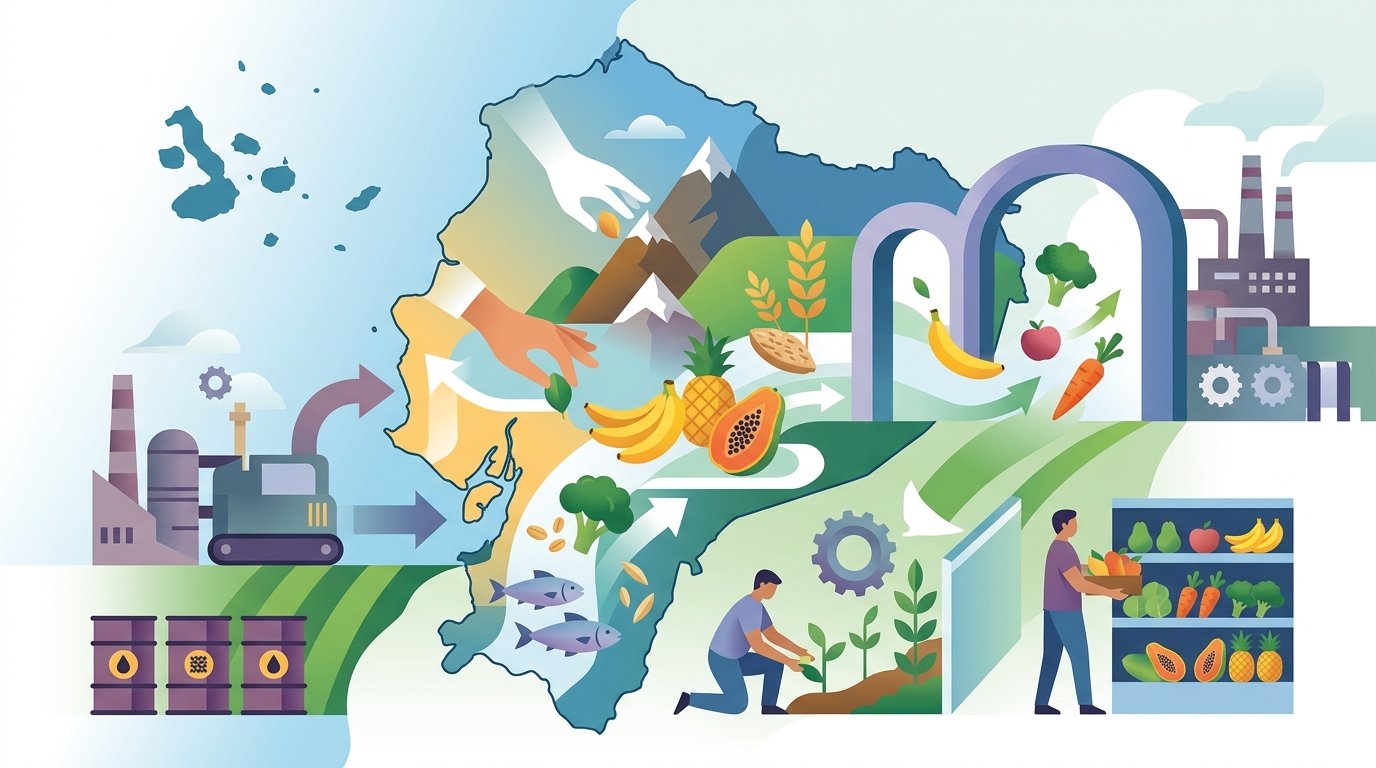
Ecuador is pushing to strengthen its regulations around industrial trans fats, as health advocates, researchers and government representatives gathered in Quito in early September 2026 to assess progress and identify what more needs to be done. The meetings, held across three days at two universities, brought together civil society groups, academic institutions and public health agencies to discuss the risks posed by these fats and the steps required to remove them from the country’s food supply.
A health concern with wide consequences
Industrial trans fats are created primarily through a process called partial hydrogenation, in which hydrogen is added to liquid oils to make them solid or semi-solid. The resulting partially hydrogenated oils are used in a range of processed foods — including margarines, cookies, spreads, baked goods and some fried products — to alter texture and extend shelf life. The World Health Organization links consumption of these fats to an increased risk of coronary heart disease, stroke and death, estimating that more than 278,000 deaths globally each year are attributable to them.
Representatives from the Pan American Health Organization noted that in the Americas alone, industrial trans fats are associated with more than 150,000 deaths annually, many of them premature. Speakers at the Quito events emphasised that the burden of illness extends beyond individuals, affecting household income, caregiving responsibilities and broader social wellbeing. In Ecuador, noncommunicable diseases account for more than 76 percent of all deaths.
Where Ecuador’s regulation stands
Ecuador introduced limits on trans fats through Ministerial Agreement 4439, which set a maximum of two grams of trans fats per 100 grams of fat in oils, margarines and ingredients used across the food industry and food services. This broadly aligns with WHO recommendations, though gaps remain:
- Not all final processed products are explicitly covered by the agreement
- The use of partially hydrogenated oils has not been banned outright
- Enforcement mechanisms, including inspection frequency and laboratory protocols, are not clearly defined
Campaigning organisations have outlined a concrete agenda to address these shortcomings, calling for extended coverage across all processed foods, a prohibition on partially hydrogenated oils and the establishment of routine monitoring with adequate laboratory capacity. The goal, as framed at the September meetings, is a regulatory framework strong enough to ensure that harmful fats are absent from the food supply before a consumer even reaches the shelf.
This article is adapted from “How Ecuador is fighting to keep industrial trans fats off the food shelf” published by Global Voices, licensed under CC BY 3.0. Changes were made. Read the original story at the link above.
Discover More from Didier Lancelot
Amazon Author page: amazon.com/author/didierlancelot
Narmer Store: narmerstore.org
AI and Technology Ebooks
- Creative AI: Animated Drawings, Manga & Illustrations
- Build a Game with AI: The No-Code Guide
- AI Image Generation Made Easy
- Build a Website with AI: The No-Code Guide
- How to Connect AI to Your Blog: The Ultimate Automation Guide
- AI Productivity Habits: Get More Done in Less Time
- AI Avatars Made Easy
- The Book of AI Prompts: 100+ Proven Prompts
- Make Music with AI: Suno, Udio and AI Music Generators
- Click to Cash
- The Automated Edge: Outwork, Outpace, and Outperform with AI
- AI Side Hustle: How to Make Money with ChatGPT and AI Tools
- Work Smarter with AI
Health, Lifestyle and Home Ebooks
- Hidden Superfoods: The World’s Most Powerful Healing Foods
- Spanish Food: The Complete Cookbook for Authentic Home Cooking
- The Science of Happiness Explained
- The Psychology of Success
- The Secret Sauce of Consistency: What the Experts Don’t Tell You About Fitness
- The Complete Home Bartender’s Guide: Link 1 | Link 2
- Natural Beauty, Made Simple: Easy DIY Organic Skincare Recipes
- Garden Made Simple: Easy, Beginner-Friendly Techniques
- The Dog Training Bible