
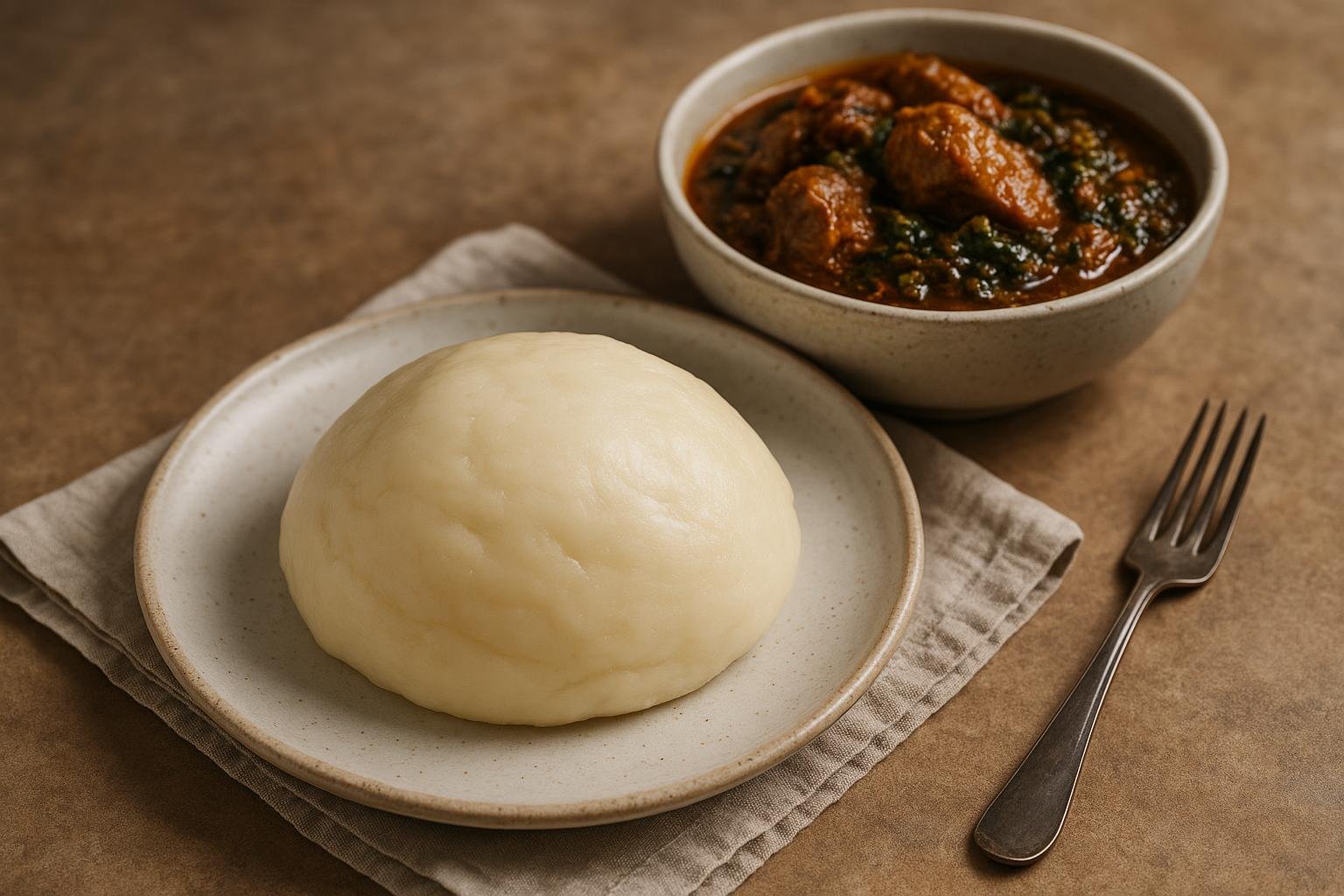
Pounded yam is one of West Africa’s most cherished comfort foods: elegant in its simplicity, yet deeply satisfying. Soft, elastic, and delicately flavored, it is traditionally served with richly seasoned soups and stews that transform a humble tuber into a celebratory meal. Whether you grew up eating it or are encountering it for the first time, understanding how to prepare pounded yam properly opens the door to an entire world of Nigerian and broader West African cuisine.
What is Pounded Yam?
Origins and Cultural Significance
Pounded yam is a staple made from boiled yam tubers that are pounded until they become smooth, stretchy, and dough-like. It is especially prominent in Nigeria, Ghana, and parts of Cameroon and Benin, where it often appears at weddings, festivals, religious celebrations, and Sunday family gatherings.
In Nigeria, pounded yam holds particular prestige. Among the Yoruba, Igbo, and several Middle Belt communities, it is more than a side dish; it is a symbol of hospitality, status, and tradition. Preparing it the traditional way—with a heavy mortar and pestle—requires time, strength, and collaboration, which is why it is often associated with communal life and special occasions. The rhythmic pounding is integral to the culinary heritage, creating a sensory experience of sound, movement, and aroma that modern shortcuts can only partially replicate.
Pounded yam also reflects agricultural history. Yams have long been a cornerstone crop in the region, and annual yam festivals mark the beginning of harvest, giving thanks for abundance. Serving traditional pounded yam at such occasions reinforces the connection between land, community, and shared identity.
Nutritional Benefits of Pounded Yam
Beyond its cultural importance, pounded yam offers meaningful nutritional value. Yam is a complex carbohydrate, providing sustained energy rather than a sharp spike in blood sugar. When eaten with protein-rich and vegetable-based soups, it can form part of a balanced, nourishing meal.
- Complex Carbohydrates: The primary macronutrient in yam is starch, which digests more slowly than refined grains, helping with satiety and energy stability.
- Dietary Fiber: Yams contain fiber that supports digestive health and may contribute to better cholesterol and blood sugar control when part of a broader dietary pattern.
- Vitamins and Minerals: Yams provide vitamin C, some B vitamins (notably B6), potassium, and manganese, all important for immune function, nerve health, and metabolism.
- Low Fat, No Gluten: Traditional pounded yam made from fresh yams is naturally low in fat and gluten-free, suitable for many dietary requirements.
The overall nutritional impact of a Nigerian pounded yam meal depends largely on the accompanying soup. When paired with leafy vegetables, fish or lean meat, and moderate oil, it can be both satisfying and nutritionally dense.
How to Make Pounded Yam at Home
Required Ingredients and Tools
There are two main approaches to pounded yam preparation at home: the fully traditional method using fresh yam tubers and pounding tools, and the modern shortcut using pounded yam flour. Here, the focus is on the classic approach, with notes on contemporary adaptations.
Ingredients (Traditional Method):
- Fresh white yam tuber (African yam, not sweet potato)
- Water (for boiling)
- Salt (optional, used sparingly)
Tools (Traditional Method):
- Sturdy mortar and pestle (wooden or stone)
- Sharp knife for peeling and cutting the yam
- Large pot for boiling
- Slotted spoon or tongs
- Clean bowl or plate for serving
Ingredients (Flour-Based Method):
- Pounded yam flour (instant yam flour)
- Water
Tools (Flour-Based Method):
- Pot or saucepan
- Wooden spatula or strong spoon
- Whisk (optional, for breaking lumps at the early stage)
Step-by-Step Preparation Guide
The hallmark of authentic Nigerian pounded yam is its smooth, stretchy texture. Achieving this consistently requires attention to detail at each stage of the process.
Traditional Method Using Fresh Yams
- Peel and Cut the Yam:
Slice off the ends of the yam tuber, peel off the thick brown skin, and remove any discolored spots. Cut the white flesh into thick roundels or chunks of roughly equal size to ensure even cooking.
- Rinse Thoroughly:
Rinse the yam pieces in several changes of water to remove excess surface starch and any dirt. This helps keep the cooking water cleaner and prevents unwanted stickiness.
- Boil Until Tender:
Place the yam chunks in a pot, cover with enough water, and bring to a boil. You may add a pinch of salt if desired, though some prefer none. Cook until the pieces are soft and can be easily pierced with a fork, without falling apart. Do not overcook them into mush.
- Drain and Steam-Dry:
Drain off most of the water, reserving a small amount in case you need it later. Allow the yam to sit in the pot for a few minutes with the lid slightly ajar so excess moisture can evaporate. Slightly dry yam pounds more smoothly.
- Begin Pounding:
Transfer a few pieces of hot yam into the mortar. Pound steadily with the pestle, using a rhythmic up-and-down motion. Once the initial pieces begin to break down, add more yam gradually rather than overloading the mortar.
- Work to a Uniform Mass:
Continue pounding, turning the mass occasionally with a hand or wooden spatula (taking care not to touch hot yam with bare skin). The goal is a single cohesive ball without visible chunks. This phase is where texture is developed.
- Adjust Consistency if Needed:
If the pounded yam feels too stiff or dry, sprinkle in a tablespoon or two of the reserved hot water and pound again until fully incorporated. Repeat in small amounts only; too much water will make it sticky or loose.
- Shape and Serve:
Once you achieve a smooth, elastic consistency with a slight sheen, form the pounded yam into balls or mound it on a plate. Traditionally, it is served hot, often shaped into individual portions for each diner.
Modern Method Using Pounded Yam Flour
- Heat the Water:
Measure water into a pot based on the instructions on the flour package. Bring it to a gentle boil, then reduce to a simmer.
- Add Flour Gradually:
Sprinkle the flour into the hot water in a thin stream while vigorously stirring with a wooden spoon or spatula. This helps prevent lumps and gives you control over the final thickness.
- Stir and Cook:
Continue stirring as the mixture thickens. If it is too soft, add a bit more flour; if too stiff, incorporate small amounts of hot water. Aim for a smooth, stretchy mass that pulls away from the sides of the pot.
- Steam for a Few Minutes:
Once the mixture is properly combined, reduce the heat to very low, cover the pot, and allow it to steam for a couple of minutes. Stir again to ensure even texture.
- Mould and Serve:
Shape with a spoon or lightly moistened hands and serve immediately with your preferred soup.
Popular Pounded Yam Recipes
Classic Pounded Yam with Egusi Soup
One of the most celebrated ways to enjoy pounded yam is with egusi soup, a rich, nutty preparation made from ground melon seeds. This pairing is common in many parts of Nigeria and often appears at special events.
Key Components of Egusi Soup:
- Egusi (melon seeds): Finely ground to create a thick, protein-rich base.
- Palm oil: Adds color and depth of flavor typical of West African stews.
- Stock and proteins: Beef, goat meat, assorted offal, fish, or a combination, simmered until tender.
- Leafy vegetables: Such as ugu (fluted pumpkin leaves), spinach, or bitter leaf.
- Aromatics and spices: Onion, ground crayfish, peppers, seasoning cubes, and salt.
Serving Pounded Yam with Egusi Soup:
To serve, a portion of hot pounded yam is placed in a bowl or plate, with egusi soup ladled into a separate bowl or spooned alongside. Diners pinch off small pieces of the yam with their fingers, shape it into a small ball, and use it to scoop up the soup. The neutral, slightly earthy taste of the pounded yam balances the richness and heat of the egusi, creating a well-rounded dish that showcases traditional Nigerian pounded yam at its finest.
Pounded Yam and Vegetable Soup Variations
Pounded yam soup pairings are numerous, reflecting regional tastes and available ingredients. Vegetable-rich soups, in particular, complement the soft texture of the yam while enhancing the overall nutritional profile.
Common Vegetable-Based Soups:
- Efo Riro: A Yoruba-style spinach stew featuring tomatoes, bell peppers, hot peppers, onions, and assorted meats or fish. The slightly smoky, robust flavors harmonize beautifully with the gentle taste of pounded yam.
- Edikang Ikong: A dense vegetable soup from the Efik and Ibibio people of southern Nigeria, prepared with waterleaf, fluted pumpkin leaves, stockfish, meat, and palm oil. Served with pounded yam, it becomes a luxurious, deeply flavored meal.
- Afang Soup: Another Cross River delicacy made from sliced afang (okazi) leaves and waterleaf, often combined with periwinkles, meat, and fish. The slightly chewy afang leaves provide textural contrast to the smooth yam.
- Bitter Leaf Soup (Ofe Onugbu): An Igbo classic with washed bitter leaves, cocoyam or thickening agents, and a medley of meats. When matched with Nigerian pounded yam, the subtle bitterness enhances the overall complexity of the dish.
Beyond these, numerous pounded yam variations exist across the region, where households experiment with different soups, proteins, and spice levels. Some prefer lighter, vegetable-dominant sauces; others lean toward richer, meat-focused broths. The versatility of pounded yam makes it an ideal base for exploring these culinary traditions.
Tips for Perfectly Smooth Pounded Yam
Common Mistakes to Avoid
Achieving consistently smooth pounded yam requires avoiding a few frequent errors that compromise texture and taste.
- Using the Wrong Yam Variety: Not all tubers labeled “yam” behave the same. For traditional pounded yam, African white yam (Dioscorea rotundata) is preferred. Sweet potatoes or non-starchy varieties will not yield the correct elasticity.
- Overcooking the Yam: If the yam becomes waterlogged and mushy, the final product often turns gummy or sticky. Aim for tender pieces that still hold their shape.
- Pounding in Large Batches: Overloading the mortar makes it difficult to reach all the pieces evenly, leading to lumps. It is better to pound smaller amounts and combine them than to rush the process.
- Adding Too Much Water: Excess water during or after pounding results in a loose, paste-like consistency instead of a firm, stretchy mass. Always add liquid sparingly.
- Inadequate Pounding Time: Stopping too early leaves small chunks in the mass. These will be evident when serving and affect the feel in the mouth.
- Neglecting Heat: Pounded yam should be worked while hot. Allowing the yam to cool before pounding can make it harder to achieve a seamless texture.
Expert Tips and Techniques
With practice, how to make pounded yam well becomes intuitive. A few professional-level techniques, however, can accelerate your learning and dramatically improve results.
- Choose Good Quality Yams: Select firm, heavy tubers without soft spots, mold, or extensive blemishes. Older, overly dry yams may not pound as smoothly and can produce a fibrous texture.
- Control Moisture Carefully: After boiling, allow some steam to evaporate before pounding. This slight drying is one of the most important smooth pounded yam tips; it prevents excess moisture from weakening the structure.
- Pound in a Steady Rhythm: Consistency of motion matters. A steady, firm pounding rhythm, combined with periodic turning of the mass, helps integrate all pieces evenly, reducing lumps and ensuring uniform elasticity.
- Work in Stages: Start by breaking down the boiled yam into smaller fragments. Once everything is roughly mashed, continue pounding until the surface becomes glossy and stretches slightly when pulled. This staged approach leads to better control over the final texture.
- Use Reserved Hot Water Strategically: Instead of adding plain water from the tap, use a bit of the starchy cooking water if you must adjust consistency. It blends more seamlessly and maintains flavor.
- For Flour-Based Methods, Stir Vigorously Early: When preparing pounded yam from instant flour, the first few minutes are critical. Stir or whisk energetically as the flour hydrates; once lumps form, they are difficult to remove.
- Serve Immediately: Pounded yam is at its best when freshly made, still warm, and supple. Over time, it may firm up. If necessary, very gently reheating with steam can revive some of the softness, but freshly prepared is always preferable.
Mastering these details transforms pounded yam from merely acceptable to outstanding. Over time, you will develop a personal style—firmer or softer, more or less stretchy—that suits your taste and the soups you frequently prepare.
Conclusion
Pounded yam is more than a starch on the side of the plate; it is a culinary tradition that embodies history, community, and craftsmanship. From its origins among yam-farming cultures in West Africa to its enduring place at contemporary Nigerian tables, it continues to connect generations through shared technique and shared meals.
Learning proper pounded yam preparation—whether through traditional pounding or modern flour-based shortcuts—gives you a versatile foundation for exploring classic pairings such as egusi soup, efo riro, and a wide spectrum of vegetable-rich stews. With high-quality ingredients, careful control of moisture and heat, and deliberate attention to texture, you can consistently achieve the smooth, elastic result that defines an excellent pounded yam recipe.
For home cooks interested in West African flavors, mastering this dish is an essential step. It opens up a repertoire of soups and stews, encourages experimentation with regional variations, and offers a direct connection to one of the most beloved traditions in Nigerian cuisine.
Discover More from Didier Lancelot
Amazon Author page: amazon.com/author/didierlancelot
Narmer Store: narmerstore.org
AI and Technology Ebooks
- Creative AI: Animated Drawings, Manga & Illustrations
- Build a Game with AI: The No-Code Guide
- AI Image Generation Made Easy
- Build a Website with AI: The No-Code Guide
- How to Connect AI to Your Blog: The Ultimate Automation Guide
- AI Productivity Habits: Get More Done in Less Time
- AI Avatars Made Easy
- The Book of AI Prompts: 100+ Proven Prompts
- Make Music with AI: Suno, Udio and AI Music Generators
- Click to Cash
- The Automated Edge: Outwork, Outpace, and Outperform with AI
- AI Side Hustle: How to Make Money with ChatGPT and AI Tools
- Work Smarter with AI
Health, Lifestyle and Home Ebooks
- Hidden Superfoods: The World’s Most Powerful Healing Foods
- Spanish Food: The Complete Cookbook for Authentic Home Cooking
- The Science of Happiness Explained
- The Psychology of Success
- The Secret Sauce of Consistency: What the Experts Don’t Tell You About Fitness
- The Complete Home Bartender’s Guide: Link 1 | Link 2
- Natural Beauty, Made Simple: Easy DIY Organic Skincare Recipes
- Garden Made Simple: Easy, Beginner-Friendly Techniques
- The Dog Training Bible