
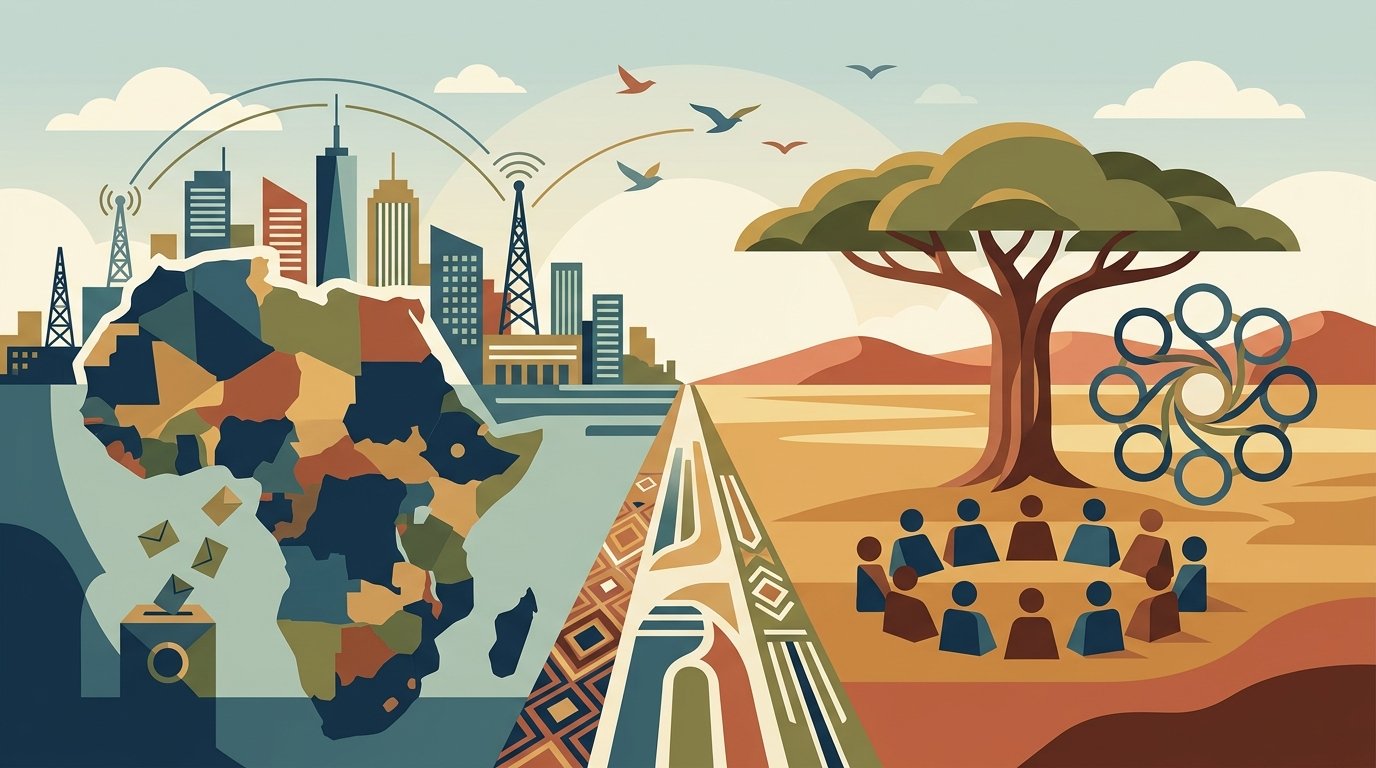
An article published by the Peace News Network and republished by Global Voices examines what contemporary African political systems might take from a centuries-old indigenous governance model practiced by the Borana Oromo people of southern Ethiopia and northern Kenya. The piece explores how the Borana Gadaa system, which UNESCO added to its list of Intangible Cultural Heritage of Humanity in 2016, has maintained peaceful, structured leadership transitions without the instability that has marked many modern elections across the continent.
How the Borana Gadaa system works
The Gadaa system organises political authority around a fixed eight-year cycle, in which leadership rotates among five groupings known as Gogeessas. When one group’s term ends, power transfers to the next at a formal ceremony called the Balli Walirafudhu. Every eight years, a national assembly known as the Gumi Gaayo, held beneath a sacred Odaa tree, reviews laws, settles disputes, and formally endorses incoming leadership. Authority is deliberately distributed across several offices and councils — including the Hayyuu advisory council and the Abbaa Seera, who oversees law — so that no single individual can accumulate unchecked power. Oral historians preserve a documented record of more than 72 successive leaders, maintaining institutional memory across generations.
Lessons identified for African democracies
The article draws several comparisons between Gadaa principles and recurring challenges in African electoral politics, including disputed results, ethnic mobilisation, and leaders extending their time in office through constitutional changes. Among the lessons the piece identifies are:
- Embedding fixed term limits within institutional structures rather than relying on individual leaders to honour them voluntarily
- Developing leadership pipelines through local councils and civil institutions long before candidates seek national office
- Designing political structures that cross ethnic and clan lines to reduce the risk of elections becoming, in effect, an ethnic census
- Maintaining ongoing accountability mechanisms — such as independent courts and community mediation bodies — rather than concentrating democratic activity on a single voting day
- Establishing channels for conflict resolution before grievances escalate into violence
The article stops short of suggesting that African governments directly replicate customary Borana institutions, but argues that the underlying principles — structured time limits, distributed power, cross-community inclusion, and continuous dialogue — offer a relevant framework for strengthening democratic governance across the continent.
This article is adapted from “What African elections can learn from the Borana Gadaa system” published by Global Voices, licensed under CC BY 3.0. Changes were made. Read the original story at the link above.
Discover More from Didier Lancelot
Amazon Author page: amazon.com/author/didierlancelot
Narmer Store: narmerstore.org
AI and Technology Ebooks
- Creative AI: Animated Drawings, Manga & Illustrations
- Build a Game with AI: The No-Code Guide
- AI Image Generation Made Easy
- Build a Website with AI: The No-Code Guide
- How to Connect AI to Your Blog: The Ultimate Automation Guide
- AI Productivity Habits: Get More Done in Less Time
- AI Avatars Made Easy
- The Book of AI Prompts: 100+ Proven Prompts
- Make Music with AI: Suno, Udio and AI Music Generators
- Click to Cash
- The Automated Edge: Outwork, Outpace, and Outperform with AI
- AI Side Hustle: How to Make Money with ChatGPT and AI Tools
- Work Smarter with AI
Health, Lifestyle and Home Ebooks
- Hidden Superfoods: The World’s Most Powerful Healing Foods
- Spanish Food: The Complete Cookbook for Authentic Home Cooking
- The Science of Happiness Explained
- The Psychology of Success
- The Secret Sauce of Consistency: What the Experts Don’t Tell You About Fitness
- The Complete Home Bartender’s Guide: Link 1 | Link 2
- Natural Beauty, Made Simple: Easy DIY Organic Skincare Recipes
- Garden Made Simple: Easy, Beginner-Friendly Techniques
- The Dog Training Bible