
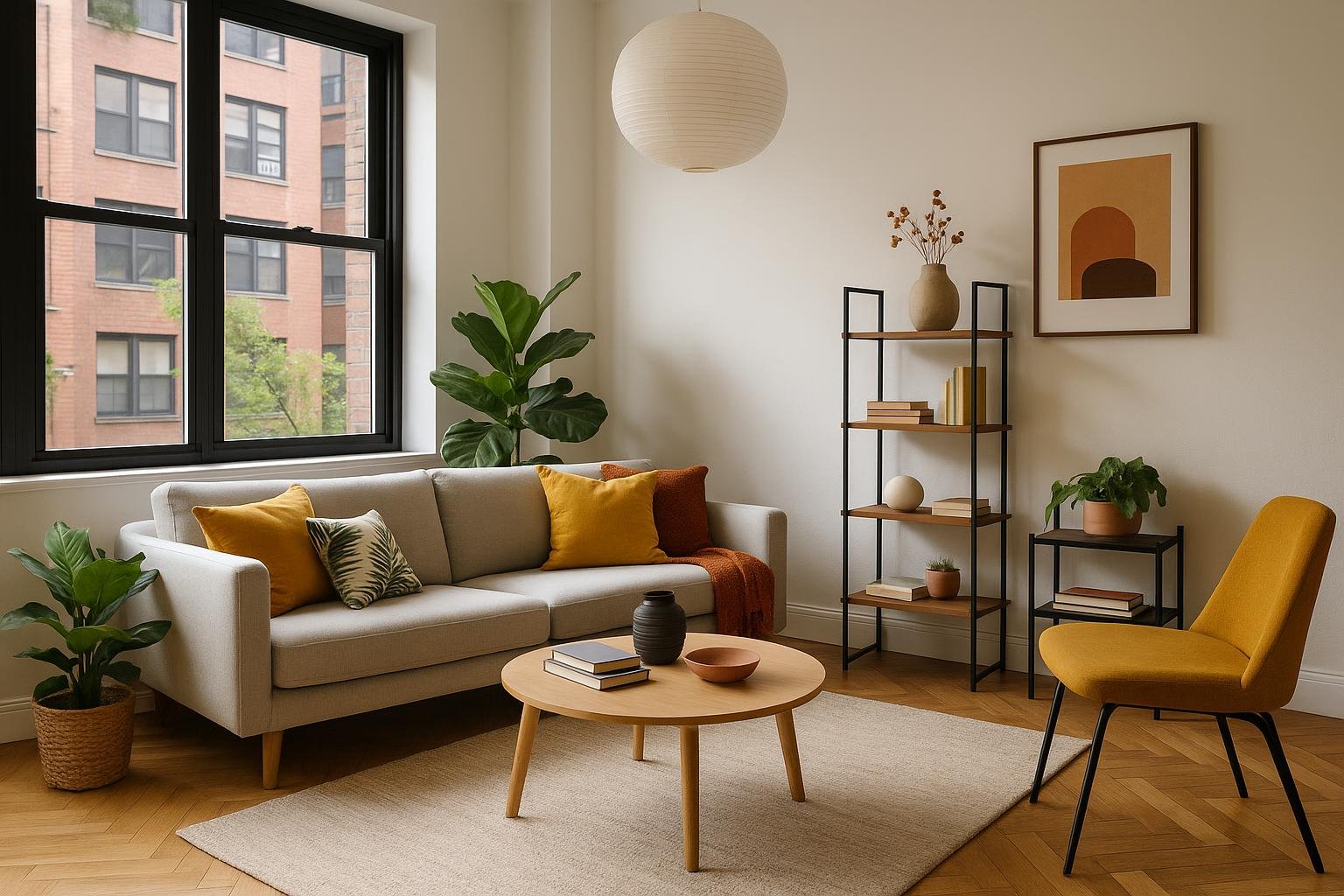
Interior Design Tips for Urban Living: Create a Flexible, Calm, and Personal City Home
City homes are often compact, busy, and shared with partners, flatmates, kids, or pets. That doesn’t mean they have to feel cramped or chaotic. The most successful urban interiors aren’t about optical tricks to “make a small room look bigger”—they’re about designing around how you actually live, move, work, and relax.
Below are practical, real-world interior design tips for urban living that focus on flexibility, clear flow, and calm, with plenty of room for personality.
Start With How You Live, Not How It Looks
Before you buy a single piece of furniture, get really clear on what your home needs to do for you each day.
- List your daily activities: working from home, hosting friends, cooking, exercising, hobbies, kids’ play, etc.
- Map where they happen: at the dining table, on the sofa, in a corner by the window, on the balcony.
- Note friction points: chairs you always trip over, a desk that blocks a door, nowhere to drop bags or mail.
This quick audit helps you design an apartment that supports your routines instead of fighting them. From here, every design choice—furniture, lighting, storage—should answer one question: Does this make my daily life easier and calmer?
Choose Adaptable Furniture That Works Hard
In urban interiors, every piece needs a job—and ideally more than one.
Multifunctional staples
- Storage ottomans: Use them as extra seating, a coffee table with a tray, and hidden storage for blankets, games, or tech clutter.
- Nesting tables: Pull them out when guests arrive; tuck them away to free up floor space during the week.
- Modular sofas: Sectionals with movable components let you reconfigure for movie nights, overnight guests, or more open floor space.
- Sofa beds or daybeds: Essential for studio apartments or one-bedrooms that double as guest rooms.
- Fold-away desks: Wall-mounted drop-leaf desks or slim consoles that transform into a workstation keep work from dominating your home.
In a small city home, it’s usually better to have fewer, smarter pieces than lots of single-purpose furniture. Look for clean silhouettes and slim legs so items feel lighter in the space.
Use Walls and Height to Free the Floor
When square footage is limited, think vertically. Walls and height are your biggest untapped assets in urban design.
- Tall shelving: Bookcases or shelving units that go close to the ceiling draw the eye up and massively increase storage without expanding the footprint.
- Wall-mounted storage: Floating shelves, wall-mounted cabinets, and pegboards keep surfaces clear and floors open.
- Hooks and rails: In entrances, kitchens, and bathrooms, add hooks and rail systems for coats, bags, utensils, and towels.
- Built-ins or fitted storage: Custom or semi-custom units around beds, sofas, or doors can turn “dead” space into organized storage.
By getting storage up off the floor, you preserve circulation and make even a small room feel more open and calm.
Protect Circulation and Sightlines
How you move through your home directly affects how spacious it feels. One of the most powerful design strategies for urban living is protecting circulation and sightlines.
Keep walkways clear
- Identify main traffic routes: front door to kitchen, bedroom to bathroom, sofa to balcony.
- Keep at least a comfortable stride’s width clear in these paths—no chairs, sharp table corners, or floor lamps blocking the way.
- Position larger furniture against walls or aligned with the room’s longest dimension to avoid awkward bottlenecks.
Choose the right scale
- Skip oversized, deep sofas that dominate a small living room; opt for compact seating with supportive backs.
- Choose a dining table that comfortably fits your household, then add flexible options (like folding chairs) for occasional guests.
- A few larger, well-scaled pieces almost always look calmer than many small, fussy items.
Clear circulation and unobstructed sightlines trick your brain into reading the space as larger and more relaxing—without any mirrors or paint tricks.
Create Distinct Zones in Shared Rooms
Most urban homes have at least one “do-it-all” room: living, dining, working, sometimes sleeping all in one. Zoning is how you give each function a clear place without building walls.
Zone with layout and rugs
- Rugs: Use different rugs (or one large rug and a smaller one) to anchor activity zones: one for the seating area, one for dining, one for a workspace.
- Furniture placement: Back a sofa onto a dining area or home office to subtly separate them; face seats toward each other to mark out a conversation area.
- Low, open shelving: A waist-height shelf can divide spaces while still allowing light and sightlines to flow through.
Zone with lighting and decor
- Lighting: A pendant over a dining table, a floor lamp by a reading chair, and a desk lamp on a work surface instantly signal different zones.
- Color and texture: Keep a cohesive overall palette, but vary textures or accent colors slightly in each zone to give them identity.
Good zoning makes a studio apartment or open-plan living area feel purposeful rather than chaotic, and makes it easier to mentally switch from “work” to “relax” even in the same room.
Make the Most of Daylight
Natural light is one of the biggest luxuries in urban living. Use every bit of it to make your home feel brighter, airier, and more spacious.
- Keep windows as clear as possible: Avoid bulky furniture in front of windows; if you need storage there, use low-profile pieces.
- Choose light-filtering window treatments: Sheer curtains or blinds that tilt give privacy while keeping daylight.
- Add mirrors strategically: Place mirrors opposite or adjacent to windows to bounce light deeper into the room and extend sightlines.
- Use reflective finishes sparingly: A glass coffee table, metal lamp bases, or glossy tiles can enhance light without turning the space cold.
Design your layout to give the activities you care about most—reading, working, relaxing—priority access to windows and the best natural light.
Layer Lighting for Flexibility and Mood
Urban homes rarely do just one thing, so a single overhead light won’t cut it. Layered lighting lets a room shift from focused work zone to cozy retreat with minimal effort.
The three layers of lighting
- Ambient lighting: Your general, overall light. Think ceiling fixtures, track lighting, or well-placed wall sconces.
- Task lighting: Focused light for specific activities—desk lamps, under-cabinet strips in the kitchen, reading lamps by chairs or beds.
- Accent lighting: Light that highlights art, plants, or architectural features, or adds softness: picture lights, LED strips on shelves, small table lamps.
Make it adjustable
- Install dimmers wherever possible so one room can support different moods and activities.
- Use plug-in lamps and smart bulbs if you rent and can’t hard-wire fixtures.
- Aim for a mix of light sources at different heights (ceiling, wall, table, floor) to avoid harsh shadows.
Thoughtful lighting design makes even a small apartment feel intentional and inviting at any time of day.
Balance Storage With Visual Calm
Storage is non-negotiable in city living, but the way you store things determines whether your home feels organized or overwhelming.
Mix closed and open storage
- Closed storage: Cabinets, credenzas, and boxes are ideal for everyday clutter: cables, remote controls, toiletries, cleaning supplies, kids’ toys.
- Open storage: Use shelves and open units for items you enjoy looking at—books, ceramics, plants—so they become part of your decor.
- Entry solutions: Give keys, bags, coats, and mail a dedicated, contained spot (hooks, trays, baskets) so they don’t spread across every surface.
Edit regularly
- Do quick, seasonal “edits” to remove items you no longer use or love.
- Question duplicates and just-in-case items—especially in kitchens, wardrobes, and tech drawers.
- Keep everyday surfaces (coffee table, kitchen counter, desk) mostly clear so your home feels ready for living, not constantly mid-cleanup.
This balance—enough storage to hide visual noise, enough openness to feel lived-in—creates the calm that so many urban interiors lack.
Add Warmth and Character: Make It Distinctly Yours
Once layout, lighting, and storage are working for your life, you can layer in personality. This is where a small city home stops feeling generic and starts feeling like yours.
Use natural materials and texture
- Incorporate wood, rattan, linen, wool, cork, and stone to soften hard architectural lines.
- Layer textured textiles: a chunky throw on a sleek sofa, linen cushions on a leather chair, a jute rug under a softer one.
- Choose a few tactile pieces (a carved bowl, a woven basket, a ceramic lamp) that invite touch and add depth.
Bring in plants and greenery
- Use plants to soften corners, fill awkward spots, and bring life into small rooms.
- Mix sizes: a tall floor plant, a trailing plant on a shelf, and a few small pots on the windowsill.
- If light is limited, look for low-light options or high-quality faux greenery.
Mix contemporary and vintage
- Pair clean-lined, modern basics with a few vintage or heirloom pieces for soul and contrast.
- Use art, objects, and books that reflect your interests—travel, music, photography, design.
- Curate a small gallery wall or a styled shelf instead of spreading decor randomly around the room.
The goal is not perfection but personality. Your home should feel warm, approachable, and specific to you—even if it’s just 400 square feet.
Pulling It All Together: A Flexible, Calm Urban Home
Interior design for urban living is about more than clever storage and small-space hacks. When you:
- Start with how you truly live day-to-day,
- Choose adaptable furniture and protect your circulation,
- Create clear zones in shared rooms,
- Maximize daylight and layer your lighting,
- Balance practical storage with visual calm, and
- Layer in warmth, texture, and personal details,
you end up with a small city home that feels flexible, peaceful, and distinctly yours.
Design the bones of your space—layout, light, and movement—around comfort and routine first. Then let color, art, and greenery tell your story. That’s the foundation of an urban interior you’ll actually love living in, every single day.
Discover More from Didier Lancelot
Amazon Author page: amazon.com/author/didierlancelot
Narmer Store: narmerstore.org
AI and Technology Ebooks
- Creative AI: Animated Drawings, Manga & Illustrations
- Build a Game with AI: The No-Code Guide
- AI Image Generation Made Easy
- Build a Website with AI: The No-Code Guide
- How to Connect AI to Your Blog: The Ultimate Automation Guide
- AI Productivity Habits: Get More Done in Less Time
- AI Avatars Made Easy
- The Book of AI Prompts: 100+ Proven Prompts
- Make Music with AI: Suno, Udio and AI Music Generators
- Click to Cash
- The Automated Edge: Outwork, Outpace, and Outperform with AI
- AI Side Hustle: How to Make Money with ChatGPT and AI Tools
- Work Smarter with AI
Health, Lifestyle and Home Ebooks
- Hidden Superfoods: The World’s Most Powerful Healing Foods
- Spanish Food: The Complete Cookbook for Authentic Home Cooking
- The Science of Happiness Explained
- The Psychology of Success
- The Secret Sauce of Consistency: What the Experts Don’t Tell You About Fitness
- The Complete Home Bartender’s Guide: Link 1 | Link 2
- Natural Beauty, Made Simple: Easy DIY Organic Skincare Recipes
- Garden Made Simple: Easy, Beginner-Friendly Techniques
- The Dog Training Bible