
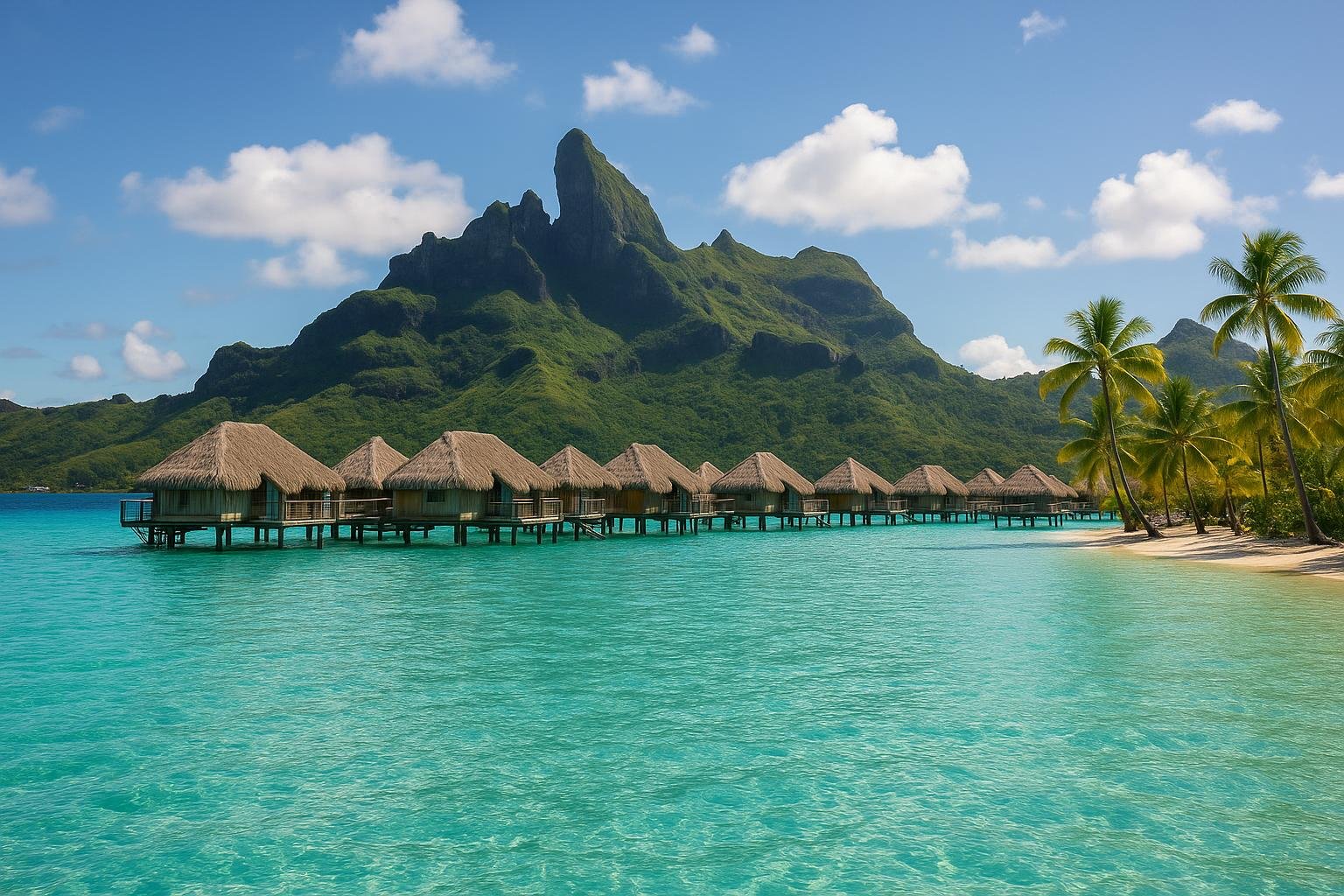
Bora Bora has long been synonymous with postcard-perfect lagoons, overwater bungalows, and a sense of remoteness that feels almost otherworldly. This small South Pacific island in French Polynesia is the kind of destination where the color of the water appears unreal, where volcanic peaks rise dramatically above a turquoise lagoon, and where daily life slows to the languid rhythm of the tropics. Planning a trip here, however, requires more than daydreaming. Choosing the right season, understanding the main sights, selecting accommodations wisely, and knowing how to get around will ensure that your Bora Bora escape feels as seamless and rewarding as it looks in photographs.
Best Time to Visit Bora Bora
Weather Overview
Bora Bora enjoys a tropical climate with warm temperatures year-round, typically ranging between 24°C and 30°C (75°F to 86°F). There are two main seasons: the dry season and the wet season.
The dry season, from May to October, brings lower humidity, cooler evenings, and more stable weather. Skies are often clearer, and rainfall is less frequent, making this an excellent period for outdoor activities such as snorkeling, hiking, and lagoon excursions. Trade winds, known locally as the “maraamu,” can pick up at times, providing a welcome breeze but occasionally making the water choppier for boat trips.
The wet season, from November to April, is warmer and more humid, with short, intense showers that often pass quickly. Tropical downpours are common in the late afternoon or evening, and you may experience periods of overcast skies. On the positive side, the lagoon water is usually warmer, and the lush vegetation is at its most vivid green. While cyclones are rare, this is technically the cyclone season across the South Pacific, so travel insurance is advisable.
Peak and Off-Peak Seasons
The peak season typically aligns with the dry months, especially from June to August and around Christmas and New Year. During this time, Bora Bora sees increased visitor numbers, and resort prices are at their highest. Availability for overwater villas can be limited, so booking several months in advance is often necessary. The upside is more predictable weather, clearer visibility for diving and snorkeling, and a subtly lively atmosphere across the island’s resorts.
The shoulder seasons—April to early May and late October to early November—are often the sweet spot. You benefit from relatively good weather, milder humidity, and noticeably fewer crowds. Room rates can be slightly lower, and you may find better value packages that include meals or activities. This period is well-suited to travelers seeking a balance between comfort, budget, and tranquility.
The off-peak season runs roughly from December through March (excluding the festive weeks), when rainfall and humidity are highest. This is when you are most likely to secure discounted resort rates and special offers on excursions. Honeymooners and couples who do not mind occasional showers often find this season more intimate, as public spaces feel quieter and the lagoon remains stunning, even under moody skies.
Top Attractions in Bora Bora
Matira Beach
Matira Beach is frequently described as one of the most beautiful beaches in the South Pacific, and it lives up to that reputation. Stretching along the southern tip of the island, this public beach offers powder-soft white sand, gently sloping shallows, and water so clear it resembles liquid glass. Unlike many sections of Bora Bora that are dominated by private resort frontages, Matira is accessible to everyone, making it a focal point for independent travelers.
The beach’s orientation makes it particularly spectacular at sunset. As the sun dips behind the horizon, the lagoon shifts through a palette of gold, copper, and deep indigo. During the day, the calm, shallow waters are ideal for swimming and casual snorkeling. Coral outcrops shelter colorful reef fish, and conditions suit both beginners and families with children.
Behind the beach, you will find a modest but appealing strip of beachside cafés, snack bars, and small shops. Here, you can sample local dishes such as poisson cru (raw fish marinated in lime and coconut milk) or simply enjoy a chilled drink in the shade of palm trees. Sun loungers, kayaks, and paddleboards are often available to rent, and the relaxed ambiance encourages unhurried hours of sunbathing and lagoon-gazing.
Mount Otemanu
Mount Otemanu, the jagged volcanic peak that dominates Bora Bora’s skyline, is the island’s most recognizable landmark. Rising 727 meters (2,385 feet) above the lagoon, it is the eroded remnant of an ancient volcano and provides an unforgettable backdrop to nearly every view. For many visitors, experiencing Otemanu up close is the highlight of their trip.
Although the summit itself is not accessible due to unstable rock and dense vegetation, you can still explore the mountain’s lower slopes and viewpoints. 4×4 safari tours are a popular option, taking you along rugged tracks through tropical forest, World War II relics, and traditional villages. Guides often share stories about Polynesian legends, local customs, and the island’s history as a strategic military base.
For a more adventurous perspective, consider a guided hiking excursion to one of the mid-level lookouts. These hikes require moderate fitness but reward you with panoramic views of the turquoise lagoon, the fringing reef, and the ring of motu (small islets) that encircle the island. From certain vantage points, you can see the gradient of blues where the shallow lagoon drops into the deep Pacific.
The most dramatic way to appreciate Mount Otemanu is from the air. Helicopter tours and scenic flights reveal the full volcanic caldera, the intricate coral formations, and the surreal contrast between the emerald peaks and the luminous lagoon. While these flights are a splurge, they underline why Bora Bora is often described as one of the most photogenic islands on earth.
Where to Stay in Bora Bora
Luxury Resorts
Bora Bora’s global reputation as an exclusive retreat is largely anchored in its collection of luxury resorts. Built across both the main island and the surrounding private motu, they offer expansive overwater villas, private plunge pools, and direct lagoon access. These properties are designed for privacy and indulgence, making them especially popular with honeymooners and couples celebrating significant milestones.
Many of the high-end resorts feature overwater bungalows with glass floor panels, allowing guests to watch reef fish swim beneath their rooms. Spas draw on Polynesian traditions, using local ingredients such as coconut oil and monoi in their treatments. Fine-dining restaurants serve both contemporary international cuisine and refined interpretations of Tahitian dishes, often with front-row lagoon views.
Service levels are generally meticulous. Dedicated concierges can arrange everything from private lagoon cruises and snorkeling expeditions to romantic dinners on secluded sandbanks. Resort-based activity centers typically offer complimentary non-motorized water sports, such as kayaking, stand-up paddleboarding, and snorkeling gear, while also organizing paid excursions like shark and ray encounters or scuba diving on the outer reef.
Luxury properties vary in style, from ultra-modern design with sleek lines to more traditional thatched-roof architecture that blends into the natural surroundings. When choosing, consider not only aesthetic preferences but also location: some motu-based resorts feel highly secluded but require boat transfers for access to Matira Beach or local restaurants on the main island.
Budget Accommodations
Despite its reputation as a high-end escape, Bora Bora does offer more modest options for travelers who are willing to trade some luxury for affordability. While there are no true “backpacker hostels,” you will find small guesthouses, family-run pensions, and simple lodges primarily located on the main island rather than the outer motu.
These pensions and guesthouses often provide comfortable, air-conditioned rooms, sometimes with kitchenettes or shared kitchens that allow you to self-cater and manage food costs. Staying at such properties can offer a more local experience; hosts may prepare home-style meals, share practical advice about the island, and help arrange activities with trusted operators.
Some budget-friendly accommodations are situated within walking or cycling distance of Matira Beach, supermarkets, and casual restaurants. While they may not have the elaborate facilities of a resort—no overwater villas, expansive pools, or on-site spas—they still benefit from the island’s natural beauty. Guests can rent bicycles, scooters, or join organized tours to explore the lagoon and interior.
To secure the best value, it is important to book early, particularly during the dry season. Flexible travelers willing to visit in the shoulder or wet seasons will often find significant savings. Comparing packages that bundle accommodation with airport transfers, breakfast, or select excursions can also help manage overall costs.
Getting Around and Local Tips
Transportation Options
Access to Bora Bora is by air, typically via a short domestic flight from Tahiti’s Faa’a International Airport in Papeete. Upon arrival at Bora Bora Airport, located on a small motu, most travelers are transferred to their accommodation by boat. Luxury resorts frequently operate their own private shuttle boats, while guests of smaller properties usually take a shared ferry to the main island’s Vaitape harbor.
Once on the island, getting around is relatively straightforward. The main road encircles Bora Bora, covering about 32 kilometers (20 miles). Rental cars and scooters are widely available and offer flexibility to stop at viewpoints, beaches, and local eateries at your own pace. For those who prefer a slower mode of travel, bicycles are an enjoyable option for exploring shorter stretches around Matira and Vaitape.
Le truck, a form of local bus service, operates along parts of the coastal road, but schedules can be irregular and limited, especially in the evening. Taxis exist but are relatively expensive compared to rentals, and should be reserved in advance through your accommodation whenever possible.
To explore the lagoon and outer motu, you will rely on boat transfers and excursions. Many activities—such as snorkeling tours, island picnics, and shark and ray encounters—include round-trip boat transportation from major hotels and meeting points. Confirm transfer details when booking any tour to avoid confusion.
Travel Tips for First-Time Visitors
Preparing well for a first visit to Bora Bora will enhance both comfort and enjoyment. The island’s remote location means that certain goods are imported and can be costly, so packing strategically helps manage expenses. Bring high-quality reef-safe sunscreen, a wide-brimmed hat, polarized sunglasses, and lightweight, breathable clothing suitable for a tropical climate. A long-sleeved rash guard is particularly useful for snorkeling and paddleboarding, providing sun protection without relying solely on sunscreen.
While Bora Bora is part of French Polynesia and the official currency is the CFP franc (XPF), credit cards are widely accepted at resorts, many restaurants, and tour operators. Nevertheless, carrying a modest amount of cash is advisable for small shops, local snacks, and tips. ATMs are available in Vaitape, but not on all motu, so plan withdrawals in advance.
The primary languages are French and Tahitian, though English is commonly spoken in the tourism sector. Learning a few Tahitian greetings—such as “Ia ora na” (hello) and “Māuruuru” (thank you)—is appreciated and fosters warm interactions with local residents. Respect for Polynesian culture is important; dress modestly when away from the beach, particularly in villages and at religious sites.
Given the strength of the sun even on overcast days, hydration is essential. Drink plenty of water, especially if you are consuming alcohol or spending long hours on the lagoon. When snorkeling, avoid standing on coral or touching marine life; the lagoon’s ecosystem is fragile, and responsible behavior preserves it for future visitors. Many tour operators emphasize sustainability, so choosing those with environmentally conscious practices is recommended.
Finally, allow time in your itinerary simply to be still. Bora Bora rewards those who slow down—watching the light change over Mount Otemanu, listening to the surf break on the outer reef, or observing reef fish under your bungalow deck can be as memorable as any organized excursion.
Conclusion
Bora Bora is far more than a luxury travel cliché; it is a volcanic island encircled by a luminous lagoon, where Polynesian culture and natural beauty converge in an extraordinary way. By choosing the right season, you can align your trip with your priorities—whether that is guaranteed sunshine, quieter beaches, or better-value accommodation. Experiencing iconic sites such as Matira Beach and Mount Otemanu provides a deeper appreciation of the island’s geography and allure, while thoughtful decisions about where to stay and how to get around help you manage costs without sacrificing experience.
With realistic expectations and careful planning, Bora Bora can be both an indulgent escape and a meaningful journey. Approach it not only as a place for overwater relaxation, but as a living island with stories, traditions, and landscapes worth exploring. In doing so, you will leave with more than photographs—you will carry the memory of a lagoon and a mountain that are truly unlike anywhere else on earth.
Discover More from Didier Lancelot
Amazon Author page: amazon.com/author/didierlancelot
Narmer Store: narmerstore.org
AI and Technology Ebooks
- Creative AI: Animated Drawings, Manga & Illustrations
- Build a Game with AI: The No-Code Guide
- AI Image Generation Made Easy
- Build a Website with AI: The No-Code Guide
- How to Connect AI to Your Blog: The Ultimate Automation Guide
- AI Productivity Habits: Get More Done in Less Time
- AI Avatars Made Easy
- The Book of AI Prompts: 100+ Proven Prompts
- Make Music with AI: Suno, Udio and AI Music Generators
- Click to Cash
- The Automated Edge: Outwork, Outpace, and Outperform with AI
- AI Side Hustle: How to Make Money with ChatGPT and AI Tools
- Work Smarter with AI
Health, Lifestyle and Home Ebooks
- Hidden Superfoods: The World’s Most Powerful Healing Foods
- Spanish Food: The Complete Cookbook for Authentic Home Cooking
- The Science of Happiness Explained
- The Psychology of Success
- The Secret Sauce of Consistency: What the Experts Don’t Tell You About Fitness
- The Complete Home Bartender’s Guide: Link 1 | Link 2
- Natural Beauty, Made Simple: Easy DIY Organic Skincare Recipes
- Garden Made Simple: Easy, Beginner-Friendly Techniques
- The Dog Training Bible