
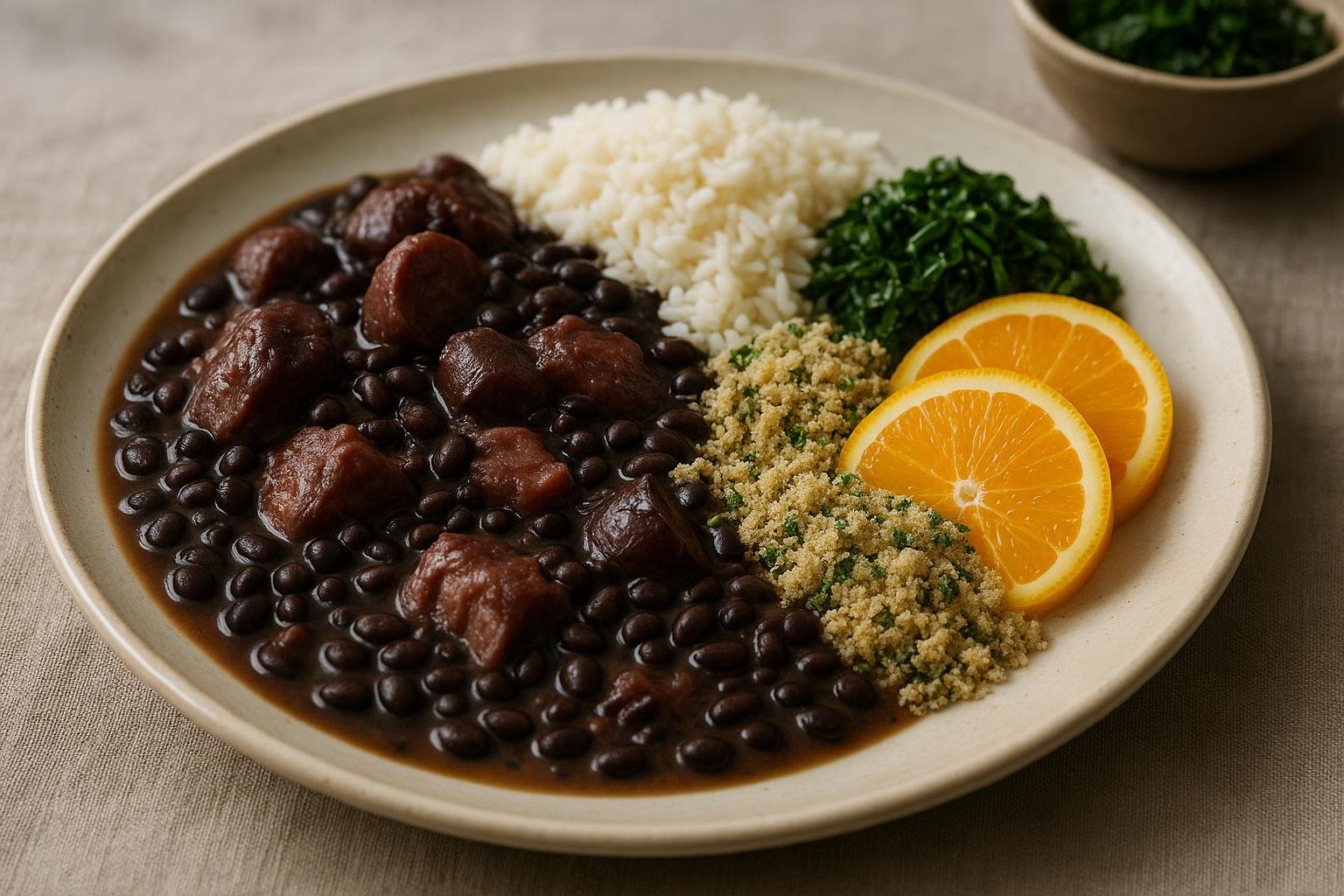
Feijoada is much more than a hearty stew. It is a dish that tells the story of Brazil on a plate, combining African, Portuguese, and Indigenous influences into a single, slow-simmered celebration. Rich, smoky, and deeply comforting, traditional feijoada remains a centerpiece of Brazilian cuisine and a ritual of conviviality, shared at large tables and long lunches. Understanding its history, ingredients, and preparation techniques is essential for anyone who wants to cook an authentic version at home.
What is Feijoada?
Origin and History of Feijoada
The history of feijoada is intertwined with Brazil’s colonial past. While similar bean-and-pork stews existed in Portugal, especially in the northern regions, feijoada as we know it today emerged in Brazil during the 18th and 19th centuries. Enslaved Africans and poor laborers played a crucial role in shaping the dish, transforming inexpensive cuts of pork, local beans, and native seasonings into sustaining meals.
Contrary to popular myth, feijoada was not simply a stew of discarded scraps. Historical research shows that various social classes enjoyed beans and pork cooked together, though the quality and variety of meat differed. Over time, black beans became emblematic in most of Brazil, while regional adaptations incorporated different bean varieties and local ingredients. What began as a practical, resourceful way to feed large groups evolved into a national culinary emblem.
By the 20th century, feijoada had moved from rural kitchens and plantation quarters into restaurants, urban homes, and eventually the global stage. It rose to prominence as a Saturday lunchtime tradition, frequently accompanied by live music and extended family gatherings. Today, it stands as one of Brazil’s most iconic dishes, encapsulating both the complexity and resilience of its cultural heritage.
Traditional Ingredients in Feijoada
Authentic feijoada centers on black beans and a selection of pork cuts, chosen to create depth of flavor, varying textures, and a distinctive smokiness. While recipes differ by region and household, several core feijoada ingredients appear again and again.
- Black beans (feijão preto): The heart of Brazilian feijoada. They provide a velvety broth and a mild, earthy flavor that carries the aromatics and meats.
- Pork cuts: Typically a mix of fresh and cured meats. Common choices include pork shoulder, ribs, smoked sausage (linguiça), paio (a cured sausage), bacon, and sometimes more rustic cuts like pig’s feet or ears in very traditional versions.
- Beef elements: Certain recipes incorporate dried beef (carne seca) or smoked beef cuts to provide additional complexity and a pleasantly chewy texture.
- Aromatics: Onion, garlic, and bay leaves form the aromatic base. They infuse the beans and broth with fragrance and savory sweetness.
- Fat and seasonings: Pork fat or neutral oil for sautéing, along with salt, black pepper, and sometimes cumin or smoked paprika. Careful seasoning is crucial, particularly when using salted or cured meats.
The essence of traditional feijoada lies in combining these elements slowly, allowing the beans to absorb the flavors of the meats and aromatics. The result is a dense, glossy stew that should be rich but not greasy, full-flavored yet balanced.
How to Make Authentic Feijoada
Step-by-step Feijoada Recipe
Preparing an authentic feijoada recipe requires time and patience, but the procedure itself is straightforward. The following method is designed for a home kitchen while preserving the character of the classic dish.
Ingredients (serves 8–10)
- 1 kg (about 2.2 lb) dried black beans
- 300 g smoked sausage (linguiça), sliced into rounds
- 300 g paio or another cured sausage, sliced
- 400 g pork shoulder, cut into large chunks
- 400 g pork ribs, separated into individual ribs
- 150 g bacon, cut into strips
- 200 g dried beef (carne seca), soaked and cubed (optional but traditional)
- 2 large onions, finely chopped
- 6–8 cloves garlic, minced
- 3–4 bay leaves
- 2–3 tbsp neutral oil or rendered pork fat
- Salt and freshly ground black pepper, to taste
- Water, as needed for soaking and cooking
1. Prepare and soak the meats
If using very salty cured meats such as carne seca or heavily salted ribs, soak them in cold water for 12–24 hours, changing the water several times. This step prevents the finished stew from becoming excessively salty and allows you to control the final seasoning.
2. Soak the black beans
Rinse the dried beans under cold water, discarding any debris or damaged beans. Soak them in plenty of water for at least 8 hours or overnight. This reduces cooking time and helps the beans cook evenly. Drain and set aside before cooking.
3. Brown the meats
In a large, heavy-bottomed pot, heat the oil or pork fat over medium heat. Add the bacon and cook until it renders its fat and begins to crisp. Remove and reserve. In the same pot, brown the pork shoulder and ribs on all sides, working in batches if necessary. Browning builds flavor and contributes to the deep, caramelized notes that distinguish an excellent feijoada.
4. Sauté aromatics
Once the meats are browned, push them to the sides of the pot or temporarily remove them. Add the onions and cook over medium heat until translucent and lightly golden. Stir in the garlic and cook for another minute, taking care not to burn it. Return any reserved meat and bacon to the pot, along with the sausages.
5. Add beans and liquid
Combine the soaked and drained black beans with the meat mixture. Add bay leaves and enough water to cover everything by a few centimeters. Bring to a gentle boil, then reduce the heat to low and simmer. Skim off any foam or excess fat that rises to the surface in the early stages of cooking.
6. Slow simmer
Allow the feijoada to simmer gently for 2 to 3 hours, partially covered. Stir occasionally to prevent sticking and add hot water as needed to maintain a stew-like consistency. The beans should become soft and creamy, and the meats tender enough to fall from the bone. Toward the end of cooking, adjust salt and pepper carefully, remembering that cured meats contribute saltiness.
7. Final reduction and rest
Once the beans are tender and the meats are cooked through, you may wish to reduce the stew slightly by uncovering the pot and simmering until the broth thickens to your desired consistency. Remove bay leaves and any bones that have separated from the meat. Let the feijoada rest for at least 15–20 minutes before serving; this allows the flavors to meld and the texture to settle.
Best Cooking Tips for Feijoada
Producing an outstanding feijoada depends on technique and attention to detail as much as on ingredients. The following Brazilian feijoada tips will help you achieve a rich, balanced stew.
- Control the salt: Soak cured meats thoroughly and taste the broth before adding salt. It is far easier to add salt at the end than to rescue an over-salted stew.
- Respect the cooking time: Feijoada cannot be rushed. Low, slow cooking allows collagen in the meats to break down and beans to soften without bursting into mush.
- Manage the fat: Some richness is essential, but excess fat can weigh the dish down. Skim surface fat periodically and avoid adding unnecessary oil once the bacon has rendered.
- Balance texture: For a luxurious mouthfeel, lightly mash a small portion of the beans against the side of the pot in the final stage of cooking. This thickens the broth without requiring additional thickeners.
- Use quality sausages: Inferior sausages can release excessive fat or artificial flavors. Invest in good smoked or cured sausages to elevate the entire dish.
- Prepare in advance: Feijoada often tastes better the next day. If time allows, cook it one day ahead, chill, remove any solidified fat, and reheat gently before serving.
Serving Suggestions and Accompaniments
Common Side Dishes with Feijoada
Feijoada is traditionally presented as part of a generous spread. Each element has a role, providing contrast, freshness, or textural variation. Thoughtful side dishes transform the stew from a simple meal into a memorable feast.
- White rice: Plain, fluffy rice is indispensable. It absorbs the savory broth and helps balance the richness of the beans and meat.
- Farofa: Toasted cassava flour, often sautéed with butter, onions, garlic, and occasionally bacon or eggs. Its dry, crumbly texture contrasts beautifully with the moist stew.
- Sautéed collard greens: Thinly sliced collards, briefly sautéed with garlic and oil, bring color, slight bitterness, and freshness. They lighten the overall experience.
- Orange slices: Fresh oranges, cut into wedges or rounds, are a classic pairing. Their acidity and sweetness cleanse the palate and aid digestion.
- Vinaigrette salsa: A simple mix of diced tomatoes, onions, bell peppers, vinegar, oil, and herbs. This bright, tangy accompaniment cuts through the richness of the stew.
- Hot pepper sauces: Diners often add heat with malagueta pepper sauce or other spicy condiments, tailoring the intensity to personal taste.
Thoughtful feijoada side dishes not only complement the flavor profile but also respect the traditional ways in which the dish is enjoyed throughout Brazil.
Beverage Pairings for Feijoada
Feijoada demands beverages that stand up to its intensity while refreshing the palate. Both alcoholic and non-alcoholic options work well, as long as they offer acidity, effervescence, or bitterness to counterbalance the stew.
- Caipirinha: Brazil’s emblematic cocktail, made with cachaça, lime, sugar, and ice. Its sharp citrus and sugarcane notes harmonize with the smoky, salty flavors of the stew.
- Beer: Crisp, cold lagers or pilsners are traditional companions. Their carbonation and light body provide welcome relief between bites.
- Red wine: Medium-bodied reds with good acidity, such as Tempranillo, Malbec with moderate oak, or certain Portuguese reds, pair well if served slightly cool.
- Fresh juices: Passion fruit, orange, or lime juice—lightly sweetened—offer vibrancy without the weight of alcohol.
- Sparkling water: For a non-alcoholic, neutral option, sparkling water with a slice of citrus cleanses the palate without competing with the dish.
Ultimately, the best beverage pairing for feijoada is one that suits the occasion and the guests. The goal is balance: something lively and refreshing to complement the depth of the stew.
Cultural Significance of Feijoada
Feijoada in Brazilian Cuisine
Within Brazilian cuisine, feijoada occupies a symbolic position comparable to that of national dishes in other countries. It represents abundance, hospitality, and the blending of cultures that define the Brazilian identity. A feijoada lunch is rarely a quick meal; it is an event, often stretching over several hours and centered on conversation, music, and shared enjoyment.
Restaurants across Brazil dedicate specific days—most famously Wednesdays and Saturdays—to serving feijoada, often as part of a buffet-style spread. In homes, it is frequently prepared for birthdays, holidays, and reunions, where large pots simmer throughout the day and guests serve themselves repeatedly. The dish’s communal nature reinforces social ties and underscores its role beyond mere sustenance.
Furthermore, feijoada’s story reflects the country’s complex history of colonization, slavery, and cultural fusion. It is a dish born from necessity and ingenuity, elevated over generations to a proud emblem of national identity. To cook feijoada is to participate in a culinary tradition that honors resilience, creativity, and community.
Variations of Feijoada Across Regions
While many associate feijoada primarily with black beans and pork, there are numerous regional and cultural variations across Brazil and in Portuguese-speaking countries. These feijoada variations illustrate how a foundational concept—beans stewed with meats—adapts to local ingredients and preferences.
- Feijoada completa: The classic Rio de Janeiro–style version, rich in assorted pork cuts, sausages, and sometimes dried beef, served with the full array of side dishes.
- Feijoada light: A more contemporary adaptation that reduces fatty cuts and uses leaner meats such as pork loin or even chicken. While not strictly traditional, it appeals to diners seeking a lighter option.
- Feijoada branca: Made with white beans instead of black, often featuring different seasonings and meats. This style is more closely connected to certain Portuguese traditions.
- Regional bean choices: In some parts of Brazil, other beans such as pinto or carioca beans appear in adaptations, especially in home cooking where availability dictates the choice.
- Vegetarian and vegan versions: Modern cooks have created plant-based feijoadas using smoked tofu, mushrooms, or textured vegetable protein combined with black beans and robust seasonings. While not historically traditional, they aim to capture the spirit and flavor profile for those who avoid meat.
These diverse interpretations do not diminish the status of traditional feijoada; rather, they highlight its versatility and enduring appeal. Each version maintains the core idea of a slow-cooked, hearty bean stew, tailored to the resources and tastes of the community that prepares it.
Feijoada endures because it is both familiar and profound. It is a simple combination of beans, meats, and aromatics, yet capable of extraordinary complexity when treated with care. Preparing an authentic feijoada at home offers more than a satisfying meal; it provides a window into Brazilian history, culture, and hospitality. By understanding its origins, selecting quality ingredients, applying patient cooking techniques, and serving it with thoughtful accompaniments, you can bring a genuine expression of Brazil’s culinary soul to your table.
Discover More from Didier Lancelot
Amazon Author page: amazon.com/author/didierlancelot
Narmer Store: narmerstore.org
AI and Technology Ebooks
- Creative AI: Animated Drawings, Manga & Illustrations
- Build a Game with AI: The No-Code Guide
- AI Image Generation Made Easy
- Build a Website with AI: The No-Code Guide
- How to Connect AI to Your Blog: The Ultimate Automation Guide
- AI Productivity Habits: Get More Done in Less Time
- AI Avatars Made Easy
- The Book of AI Prompts: 100+ Proven Prompts
- Make Music with AI: Suno, Udio and AI Music Generators
- Click to Cash
- The Automated Edge: Outwork, Outpace, and Outperform with AI
- AI Side Hustle: How to Make Money with ChatGPT and AI Tools
- Work Smarter with AI
Health, Lifestyle and Home Ebooks
- Hidden Superfoods: The World’s Most Powerful Healing Foods
- Spanish Food: The Complete Cookbook for Authentic Home Cooking
- The Science of Happiness Explained
- The Psychology of Success
- The Secret Sauce of Consistency: What the Experts Don’t Tell You About Fitness
- The Complete Home Bartender’s Guide: Link 1 | Link 2
- Natural Beauty, Made Simple: Easy DIY Organic Skincare Recipes
- Garden Made Simple: Easy, Beginner-Friendly Techniques
- The Dog Training Bible