
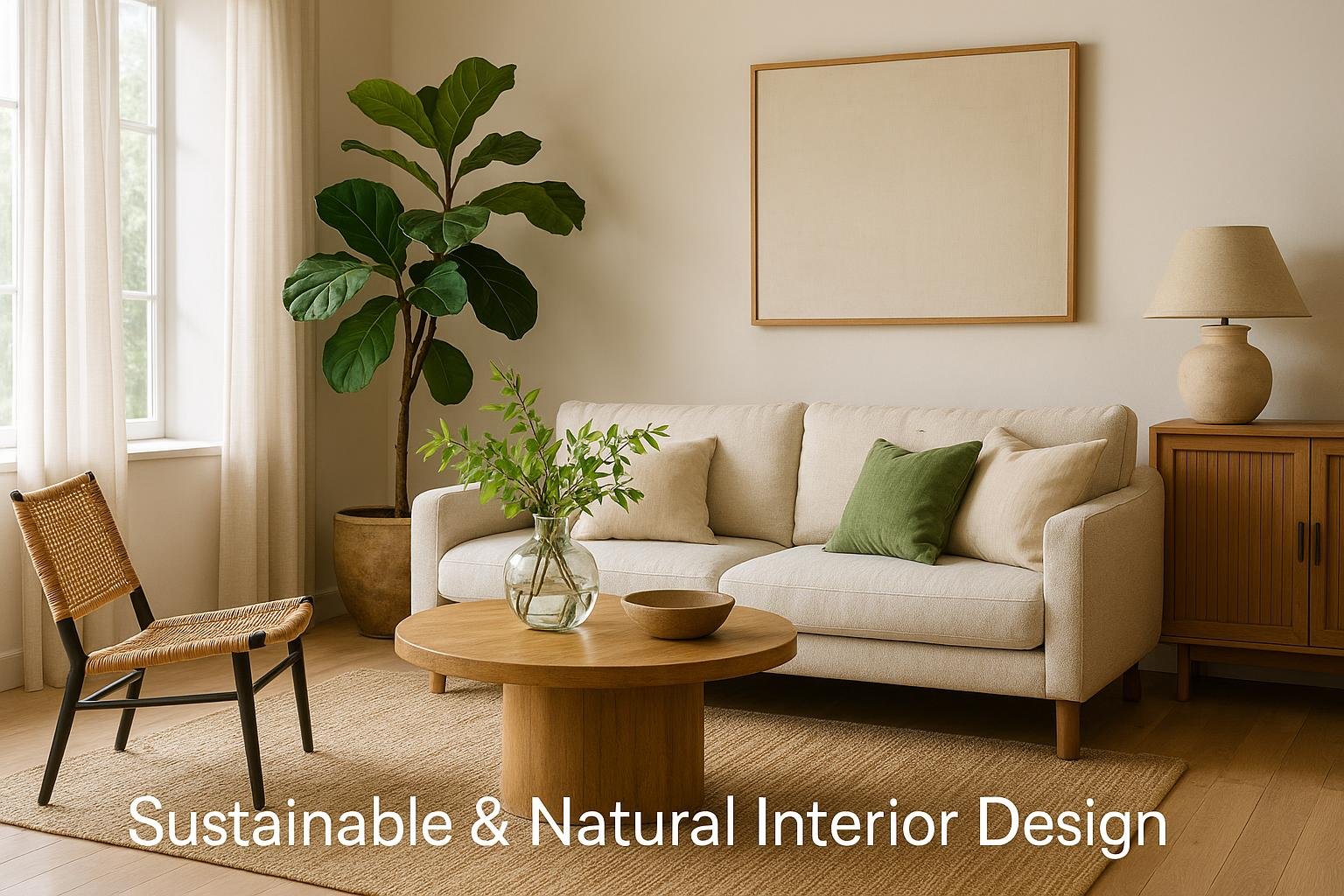
What Sustainable & Natural Interior Design Really Means in 2026
“Sustainable” interiors used to mean a few plants and some wicker baskets. In 2026, the conversation is far more practical and evidence-based. It’s less about a “green” look and more about reducing your home’s impact across the full life of its materials—while creating a healthier, more comfortable place to live.
This guide breaks down what sustainable and natural interior design really involves today, the materials worth considering, and the most impactful upgrades you can make on a realistic budget.
The Shift: From Green Aesthetic to Life-Cycle Thinking
Modern sustainable interior design is guided by one key question: What is the true impact of this choice over its entire life? That means looking beyond labels like “eco” or “natural” and asking where something came from, how long it will last, and what happens when you’re done with it.
Instead of chasing trends, the focus is on:
- Reusing what already exists before buying new
- Durability and repairability over quick fixes
- Responsible sourcing and traceable supply chains
- Low-emission finishes to protect indoor air quality
- Energy-efficient design to reduce day-to-day impact
- Biophilic, human-centered spaces that support wellbeing
In practice, that can mean anything from choosing a timeless, solid-wood dining table you’ll own for decades to rethinking how daylight enters your home.
Start Here: Reuse Before You Buy
The most sustainable interior is the one that uses what’s already been produced. Every new item carries an environmental cost—raw materials, manufacturing, transport, packaging, and, eventually, disposal.
Audit What You Already Have
Before planning a renovation or a major decor update, take inventory:
- What can be repaired? Reupholster a quality sofa, refinish a scratched wood table, replace chair cushions instead of the entire frame.
- What can be repurposed? Turn an old dresser into a bathroom vanity, use a sideboard as a media console, convert a door into a desk surface.
- What can be relocated? Swap rugs, lighting, or side tables between rooms before buying new pieces.
Lean Into Vintage, Second-Hand, and Reclaimed
When you do need “new to you” items, buying second-hand or vintage can significantly reduce impact:
- Vintage furniture is often solid wood with joinery designed for decades of use.
- Refurbished pieces (e.g., professionally reconditioned office chairs or task lights) give commercial-grade items a second life.
- Reclaimed materials—such as timber flooring, bricks, or doors—help divert waste from landfills and give character to interiors.
Design-wise, mixing vintage with contemporary sustainable design creates a layered, timeless interior that doesn’t feel like a themed “eco” set.
Think in Life Cycles, Not Labels
Not every “natural” material is automatically sustainable. Conversely, some engineered products can be responsible choices when they offer durability, low emissions, and recyclability.
The Life-Cycle Checklist
When evaluating materials or furniture, consider:
- Origin: Is the raw material rapidly renewable, responsibly harvested, or recycled?
- Production: Does manufacturing require heavy chemicals, high energy, or long-distance transport?
- Durability: How many years of real-world use will you get before replacement?
- Maintenance: Can you clean and maintain it with low-toxicity products?
- End of life: Can it be repaired, reused, disassembled, or recycled—or will it likely end up in landfill?
A responsibly sourced hardwood floor that lasts 40 years and can be refinished may be more sustainable than a “green” alternative that needs replacing every 10 years.
Durable, Adaptable Interiors: Designing to Avoid Future Waste
Sustainability is as much about what you won’t have to change later as what you install today. Focus on flexibility, longevity, and classic forms.
Invest in Fewer, Better Pieces
Where budget allows, prioritize:
- Well-constructed furniture with solid joinery, replaceable components, and quality hardware
- Timeless shapes and neutral bases you can refresh with textiles rather than constant big-ticket replacements
- Modular storage that can be reconfigured as your needs change
Plan Flexible Layouts
Adaptable design means fewer major renovations later. Consider:
- Multi-functional rooms (e.g., a guest room with a sofa bed and integrated desk)
- Non-structural partitions like screens or freestanding shelving instead of fixed walls
- Movable lighting (track systems, plug-in sconces) that can shift with layouts
Protecting Indoor Air Quality: Low-Emission Finishes
Healthy, natural-inspired interiors are as much about what you don’t breathe as what you can see. Many conventional paints, sealants, adhesives, and composite woods emit VOCs (volatile organic compounds) that degrade indoor air quality, especially in well-insulated homes.
Key Moves for Healthier Air
- Low- and zero-VOC paints: Choose certified low-emission brands and avoid products with strong chemical odors.
- Low-emission wood products: Look for formaldehyde-free plywood, MDF, and other composites, or opt for solid wood where practical.
- Greener adhesives and sealants: Specify low-VOC options for flooring, tiles, and joinery.
- Ventilation planning: During renovations, ensure good cross-ventilation; consider mechanical ventilation with heat recovery in airtight homes.
When possible, finish or off-gas new pieces (especially large case goods, rugs, and mattresses) outside living spaces before regular use.
Reducing Everyday Energy Use Through Design
Operational energy—heating, cooling, and lighting—often outweighs the embodied impact of materials over a home’s life. Small, design-led changes can cut your energy use significantly.
Light, Shade, and Ventilation
- Maximize daylight: Keep window sills clear, use light-reflective surfaces, and choose sheer or adjustable window treatments to bring light deeper into the room.
- Control heat gain and loss: Layer window coverings (sheers + heavier curtains or blinds) to insulate at night and reduce glare in summer.
- Encourage natural ventilation: Align openings to promote cross-breezes where climate permits; use ceiling fans or energy-efficient fans to reduce reliance on air conditioning.
Efficient Lighting and Appliances
- Switch to LEDs: Replace halogen and older bulbs with high-quality, warm-tone LEDs.
- Use task lighting: Focus lighting where you actually need it rather than over-illuminating entire rooms.
- Choose efficient appliances: For kitchens and laundries, look for robust efficiency ratings and consider lifetime energy use, not just purchase price.
Designing for Wellbeing and Connection to Nature
Sustainable interiors should feel good to live in. Biophilic design—a design approach that supports our innate connection to nature—has moved from niche to mainstream, with strong research linking it to improved mood, focus, and comfort.
Key Elements of a Wellbeing-Focused Space
- Natural light: Prioritize unobstructed daylight for living and working zones; consider light shelves, mirrors, and pale finishes to distribute light.
- Views and cues to nature: Frame views of greenery where possible, or use artwork and photography that reference natural landscapes.
- Plants: Incorporate low-maintenance indoor plants to soften hard lines, improve perceived air quality, and introduce seasonal change.
- Acoustics: Use textiles, rugs, upholstery, and acoustic panels (including plant-fiber options) to reduce echo and create calmer soundscapes.
- Comfort and adaptability: Adjustable lighting, movable shades, and flexible furniture arrangements let occupants tune comfort throughout the day.
Materials to Consider (And How to Evaluate Them)
Many sustainable and natural interiors today favor tactile, honest materials. But context matters: how something is sourced, processed, and maintained can matter more than the name of the material itself.
Popular Natural and Low-Impact Materials
- Responsibly sourced or reclaimed wood: Use for flooring, furniture, and joinery. Look for certifications (like FSC) and consider reclaimed timber for visual character and lower embodied impact.
- Cork: Renewable, resilient, and acoustically soft—suitable for flooring, wall tiles, and pinboards.
- Bamboo: Fast-growing and strong, but sustainability depends on farming and processing; favor reputable suppliers with clear certifications.
- Linen, wool, organic cotton: Great for upholstery, curtains, and bedding. Check for responsible farming and processing; untreated or minimally treated options usually mean fewer chemicals.
- Clay and lime plasters: Breathable, tactile wall finishes that regulate humidity and create subtle texture.
- Recycled glass and metals: Ideal for tiles, worktops, and fixtures with a clear recycled content story.
Emerging Circular and Regenerative Materials
Design conversations in 2026 are increasingly focused on materials that go beyond “less bad” to potentially regenerative or circular:
- Mycelium-based products: Fungal-based foams and panels for packaging, insulation, or furniture components.
- Algae-based materials: Experimental finishes, bioplastics, and foams derived from algae.
- Plant-fiber acoustic panels: Sound-absorbing panels made from agricultural by-products or fast-growing fibers.
- Digitally traceable timber: Timber with verifiable, trackable sourcing data, improving transparency and forest management.
These innovations are promising but still emerging. Before specifying them heavily in a project, evaluate:
- Real-world performance: Durability, fire safety, moisture behavior, and maintenance requirements.
- Certifications and testing: Look for recognized standards and third-party verification.
- Availability and logistics: Local availability and realistic lead times reduce the need for long transport chains.
- End-of-life options: Can they be composted, disassembled, or recycled in existing systems?
Aesthetic Trends: Warm, Tactile, and “Organic Minimalism”
The prevailing look in sustainable interiors is less sleek-and-sterile, more warm and grounded. It’s sometimes described as “organic minimalism”: calm, edited spaces that are rich in texture and comfort rather than clutter or constant novelty.
Key Visual Themes
- Visible grain and patina: Finishes that celebrate aging and use, like oiled wood, unlacquered brass, and linen that softens over time.
- Earthy palettes: Warm neutrals, clay tones, forest greens, soft blues, and muted stone shades dominate over stark whites.
- Woven fibers: Jute, sisal, seagrass, rattan, and cane add a tactile, natural feel to rugs, seating, and storage.
- Soft geometry: Rounded edges, organic forms, and relaxed silhouettes over sharp, ultra-minimal lines.
The goal is comfort and longevity, not keeping up
Discover More from Didier Lancelot
Amazon Author page: amazon.com/author/didierlancelot
Narmer Store: narmerstore.org
AI and Technology Ebooks
- Creative AI: Animated Drawings, Manga & Illustrations
- Build a Game with AI: The No-Code Guide
- AI Image Generation Made Easy
- Build a Website with AI: The No-Code Guide
- How to Connect AI to Your Blog: The Ultimate Automation Guide
- AI Productivity Habits: Get More Done in Less Time
- AI Avatars Made Easy
- The Book of AI Prompts: 100+ Proven Prompts
- Make Music with AI: Suno, Udio and AI Music Generators
- Click to Cash
- The Automated Edge: Outwork, Outpace, and Outperform with AI
- AI Side Hustle: How to Make Money with ChatGPT and AI Tools
- Work Smarter with AI
Health, Lifestyle and Home Ebooks
- Hidden Superfoods: The World’s Most Powerful Healing Foods
- Spanish Food: The Complete Cookbook for Authentic Home Cooking
- The Science of Happiness Explained
- The Psychology of Success
- The Secret Sauce of Consistency: What the Experts Don’t Tell You About Fitness
- The Complete Home Bartender’s Guide: Link 1 | Link 2
- Natural Beauty, Made Simple: Easy DIY Organic Skincare Recipes
- Garden Made Simple: Easy, Beginner-Friendly Techniques
- The Dog Training Bible