
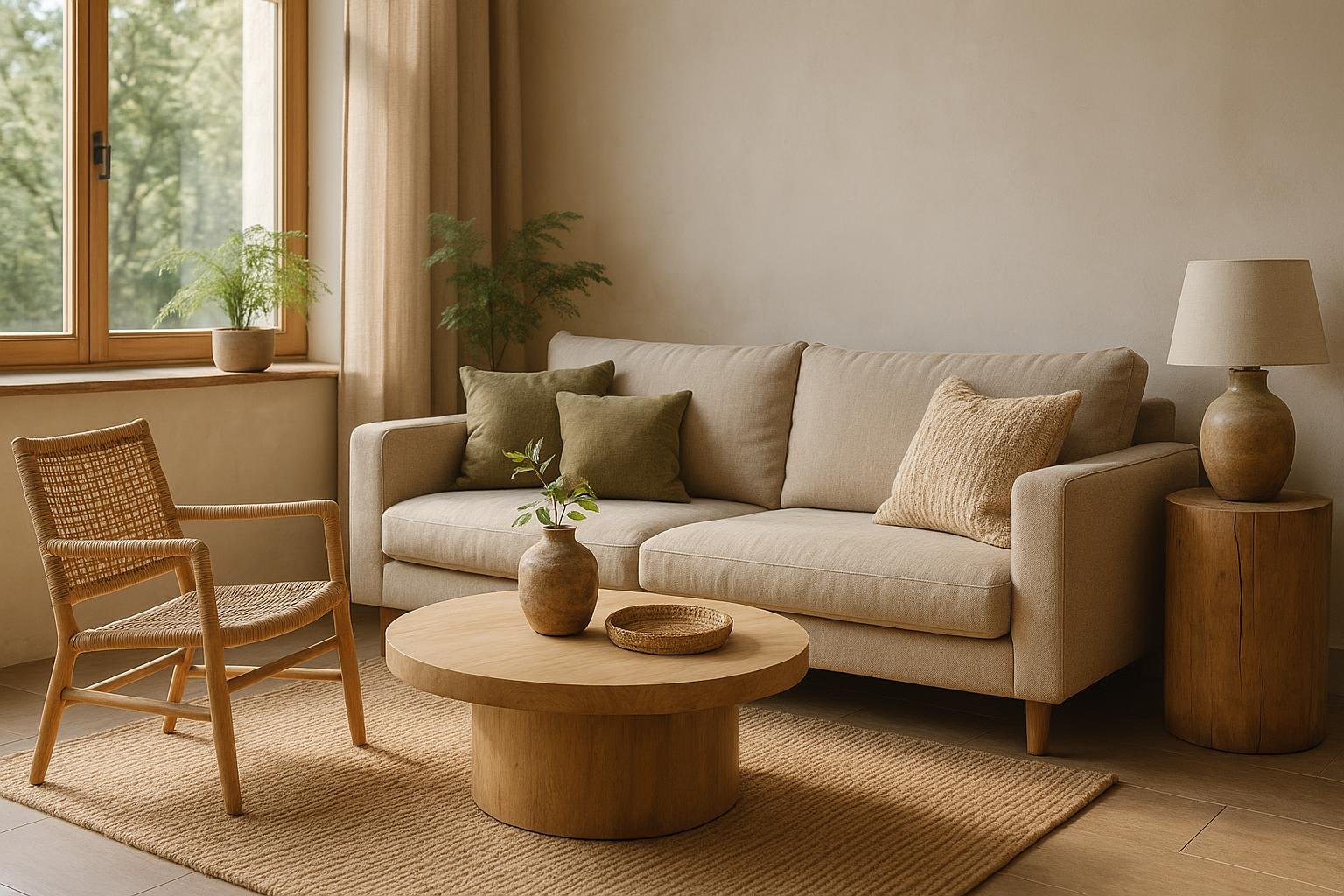
What Is Sustainable Interior Design, Really?
Sustainable interior design isn’t a specific “look” or a Pinterest aesthetic. It’s a way of making design decisions that considers how a space performs over time: how much it consumes, how healthy it feels, and how easily it can adapt.
Instead of focusing on a single “eco” material or trend, sustainable interiors look at the whole life cycle of what you bring into your home. That means:
- Reducing the need for new products in the first place
- Choosing materials that balance durability, health, and environmental impact
- Designing spaces that use less energy and support wellbeing
- Thinking about where things come from, how they’re made, and where they’ll end up
In practice, the most sustainable design decision is often the least glamorous: keep and improve what you already have, then buy fewer, better, longer-lasting pieces only when you truly need them.
Start Where You Are: Reuse Before Replacing
If you’re planning a renovation or refresh, the greenest material is almost always the one that’s already in your home.
Before you order anything new, walk through your space and ask:
- What can stay exactly as it is? Solid wood floors, quality cabinetry, and well-made furniture often just need cleaning or minor repairs.
- What can be improved instead of replaced? Can cabinets be repainted or re-fronted? Can a worn table be sanded and refinished? Could a dated chair look current with reupholstery?
- What can be repurposed? Old doors become headboards, dressers become bathroom vanities, and leftover tiles can be used as coasters or small backsplashes.
Every item you keep avoids the environmental impact of manufacturing, shipping, and eventually disposing of something new. It also helps you retain the character and “soul” of your home—something that brand-new, trend-driven decor rarely offers.
Choosing Materials With a Longer View
When you do need to buy or renovate, sustainable interior design is less about labels and more about asking the right questions. “Natural” or “eco” on a tag doesn’t automatically mean a product has a low overall impact.
Look Beyond the Surface
When comparing options for floors, furniture, finishes, or textiles, consider:
- Origin: Where and how was it made? Locally produced items reduce transportation emissions and can support your local economy.
- Resource use: Is it made from reclaimed, recycled, or rapidly renewable materials (like bamboo, cork, or certain agricultural byproducts)? Is timber certified from responsibly managed forests?
- Durability: Will it last, or is it likely to be replaced in a few years? A long-lasting product can be more sustainable than a “green” product that wears out quickly.
- Maintenance: Does it require harsh chemicals to clean or maintain? Low-maintenance finishes reduce both effort and environmental load over time.
- End of life: Can it be repaired, refinished, disassembled, reused, or recycled? Or is it destined for landfill?
Examples of Thoughtful Choices
- Floors: Refinish existing hardwood instead of replacing it. If new flooring is essential, consider reclaimed wood, cork, or linoleum (not vinyl) with a proven track record for durability.
- Furniture: Solid wood pieces that can be repaired and refinished often outperform flat-pack furniture that’s difficult to fix. Look for reupholstery-friendly frames.
- Textiles: Wool, linen, organic cotton, and recycled fibers can be good options, but check for durability and ease of cleaning. A robust fabric you’ll use for 10 years is better than a delicate “eco” fabric you replace in two.
- Surfaces: Consider recycled-content countertops, tiles with recycled glass, or locally quarried stone where appropriate.
The goal isn’t perfection; it’s making better trade-offs with a longer time horizon in mind.
Designing for Healthier Indoor Air and Comfort
Your interior environment has a significant impact on daily wellbeing. Sustainable design pays attention not just to how things look, but how they make you feel and function in the space.
Low-Emission Materials and Finishes
Many conventional paints, adhesives, and finishes release volatile organic compounds (VOCs) into the air over time. These can contribute to poor indoor air quality, especially in well-insulated homes.
To create a healthier interior:
- Choose low- or zero-VOC paints, sealants, and adhesives where available.
- Look for third-party certifications that test emissions rather than relying on vague marketing claims.
- Be cautious with heavily fragranced products, including some cleaners and candles, which can add to indoor air pollution.
- Prioritize solid wood, metal, or glass over composite materials when possible, as some cheaper composites can off-gas for longer.
Light, Air, and Connection to Nature
Sustainable interior design also considers passive comfort—how your home feels before you touch a thermostat or light switch.
- Maximize natural light: Use light-colored walls, mirrors, and thoughtful window treatments to bounce daylight deeper into rooms.
- Improve ventilation: Cross-ventilation, operable windows, and well-placed fans can reduce reliance on mechanical cooling.
- Bring nature in: Views to outdoor greenery, indoor plants (where they’re easy to maintain), and natural textures can support mental wellbeing.
- Thermal comfort: Window coverings, rugs, and strategic insulation upgrades help maintain comfortable temperatures without excessive energy use.
Reducing Energy Use Through Smart Design
Energy efficiency isn’t only about appliances; it’s about how the whole room is planned and used. Thoughtful design can significantly reduce the energy needed to light, heat, and cool a space.
Daylighting and Lighting Design
- Use daylight first: Arrange seating and work zones near windows to reduce dependence on artificial lighting during the day.
- Layer your lighting: Combine ambient, task, and accent lighting so you only use what you need.
- Choose efficient sources: Opt for LED fixtures and bulbs; they use far less energy and last much longer than incandescent or halogen options.
- Control it: Dimmer switches, motion sensors in low-use areas, and smart controls can fine-tune energy use.
Insulation, Shading, and Appliances
- Window treatments: Insulated curtains or blinds can significantly improve thermal performance, keeping heat in during winter and out during summer.
- Strategic insulation: Where renovations allow, adding insulation to key walls, floors, or ceilings can make rooms more comfortable with less heating or cooling.
- Efficient appliances: When it’s time to replace, choose models that balance energy efficiency with durability and repairability. A robust, serviceable appliance is often the more sustainable choice.
The result is a home that feels more comfortable and costs less to run, while quietly lowering its environmental footprint.
Designing for Longevity and Change
A truly sustainable interior should evolve with your life, not require a full overhaul every time circumstances change. Designing for flexibility is one of the most powerful ways to reduce waste over the long term.
Buy Once, Use for Years
- Choose timeless over trendy: Reserve bold, trend-led choices for items that are easy to swap (like cushions or art), and keep big, expensive pieces more classic.
- Prioritize repairable construction: Look for furniture assembled with screws and bolts rather than glued-only joints, which are harder to fix.
- Opt for modular pieces: Sectional sofas, expandable tables, and modular storage can be reconfigured as your needs change.
Plan for Adaptation and End of Life
When you make design decisions, think about both the next few years and the distant future:
- Flexible layouts: Can a guest room double as a study? Can a playroom evolve into a teen lounge without new built-ins?
- Disassembly in mind: Select products that can be taken apart to repair, move, or eventually recycle, rather than complex composites that must be discarded whole.
- Universal design: Incorporate accessibility and comfort features (like good lighting, level thresholds, or lever handles) that help the space serve a wider range of users over time.
Social Sustainability: Style With a Wider Conscience
Sustainability isn’t only about energy and materials. How and where items are made—and who they support—matters too. A conscious interior can reflect your values on a social level as well.
Support People and Culture
- Buy local where it counts: Commissioning a local craftsperson for cabinetry, textiles, or metalwork reduces shipping emissions and supports skilled trades in your community.
- Look for fair labor: Prefer brands that are transparent about their supply chains and labor practices.
- Value craft and heritage: Incorporate traditional techniques, patterns, and objects that honor cultural continuity rather than mimicking them as surface trends.
- Design for inclusivity: Comfortable seating for different body types, clear pathways, adjustable lighting, and acoustic comfort all contribute to a space that welcomes more people.
When you align aesthetic choices with ethical ones, your interior tells a richer story—and your money has more positive impact.
Sustainable Style: Beautiful, Not Bare
There’s a common misconception that sustainable interiors must be sparse, neutral, or ultra-minimalist. In reality, a sustainable home can be colorful, eclectic, luxurious, or quietly simple. The difference lies in how intentionally it’s put together.
Mix Old and New
- Lean into vintage: Pre-loved furniture, lighting, and decor extend the life of existing items and often offer higher quality at a lower cost than new equivalents.
- Layer character: Reclaimed wood beams, antique rugs, and second-hand art give depth and uniqueness that mass-produced decor can’t match.
- Curate, don’t accumulate: Aim for pieces that serve a clear function or spark genuine joy, rather than filling space for the sake of it.
Be a Deliberate Consumer
Style with a conscience means asking a few extra questions before you buy:
- Does this item genuinely solve a need in my space?
- Is it well made enough to last and be repaired?
- Will I still want this in five or ten years?
- Is its “green” claim backed up by credible information, or is it just marketing?
When every piece is chosen with intention, your home becomes a reflection of your values as well as your style.
Bringing It All Together
Sustainable interior design isn’t a single decision; it’s a series of small, thoughtful choices that add up over time. You don’t need to do everything at once, and you don’t need a perfect eco-home to make a real difference.
Start simply:
- Keep and improve what you can before replacing anything.
- When you must buy, favor durability, repairability, and responsible materials over quick, cheap fixes.
- Improve indoor air quality with low-emission finishes and good ventilation.
- Reduce energy use through smart lighting, insulation, and efficient appliances.
- Design for flexibility, so your space can adapt instead of being ripped out and redone.
- Consider who and what your purchases support—locally and globally.
A beautiful sustainable interior is one that works beautifully for you, ages gracefully, and quietly does less harm over its lifetime. Style with a conscience isn’t about sacrifice; it’s about creating spaces
Discover More from Didier Lancelot
Amazon Author page: amazon.com/author/didierlancelot
Narmer Store: narmerstore.org
AI and Technology Ebooks
- Creative AI: Animated Drawings, Manga & Illustrations
- Build a Game with AI: The No-Code Guide
- AI Image Generation Made Easy
- Build a Website with AI: The No-Code Guide
- How to Connect AI to Your Blog: The Ultimate Automation Guide
- AI Productivity Habits: Get More Done in Less Time
- AI Avatars Made Easy
- The Book of AI Prompts: 100+ Proven Prompts
- Make Music with AI: Suno, Udio and AI Music Generators
- Click to Cash
- The Automated Edge: Outwork, Outpace, and Outperform with AI
- AI Side Hustle: How to Make Money with ChatGPT and AI Tools
- Work Smarter with AI
Health, Lifestyle and Home Ebooks
- Hidden Superfoods: The World’s Most Powerful Healing Foods
- Spanish Food: The Complete Cookbook for Authentic Home Cooking
- The Science of Happiness Explained
- The Psychology of Success
- The Secret Sauce of Consistency: What the Experts Don’t Tell You About Fitness
- The Complete Home Bartender’s Guide: Link 1 | Link 2
- Natural Beauty, Made Simple: Easy DIY Organic Skincare Recipes
- Garden Made Simple: Easy, Beginner-Friendly Techniques
- The Dog Training Bible