
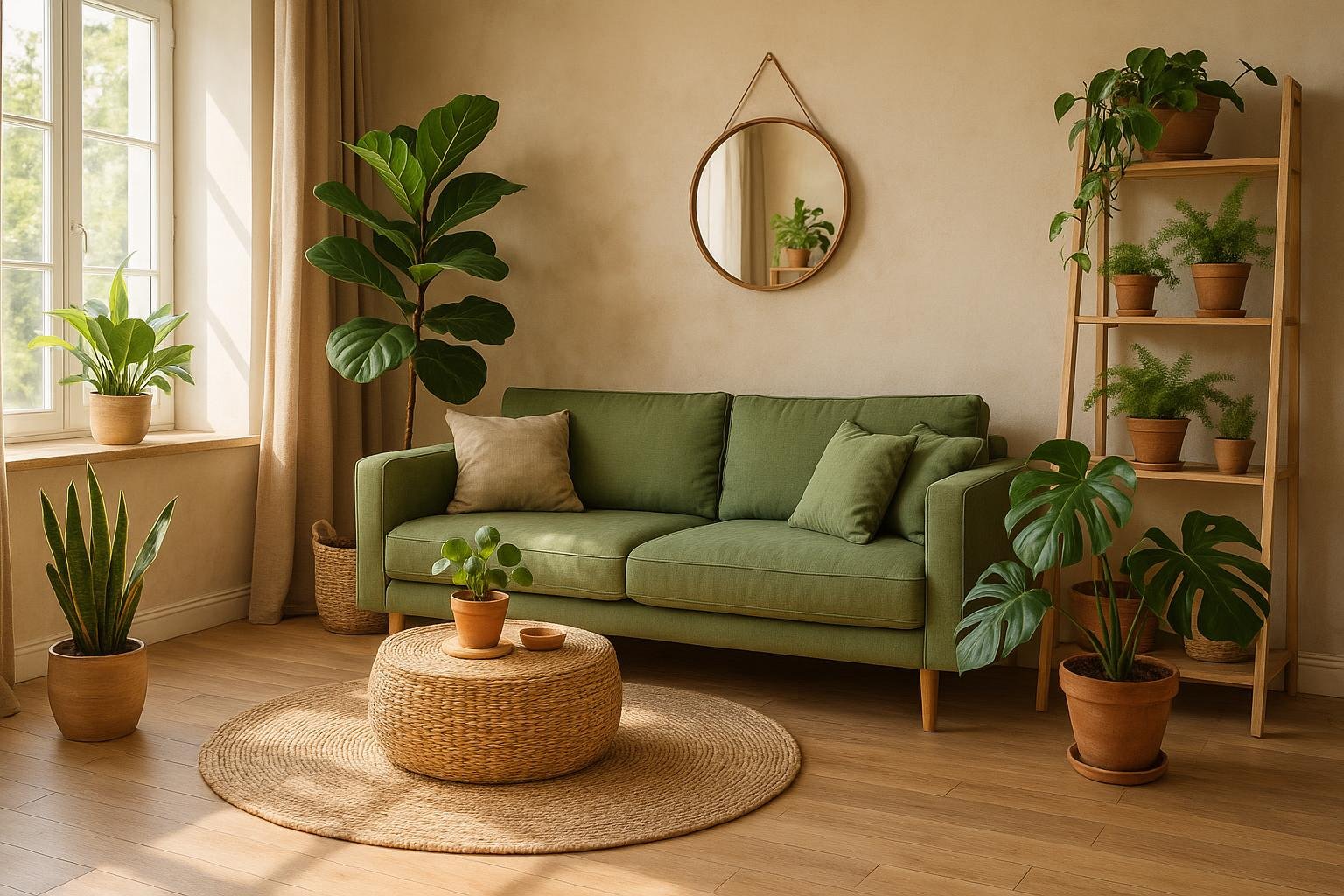
Eco-Friendly Interior Design Ideas for a Greener Home
Eco-friendly interior design isn’t a specific “look” full of jute rugs and mason jars. It’s a way of making design decisions that lower your home’s environmental impact while keeping it comfortable, beautiful, and healthy to live in.
The most sustainable home is usually the one you already have—thoughtfully improved over time. That means keeping and repairing what you can, choosing secondhand before buying new, then investing in durable, responsibly made pieces and efficiency upgrades that really last.
Below is a practical, step-by-step guide to creating a greener home, whatever your style—minimalist, traditional, or eclectic.
Step 1: Keep, Repair, and Repurpose Before You Replace
The greenest interior design change is often the one you don’t make. Manufacturing, shipping, and disposing of home products all carry a carbon footprint and create waste. Start by asking: “Can I keep this and make it better?”
Refresh what you already own
- Repair instead of replace: Tighten wobbly chair legs, re-glue loose joints, replace sofa cushion foam, fix broken handles, and patch minor upholstery tears.
- Refinish furniture: A tired wooden table can look new again with sanding and a low- or zero-VOC finish. Changing the stain or paint colour can completely transform a piece.
- Update hardware and details: Swapping drawer pulls, handles, lamp shades, or table legs is far less wasteful (and cheaper) than buying new furniture.
- Rearrange your layout: Sometimes a room feels “wrong” due to layout, not the furnishings. Try a new furniture arrangement before any purchases.
Repurpose with intention
- Turn an old dresser into a bathroom vanity or entryway console.
- Use dining chairs as desk chairs instead of buying a separate set.
- Transform leftover tiles, stone, or wood offcuts into side tables, shelves, or plant stands.
This “keep and improve” mindset reduces waste, saves money, and gives your home more character than buying everything new.
Step 2: Shop Secondhand and Vintage First
When you truly need something you don’t own already, secondhand is often the most eco-friendly interior design choice. It keeps items in use longer and avoids the footprint of new manufacturing.
Where to look
- Local thrift and charity shops
- Vintage and antique stores
- Online marketplaces and neighbourhood swap groups
- Architectural salvage yards for doors, lighting, and hardware
What to prioritise secondhand
- Solid wood furniture: Dressers, tables, bookshelves, and chairs can often be revived and will usually outlast flat-pack alternatives.
- Lighting: Vintage lamps and pendants can be rewired and paired with LED bulbs.
- Mirrors and décor: Mirrors bounce light around a room, improving brightness without more fixtures.
- Rugs: Natural-fibre rugs (wool, cotton) wear well and can often be professionally cleaned.
Inspect pieces for structural integrity, pests, and musty odours. A scratch or faded finish is usually fixable; a broken frame or strong mould smell may not be worth the effort.
Step 3: Choose Materials Carefully When You Buy New
Sometimes new is the right choice, especially for items like mattresses, sofas, or fixtures with efficiency standards. When you do buy new, focus on durability and material transparency over buzzwords like “eco” or “natural.”
Look for responsible wood and hard materials
- Reclaimed wood: Gives new life to existing timber and often has unique texture and character.
- FSC-certified wood: The Forest Stewardship Council (FSC) label helps confirm more responsible forestry practices.
- Recycled metal and glass: These materials can often be recycled again at end-of-life and are long-lasting in the home.
- Renewable materials: Cork and bamboo grow quickly; look for products with credible certifications and clear sourcing information.
Think beyond the “natural” label
Natural doesn’t always equal low-impact or non-toxic. Instead of relying on marketing terms, ask:
- Where was this made, and from what?
- How long is it likely to last?
- Can it be repaired or refinished?
- What does maintenance involve (harsh chemicals or simple soap and water)?
Choosing fewer, better-quality pieces usually leads to a more sustainable home than frequently buying and replacing low-cost, low-durability items.
Step 4: Reduce Indoor Pollutants for Healthier Air
Eco-friendly interior design also means caring about what you breathe. Many paints, adhesives, and furnishings emit volatile organic compounds (VOCs) and other chemicals into indoor air over time.
Choose low- or zero-VOC finishes
- Paint: Look for clearly labelled low- or zero-VOC interior paints and primers.
- Wood finishes: Seek out low-VOC oils, water-based varnishes, or hard wax finishes instead of high-solvent products.
- Adhesives and sealants: Choose low-emission options wherever possible.
Check furnishings for emissions and treatments
- Ask about formaldehyde-free composite wood panels (for cabinets, shelving, and flat-pack furniture).
- Check whether textiles or carpets are treated with stain repellents, flame retardants, or antimicrobial coatings and whether those treatments are necessary.
- Look for independent certifications that measure emissions rather than vague “eco” wording.
Always ventilate well during and after painting or installing new products. Open windows, use fans, and follow manufacturer instructions for safe curing times.
Step 5: Use Daylight and Efficient Lighting Wisely
Lighting affects both energy use and how your home feels. The goal is to maximise natural light, then supplement it with efficient, well-placed fixtures.
Make the most of natural light
- Keep windows clean and free of heavy obstructions.
- Use lighter window treatments or layer sheer curtains with heavier ones to control glare and privacy.
- Place mirrors to reflect daylight deeper into the room.
- Choose lighter wall colours in darker rooms to help bounce light.
Upgrade to efficient, layered lighting
- Switch to LEDs: Replace inefficient bulbs with warm or neutral white LED bulbs; they last longer and use far less energy.
- Use task lighting: Add desk lamps, reading lights, and under-cabinet lights so you don’t have to brightly light the entire room.
- Add dimmers and smart controls: Dimmers or smart bulbs help tailor brightness and reduce unnecessary energy use.
Thoughtful lighting design can make your home feel more inviting while quietly lowering your electricity bills.
Step 6: Boost Comfort and Energy Efficiency
Improving your home’s comfort often goes hand-in-hand with reducing energy use. Many of these upgrades sit at the intersection of interior design and home performance.
Use textiles to stabilise temperature
- Insulated window coverings: Curtains with thermal lining, honeycomb blinds, or well-fitted roman shades help reduce heat loss in winter and solar gain in summer.
- Rugs and runners: Thick rugs help insulate cold floors and make rooms more comfortable without turning up the heat.
- Throw blankets and layers: Styling sofas and beds with warm layers can reduce the need for constant high heating.
Choose efficient equipment when you upgrade
- Compare energy ratings when buying refrigerators, dishwashers, washing machines, and dryers.
- Choose heating and cooling systems sized properly for your space; bigger is not always better.
- Seal obvious drafts around windows and doors to reduce heat loss and improve comfort.
Small tweaks like insulating curtains or sealing gaps can make a noticeable difference, even if a full renovation isn’t in your plans.
Step 7: Save Water Without a Major Renovation
Water-efficient design changes can be simple, affordable, and visually unobtrusive.
Easy water-saving upgrades
- Low-flow showerheads: Modern models offer good pressure with much lower water use.
- Efficient faucets: Aerators can be added to many existing taps to cut water use with little impact on how they feel.
- Water-saving toilets: Consider dual-flush or efficient single-flush models when it’s time for replacement.
These changes are typically quick to install and pay back over time in lower utility bills.
Step 8: Choose Durable, Washable Natural-Fibre Textiles
Soft furnishings—rugs, cushions, bedding, curtains—shape how your home looks and feels. They’re also items people often replace frequently, so durability matters.
Better fabric choices
- Linen: Breathable, strong, and ideal for bedding and curtains; wrinkles but softens beautifully with use.
- Wool: Naturally resilient, stain-resistant, and excellent for rugs and throws; offers warmth without bulk.
- Hemp: Very strong and often requires fewer inputs to grow; good for upholstery or heavy-duty textiles.
- Organic cotton: Reduces pesticide use compared with conventional cotton; suitable for sheets, towels, and casual upholstery.
Consider care and longevity
- Check wash instructions and avoid fabrics that require frequent dry cleaning.
- Pick tight weaves and robust constructions for high-use items such as sofas and family-room rugs.
- Choose timeless colours and patterns you won’t tire of quickly to avoid premature replacement.
Durable natural fibres can be a smart sustainability choice if they’re sourced responsibly and cared for well.
Step 9: Bring Nature Indoors—Realistically
Biophilic design—incorporating nature into interiors—can make spaces feel calmer and more inviting, but plants alone aren’t a solution to indoor air quality issues.
Use plants and natural elements thoughtfully
- Introduce houseplants in spots with appropriate light and room for growth.
- Combine plants with natural materials: wood, stone, cork, natural-fibre textiles.
- Use planters made from durable materials (ceramic, metal, quality fibre) instead of thin plastic that breaks easily.
Keep in mind that while plants can slightly improve perceived freshness and humidity, they do not replace the need for ventilation, low-emission finishes, or proper moisture control.
Step 10: Start Small and Build Over Time
Sustainable interior design is a process, not a weekend project. Trying to change everything at once can lead to unnecessary purchases and more waste. Instead, focus on high-impact, manageable steps.
Small eco-friendly changes you can make this month
- Replace the most-used light bulbs with LEDs.
- Repaint a room using a low- or zero-VOC paint.
- Repair one piece of furniture instead of discarding it.
- Swap a disposable item (like cheap throw pillows or flimsy kitchen tools) for a long-lasting alternative.
- Install a low-flow showerhead or faucet aerator.
- Add thermal curtains to a drafty window.
Over time, these targeted upgrades add up to a home that uses fewer resources, costs less to run, and is healthier and more comfortable to live in.
Bringing It All Together: A Greener Home, Your Way
Eco-friendly interior design isn’t about conforming to a single aesthetic. A space can be ultra-modern, rustic, or anything in between and still be deeply sustainable if it:
Discover More from Didier Lancelot
Amazon Author page: amazon.com/author/didierlancelot
Narmer Store: narmerstore.org
AI and Technology Ebooks
- Creative AI: Animated Drawings, Manga & Illustrations
- Build a Game with AI: The No-Code Guide
- AI Image Generation Made Easy
- Build a Website with AI: The No-Code Guide
- How to Connect AI to Your Blog: The Ultimate Automation Guide
- AI Productivity Habits: Get More Done in Less Time
- AI Avatars Made Easy
- The Book of AI Prompts: 100+ Proven Prompts
- Make Music with AI: Suno, Udio and AI Music Generators
- Click to Cash
- The Automated Edge: Outwork, Outpace, and Outperform with AI
- AI Side Hustle: How to Make Money with ChatGPT and AI Tools
- Work Smarter with AI
Health, Lifestyle and Home Ebooks
- Hidden Superfoods: The World’s Most Powerful Healing Foods
- Spanish Food: The Complete Cookbook for Authentic Home Cooking
- The Science of Happiness Explained
- The Psychology of Success
- The Secret Sauce of Consistency: What the Experts Don’t Tell You About Fitness
- The Complete Home Bartender’s Guide: Link 1 | Link 2
- Natural Beauty, Made Simple: Easy DIY Organic Skincare Recipes
- Garden Made Simple: Easy, Beginner-Friendly Techniques
- The Dog Training Bible