
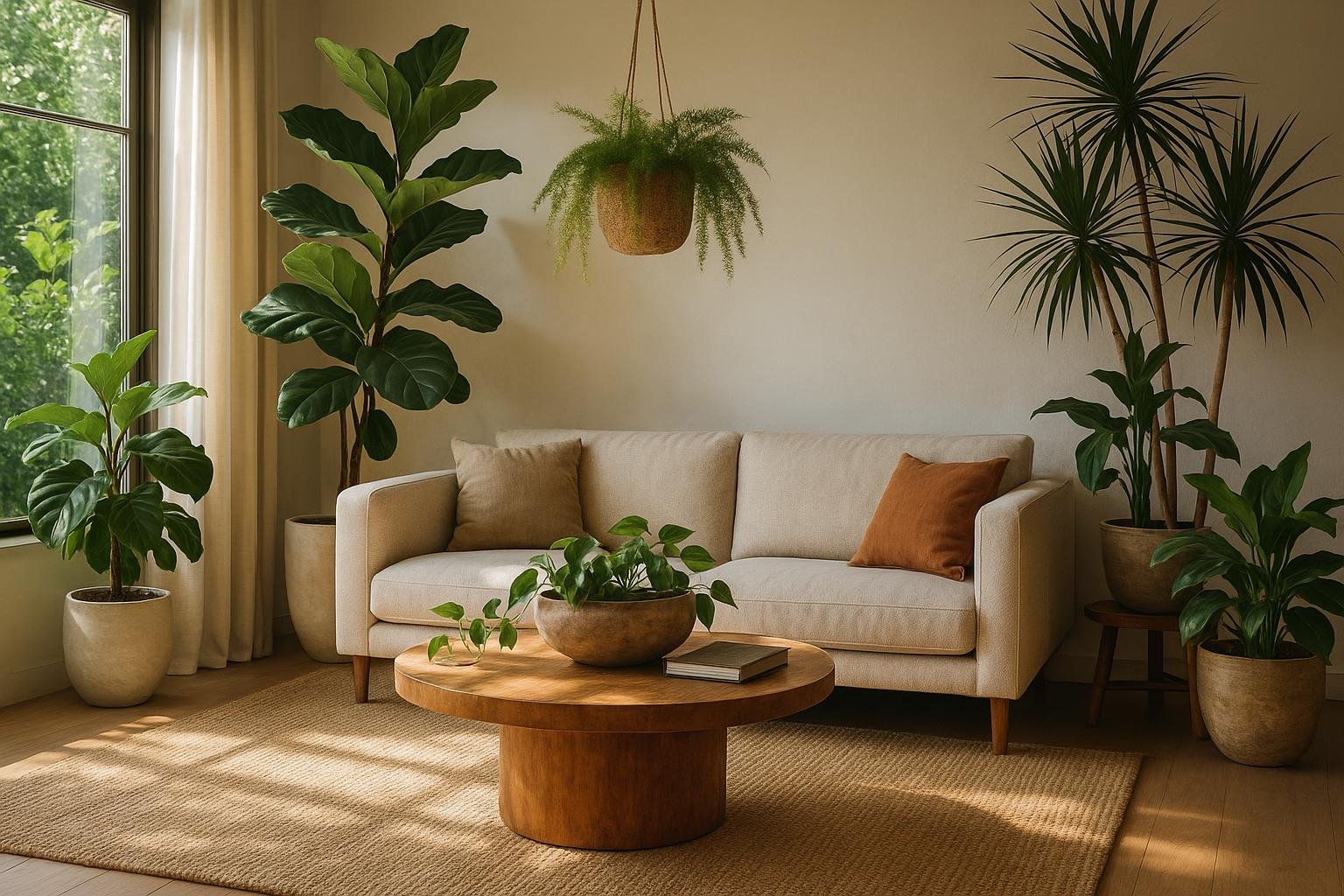
Biophilic Interior Design: How to Bring Nature Indoors in a Real, Practical Way
Biophilic interior design is often reduced to “add more plants,” but the idea is far richer—and more useful—than that. At its core, biophilic design is about creating a deliberate, meaningful connection between your indoor spaces and the natural world through light, air, materials, and forms.
A large 2026 review of 203 studies reported associations between biophilic strategies and lower stress, better attention and cognitive performance, and some gains in workplace productivity. It also highlighted potential environmental benefits, such as reduced energy use and improved indoor air quality in certain settings. These are potential outcomes, not guarantees, but they point in a clear direction: interiors that work with nature can feel more restorative and function better day to day.
Think of biophilic interior design as a flexible framework, not a rigid style. You can apply it to a city studio, a family home, or a busy office—incrementally, without a full renovation. Start with daylight and fresh air, add natural materials, then layer in plants, textures, and patterns that make sense for your climate and lifestyle.
What Biophilic Interior Design Really Means
Biophilia is our innate tendency to seek connection with nature. Biophilic design translates that instinct into practical design moves. Instead of simply decorating with “nature-themed” accessories, it aims to:
- Improve access to daylight and fresh air
- Introduce greenery and, where appropriate, water
- Use natural materials and organic forms
- Create comfortable, sensory-rich spaces that support focus and relaxation
Done well, biophilic design supports both well-being and performance. The 2026 research review found that spaces with intentional nature connections often feel less stressful and more mentally restorative, although results depend on the specific design and context. In other words, a bright, well-ventilated workspace with views of trees is not just prettier—it may also support better concentration and comfort.
Step 1: Start with Direct Contact with Nature
Direct experiences of nature—light, air, greenery, views—are the foundation of biophilic interiors. Before buying anything new, look at how your space currently connects to the outdoors.
Maximize Natural Daylight
Daylight is the single most powerful natural element you can work with. Research consistently links good daylight with improved mood, sleep patterns, and visual comfort.
- Clear the path to windows. Move bulky furniture, heavy drapes, and tall objects that block light. Even a small change in layout can brighten a room.
- Use layered window treatments. Pair sheer curtains (for daytime privacy and diffused light) with heavier drapes or blinds (for glare control and nighttime insulation).
- Choose light-reflective surfaces. Pale walls and matte finishes near windows help bounce natural light deeper into the room without harsh reflections.
For offices and workspaces, position desks to get side lighting from windows where possible. Light from the side tends to be more comfortable for reading and screen work than direct frontal sunlight.
Prioritize Fresh Air and Ventilation
Fresh air is often undervalued in interior design, but it’s central to both comfort and health. The 2026 review noted that some biophilic strategies—especially operable windows and passive ventilation—can contribute to better indoor air quality and lower energy demand.
- Make windows usable. Avoid blocking operable windows with fixed furniture; ensure handles and latches are accessible.
- Use natural ventilation when climate allows. Cross-ventilation (opening windows on opposite sides of a room or building) can quickly refresh stale indoor air.
- Combine with mechanical systems. In dense urban areas or during extreme weather, use filtration and HVAC systems to supplement natural ventilation while keeping windows closed as needed.
Plants can complement a healthy indoor environment, but they are not substitutes for adequate ventilation or air filtration. The air-cleaning effect of indoor plants is real in lab conditions, but typically modest in real-world rooms.
Bring in Greenery with Intention
Plants are often the visual shorthand for biophilic design, and for good reason: people generally respond positively to greenery. Studies link exposure to plants with reduced stress, improved mood, and better attentional capacity in some settings. But more is not always better.
- Match plants to light levels.
- Bright light: succulents, fiddle leaf figs, rubber plants, herbs.
- Medium light: pothos, peace lilies, snake plants, ZZ plants.
- Low light: cast iron plant, certain ferns, some philodendrons.
- Be honest about maintenance. If you’re busy or new to plants, start with hardy, low-care species and self-watering pots.
- Think beyond pots. Consider window boxes, hanging planters, or a slim plant shelf near a window to add greenery without using floor space.
The goal is a few healthy, well-placed plants rather than a dense “jungle” that’s hard to maintain. Quality of contact with nature matters more than quantity of foliage.
Consider Views and, Where Suitable, Water
Even if you can’t open a wall to a garden, small changes can improve access to outdoor views.
- Orient seating toward windows. Angle a reading chair or desk to face a tree, sky, or courtyard where possible.
- Borrow views. If your immediate view isn’t appealing, use interior glazing (like glass doors or cut-outs) to capture a nicer view from another part of the home or office.
Water features can be calming but should be used carefully:
- Keep them small, easy to clean, and quiet to avoid noise and humidity issues.
- Position them where you can see and hear them without disrupting work or sleep.
In many projects, a view of rain, a nearby river, or even a carefully chosen audio track can offer some of the same restorative qualities without adding a physical water feature.
Step 2: Use Natural Materials and Forms
Not every space can support lots of living plants or expansive views. That’s where indirect connections to nature—materials, textures, and shapes—become powerful tools.
Choose Tactile, Natural Materials
Natural materials subtly signal the presence of nature, especially when they are visible and touchable. The 2026 review notes that wood, stone, and other naturals can enhance perceived warmth and comfort.
- Wood: Floors, wall cladding, furniture, or even a single solid-wood tabletop bring warmth and natural variation in grain and tone.
- Stone and clay: Stone countertops, clay tiles, or lime-based plasters offer visual texture and a sense of permanence.
- Natural fibers: Wool rugs, linen curtains, cotton bedding, rattan or cane chairs add softness and richer tactile experience.
When possible, look for responsibly sourced materials (FSC-certified wood, recycled content, low-VOC finishes) to align the design with broader environmental goals.
Incorporate Organic Shapes and Patterns
Nature rarely arranges itself in straight lines and sharp angles. Introducing more organic forms can evoke the feel of natural environments even in highly urban settings.
- Curved forms: Rounded tables, arched doorways, organic-shaped mirrors, and soft-edged sofas can counteract rigid geometries.
- Biomorphic patterns: Textiles, wallpapers, or rugs with leaf, branch, wave, or cellular patterns can hint at nature without becoming overly literal.
- Subtle repetition and variation: Patterns that repeat with gentle irregularities mimic natural systems more authentically than perfectly uniform designs.
The goal is not to theme a room as a “forest” or “beach,” but to echo the complexity and softness of natural forms in a restrained way.
Step 3: Design for Sensory Variety and Comfort
Biophilic design is not purely visual. The most restorative spaces offer a balanced mix of sensory cues—light, texture, sound, and even scent—without becoming overwhelming.
Layer Light for Different Times and Tasks
Daylight is only part of the story. As the sun moves, your artificial lighting should support comfort and function.
- Use layers: Combine ambient lighting (ceiling fixtures), task lighting (desk lamps, reading lights), and accent lighting (wall sconces, spotlights on art or plants).
- Control intensity and color: Dimmable fixtures and warmer-color bulbs in the evening help mimic natural light rhythms and support relaxation.
- Reduce glare: Position screens and reflective surfaces to avoid direct light sources in your line of sight.
Blending daylight with adjustable artificial light allows a space to shift from focused work to evening calm without harsh transitions.
Layer Textures and Colors Thoughtfully
Many people equate biophilic interiors with a single “earthy” palette, but nature is far from monochrome. The key is cohesive variety.
- Mix textures: Pair smooth surfaces (plaster walls, honed stone) with rougher ones (textured textiles, woven baskets) to engage touch and sight.
- Build a grounded palette: Start with neutrals drawn from stone, sand, bark, or soil, then layer in greens, muted blues, or warm terracottas as accents.
- Use color to signal function: Cooler, quieter tones in focus areas; warmer, richer hues where you want social energy or relaxation.
This kind of sensory variety mirrors natural environments—where no single color or texture dominates—and can make rooms feel more alive and less flat.
Manage Sound and Scent
Sound and scent have a strong impact on how restorative a space feels, even though they’re often an afterthought.
- Soften noise: Use rugs, upholstered furniture, curtains, and acoustic panels to reduce harsh echoes, especially in open-plan layouts.
- Introduce gentle nature sounds where appropriate: Subtle background audio of rain, leaves, or waves can be calming in waiting areas or relaxation spaces, as long as volume is low and controllable.
- Be selective with scent: Fresh air should be the baseline. If you add scent, choose light, natural profiles (herbal, woody, citrus) and avoid overwhelming diffusers.
The aim is a calm, comfortable sensory backdrop that supports how you use the space—deep work, collaboration, rest—without constant distraction.
Step 4: Make Biophilic Design Practical and Sustainable
One of the strengths of biophilic design is its practicality. You do not have to rebuild your home or office to benefit from nature-informed design decisions. Incremental changes can still have impact.
Match Strategies to Your Space and Lifestyle
- Assess constraints first. Note window orientation, local climate, building rules (for offices or rentals), and your realistic maintenance capacity.
- Start with the biggest levers. Improve daylight access, free up windows, adjust layout, and introduce a few well-chosen materials before buying lots of décor.
- Layer slowly. Add plants, textiles, and patterns over time, observing what actually improves comfort and usability.
In workplaces, this might mean rearranging workstations for better views and creating one plant-rich breakout area instead of filling every desk with greenery that no one maintains.
Choose Durable, Responsible Materials
Biophilic design aligns naturally with sustainable interiors when you prioritize:
- Durability: Solid wood, high-quality natural fibers, and well-made pieces that last reduce waste over time.
- Sourcing: Certified woods, recycled metal and glass, and local materials often carry a smaller environmental footprint.
- Healthy finishes: Low-VOC paints, natural oils or waxes, and formaldehyde-free composites support indoor air quality.
These choices reinforce the connection to nature not only visually, but also in how your space impacts the broader
Discover More from Didier Lancelot
Amazon Author page: amazon.com/author/didierlancelot
Narmer Store: narmerstore.org
AI and Technology Ebooks
- Creative AI: Animated Drawings, Manga & Illustrations
- Build a Game with AI: The No-Code Guide
- AI Image Generation Made Easy
- Build a Website with AI: The No-Code Guide
- How to Connect AI to Your Blog: The Ultimate Automation Guide
- AI Productivity Habits: Get More Done in Less Time
- AI Avatars Made Easy
- The Book of AI Prompts: 100+ Proven Prompts
- Make Music with AI: Suno, Udio and AI Music Generators
- Click to Cash
- The Automated Edge: Outwork, Outpace, and Outperform with AI
- AI Side Hustle: How to Make Money with ChatGPT and AI Tools
- Work Smarter with AI
Health, Lifestyle and Home Ebooks
- Hidden Superfoods: The World’s Most Powerful Healing Foods
- Spanish Food: The Complete Cookbook for Authentic Home Cooking
- The Science of Happiness Explained
- The Psychology of Success
- The Secret Sauce of Consistency: What the Experts Don’t Tell You About Fitness
- The Complete Home Bartender’s Guide: Link 1 | Link 2
- Natural Beauty, Made Simple: Easy DIY Organic Skincare Recipes
- Garden Made Simple: Easy, Beginner-Friendly Techniques
- The Dog Training Bible