
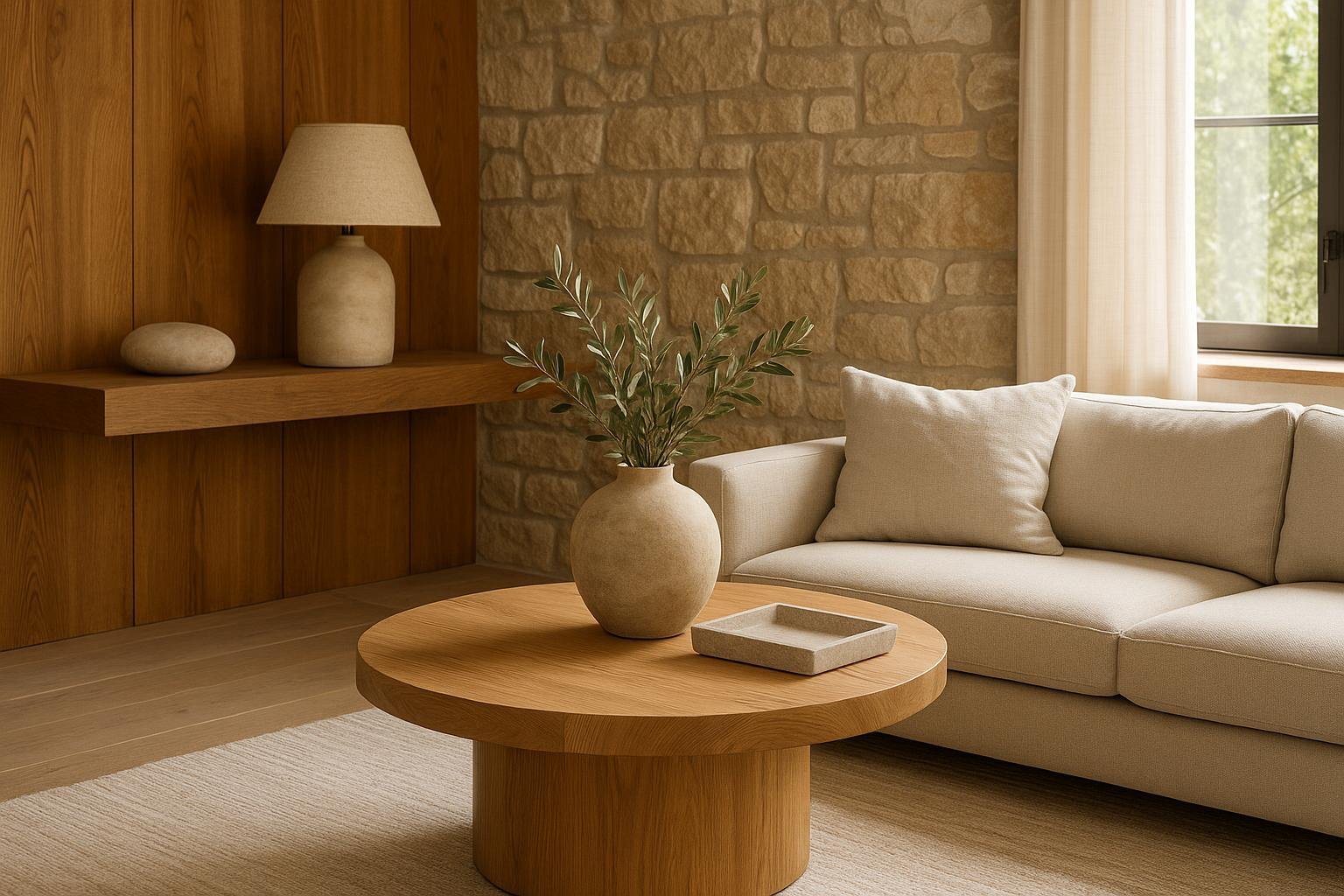
Interior Design Ideas Using Wood, Stone, and Linen
Wood, stone, and linen are three of the most timeless interior design materials. Together, they create calm, tactile spaces that feel both modern and enduring. Instead of relying on bold color or heavy decoration, these natural materials bring character through their texture, tone, and subtle variation.
If you want a home that feels warm, grounded, and quietly luxurious, this combination is one of the most effective ways to get there. Below, you’ll find practical ideas for using wood, stone, and linen in a cohesive way, with tips you can apply whether you’re renovating or just refreshing a room.
Why Wood, Stone, and Linen Work So Well Together
Before getting into specific ideas, it helps to understand why these materials work so beautifully together:
- Wood adds warmth and character through its grain, knots, and undertones. It keeps a space from feeling cold or flat.
- Stone brings visual weight and a sense of permanence. Even in small amounts, it grounds a room.
- Linen softens everything with a relaxed, tactile feel. It diffuses light and introduces gentle texture.
Used together, they balance one another: warmth from wood, solidity from stone, and softness from linen. The key is to keep finishes natural, colors restrained, and forms simple so the materials themselves provide the interest.
Start with an Anchor Material
Every successful room needs a clear starting point. When you’re working with wood, stone, and linen, choose one anchor material, then support it with the other two in smaller ways.
Ideas for a Strong Anchor
- Wood as the anchor: Wide-plank oak flooring, a substantial oak dining table, or wall-to-wall wooden cabinetry. Add a stone vase and linen seat cushions to complete the story.
- Stone as the anchor: A limestone fireplace surround, marble kitchen island, or travertine coffee table. Soften with linen curtains and a wood-framed lounge chair.
- Linen as the anchor: A large linen sofa, upholstered bed or full-height linen curtains. Then introduce a wood side table and a honed stone lamp base or tray.
Once you’ve chosen an anchor, repeat the other materials in two or three smaller details so the combination feels intentional instead of accidental.
How to Mix Wood Tones Thoughtfully
Mixing different woods can look effortless—or disjointed. Rather than trying to match finishes perfectly, focus on pairing woods by their undertones.
- Light, pale woods (like oak, ash, or light-stained maple) usually have soft warm or neutral undertones. These sit naturally with warm, pale stones like limestone or travertine.
- Mid to dark woods (like walnut or darker-stained oak) add depth and contrast beside lighter stone and lighter linens.
- Limit the variety: Aim for two main wood tones in a single room—three at most—so the space feels cohesive.
- Repeat each tone: If you have walnut in a coffee table, repeat that depth in a picture frame or chair legs.
When in doubt, place samples together: a flooring offcut, a cabinet door, a side table finish. Checking them side by side is the fastest way to see whether undertones clash or complement each other.
Using Stone as a Focal Point
Stone doesn’t need to cover every surface to make an impact. In a modern interior, one or two carefully chosen stone elements can act as understated focal points.
High-Impact Stone Ideas
- Coffee or side tables: A honed stone coffee table or side table brings instant presence to a living area.
- Fireplace surrounds: Limestone, marble, or slate around a fireplace creates a natural focal point without needing heavy decoration.
- Kitchen and bathroom surfaces: Stone backsplashes, countertops, or vanity tops feel luxurious but quietly so—especially in matte or honed finishes.
Subtle Stone Details (No Renovation Required)
- A stone bowl or platter on a wooden dining table
- A small travertine or marble tray on a console
- Stone bookends on open shelving
If you’re aiming for a contemporary feel, choose matte or honed stone rather than highly polished finishes. This keeps the look soft, tactile, and more in tune with linen and natural wood.
Bringing in Linen to Soften Hard Surfaces
Linen is your most powerful tool for softening the visual weight of wood and stone. It introduces movement, lightness, and a relaxed mood.
Where to Use Linen
- Curtains: Linen curtains filter light beautifully and add height and softness to a room. In living rooms and bedrooms, they offset the hardness of floors, joinery, and stone.
- Upholstery: A linen or linen-blend sofa, dining chairs, or bed headboard immediately make a space feel more inviting.
- Textiles and accessories: Linen cushions, throws, table runners, and bedding are easy updates that dramatically change the feel of a room.
To keep the palette cohesive, look for creams, oatmeals, and warm grays. These neutrals sit quietly alongside most wood and stone finishes and create a unified, calm backdrop.
Create Contrast Through Texture, Not Color
One of the strengths of designing with wood, stone, and linen is that you don’t need loud color to make a room interesting. Instead, use texture as your main source of contrast.
- Smooth stone against visible wood grain adds a subtle push-pull between refined and organic.
- Loosely woven linen next to sleek joinery brings softness to otherwise clean lines.
- Matte finishes on wood and stone feel more contemporary than high gloss and allow textures to take the lead.
Vary the textures in each material family—for example, pair a smooth limestone table with a rougher stone bowl, or a tight-weave linen sofa with more relaxed, slubby linen cushions. The room gains depth without needing busy patterns.
Keep the Forms Simple for a Modern Look
Natural materials can quickly veer into “rustic” if the shapes and decorative details are too fussy. To keep things feeling current, let the materials be the star and keep the forms simple.
- Choose clean-lined furniture: Straight legs, simple frames, minimal hardware.
- Add a few rounded or sculptural pieces: A curved stone side table, an oval wood coffee table, or a rounded linen armchair softens all the straight lines.
- Avoid heavy ornamentation: Carved details, overly chunky moldings, and shiny ornate handles can fight with the quiet beauty of wood, stone, and linen.
The more restrained the shapes, the more the natural variation in the materials stands out—and that’s where the real richness lies.
A Simple Formula for a Wood, Stone, and Linen Living Room
If you’re not sure where to start, use this simple formula as a blueprint for a balanced living room.
Step 1: Choose Your Main Wood Element
- Option A: Wood flooring (oak works especially well with this palette).
- Option B: A substantial wood coffee table or TV unit if you already have neutral flooring.
Let this wood element set the tone for the rest of the space.
Step 2: Add One Substantial Stone Piece
- A stone coffee table or side table
- A stone fireplace surround
- A stone lamp base or plinth-style side table
This piece acts as your visual anchor and adds weight to the room.
Step 3: Bring in Linen for Softness
- Linen curtains in a warm neutral tone for softness and light diffusion.
- Or a linen or linen-blend sofa if curtains aren’t practical.
Even one large linen element will noticeably change the feel of the room.
Step 4: Repeat the Materials in Smaller Details
To pull it all together, repeat each material at least one more time:
- Wood: Picture frames, a tray on the coffee table, shelving, or a chair.
- Stone: A bowl, tray, candleholder, or small side table.
- Linen: Cushions, a throw, or a table runner on a sideboard.
This repetition makes the design feel intentional and layered without a lot of extra decoration.
Practical Considerations: Care and Maintenance
Natural materials age beautifully when they’re given the right care. A few practical steps will keep your wood, stone, and linen looking their best.
Wood
- Know your finish (oil, wax, lacquer, polyurethane) and choose cleaning products that are specifically recommended for it.
- Protect high-use surfaces with coasters, felt pads, and placemats to reduce heat and water marks.
- Maintain as needed: Oiled finishes may need re-oiling periodically; lacquered or sealed finishes may need only gentle cleaning.
Stone
- Check if your stone is sealed. Porous stones like marble, limestone, and travertine usually require sealing, especially in kitchens and bathrooms.
- Avoid harsh cleaners or anything acidic (like vinegar or lemon-based products) on natural stone unless your product specifically says it’s safe.
- Blot spills quickly instead of wiping to avoid spreading them, particularly with wine, coffee, or oil.
Linen
- Follow the care label: Some linens are machine washable; others may be dry-clean only, especially upholstery.
- Expect natural creasing. This is part of linen’s relaxed character; if you prefer a neater look, choose a linen blend.
- Use removable covers for sofas and cushions wherever possible; they’re easier to maintain and refresh.
Most importantly, avoid assuming that all wood or stone can tolerate the same treatment. When in doubt, test cleaning products on a discreet area first.
Bringing It All Together
Designing with wood, stone, and linen is about restraint and intention. Instead of relying on busy patterns or strong color, you’re creating interest through material, texture, and proportion. Start with one anchor material, choose a few key pieces in the other two, and keep forms simple so the natural finishes can shine.
By focusing on warm neutrals, visible wood grain, and matte or honed stone, you’ll create interiors that feel calm, grounded, and relevant for years to come—spaces that look good in photographs, but feel even better to live in.
Discover More from Didier Lancelot
Amazon Author page: amazon.com/author/didierlancelot
Narmer Store: narmerstore.org
AI and Technology Ebooks
- Creative AI: Animated Drawings, Manga & Illustrations
- Build a Game with AI: The No-Code Guide
- AI Image Generation Made Easy
- Build a Website with AI: The No-Code Guide
- How to Connect AI to Your Blog: The Ultimate Automation Guide
- AI Productivity Habits: Get More Done in Less Time
- AI Avatars Made Easy
- The Book of AI Prompts: 100+ Proven Prompts
- Make Music with AI: Suno, Udio and AI Music Generators
- Click to Cash
- The Automated Edge: Outwork, Outpace, and Outperform with AI
- AI Side Hustle: How to Make Money with ChatGPT and AI Tools
- Work Smarter with AI
Health, Lifestyle and Home Ebooks
- Hidden Superfoods: The World’s Most Powerful Healing Foods
- Spanish Food: The Complete Cookbook for Authentic Home Cooking
- The Science of Happiness Explained
- The Psychology of Success
- The Secret Sauce of Consistency: What the Experts Don’t Tell You About Fitness
- The Complete Home Bartender’s Guide: Link 1 | Link 2
- Natural Beauty, Made Simple: Easy DIY Organic Skincare Recipes
- Garden Made Simple: Easy, Beginner-Friendly Techniques
- The Dog Training Bible