
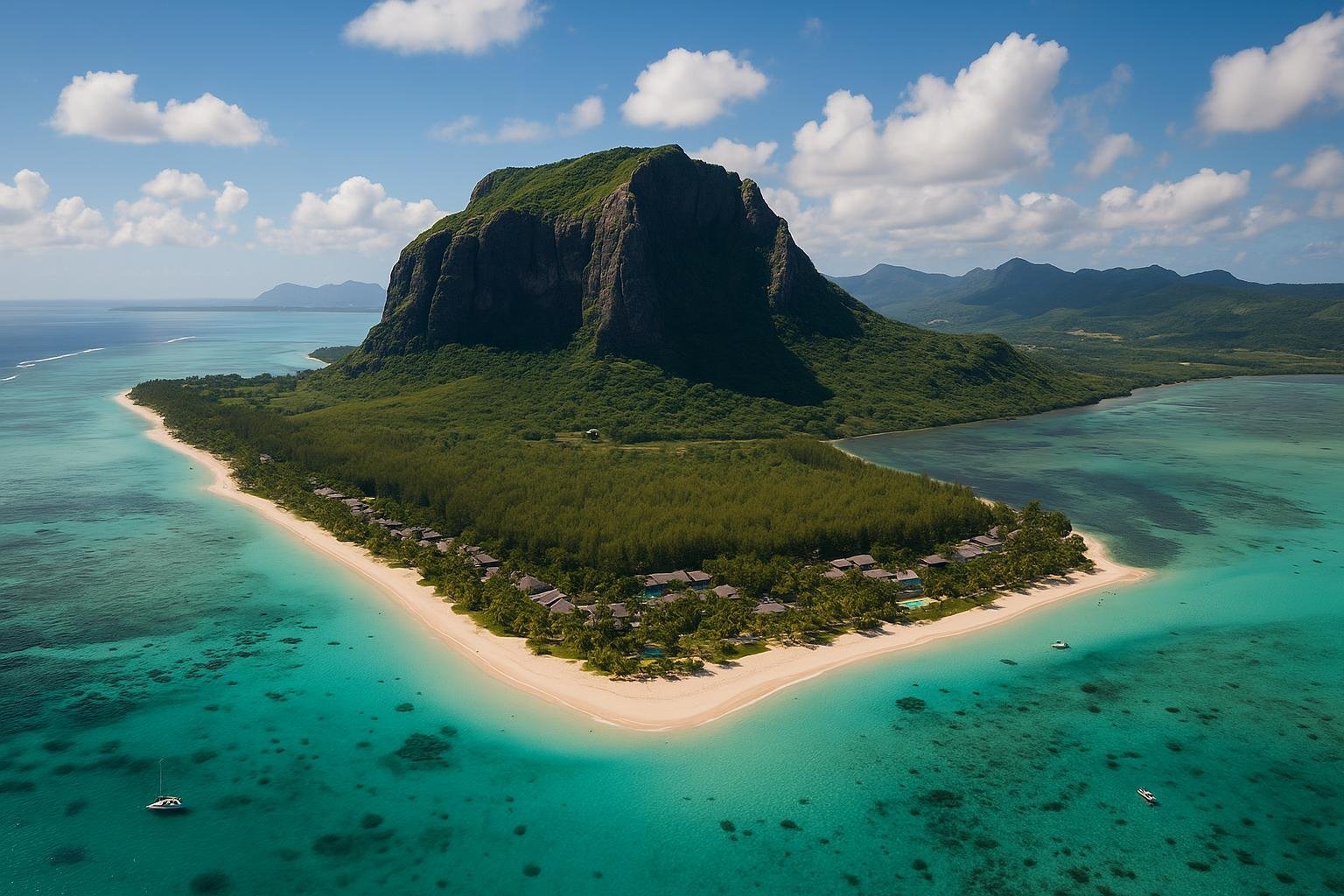
Mauritius is far more than an idyllic image on a postcard. This small Indian Ocean island blends volcanic landscapes, sugarcane-covered hills, coral-fringed lagoons and a multicultural heritage shaped by African, Indian, Chinese and European influences. Whether you are drawn by translucent waters, refined resorts or Creole street food, Mauritius rewards slow exploration and curiosity beyond the beach.
Best Time to Visit Mauritius
Weather Overview
Mauritius enjoys a mild, maritime subtropical climate, moderated by the surrounding Indian Ocean and south-east trade winds. Rather than four distinct seasons, the island cycles through a warmer, more humid summer (roughly November to April) and a cooler, drier winter (May to October).
Summer brings daytime temperatures between 28–33°C along the coast, with high humidity and warm sea temperatures ideal for swimming, snorkelling and diving. Rainfall is heavier during this period, especially in the central highlands, often arriving as short, intense showers that clear quickly. Cyclonic activity is possible from January to March, occasionally disrupting ferry services and water-based excursions.
Winter is noticeably cooler but still comfortably warm, with coastal temperatures around 22–27°C and lower humidity. The skies are generally clearer, trade winds stronger on the east and south coasts, and rainfall lighter. The sea remains pleasant for swimming, though slightly cooler than in peak summer. This is a particularly appealing time for travellers seeking active pursuits, from hiking in the Black River Gorges to exploring the island’s cultural sites without the heat.
Seasonal Highlights
November to April – Beach Lovers and Divers
This is prime time for classic Mauritius beach holidays. The lagoon is at its calmest and clearest between December and March, which benefits scuba diving, snorkelling and underwater photography. The west and north coasts, including Flic-en-Flac and Grand Baie, tend to be more sheltered when trade winds strengthen along the east coast.
Several key cultural events also fall in this window. In January or February, Mauritian Tamils celebrate Thaipusam Cavadee with colourful processions and temple ceremonies. Around the same period, Chinese New Year illuminates Chinatown in Port Louis with lion dances and lanterns, highlighting the island’s layered cultural fabric.
May to October – Active Travellers and Sightseers
The cooler months favour outdoor exploration. Hiking conditions in Black River Gorges National Park are excellent, with lower humidity and more comfortable temperatures for tackling viewpoints such as Piton de la Rivière Noire. This period also suits golfers, kitesurfers and anyone planning extended days of sightseeing.
The trade winds make the south-east coast, especially around Le Morne and Belle Mare, a magnet for kitesurfing and windsurfing from June to September. In September and October, visibility for diving remains good, while whale watching excursions off the west coast sometimes encounter migrating cetaceans.
For many, the ideal compromise between beach weather and manageable humidity falls in the shoulder months of April, May, September and October. These periods combine pleasant sea conditions with fewer crowds and, often, more favourable accommodation rates.
Top Attractions in Mauritius
Natural Wonders
Le Morne Brabant
A basaltic monolith rising from the south-west tip of the island, Le Morne Brabant is both a striking natural landmark and a UNESCO World Heritage Site. Its dramatic cliffs tower over turquoise lagoons and powdery beaches, creating one of Mauritius’ most iconic vistas. Hiking to the summit with a licensed guide rewards you with sweeping panoramas of the reef, Ile aux Bénitiers and the undulating coastline.
Black River Gorges National Park
The island’s largest protected native forest, Black River Gorges shelters endemic species such as the Mauritian flying fox and rare birds including the pink pigeon. Well-marked trails thread through rugged ravines, cloud forest and vantage points like Alexandra Falls Viewpoint. The park reveals a wilder, more untamed side of Mauritius, far removed from resort lawns.
Chamarel and the Seven Coloured Earths
The village of Chamarel, nestled in the south-west hills, is home to the famed Seven Coloured Earths, a geological curiosity where undulating sand dunes appear in shifting hues of red, violet, ochre and blue. Nearby, Chamarel Waterfall plunges over volcanic rock into a lush ravine. Combined, these attractions make an easy, visually captivating excursion from the coastal resorts.
Trou aux Cerfs and the Central Plateau
Near the town of Curepipe, the dormant volcanic crater of Trou aux Cerfs offers a circular viewpoint over the central plateau and distant coastline. The region’s cooler climate and misty mornings give it a very different character to the sultry beaches. On clear days, you can trace the island’s contours and understand just how volcanic forces shaped Mauritius.
Offshore Islets and Lagoons
The surrounding lagoon hides a constellation of smaller islands and sandbanks. Ile aux Cerfs, off the east coast, is renowned for its shallow azure waters, white sands and water sports. On the north coast, boat trips to Coin de Mire and the cluster of northern islets provide rewarding snorkelling, with coral reefs alive with tropical fish and, occasionally, turtles and dolphins.
Cultural and Historical Sites
Port Louis and the Central Market
The capital, Port Louis, offers a fascinating window into Mauritius’ urban life and history. Stroll along the Caudan Waterfront for a polished promenade of boutiques and cafes, then delve into the vibrant Central Market. Here, stalls overflow with spices, tropical fruits, vanilla pods, local snacks and colourful textiles. The market’s energy, aromas and bargaining chatter provide an authentic counterpoint to the island’s tranquil beaches.
Aapravasi Ghat
Also in Port Louis, Aapravasi Ghat is a UNESCO-listed site that once served as a major immigration depot for indentured labourers arriving from India in the 19th century. The modest stone buildings and interpretive displays chronicle a pivotal chapter in Mauritian history, explaining how these arrivals shaped the island’s demographics, languages and culinary traditions.
Le Morne Cultural Landscape
Beyond its physical grandeur, Le Morne also carries profound historical resonance. Oral traditions recount how escaped slaves used this remote promontory as a refuge during the colonial era. Today, memorials and interpretive plaques at the base of the mountain recount these narratives, framing Le Morne as a symbol of resistance and freedom in Mauritian memory.
Grand Bassin (Ganga Talao)
High in the central highlands lies Grand Bassin, a serene crater lake considered sacred by the island’s Hindu community. The temple complex and towering statues of Hindu deities make this one of the most important spiritual sites in Mauritius. During Maha Shivaratri, thousands of pilgrims travel here on foot, creating one of the island’s most remarkable religious gatherings.
Château de Labourdonnais and Plantation Heritage
Several restored colonial-era estates, including Château de Labourdonnais in the north, shed light on Mauritius’ plantation history. Visitors can tour the elegantly furnished mansion, wander through orchards rich with tropical fruit trees and sample locally produced rum, jams and juices. These estates reveal yet another facet of Mauritian heritage, entwining agriculture, architecture and gastronomy.
Where to Stay in Mauritius
Luxury Accommodations
Mauritius has cultivated a reputation for exceptionally high-calibre resorts, many of which occupy prime beachfront settings and sprawling gardens. These properties excel in discreet service, refined design and comprehensive leisure facilities.
West and South-West Coasts
Around Flic-en-Flac and Le Morne, several five-star resorts offer grand suites, overwater-inspired villas and private pools with uninterrupted lagoon views. Expect expansive spa facilities, championship golf courses and gourmet restaurants specialising in refined Mauritian and international cuisines. The sunset-facing orientation of many west coast properties adds extra allure.
North Coast
The Grand Baie area blends high-end hotels with an energetic dining and nightlife scene. Luxury properties here often emphasize contemporary design, yacht marinas and easy access to offshore excursions. This area suits travellers seeking a balance between seclusion and urban amenities, including boutiques and bars within a short drive.
East Coast
On the east coast, large resorts front extensive stretches of beach and shallow lagoon. Trade winds suit sailing and windsurfing, while sheltered coves provide calm areas for swimming. Many high-end properties here integrate Mauritian craftsmanship in their architecture and landscaping, with thatched roofs, lava-stone walls and native plants.
Across the island, luxury resorts frequently include kids’ clubs, water sports centres, cooking classes, rum tastings and cultural performances. All-inclusive or half-board packages are common, simplifying budgeting while still allowing guests to venture out and explore local restaurants.
Budget-Friendly Options
Mauritius is not reserved solely for luxury travellers. A growing network of guesthouses, boutique inns and self-catering apartments provides more accessible options without sacrificing local charm.
Guesthouses and B&Bs
In coastal villages such as Trou aux Biches, Pereybère and Blue Bay, family-run guesthouses offer comfortable rooms, home-cooked breakfasts and personal insight into local life. Many sit within walking distance of public beaches, snack stands and small supermarkets, making them ideal for independent travellers.
Self-Catering Apartments and Villas
Apartment rentals and modest villas scattered around Grand Baie, Tamarin and the east coast suit couples, families or groups seeking privacy and the flexibility to cook. Fully equipped kitchens and proximity to markets and bakeries encourage guests to experiment with local ingredients, from fresh fish to tropical produce.
Budget Hotels and Lodges
Simple hotels and lodges, often set slightly back from the shoreline, typically provide basic amenities, air conditioning and Wi-Fi at reasonable rates. While facilities are more modest than in large resorts, many compensate with friendly service and a location close to bus routes, enabling easy exploration without a rental car.
Regardless of budget, it is worth considering the island’s different coasts. The west and north generally offer calmer waters and more restaurants within easy reach, while the east and south feel wilder and less developed, appealing to travellers who prioritise scenery and tranquillity over nightlife.
Local Cuisine and Dining Experiences
Must-Try Dishes
Mauritian cuisine is a vivid expression of the island’s diversity. Indian, Creole, Chinese and European influences interweave, resulting in dishes that are aromatic, subtly spiced and often centred around fresh seafood.
- Curry and “Cari” – Mauritian curries range from gently spiced tomato-based sauces to more robust preparations using local masala blends. Octopus curry (cari ourite), fish curry and chicken curry served with rice, lentil dal, pickles and chutneys are staples.
- Dholl Puri – Perhaps the island’s most beloved street food, these soft, pan-cooked flatbreads are made with ground yellow split peas and filled with bean curries, pickled vegetables and chilli paste. They are inexpensive, satisfying and widely available.
- Roti and Farata – Similar to Indian flatbreads, these are often sold from roadside stalls and filled with spiced vegetables, curries and chutneys. They make an excellent quick lunch or snack while exploring.
- Boulette – Chinese-Mauritian dumplings, often steamed and served in light broth or with dipping sauces. Fish, prawn and chayote are common fillings, and they are typically enjoyed in casual eateries or at the market.
- Mine Frite and Riz Frite – Stir-fried noodles or rice with vegetables, egg and your choice of meat or seafood, reflecting the island’s Chinese heritage. They are ubiquitous, comforting and easily customised.
- Rougaille – A tomato-based Creole sauce infused with thyme, garlic, ginger and chillies, commonly served with fish, sausages or salted meat. It pairs beautifully with rice or bread.
- Seafood Platters – Grilled fish, prawns, lobster and calamari feature prominently along the coast. Often simply seasoned with lime, garlic, herbs and local chilli, they highlight the freshness of the catch.
- Tropical Desserts – Pineapple with chilli salt, caramelised bananas, coconut cakes and alouda (a sweet, milky drink with basil seeds) provide a delicate end to a meal or a refreshing afternoon treat.
Best Restaurants and Street Food Spots
Fine Dining and Hotel Restaurants
Many of Mauritius’ most sophisticated dining experiences are located within top-tier resorts, yet several welcome non-resident guests with advance reservation. Tasting menus often reinterpret classic Mauritian recipes with contemporary techniques, spotlighting local produce, lagoon fish and island-grown spices. Wine lists are extensive, and service standards mirror those of leading international restaurants.
Outside the resorts, independent fine-dining venues in and around Grand Baie, Tamarin and the east coast serve refined seafood, French-influenced cuisine and creative fusion dishes. These establishments frequently blend open-air settings with polished interiors, taking full advantage of the island’s climate and seascapes.
Casual Restaurants and Coastal Grills
Beachfront grills and small, family-run restaurants dot much of the coastline. Here, menus revolve around the day’s catch, grilled over open flames and served with rice, salads, rougaille and homemade chutneys. Prices are generally moderate, and the atmosphere relaxed, encouraging long, unhurried meals at the water’s edge.
In villages such as Flic-en-Flac, Pereybère and Trou d’Eau Douce, you will find modest eateries specialising in curries, briyanis, boulettes and Chinese-Mauritian noodles. These establishments are ideal for sampling local flavours in a straightforward setting.
Street Food and Markets
Street food is an essential part of the Mauritian culinary experience. In Port Louis, the Central Market and nearby streets teem with vendors selling dholl puri, gateaux piments (chilli cakes), samosas, rotis and fresh sugarcane juice. Similar stands line the seafront in Grand Baie, Quatre Bornes’ market area and around bus stations across the island.
Night markets and weekend food fairs periodically appear in coastal towns, offering an array of local snacks, desserts and drinks. These gatherings provide a lively atmosphere where visitors and residents share the same benches, often accompanied by Sega music drifting from nearby speakers.
Conclusion
Mauritius rewards those who look beyond its surface beauty. The island’s sugarcane slopes, volcanic peaks and luminous lagoons are undeniably compelling, yet its real character emerges in the markets of Port Louis, the stories of Le Morne, the incense-scented shrines of Grand Bassin and the flavours of a freshly prepared dholl puri.
Choosing when to visit depends on your priorities: warm, languid days by the lagoon in summer; cooler, clearer conditions for hiking and kitesurfing in winter; or the quieter shoulder seasons that strike a balance between the two. Accommodation ranges from world-class beachfront resorts to intimate guesthouses, ensuring every traveller can find a suitable base from which to explore.
Ultimately, a journey to Mauritius is as much about cultural discovery and culinary exploration as it is about beaches and palm trees. Take time to wander inland, engage with the island’s diverse communities and taste its layered history on the plate. The more deeply you explore, the more Mauritius reveals itself as a nuanced, compelling destination worth returning to.
Discover More from Didier Lancelot
Amazon Author page: amazon.com/author/didierlancelot
Narmer Store: narmerstore.org
AI and Technology Ebooks
- Creative AI: Animated Drawings, Manga & Illustrations
- Build a Game with AI: The No-Code Guide
- AI Image Generation Made Easy
- Build a Website with AI: The No-Code Guide
- How to Connect AI to Your Blog: The Ultimate Automation Guide
- AI Productivity Habits: Get More Done in Less Time
- AI Avatars Made Easy
- The Book of AI Prompts: 100+ Proven Prompts
- Make Music with AI: Suno, Udio and AI Music Generators
- Click to Cash
- The Automated Edge: Outwork, Outpace, and Outperform with AI
- AI Side Hustle: How to Make Money with ChatGPT and AI Tools
- Work Smarter with AI
Health, Lifestyle and Home Ebooks
- Hidden Superfoods: The World’s Most Powerful Healing Foods
- Spanish Food: The Complete Cookbook for Authentic Home Cooking
- The Science of Happiness Explained
- The Psychology of Success
- The Secret Sauce of Consistency: What the Experts Don’t Tell You About Fitness
- The Complete Home Bartender’s Guide: Link 1 | Link 2
- Natural Beauty, Made Simple: Easy DIY Organic Skincare Recipes
- Garden Made Simple: Easy, Beginner-Friendly Techniques
- The Dog Training Bible