
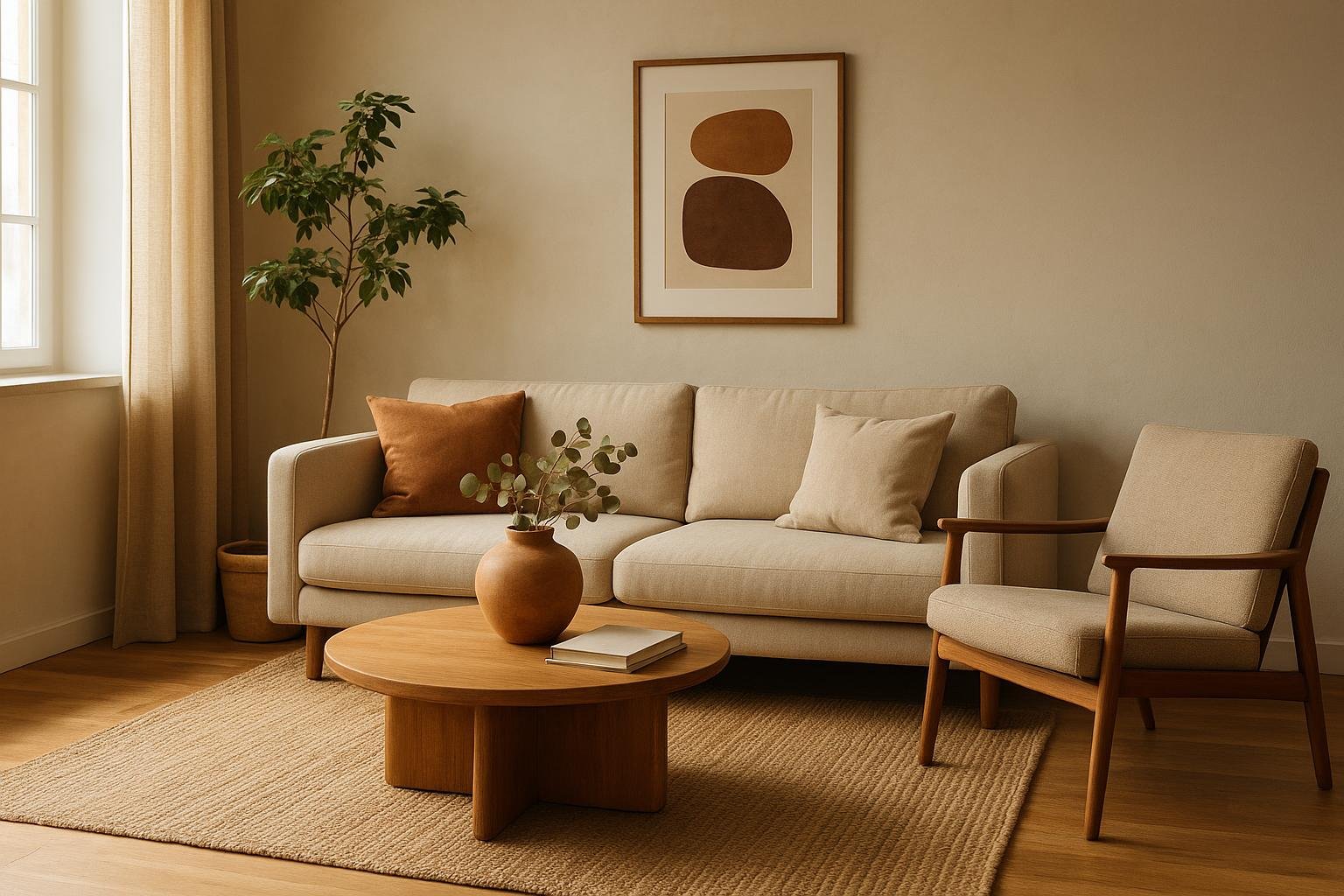
Calm interiors are less about minimal possessions and more about how a room feels. Earthy tones—sand, warm beige, clay, terracotta, ochre, muted browns, sage, and olive—have a natural ability to make a space feel grounded and restorative. When you layer these related colors and textures thoughtfully, you get a home that looks inviting and quietly sophisticated, without feeling bland or overly designed.
Why Earthy Tones Feel So Calming
Earthy colors are inherently connected to nature: soil, stone, sun-baked clay, dried grasses, leaves, and tree bark. Our brains read these hues as familiar and stable, which makes them ideal for anyone looking to create a peaceful interior design.
Instead of sharp contrasts and high saturation, the calm comes from:
- Related hues: Colors that sit close together in tone, like sand and warm beige, or sage and olive, are visually easy to process.
- Soft transitions: Subtle shifts from light to dark feel gentler than stark jumps between unrelated colors.
- Natural materials: Linen, wood, stone, and ceramics echo the colors in a tactile way, so the whole room feels coherent rather than busy.
The goal is harmony, not monotony: a layered palette of warm neutrals and soft color that feels collected, not cluttered.
Step 1: Choose a Warm Base
Your base color sets the tone for the entire room. For a calm earthy interior, start with warm, light neutrals on the largest surfaces.
- Good base options: cream, oat, sand, warm beige, or light mushroom.
- Use on: walls, large rugs, main sofa, or even wide expanses of cabinetry.
Then, choose one or two supporting tones to build on that base—perhaps a muted sage and a soft terracotta. Finally, select a deeper anchor color, like chocolate brown or olive, to ground the palette.
Think of your scheme in layers:
- Base: warm cream walls
- Supporting tones: sage cushions, terracotta throw
- Anchor: dark wood coffee table or olive armchair
This simple structure keeps your earthy interior design from feeling chaotic as you add pieces over time.
Step 2: Layer Shades, Don’t Rely on One Accent
Instead of one “pop” of color in a neutral room, treat earthy hues themselves as your neutrals. Mix lighter and darker versions of the same family to add depth without visual noise.
For example:
- Combine pale sand walls with a camel sofa and deeper caramel leather accents.
- Layer sage in multiple strengths: soft sage on cushions, deeper olive in a throw, and a muted green-gray on a side chair.
- Use terracotta in varying intensities—from dusty rose-clay in textiles to richer burnt terracotta in pottery.
This approach keeps the room relaxed. Instead of feeling like a bold, high-contrast “look,” the space feels naturally evolved and easy on the eye.
Step 3: Add Tactile Contrast with Natural Materials
Earthy tones are at their most beautiful when paired with a mix of textures. Otherwise, a room full of beige can end up looking flat or washed out.
Combine these materials for a calm yet interesting feel:
- Soft textiles: linen, cotton, wool, boucle for sofas, cushions, curtains, and throws.
- Organic fibers: jute or sisal rugs, rattan chairs, woven baskets.
- Hard surfaces: wood furniture (oak, walnut, ash), stone or concrete side tables, matte ceramics.
Try pairing opposites: a chunky wool throw on a leather chair, a jute rug under a smooth timber dining table, or linen cushions on a structured sofa. The tactile contrast keeps muted colors engaging while maintaining a calm, grounded atmosphere.
Step 4: Balance Dark and Light for a Grounded Room
A restful space needs both lightness and weight. Too light, and the room can feel insubstantial; too dark, and it feels heavy. Use earthy tones to distribute this balance from floor to ceiling.
- On the floor: introduce deeper, grounding shades. Rugs and low furniture look great in clay, chocolate brown, or deep taupe.
- At eye level: keep to mid-tones like warm beige, muted terracotta, or gentle olive for sofas, side chairs, and storage.
- Higher up: use the lightest tones for walls, curtains, and ceilings so the room stays open and airy.
This vertical gradient is subtle but powerful. Your eye naturally reads the darker base as stable, while the lighter upper walls and ceiling lift the space, enhancing that calm, spacious feeling.
Step 5: Use Natural Light and Layered Lamps
Light can make or break an earthy color palette. The same beige can look gray and dull in one room and golden in another. Pay attention to how light moves through your space before committing to colors.
- Maximize daylight: use sheer curtains instead of heavy drapes where privacy allows; avoid blocking windows with bulky furniture.
- Reflect light: mirrors, pale walls, and low-sheen finishes help distribute natural light across the room.
- Layer artificial lighting: combine ambient lighting (ceiling or wall lights) with table lamps, floor lamps, and perhaps a small accent light on a shelf.
- Test paint samples: paint large swatches on the wall and observe them morning, midday, and evening; earthy tones shift noticeably with different light.
Warmer bulbs (around 2700–3000K) usually flatter earthy interiors, reinforcing the cozy, calm atmosphere you’re aiming for.
Step 6: Bring in Nature and Personal Accents
The easiest way to strengthen an earthy interior design is to literally bring in elements from nature, then layer personal touches within that palette.
- Plants: leafy greens or sculptural branches introduce organic shapes and fresh color that pairs beautifully with neutrals and browns.
- Natural wood: picture frames, stools, side tables, or shelving add warmth and character.
- Ceramics: vases, bowls, and planters in clay, terracotta, or matte glazes subtly echo the wall and textile colors.
- Artwork: choose pieces with sand, rust, olive, and cream tones, or black-and-white art in warm frames to keep the palette cohesive.
You don’t need a full makeover to shift a room toward calm. Swapping a few key accessories—like cushions, a throw blanket, a rug, and a couple of prints—for versions in earthy tones can change the mood significantly without replacing furniture.
A Simple Starter Scheme to Try
If you want a clear, easy starting point, build a palette around three main colors and a few textures:
- Warm cream: for walls, curtains, or a large rug.
- Muted sage: for cushions, an accent chair, or bedding.
- Terracotta: for a throw, ceramics, or a feature cushion.
Add layers with wood (oak or walnut) and natural textiles like linen and cotton. Keep one temperature dominant—typically warm neutrals—then use the cooler sage and richer terracotta sparingly as accents. This helps everything feel harmonious instead of mismatched.
Common Mistakes to Avoid
To keep your earthy interior feeling calm, watch out for these pitfalls:
- Too many unrelated colors: stick to a defined palette instead of mixing every brown, green, and orange you find.
- High-gloss finishes everywhere: a few are fine, but too much shine fights the soft, grounded feel. Favor matte or low-sheen.
- All one flat shade: an all-beige room with no texture, light–dark variation, or accent tones can feel lifeless.
- Ignoring undertones: mixing cool gray-beige with very warm terracotta can clash. Check that your chosen colors share a similar warmth.
Bringing It All Together
Creating a calm interior with earthy tones isn’t about following rigid rules; it’s about building a palette that feels coherent and comforting. Start with a warm base, add one or two supporting hues, and ground the look with a deeper shade. Layer textures, balance dark and light, and be intentional with your lighting. Finally, introduce plants, wood, and ceramics to tie everything together.
With these principles, you can transform any room into a grounded, restorative space—one that feels as soothing at the end of a long day as a walk in nature.
Discover More from Didier Lancelot
Amazon Author page: amazon.com/author/didierlancelot
Narmer Store: narmerstore.org
AI and Technology Ebooks
- Creative AI: Animated Drawings, Manga & Illustrations
- Build a Game with AI: The No-Code Guide
- AI Image Generation Made Easy
- Build a Website with AI: The No-Code Guide
- How to Connect AI to Your Blog: The Ultimate Automation Guide
- AI Productivity Habits: Get More Done in Less Time
- AI Avatars Made Easy
- The Book of AI Prompts: 100+ Proven Prompts
- Make Music with AI: Suno, Udio and AI Music Generators
- Click to Cash
- The Automated Edge: Outwork, Outpace, and Outperform with AI
- AI Side Hustle: How to Make Money with ChatGPT and AI Tools
- Work Smarter with AI
Health, Lifestyle and Home Ebooks
- Hidden Superfoods: The World’s Most Powerful Healing Foods
- Spanish Food: The Complete Cookbook for Authentic Home Cooking
- The Science of Happiness Explained
- The Psychology of Success
- The Secret Sauce of Consistency: What the Experts Don’t Tell You About Fitness
- The Complete Home Bartender’s Guide: Link 1 | Link 2
- Natural Beauty, Made Simple: Easy DIY Organic Skincare Recipes
- Garden Made Simple: Easy, Beginner-Friendly Techniques
- The Dog Training Bible