
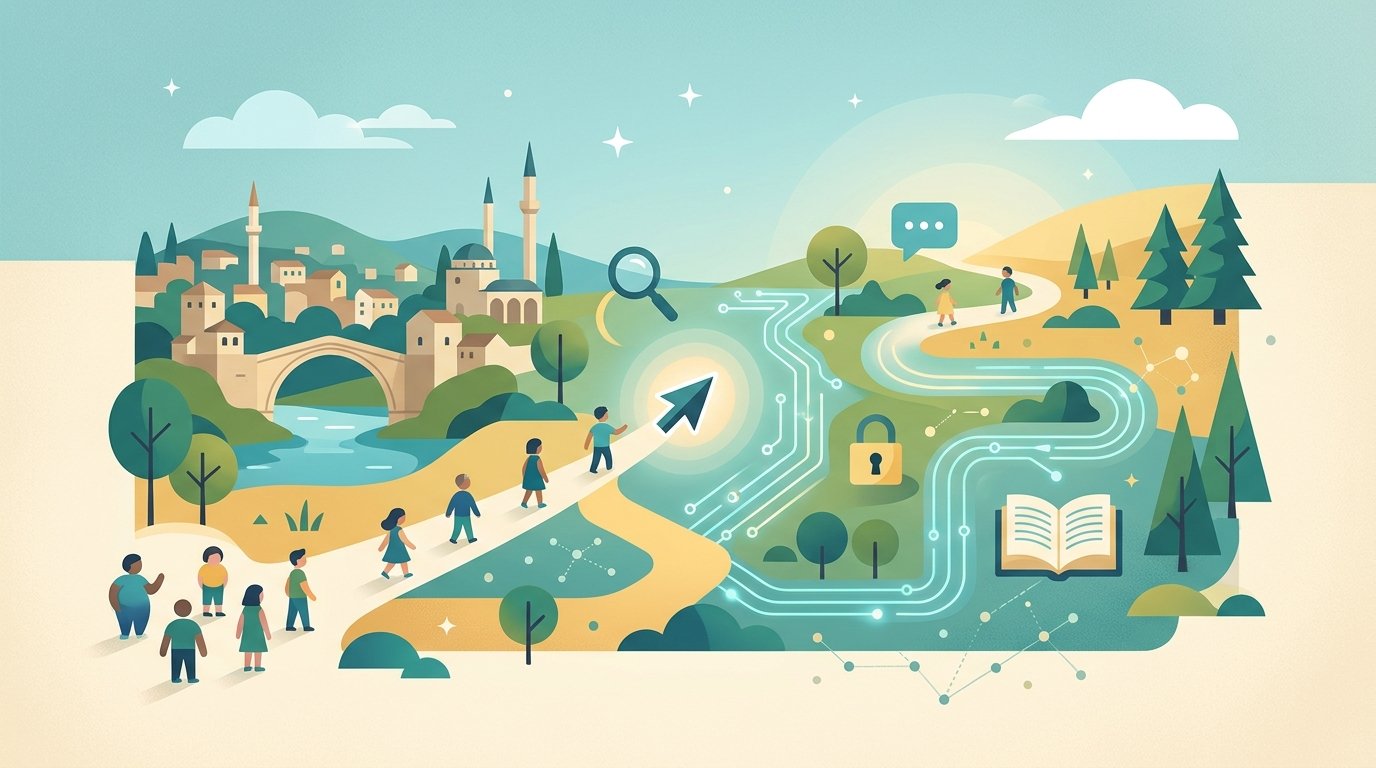
A team of developers, designers, and IT professionals based in Bosnia and Herzegovina has created a mobile video game designed to teach children and adolescents with Down syndrome how to recognise and respond to risks they may encounter online. The project addresses a gap in digital safety education for a group that has largely been overlooked by mainstream technology tools.
A game built around accessibility
The game, called SafeClick, was developed after the team observed that existing online safety resources relied heavily on written text, abstract language, and complex interfaces that were difficult for children with Down syndrome to follow. Rather than restricting internet access — a common response among caregivers — the developers wanted to give young people a way to practise making safe decisions online.
SafeClick uses visual scenarios and straightforward game mechanics to walk players through situations such as receiving a suspicious message, encountering an unknown person online, or experiencing cyberbullying. A virtual character called Sol the Owl guides players through the game. Key design choices included:
- Avoiding penalties for incorrect answers, instead explaining outcomes and offering another attempt
- Keeping interactions simple and suited to mobile devices
- Working directly with special education teachers and parents throughout development
There are estimated to be between 550 and 700 children and adolescents with Down syndrome in Bosnia and Herzegovina, supported by three specialist associations across the country. The development team collaborated with educators and families during testing, with early feedback helping to refine how scenarios were presented.
Broader implications for digital inclusion
The project was supported through the Digital Spark granting scheme, part of a wider initiative focused on digital democracy across the region. The development team said the experience shifted how they think about accessibility — not only as a design consideration, but as a condition for meaningful participation in everyday life. They noted that privacy and accessibility features need to be built into projects from the outset, rather than added later.
SafeClick was awaiting approval from major app platforms at the time of publication. The team said they plan to continue developing digital tools aimed at groups that are frequently left out of mainstream technology design.
This article is adapted from “In Bosnia and Herzegovina, children with Down syndrome are using a video game to safely navigate the internet” published by Global Voices, licensed under CC BY 3.0. Changes were made. Read the original story at the link above.
Discover More from Didier Lancelot
Amazon Author page: amazon.com/author/didierlancelot
Narmer Store: narmerstore.org
AI and Technology Ebooks
- Creative AI: Animated Drawings, Manga & Illustrations
- Build a Game with AI: The No-Code Guide
- AI Image Generation Made Easy
- Build a Website with AI: The No-Code Guide
- How to Connect AI to Your Blog: The Ultimate Automation Guide
- AI Productivity Habits: Get More Done in Less Time
- AI Avatars Made Easy
- The Book of AI Prompts: 100+ Proven Prompts
- Make Music with AI: Suno, Udio and AI Music Generators
- Click to Cash
- The Automated Edge: Outwork, Outpace, and Outperform with AI
- AI Side Hustle: How to Make Money with ChatGPT and AI Tools
- Work Smarter with AI
Health, Lifestyle and Home Ebooks
- Hidden Superfoods: The World’s Most Powerful Healing Foods
- Spanish Food: The Complete Cookbook for Authentic Home Cooking
- The Science of Happiness Explained
- The Psychology of Success
- The Secret Sauce of Consistency: What the Experts Don’t Tell You About Fitness
- The Complete Home Bartender’s Guide: Link 1 | Link 2
- Natural Beauty, Made Simple: Easy DIY Organic Skincare Recipes
- Garden Made Simple: Easy, Beginner-Friendly Techniques
- The Dog Training Bible