
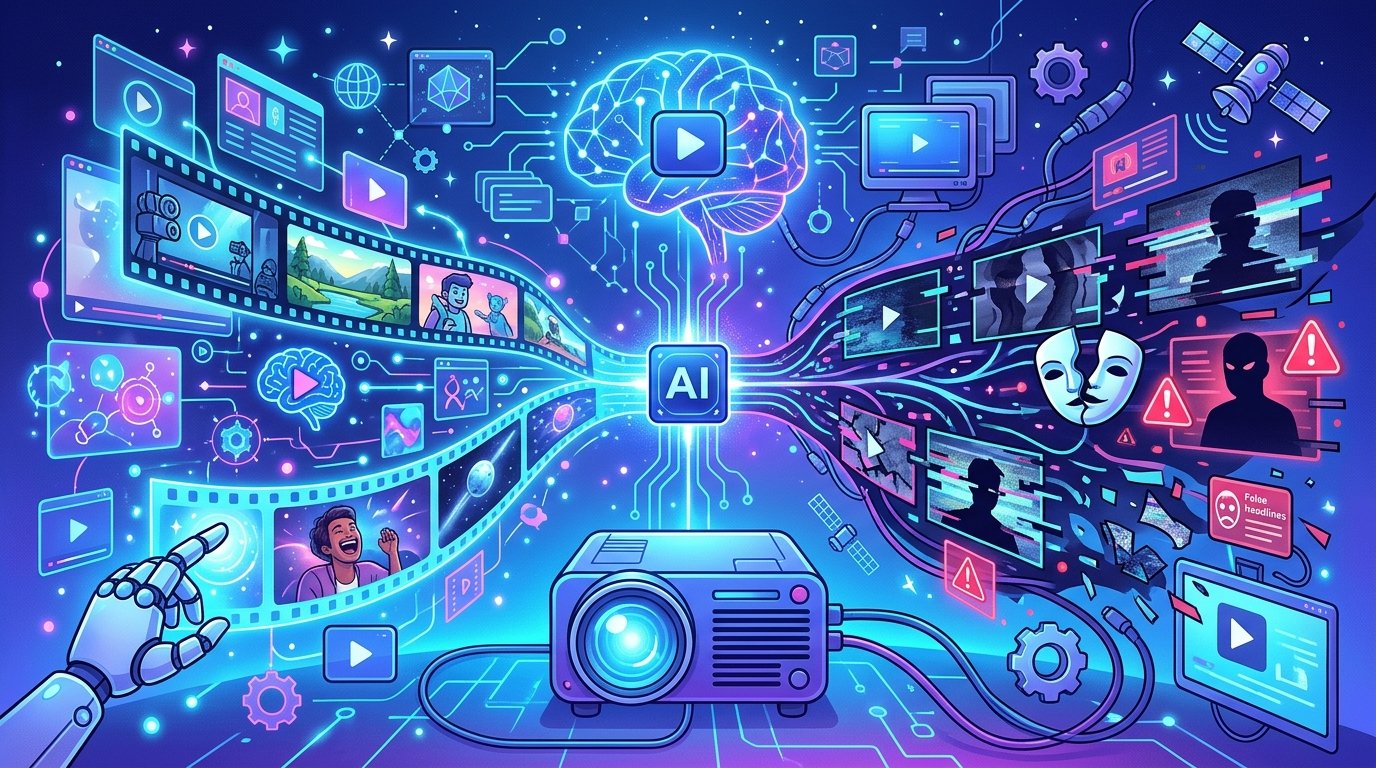
A few years ago, creating a polished video meant hiring a production crew, renting equipment, and spending days in an editing suite. Today, you can type a sentence into an AI tool and watch a video appear in minutes. AI-generated video — content produced or heavily assisted by artificial intelligence — is reshaping how we create, share, and consume media. Whether you are a small business owner, a content creator, or just someone who watches a lot of YouTube, this technology is already affecting your world. Understanding both the exciting possibilities and the very real risks is the first step to navigating it wisely.
What Is AI-Generated Video, Exactly?
AI-generated video uses machine learning models — software trained on enormous amounts of existing video, images, and text — to produce moving images automatically. Think of it as a very sophisticated autocomplete, but instead of finishing your sentence, it finishes your scene.
There are a few different flavors worth knowing about:
- Text-to-video: You type a description like “a golden retriever running on a sunny beach,” and the AI builds that clip from scratch.
- Image-to-video: You upload a still photo and the AI animates it, making characters blink, hair move, or backgrounds shift.
- Deepfakes: AI replaces or manipulates a person’s face or voice in existing footage. This is the most controversial form, and we will come back to it.
- AI-assisted editing: Tools that automatically cut footage, add subtitles, remove silences, or even clone your voice so you can fix a mispronounced word without re-recording.
The quality of these tools has improved dramatically, and the barrier to entry keeps dropping. You no longer need a computer science degree or a high-end machine to experiment with them.
The Opportunities: Who Benefits and How
The upside of AI-generated video is genuinely impressive, and the benefits spread across many different types of users.
For Creators and Marketers
Producing video content used to be expensive and slow. AI tools let a solo creator publish at the speed of a full media team. A blogger can turn a written article into a narrated explainer video in an afternoon. A small brand can produce a product demo without booking a studio. This levels the playing field in a meaningful way.
For Educators and Trainers
Imagine translating a training video into a dozen languages overnight, with a synthetic presenter who speaks each one fluently. AI-generated video makes localization — adapting content for different regions and languages — far more affordable. That means more people around the world can access high-quality learning materials.
For Accessibility
AI tools can automatically add captions, describe scenes for visually impaired viewers, or simplify complex visuals. Content that once required a specialist and a generous budget can now be made accessible by almost anyone.
Practical Tip
If you want to try AI video tools without a big commitment, start with AI-assisted editing features inside platforms you may already use. Many popular video editing apps now offer automatic captioning, background removal, and silence trimming powered by AI. These are low-risk entry points that deliver real time savings.
The Risks: Where Things Get Complicated
With great power comes a familiar set of problems. AI-generated video carries risks that individuals, businesses, and society as a whole need to take seriously.
- Misinformation and deepfakes: It is now relatively easy to create a convincing video of a real person saying something they never said. This has obvious implications for elections, journalism, and personal reputation. A fabricated video clip can go viral before anyone has time to verify it.
- Consent and privacy: Many AI video tools can animate or clone a person’s likeness using just a few photos or audio samples. This raises urgent questions about consent — who owns your face, and who has the right to animate it?
- Copyright confusion: AI models are trained on existing videos and images. The legal questions around what those models can reproduce, and whether original creators deserve compensation, are still being worked out in courts and legislatures worldwide.
- Eroding trust: When anyone can make anything look real, audiences may start doubting genuine footage. This “liar’s dividend” — the idea that real evidence becomes easier to dismiss — could be just as damaging as the fake videos themselves.
- Job displacement: Video production employs a lot of people. Editors, animators, voiceover artists, and on-screen presenters could all see their work disrupted. The transition will be uneven and, for some, painful.
How to Protect Yourself as a Viewer
You do not need to be a tech expert to develop a healthier habit of skepticism. A few practical habits go a long way:
- Check the source first. Before sharing a shocking video clip, ask where it came from. Credible news organisations verify footage before publishing it.
- Look for telltale signs. AI-generated video often has subtle glitches — unnatural blinking, odd lighting on faces, or hands with too many fingers. These imperfections are shrinking, but they still appear.
- Use reverse video search. Tools exist that let you check whether a clip has appeared elsewhere online, which can help you trace its original context.
- Slow down before sharing. Misinformation spreads fastest when people react emotionally and quickly. A moment’s pause can prevent you from amplifying something false.
What Comes Next
AI-generated video is not a passing trend. The technology will keep improving, the tools will keep getting cheaper, and the line between real and synthetic footage will keep blurring. Regulators in several parts of the world are already discussing requirements for labelling AI-generated content, sometimes called watermarking. Platform policies are evolving too, with some social networks now requiring creators to disclose when AI has been used in a meaningful way.
The most important thing is that these conversations happen in public, with everyday users at the table — not just technologists and lawyers. The choices made now about standards, transparency, and accountability will shape the media landscape for decades.
Conclusion
AI-generated video is one of the most double-edged technologies to emerge in recent memory. It hands extraordinary creative power to ordinary people, lowers the cost of storytelling, and opens doors for accessibility and education. At the same time, it poses genuine threats to truth, privacy, and trust. The key takeaway is this: approach AI video tools with both curiosity and critical thinking. Explore what they can do for you, but stay alert to what they can do to all of us — and make a habit of asking, before you believe or share any video, “could this be something it is not?”
Discover More from Didier Lancelot
Amazon Author page: amazon.com/author/didierlancelot
Narmer Store: narmerstore.org
AI and Technology Ebooks
- Creative AI: Animated Drawings, Manga & Illustrations
- Build a Game with AI: The No-Code Guide
- AI Image Generation Made Easy
- Build a Website with AI: The No-Code Guide
- How to Connect AI to Your Blog: The Ultimate Automation Guide
- AI Productivity Habits: Get More Done in Less Time
- AI Avatars Made Easy
- The Book of AI Prompts: 100+ Proven Prompts
- Make Music with AI: Suno, Udio and AI Music Generators
- Click to Cash
- The Automated Edge: Outwork, Outpace, and Outperform with AI
- AI Side Hustle: How to Make Money with ChatGPT and AI Tools
- Work Smarter with AI
Health, Lifestyle and Home Ebooks
- Hidden Superfoods: The World’s Most Powerful Healing Foods
- Spanish Food: The Complete Cookbook for Authentic Home Cooking
- The Science of Happiness Explained
- The Psychology of Success
- The Secret Sauce of Consistency: What the Experts Don’t Tell You About Fitness
- The Complete Home Bartender’s Guide: Link 1 | Link 2
- Natural Beauty, Made Simple: Easy DIY Organic Skincare Recipes
- Garden Made Simple: Easy, Beginner-Friendly Techniques
- The Dog Training Bible