
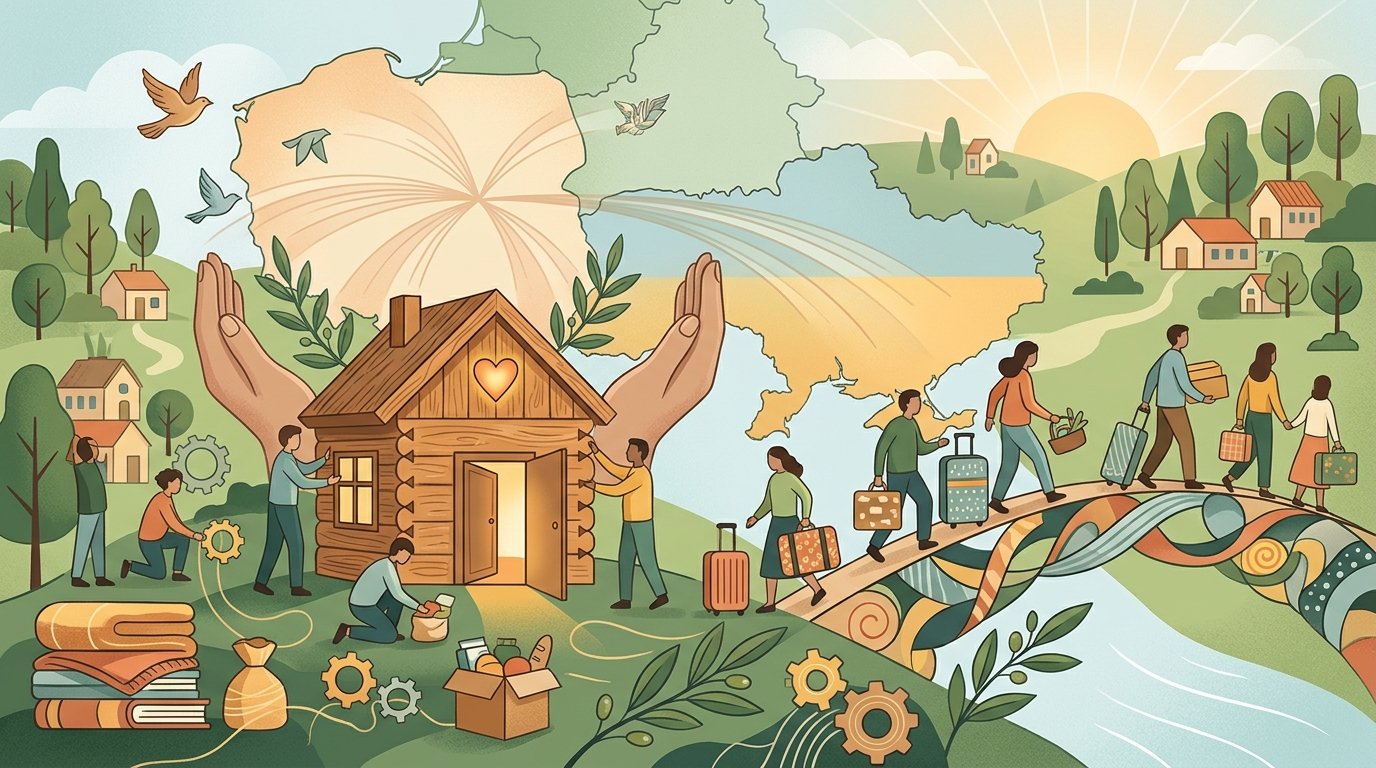
When Russian forces launched a full-scale invasion of Ukraine in February 2022, Polish citizens and civil society organisations responded with an extraordinary outpouring of support. Four years on, volunteers who were present in those early days are reflecting on how much has changed — and what is now under threat.
From border crossings to lasting programmes
In the days immediately following the invasion, volunteers from a Polish cultural association called Folkowisko crossed into Ukraine to assist the crowds of people waiting at the Budomierz-Hruszów border crossing in freezing temperatures. Drawing on their experience organising festivals, the group set up tents, medical support and logistical assistance. That emergency response eventually expanded into a broader network of cross-border initiatives, including:
- A medical clinic and education centre near the Polish-Ukrainian border
- Psychological support and training for Ukrainian social workers
- Cultural exchange programmes bringing Polish and Ukrainian youth together
- Temporary respite stays in Poland for Ukrainian families affected by the war
The organisation’s work also touches on the painful shared history of the border region, where Polish, Ukrainian and Jewish communities once lived alongside one another before wartime violence and postwar forced resettlements transformed the demographic landscape entirely. Volunteers believe that bringing people into direct contact with one another, and with this difficult history, is more productive than leaving those conversations to governments alone.
Solidarity under strain, and a disinformation threat
By 2026, close to a million Ukrainians held temporary protection status in Poland, representing more than a fifth of all Ukrainians under such protection across the European Union. Researchers and volunteers alike acknowledge that the goodwill of 2022 has been tested by the prolonged nature of the displacement. Pressure on housing, healthcare and public services has created social friction, and academics warn that Russian-linked disinformation campaigns have deliberately amplified historical grievances — particularly surrounding wartime atrocities in the Volhynia region — to deepen mistrust between Polish and Ukrainian communities.
Despite these pressures, those working on cross-border relationships argue that person-to-person contact remains the most effective counterweight to divisive narratives. Researchers studying disinformation echo this view, noting that familiarity and trust between communities make outside manipulation considerably harder to sustain.
This article is adapted from “Volunteers from Poland remember how Poles opened their homes to Ukrainian refugees in 2022” published by Global Voices, licensed under CC BY 3.0. Changes were made. Read the original story at the link above.
Discover More from Didier Lancelot
Amazon Author page: amazon.com/author/didierlancelot
Narmer Store: narmerstore.org
AI and Technology Ebooks
- Creative AI: Animated Drawings, Manga & Illustrations
- Build a Game with AI: The No-Code Guide
- AI Image Generation Made Easy
- Build a Website with AI: The No-Code Guide
- How to Connect AI to Your Blog: The Ultimate Automation Guide
- AI Productivity Habits: Get More Done in Less Time
- AI Avatars Made Easy
- The Book of AI Prompts: 100+ Proven Prompts
- Make Music with AI: Suno, Udio and AI Music Generators
- Click to Cash
- The Automated Edge: Outwork, Outpace, and Outperform with AI
- AI Side Hustle: How to Make Money with ChatGPT and AI Tools
- Work Smarter with AI
Health, Lifestyle and Home Ebooks
- Hidden Superfoods: The World’s Most Powerful Healing Foods
- Spanish Food: The Complete Cookbook for Authentic Home Cooking
- The Science of Happiness Explained
- The Psychology of Success
- The Secret Sauce of Consistency: What the Experts Don’t Tell You About Fitness
- The Complete Home Bartender’s Guide: Link 1 | Link 2
- Natural Beauty, Made Simple: Easy DIY Organic Skincare Recipes
- Garden Made Simple: Easy, Beginner-Friendly Techniques
- The Dog Training Bible