
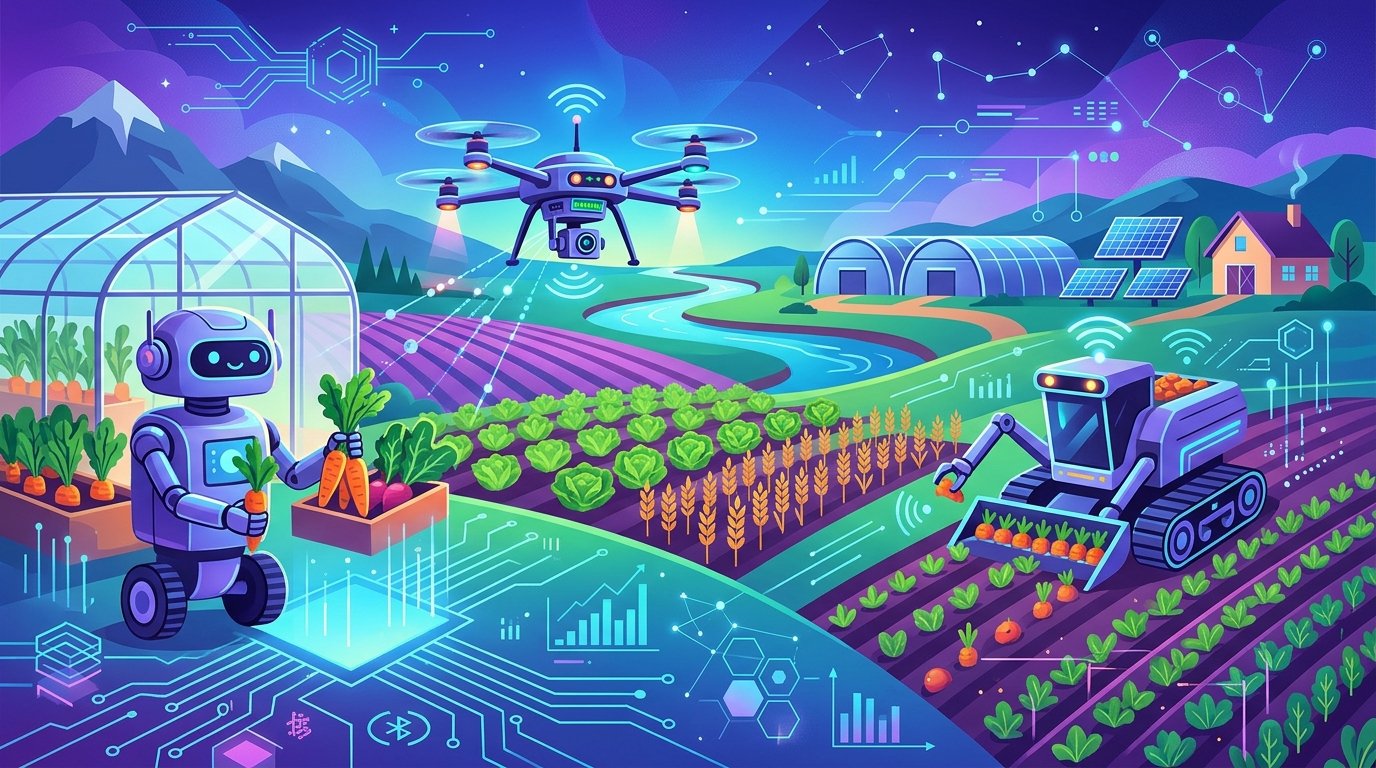
Picture a farm where tireless machines glide between crop rows at sunrise, spotting a diseased leaf before any human eye could, while another device gently picks ripe strawberries without bruising a single one. This is not science fiction — it is happening on real farms right now. Agricultural robots, once the stuff of futuristic documentaries, are quietly becoming everyday tools for farmers around the world. Whether you grow on a sprawling commercial operation or just follow food and tech trends out of curiosity, understanding how robots are reshaping farming can help you make sense of what is showing up on your dinner plate and why food production is changing so fast.
What Do Agricultural Robots Actually Do?
When most people hear “robot,” they picture a humanoid machine straight out of a movie. Farm robots look nothing like that. They come in many shapes and sizes — wheeled carts that roll through greenhouses, flying drones that survey fields from above, and robotic arms that sort produce on a conveyor belt. What unites them is their ability to perform repetitive, precise, or physically demanding tasks with minimal human input.
- Planting robots press seeds into soil at exact depths and spacing, reducing waste and improving germination rates.
- Weeding robots use cameras and software to tell the difference between a crop plant and a weed, then zap or pull the weed without harming the good plant.
- Harvesting robots use sensors and gentle grippers to pick fruit and vegetables at peak ripeness.
- Monitoring drones fly over fields and capture detailed images that reveal which areas need water, fertilizer, or pest treatment.
- Milking robots let dairy cows walk up to an automated station at their own pace and get milked without a farmer needing to be present.
Each of these machines handles a task that traditionally required skilled human labor, often for long hours in challenging outdoor conditions.
How Robots Help Farmers Work Smarter, Not Just Faster
Speed is only part of the story. The bigger shift is in precision — doing the right thing in exactly the right place at exactly the right time. This idea is often called precision agriculture, which simply means using data and technology to treat different parts of a field differently based on what each patch of land actually needs.
Think of it this way: a traditional farmer might spray an entire field with pesticide because one section has pests. A robot equipped with cameras and artificial intelligence — software that learns to recognize patterns the way a human brain does — can identify only the affected plants and treat just those spots. That means less chemical use, lower costs, and less environmental impact, all at once.
Drones are a great example of this smarter approach. A farmer can send a drone up before breakfast and, within an hour, have a color-coded map of their entire field showing which zones are stressed, dry, or thriving. Without that bird’s-eye view, spotting a problem in a large field could take days on foot.
Tackling the Labor Challenge
One of the most pressing problems in farming today is finding enough workers, especially for harvesting tasks that must happen quickly when crops reach peak ripeness. Harvesting is physically demanding, often seasonal, and increasingly hard to staff. Robots are stepping in to fill that gap.
Robotic harvesting is especially advanced in controlled environments like greenhouses, where conditions are predictable and consistent. Tomato-picking robots, for instance, use vision systems — essentially cameras combined with software that interprets what the camera sees — to locate ripe fruit and pick it without damaging the vine. In open fields, harvesting robots face trickier conditions like wind, uneven ground, and unpredictable lighting, but the technology is improving rapidly.
For farmers, this does not necessarily mean replacing workers entirely. It often means redirecting human workers toward tasks that require judgment, problem-solving, and relationship-building — things robots still struggle with — while machines handle the repetitive physical work.
Benefits Beyond the Farm Gate
The ripple effects of farm robotics reach well beyond the fields themselves. Here is how everyday consumers and the broader food system stand to benefit:
- Fresher produce: Faster, more accurate harvesting means crops spend less time in the field past peak ripeness.
- Reduced food waste: Robots can sort and grade produce with high consistency, reducing the amount that gets thrown away for cosmetic imperfections.
- Lower environmental footprint: Targeted application of water, fertilizers, and pesticides means less runoff into rivers and less pollution overall.
- Improved food safety: Automated monitoring can flag contamination risks or crop disease earlier, before problems spread.
Challenges and Things to Keep in Mind
Farm robots are not a perfect solution, and it is worth understanding the real obstacles farmers face when adopting them. The upfront cost of robotic equipment can be significant, putting it out of reach for smaller family farms without financial support or affordable leasing options. Robots also need maintenance, software updates, and occasionally specialist repairs — which can be difficult in rural areas far from tech support.
There are also broader questions worth thinking about, such as how this shift affects farming communities and the workers who depend on agricultural jobs. The technology itself is neutral; how society manages the transition matters enormously.
Finally, robots work best in structured, predictable environments. Farming is inherently unpredictable — weather changes, pests evolve, and every season brings surprises. Human expertise, local knowledge, and good judgment remain irreplaceable companions to any machine on a farm.
A Growing Field Worth Watching
Agricultural robotics is one of the most exciting and fast-moving areas in technology, with new developments emerging regularly. As sensors get cheaper, software gets smarter, and machines become more adaptable, the tools available to farmers will keep expanding. If you want to stay informed, following agriculture technology news, visiting local farm tours, or even exploring community-supported agriculture programs in your area can give you a front-row seat to these changes as they unfold.
Key takeaway: Farm robots are not replacing farming — they are transforming it. By handling precise, repetitive, and labor-intensive tasks, they free up farmers to focus on strategy and stewardship while helping produce food more efficiently and sustainably. The future of farming is a partnership between human wisdom and machine capability, and that future is already growing in fields near you.
Discover More from Didier Lancelot
Amazon Author page: amazon.com/author/didierlancelot
Narmer Store: narmerstore.org
AI and Technology Ebooks
- Creative AI: Animated Drawings, Manga & Illustrations
- Build a Game with AI: The No-Code Guide
- AI Image Generation Made Easy
- Build a Website with AI: The No-Code Guide
- How to Connect AI to Your Blog: The Ultimate Automation Guide
- AI Productivity Habits: Get More Done in Less Time
- AI Avatars Made Easy
- The Book of AI Prompts: 100+ Proven Prompts
- Make Music with AI: Suno, Udio and AI Music Generators
- Click to Cash
- The Automated Edge: Outwork, Outpace, and Outperform with AI
- AI Side Hustle: How to Make Money with ChatGPT and AI Tools
- Work Smarter with AI
Health, Lifestyle and Home Ebooks
- Hidden Superfoods: The World’s Most Powerful Healing Foods
- Spanish Food: The Complete Cookbook for Authentic Home Cooking
- The Science of Happiness Explained
- The Psychology of Success
- The Secret Sauce of Consistency: What the Experts Don’t Tell You About Fitness
- The Complete Home Bartender’s Guide: Link 1 | Link 2
- Natural Beauty, Made Simple: Easy DIY Organic Skincare Recipes
- Garden Made Simple: Easy, Beginner-Friendly Techniques
- The Dog Training Bible