
When energy dips become a daily pattern—mid-morning brain fog, afternoon fatigue, or sluggish workouts—it is tempting to reach for quick fixes. Yet the most effective energy support is rarely about “more стим” and always about better physiology: improved nutrient status, calmer stress responses, steadier focus, and stronger cellular output. The right energy supplements can help, especially when paired with sound lifestyle fundamentals.
This guide explains how energy-boosting supplements work, why fatigue happens, and the best supplements for energy—including caffeine, B vitamins, CoQ10, L-theanine, and adaptogens—along with practical guidance on choosing and using them safely.
Understanding Energy-Boosting Supplements
What Are Energy Supplements and How Do They Work?
Energy is not a single switch; it is the sum of multiple systems operating efficiently. Broadly, supplements aimed at increasing vitality work through one or more of the following pathways:
- Stimulation of the central nervous system to heighten alertness and reduce perceived effort (e.g., caffeine for energy).
- Support for energy metabolism by improving the conversion of food into usable cellular fuel (e.g., vitamins for energy such as B-complex).
- Mitochondrial support to enhance ATP production—the “energy currency” of cells (e.g., CoQ10 benefits).
- Stress modulation to reduce fatigue driven by chronic tension and dysregulated cortisol (e.g., adaptogens for energy).
- Improved focus and cognitive steadiness without overstimulation (e.g., L-theanine).
The most appropriate choice depends on the nature of your fatigue. A stimulant may mask sleep deprivation, while a nutrient repletion strategy can address a foundational deficiency. The goal is targeted support—not perpetual escalation.
Common Causes of Low Energy Levels
Before adding supplements, it is useful to identify what may be draining your reserves. Common contributors include:
- Insufficient or fragmented sleep, including inconsistent bedtimes and untreated sleep apnea.
- Dietary gaps, especially low protein intake, insufficient iron, inadequate B vitamins, or overly restrictive dieting.
- Dehydration, which can impair physical performance and concentration even at mild levels.
- Blood sugar instability from high-sugar meals followed by energy crashes.
- Chronic stress, which elevates mental fatigue and can disrupt recovery and motivation.
- Low activity levels that reduce mitochondrial efficiency and stamina over time.
- Medical factors such as anemia, thyroid dysfunction, depression, medication side effects, or nutrient malabsorption.
If fatigue is new, severe, or accompanied by concerning symptoms (shortness of breath, chest pain, unexplained weight change, persistent low mood), consult a clinician for appropriate evaluation.
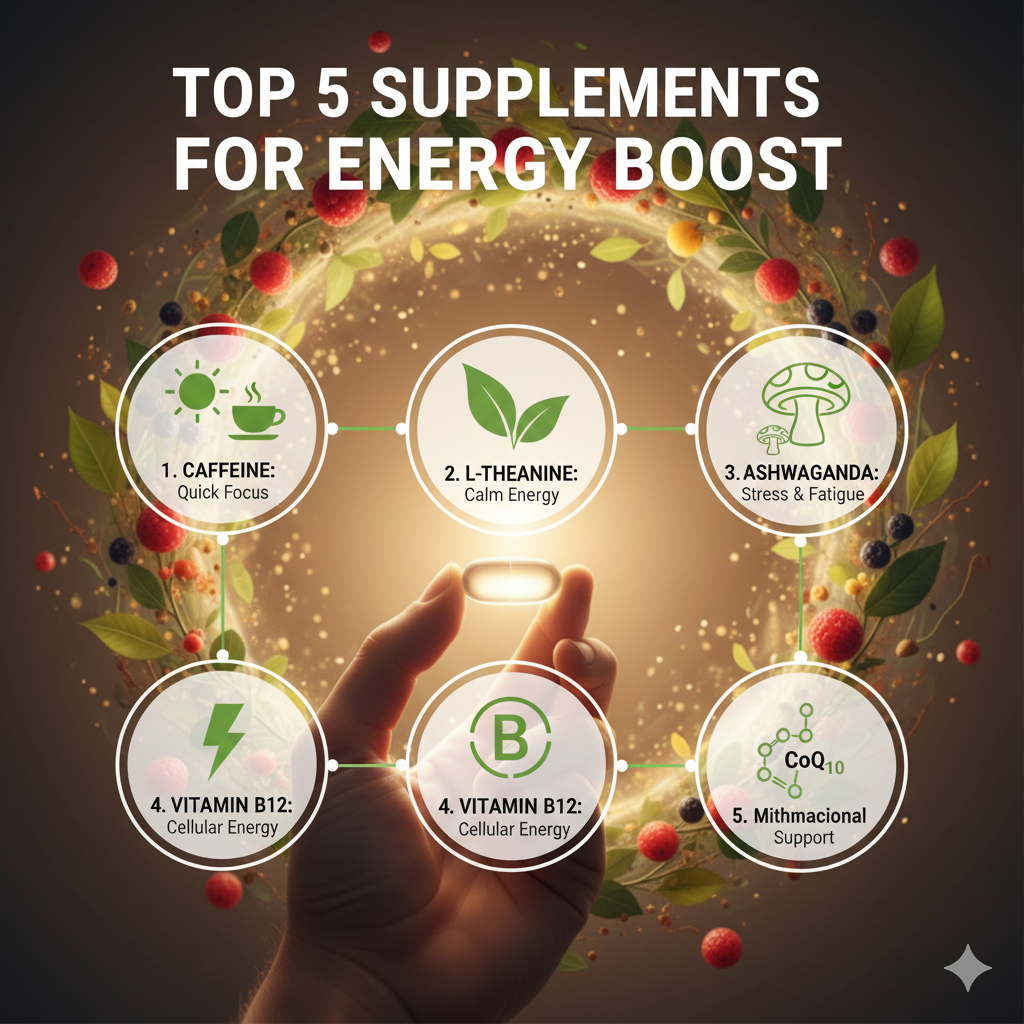
Top 5 Supplements for an Energy Boost
1. Caffeine: Fast-Acting Mental and Physical Energy
Caffeine remains one of the most reliable natural energy boosters for alertness and performance. It works primarily by blocking adenosine receptors—adenosine is a neuromodulator that accumulates during waking hours and promotes sleepiness. By dampening adenosine signaling, caffeine can sharpen attention, elevate mood, and improve exercise output.
Best for: Morning grogginess, demanding cognitive work, and pre-workout energy. It is particularly useful when you need rapid effects.
Typical dosage: Many people respond well to 50–200 mg per dose. For performance, dosing is often calculated by body weight, but sensitivity varies widely.
Timing: Use earlier in the day. A practical rule is to avoid caffeine within 8–10 hours of bedtime to protect sleep quality.
Possible side effects: Jitters, anxiety, rapid heart rate, reflux, and disrupted sleep. Habitual use may lead to tolerance. Pregnant individuals and those with certain cardiac or anxiety conditions should discuss intake with a healthcare professional.
2. B Vitamins: Nutritional Foundation for Daily Energy
B vitamins are essential co-factors in the metabolic pathways that convert carbohydrates, fats, and proteins into usable energy. While they do not “create” energy in the way stimulants do, adequate B status is foundational for normal vitality, red blood cell formation, and nervous system function. This makes them among the most important vitamins for energy when fatigue is related to nutritional insufficiency.
Key players include:
- B12 and folate for red blood cell production and neurological support.
- B6 for neurotransmitter synthesis and amino acid metabolism.
- Thiamine (B1), riboflavin (B2), and niacin (B3) for energy metabolism.
Best for: People with low dietary intake, higher needs (e.g., pregnancy), restrictive diets, older adults, and individuals who may have absorption challenges. B12 is especially relevant for vegans and some vegetarians.
Typical dosage: Many choose a B-complex providing approximately 100% of daily values; higher-potency formulas exist but are not always necessary.
Possible side effects: Generally well tolerated. High-dose niacin may cause flushing; excessive B6 over long periods can cause neuropathy. If you are managing chronic fatigue, consider testing (e.g., B12, folate) rather than guessing—especially when symptoms persist.
3. CoQ10: Cellular Powerhouse for Sustained Stamina
Coenzyme Q10 (CoQ10) is a fat-soluble compound central to mitochondrial energy production. It participates in the electron transport chain, a process that drives ATP synthesis. CoQ10 also functions as an antioxidant, helping protect cells from oxidative stress that can contribute to fatigue.
Best for: Individuals seeking sustained stamina rather than a quick “lift,” people over 40 (natural CoQ10 levels decline with age), and those taking statin medications, which may lower CoQ10 levels in some individuals. This is one reason many people explore CoQ10 benefits for day-to-day energy and exercise tolerance.
Typical dosage: Often 100–200 mg daily; some protocols use higher amounts under professional guidance.
Form and absorption: Ubiquinol (reduced form) is often promoted for superior bioavailability, especially in older adults. Taking CoQ10 with a meal containing fat can improve absorption.
Possible side effects: Usually mild (digestive upset, headache). CoQ10 may interact with blood thinners such as warfarin; medical oversight is advised in that context.
4. L-Theanine: Smooth Focus Without the Jitters
L-theanine is an amino acid found naturally in tea leaves, valued for promoting calm attentiveness. Rather than stimulating the nervous system, it appears to influence neurotransmitters associated with relaxation and cognitive performance. The result is often a clearer, steadier mental state—especially helpful for people who want focus without feeling overactivated.
Best for: Stress-related fatigue, anxious energy, and “wired but tired” patterns. L-theanine is also frequently paired with caffeine to improve attention while reducing jitters and the sharp edges of stimulation.
Typical dosage: Commonly 100–200 mg, taken as needed. Many people use it alongside caffeine in a 1:1 or 2:1 theanine-to-caffeine ratio, depending on sensitivity.
Possible side effects: Generally well tolerated. Because it may promote relaxation, some individuals prefer it earlier in the day if they are prone to sleepiness.
5. Adaptogens (Ashwagandha, Rhodiola): Stress Support and Vitality
Adaptogens are botanicals traditionally used to support resilience under stress. They are not stimulants in the classical sense; instead, they may help regulate the stress response, which can indirectly improve energy, motivation, and mental clarity. For many people, the most noticeable benefit is better stamina during demanding periods and reduced exhaustion tied to chronic tension—making them notable adaptogens for energy.
Ashwagandha: Often used for stress management, sleep support, and steady daytime vitality. It may be helpful when fatigue is paired with tension, restlessness, or poor recovery.
Rhodiola rosea: Commonly used for mental fatigue, endurance, and performance under pressure. It tends to feel more “activating” than ashwagandha for some individuals.
Typical dosage: Varies widely based on extract standardization. Follow label directions and choose products with clear standardization (e.g., withanolides for ashwagandha; rosavins/salidroside for rhodiola).
Possible side effects and cautions: Adaptogens can interact with medications and may not be appropriate for everyone (e.g., certain thyroid conditions, pregnancy, bipolar disorder, or autoimmune considerations depending on the herb and individual context). If you are under medical care, confirm suitability before starting.
How to Choose the Right Energy Supplement for You
Matching Supplements to Your Lifestyle and Health Goals
To increase energy levels effectively, start by matching the supplement to the problem you are actually trying to solve:
- You need immediate alertness: Consider caffeine, ideally with mindful timing and dosage.
- You suspect nutritional depletion or dietary gaps: A B-complex or targeted testing (B12, folate) may be more rational than escalating stimulants.
- You want longer-term stamina and cellular support: CoQ10 is a strong candidate, particularly for midlife and beyond.
- You want calm concentration: L-theanine can support focus, especially during cognitively demanding work.
- Your fatigue is stress-driven: Adaptogens such as ashwagandha or rhodiola may improve resilience and perceived energy over time.
In many cases, the best approach is not “more products,” but a small, well-chosen stack. For example, caffeine plus L-theanine for workdays, paired with CoQ10 or B vitamins when appropriate, can be more effective than chasing stronger stimulants.
Safety, Dosage, and Possible Side Effects
Even the best supplements for energy should be used with restraint and clinical common sense:
- Start low and assess: Begin at the lowest effective dose, especially with caffeine and rhodiola.
- Protect sleep at all costs: If an “energy” supplement erodes sleep quality, it will eventually worsen fatigue.
- Cycle when appropriate: Some people benefit from periodic breaks from stimulants to reduce tolerance.
- Review interactions: CoQ10 and adaptogens may interact with prescriptions. If you take anticoagulants, thyroid medication, antidepressants, or blood pressure drugs, confirm compatibility with a healthcare professional.
- Choose reputable brands: Look for transparent labeling, standardized extracts for botanicals, and third-party testing when available.
Natural Ways to Boost Energy Alongside Supplements
Diet, Hydration, and Sleep Habits That Support Energy
Supplements work best when they reinforce fundamentals rather than replace them. For sustainable energy:
- Build balanced meals: Combine protein, fiber-rich carbohydrates, and healthy fats to reduce energy volatility and cravings.
- Prioritize iron- and B-rich foods: Lean meats, legumes, leafy greens, eggs, dairy, and fortified foods can support energy metabolism.
- Hydrate consistently: Aim for regular fluid intake throughout the day; consider electrolytes if you sweat heavily or train intensely.
- Stabilize sleep timing: A consistent wake time is often more powerful than occasional early bedtimes. Keep the bedroom cool, dark, and quiet.
- Use caffeine strategically: Delay the first dose slightly after waking if you are prone to afternoon crashes, and avoid late-day intake.
Exercise, Stress Management, and Daily Routine Tips
Energy is also a byproduct of movement, recovery, and psychological load. Small changes can yield disproportionate returns:
- Move daily: Even a 10–20 minute brisk walk can improve mood, circulation, and alertness.
- Strength train consistently: Building muscle enhances metabolic health and can improve baseline stamina.
- Use micro-breaks for focus: Short breaks every 60–90 minutes can reduce cognitive fatigue and improve output.
- Manage stress deliberately: Breathwork, journaling, time-blocking, and brief mindfulness sessions can reduce the “mental tax” that drains energy.
- Get morning light: Outdoor light early in the day supports circadian rhythm, improving daytime alertness and nighttime sleep quality.
When lifestyle is aligned, supplements become precision tools—useful, not compensatory.
Conclusion
Energy is multifactorial, and so is effective support. Caffeine offers rapid alertness, B vitamins provide metabolic scaffolding, CoQ10 supports mitochondrial output, L-theanine encourages calm focus, and adaptogens can improve resilience when stress is the hidden culprit. Used thoughtfully, these energy supplements can complement healthy habits and help you increase energy levels without relying on escalating stimulation.
If fatigue persists despite improved sleep, nutrition, and stress management—or if it significantly interferes with daily life—consider medical evaluation to identify underlying causes. The most sustainable vitality comes from combining targeted supplementation with a lifestyle that consistently supports recovery and performance.