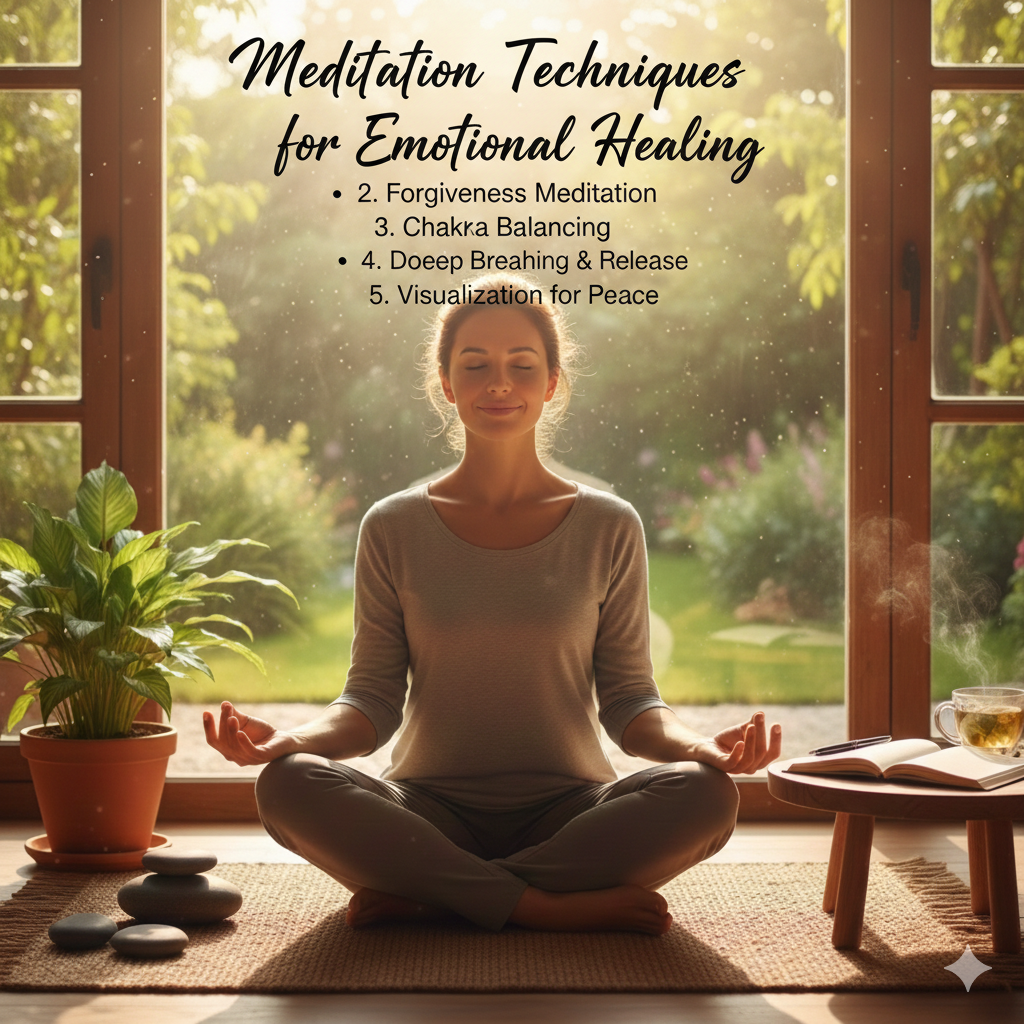
Emotional pain rarely disappears simply because time passes. It lingers in the body as tension, in the mind as rumination, and in daily life as guarded reactions. Meditation offers a structured way to meet that pain with steadiness rather than avoidance. By training attention and cultivating compassion, you can gradually loosen the grip of old wounds and develop a calmer, more resilient inner life. In this guide, you will learn practical meditation techniques for emotional healing, including mindfulness and loving-kindness practices, along with a clear routine you can begin today.
Understanding Meditation for Emotional Healing
What Is Emotional Healing and Why It Matters
Emotional healing is the process of acknowledging, integrating, and releasing distressing experiences so they no longer dominate your thoughts, choices, or relationships. It does not require forgetting what happened or denying the impact of loss, betrayal, fear, or chronic stress. Instead, it involves changing your relationship to these experiences—moving from reactivity to responsiveness, from self-judgment to self-understanding.
When emotional wounds remain unprocessed, they can shape behavior in subtle ways: difficulty trusting others, persistent anxiety, irritability, emotional numbness, or a tendency to overwork and overthink. Over time, these patterns can affect sleep, concentration, immune function, and cardiovascular health. An emotional healing meditation practice matters because it targets the roots of these patterns—how the mind interprets events and how the body holds stress—rather than merely managing symptoms.
How Meditation Supports Emotional Balance and Mental Health
Meditation strengthens the capacity to observe thoughts and feelings without being swept away by them. This skill is central to mindfulness for emotional healing: you learn to notice anger, grief, shame, or fear as experiences that arise and pass, not as definitions of who you are. With practice, you become more adept at detecting the early signals of emotional escalation—tightness in the chest, a racing mind, shallow breathing—and intervening before you spiral.
Equally important, meditation creates a safe internal environment for emotional processing. When the nervous system is regulated through steady breathing and attentive presence, the mind becomes less defensive. This allows difficult memories and sensations to surface in manageable doses, enabling gradual integration. For many people, meditation also supports healthier coping strategies, improves emotional clarity, and enhances the ability to communicate needs without blame or withdrawal.
Best Meditation Techniques for Emotional Healing
Mindfulness Meditation for Processing Difficult Emotions
Mindfulness meditation is one of the most effective meditation techniques for emotional healing because it trains you to stay present with discomfort while maintaining psychological distance from it. Rather than suppressing an emotion or acting it out, you learn to name it, locate it in the body, and observe how it changes. This is a direct answer to those searching for how to heal emotional pain with meditation in a practical, non-mystical way.
Core approach: Bring attention to the breath, then gently include emotions as they appear. When a difficult feeling arises, you acknowledge it with precision—“sadness,” “fear,” “resentment”—and observe associated sensations. If the mind begins storytelling (replaying arguments, predicting rejection, rehearsing regrets), you return to the breath and the raw sensory experience. This interrupts rumination and builds emotional tolerance.
To deepen the practice, use the “RAIN” method:
- Recognize what is present (emotion, thought, bodily sensation).
- Allow it to exist without immediate resistance.
- Investigate with curiosity: Where do you feel it? What does it need?
- Nurture with kindness: offer supportive inner language rather than critique.
When used consistently, mindfulness becomes a reliable form of meditation for stress and anxiety relief, reducing reactivity and fostering a steadier mood.
Loving-Kindness (Metta) Meditation for Self-Compassion and Forgiveness
Loving-kindness meditation, also called Metta, strengthens the emotional muscles of warmth, empathy, and goodwill. It is especially helpful when emotional pain is intertwined with self-blame, shame, or unresolved relational wounds. For those exploring meditation for self-compassion and forgiveness, Metta offers a structured way to soften inner hostility and rebuild trust in oneself.
This practice can also be supportive as loving-kindness meditation for trauma when approached gently and progressively. Trauma often fractures self-relationship; Metta helps restore it by rehearsing care in the mind until it becomes more accessible under stress. The goal is not to force positive feelings, but to plant intentions that gradually reshape emotional conditioning.
Classic Metta phrases (adapt them to your language and beliefs):
- May I be safe.
- May I be peaceful.
- May I be free from suffering.
- May I live with ease.
Over time, you can extend these wishes to a trusted person, a neutral person, and—only if it feels appropriate—someone with whom you have conflict. Forgiveness here is not excusing harm; it is releasing your nervous system from perpetual battle.
Step-by-Step Guide to Start an Emotional Healing Meditation Practice
How to Prepare Your Space, Posture, and Breath for Healing
Consistency depends on making meditation simple and accessible. Choose a quiet location where you can sit without interruption for a few minutes. The space does not need to be perfect; it needs to be dependable. If you are working with intense emotions, consider practicing at a time of day when you feel relatively stable, such as morning or early evening.
Posture: Sit on a chair with feet flat, or on a cushion with legs crossed. Keep the spine upright but not rigid, shoulders relaxed, and hands resting comfortably. This posture communicates alertness to the mind and safety to the body.
Breath: Begin with two minutes of slower breathing to settle the nervous system. Inhale through the nose for a count of four, exhale for a count of six. Longer exhales tend to reduce physiological arousal, creating the conditions for emotional processing.
If you prefer structure, use a guided meditation for emotional release. Skilled guidance can help you stay oriented when strong sensations arise and can prevent the common trap of turning meditation into another form of self-criticism.
Simple Daily Meditation Routine for Managing Stress, Anxiety, and Trauma
The most sustainable emotional healing meditation practice is modest, precise, and repeatable. A short routine performed daily is more transformative than occasional long sessions that feel daunting.
10–15 minute daily routine:
- Arrive (1–2 minutes): Sit down, feel the ground under you, and take several slow breaths. Name your intention: “I am here to listen.”
- Mindfulness of breath (4–5 minutes): Rest attention on the breath at the nostrils or abdomen. When the mind wanders, return without judgment.
- Mindfulness of emotion (3–4 minutes): Ask, “What is most present right now?” Identify one emotion and locate it in the body. Observe its intensity, texture, and movement. Let it be there while staying anchored in the breath.
- Metta for self-compassion (3–4 minutes): Repeat loving-kindness phrases toward yourself. If you feel numb, continue gently; the practice works through repetition, not force.
- Close (30 seconds): Place a hand on the chest or abdomen and acknowledge your effort. Decide on one supportive action for the day—hydration, a walk, a boundary, or rest.
This routine is particularly effective as meditation for stress and anxiety relief because it combines regulation (breath), insight (mindfulness), and repair (self-compassion). If trauma symptoms are active—flashbacks, panic, dissociation—shorten the emotional focus portion and emphasize grounding through breath and body sensation. When needed, work alongside a qualified mental health professional for additional support.
Tips, Challenges, and Long-Term Benefits of Emotional Healing Meditation
Common Obstacles in Emotional Healing and How to Overcome Them
Restlessness and impatience: Many people conclude they are “bad at meditation” because the mind is busy. A busy mind is not a failure; it is the starting point. Use shorter sessions and return to one anchor—breath, sound, or touch—repeatedly.
Emotional flooding: Sometimes meditation reveals more than you expected. If feelings become overwhelming, open your eyes, look around the room, and name five objects you see. Feel your feet on the floor. This shifts the nervous system from immersion to orientation. In future sessions, titrate exposure by focusing on emotions for briefer intervals.
Numbness or disconnection: Emotional shutdown can be a protective response. Instead of forcing feeling, practice simple sensory mindfulness: warmth of the hands, air on the skin, the weight of the body. Over time, sensation often becomes a bridge back to emotion.
Self-judgment: People frequently turn meditation into another performance metric. Replace evaluation with curiosity. If shame arises, it becomes the object of mindfulness, not a verdict. This shift is central to how to heal emotional pain with meditation.
Inconsistency: Build a ritual: same chair, same time, same duration. Reduce friction by setting a timer and keeping expectations realistic. Even five minutes daily can create momentum.
Long-Term Emotional, Mental, and Physical Benefits of Regular Meditation
With steady practice, the benefits of meditation for emotional health extend beyond momentary calm. Emotionally, you may notice greater resilience, improved distress tolerance, and less reactivity in relationships. Many practitioners report a gentler inner voice, increased self-respect, and a clearer ability to set boundaries without guilt.
Mental benefits often include improved concentration, reduced rumination, and a more flexible perspective during setbacks. Over time, mindfulness and compassion practices can help untangle habitual narratives—“I am unlovable,” “I am unsafe,” “I always fail”—and replace them with more accurate, humane interpretations.
Physically, regular meditation may support better sleep, lower perceived stress, and healthier physiological recovery after emotional triggers. While meditation is not a cure-all, it is a powerful, evidence-aligned method for nervous system regulation and emotional integration—especially when combined with therapy, social support, and sound lifestyle choices.
Conclusion
Healing is rarely linear, but it is learnable. By applying reliable meditation techniques for emotional healing—particularly mindfulness and loving-kindness—you cultivate the skills that emotional pain often disrupts: steadiness, clarity, and compassion. Begin with a simple routine, meet obstacles with patience, and let consistency do the deeper work. Over time, emotional healing meditation can become more than a practice; it can become a way of living with greater ease, integrity, and emotional freedom.