
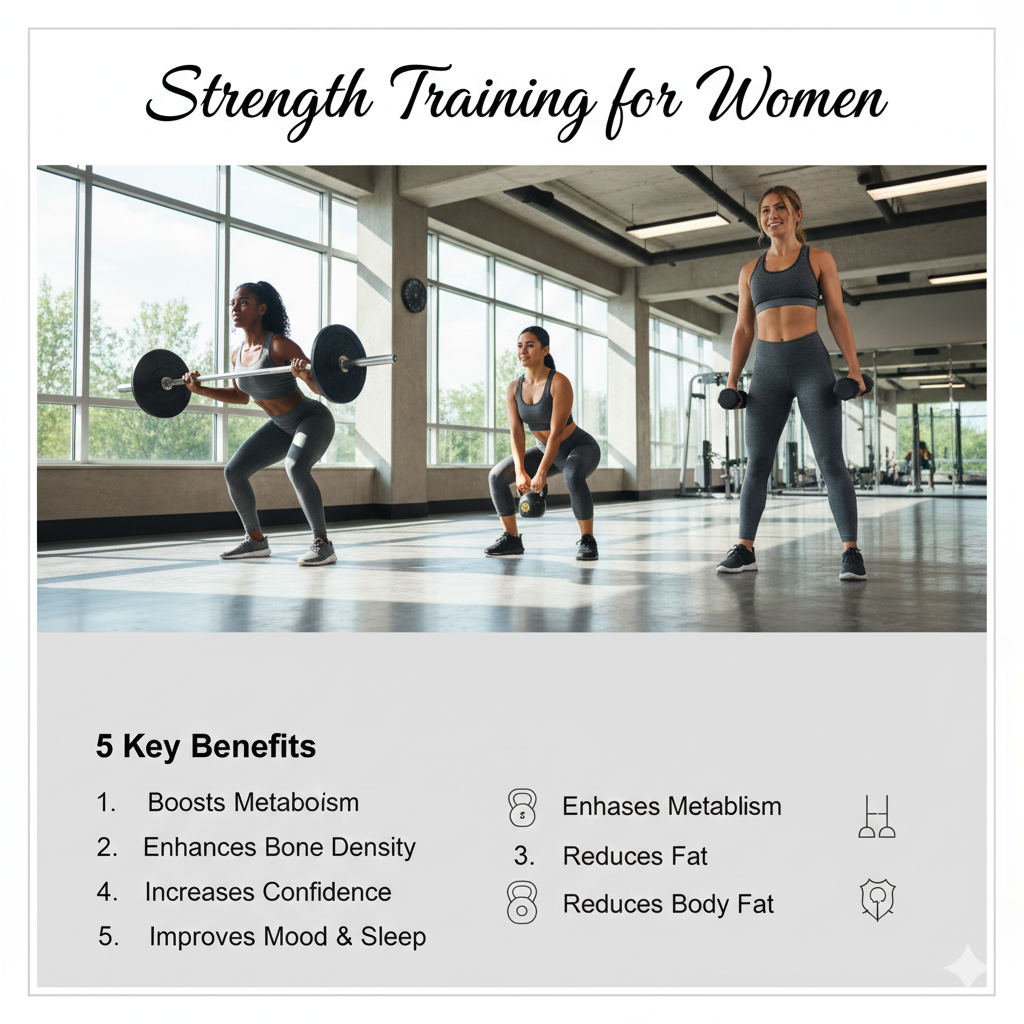
Strength training for women has moved far beyond the outdated stereotypes that once confined it to elite athletes or bodybuilders. Today, it is widely recognized as one of the most efficient, evidence-backed approaches to improving health, reshaping physique, and building durable strength for daily life. Whether your priority is improved posture, sustainable fat loss, stronger bones, or greater self-assurance, women’s weight training offers benefits that compound over time.
This guide explains the most important advantages of lifting and resistance work, clarifies common misconceptions, and provides practical direction for strength training for female beginners—including a simple, effective women’s workout routine you can adapt to your schedule and goals.
Understanding the Benefits of Strength Training for Women
Why Strength Training Is Essential for Women’s Health
Strength training is not merely an aesthetic tool; it is a cornerstone of lifelong health. As women age, natural shifts in hormones and activity levels can contribute to gradual muscle loss, reduced bone mineral density, and declining power and balance. Resistance training directly counters these changes by encouraging the body to maintain and develop muscle tissue, strengthen connective structures, and preserve functional capacity.
In practical terms, women’s fitness and strength affect nearly everything: how comfortably you carry groceries, how resilient you feel after long workdays, how stable your joints are during exercise, and how confidently you move through the world. When incorporated consistently, strength training becomes a protective habit—one that improves performance now and supports independence later.
Debunking Common Strength Training Myths for Women
Myth 1: Lifting heavy will make you “bulky.” Significant muscular bulk typically requires specific training volume, years of progressive programming, and often a calorie surplus. Most women build a lean, athletic shape because hormonal profiles and training variables generally favor gradual, proportional muscle development rather than extreme hypertrophy.
Myth 2: Cardio is the only path to weight loss. While cardiovascular training has clear benefits, weight loss strength training for women is uniquely valuable because it supports muscle retention while reducing fat. This matters because maintaining muscle helps keep metabolism higher and improves body composition—often yielding a more defined look at the same scale weight.
Myth 3: Strength training is unsafe for beginners. When technique, progression, and recovery are respected, strength work is highly adaptable and safe. In fact, building strength often reduces injury risk by improving joint stability and movement mechanics.
Physical Health Benefits of Strength Training for Women
Building Lean Muscle and Boosting Metabolism
One of the most visible benefits of strength training for women is the ability to build lean muscle. Increased muscle mass improves physical capability—lifting, carrying, pushing, and pulling become easier—and contributes to a firmer, more sculpted appearance without requiring extreme dieting.
Muscle tissue is also metabolically active. While the phrase “boosting metabolism” is sometimes oversimplified, the real advantage is meaningful: strength training encourages the body to preserve and develop muscle, which supports daily energy expenditure and helps prevent the metabolic slowdown that can occur with aggressive calorie restriction. Additionally, resistance training can elevate post-exercise oxygen consumption, meaning the body uses additional energy during recovery.
For women pursuing weight loss, strength training is especially strategic. Rather than chasing scale changes alone, it supports recomposition—reducing fat while maintaining or increasing muscle—often producing a healthier, more sustainable transformation.
Improving Bone Density, Joint Health, and Injury Prevention
Bone health is a central reason strength training should be non-negotiable. Women face a higher lifetime risk of osteopenia and osteoporosis, particularly after menopause. Progressive resistance training and targeted bone density exercises for women—such as loaded squats, lunges, deadlifts, presses, and impact-appropriate movements—stimulate bone remodeling and can help maintain or improve bone mineral density.
Strength work also reinforces the structures that support your joints. Muscles, tendons, and ligaments adapt to well-planned loading, enhancing joint integrity and improving movement control. This is a major component of injury prevention: stronger hips, glutes, hamstrings, and core can reduce knee stress; stronger upper back and shoulders can alleviate postural strain from desk work; and improved balance and proprioception reduce the risk of falls.
In short, strength training functions as “insurance” for your body—building the capacity to tolerate stress, absorb impact, and recover more efficiently.
Mental and Lifestyle Benefits of Strength Training for Women
Enhancing Confidence, Body Image, and Mental Well-Being
The psychological dividends of women’s weight training are often as profound as the physical ones. There is a distinct confidence that comes from measurable progress: adding weight to a lift, performing a push-up for the first time, or moving with noticeably better posture and stability. These milestones reshape self-perception from appearance-focused to capability-focused.
Strength training also supports mental well-being by providing structure, routine, and a sense of agency. Many women report improved stress management and a more stable mood when training consistently, in part because exercise supports sleep quality, resilience, and cognitive clarity. Over time, the gym becomes less a place of judgment and more a personal laboratory for growth.
How Strength Training Supports Weight Management and Longevity
Effective weight management is rarely about a single tactic; it is about creating a body and lifestyle that are easier to sustain. Strength training contributes by improving insulin sensitivity, enhancing energy regulation, and encouraging healthier body composition. When you build lean muscle, everyday activities often feel less taxing, which can increase overall daily movement—an underrated driver of long-term results.
From a longevity perspective, strength is a powerful marker of health. Maintaining muscle and power supports mobility, protects against frailty, and helps preserve independence with age. Better balance, stronger bones, and improved joint function all contribute to a life with fewer limitations and more options.
How to Safely Get Started with Strength Training as a Woman
Beginner-Friendly Strength Training Tips and Guidelines
If you are new to strength training for women, the best approach is disciplined simplicity. Start with foundational movement patterns, learn reliable form, and progress gradually. The goal is consistency, not exhaustion.
- Prioritize technique before load. Choose weights that allow controlled, full-range repetitions. Quality builds results; sloppy volume builds setbacks.
- Begin with compound lifts and smart accessories. Squats (or sit-to-stand variations), hip hinges (deadlift patterns), pushes, pulls, and carries give the highest return on time invested.
- Use a moderate effort level. Most sets should end with 1–3 repetitions left in reserve. This supports learning, recovery, and momentum.
- Progress with intention. Add small amounts of weight, extra repetitions, or an additional set only when your current workload feels stable and repeatable.
- Warm up strategically. Five to ten minutes of light cardio plus mobility for hips, ankles, thoracic spine, and shoulders prepares joints and improves performance.
- Respect recovery. Two to four days per week is sufficient for most beginners. Sleep, protein intake, and rest days are integral to adaptation.
- Choose the right tools for your environment. Machines can be excellent for learning controlled patterns; free weights build coordination; resistance bands and dumbbells are effective for at-home strength training for female beginners.
Finally, align training with your body and schedule. A routine that you can perform consistently for months will outperform a perfect plan that collapses in two weeks.
Sample Weekly Strength Training Routine for Women
This women’s workout routine is designed for beginners and early intermediates. It balances full-body training with manageable volume and includes key patterns to build strength, improve posture, and support joint health. Adjust loads so the last few reps are challenging but technically sound.
Option A: Three Days per Week (Full Body)
Day 1
- Goblet Squat or Leg Press: 3 sets of 8–10 reps
- Dumbbell Bench Press or Push-Up Incline: 3 sets of 8–12 reps
- Seated Row or One-Arm Dumbbell Row: 3 sets of 10–12 reps
- Romanian Deadlift (Dumbbells) or Hip Hinge with Kettlebell: 2–3 sets of 8–10 reps
- Plank or Dead Bug: 3 sets of 30–45 seconds
Day 2
- Reverse Lunge or Split Squat: 3 sets of 8–10 reps per side
- Overhead Press (Dumbbells or Machine): 3 sets of 8–10 reps
- Lat Pulldown or Assisted Pull-Up: 3 sets of 8–12 reps
- Glute Bridge or Hip Thrust: 3 sets of 10–12 reps
- Farmer’s Carry: 3 rounds of 30–60 seconds
Day 3
- Trap Bar Deadlift or Machine Deadlift Alternative: 3 sets of 5–8 reps
- Incline Dumbbell Press: 3 sets of 8–12 reps
- Chest-Supported Row or Cable Row: 3 sets of 10–12 reps
- Step-Up or Leg Curl Machine: 2–3 sets of 10 reps per side (step-up) or 10–12 reps (leg curl)
- Pallof Press or Side Plank: 3 sets of 10–12 reps per side or 30–45 seconds
Option B: Two Days per Week (Full Body, Time-Efficient)
Day 1: Squat pattern + press + row + core
Day 2: Hinge pattern + overhead press + pulldown + glute accessory
Progression guideline: When you can complete all sets at the top of the rep range with strong form, increase the weight slightly the next session. This simple progression model works exceptionally well for women’s fitness and strength goals.
Note: If you have pain, are postpartum, or have known joint issues, consult a qualified professional to individualize exercise selection and loading. Safe progression is the foundation of lasting results.
Conclusion
The benefits of strength training for women extend far beyond the gym. Done consistently, it helps build lean muscle, supports metabolism, strengthens bones and joints, reduces injury risk, and improves confidence and mental well-being. It also plays a meaningful role in weight loss strength training for women by promoting healthier body composition and long-term sustainability.
The most effective plan is the one you can maintain: start with manageable sessions, focus on sound technique, and progress steadily. Over time, strength becomes more than a workout method—it becomes a durable asset that supports health, performance, and longevity.