
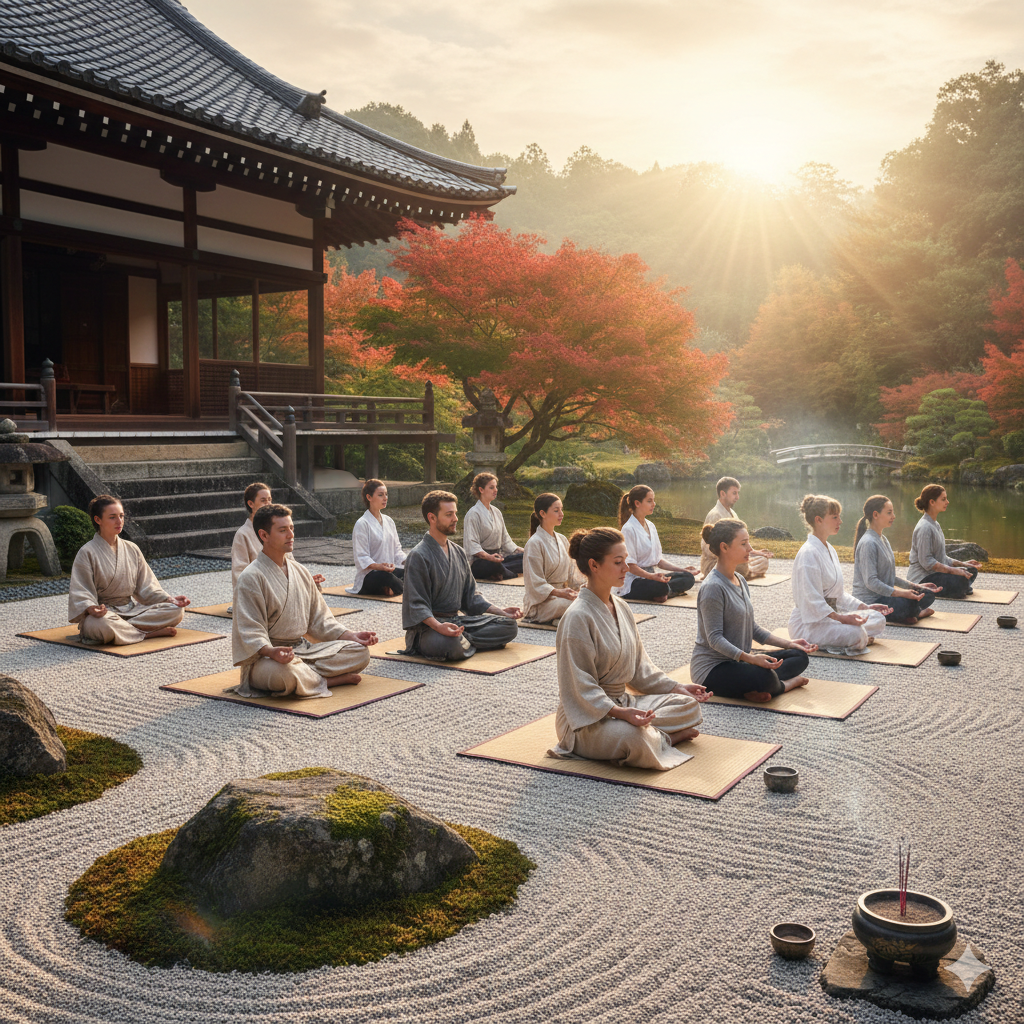
Creativity rarely disappears; it more often becomes inaccessible. Mental noise, self-judgment, fatigue, and constant input can crowd out the subtle signals where original ideas form. Meditation offers a practical way to clear that internal bandwidth. By training attention and easing cognitive tension, it becomes easier to notice fresh associations, tolerate uncertainty, and stay present long enough for a concept to mature. This guide explains how to use meditation to enhance creativity with specific methods, routines, and tools you can apply to writing, design, music, problem-solving, and innovation.
Understanding the Link Between Meditation and Creativityhttps://www.teepublic.com/t-shirt/50159849-hot-dog?store_id=2851997
What Is Creativity and Why It Gets Blocked
Creativity is the capacity to generate ideas that are both novel and useful. It draws on divergent thinking (producing many possibilities), convergent thinking (selecting and refining), and the ability to connect distant concepts. Yet even skilled creatives encounter blocks. These often stem from predictable culprits:
- Excessive self-monitoring: When the inner critic dominates, experimentation feels risky and ideas are edited prematurely.
- Cognitive overload: Continuous notifications, multitasking, and information consumption reduce the mental “white space” where insights emerge.
- Stress and time pressure: A stressed mind narrows attention and favors familiar solutions over exploratory thinking.
- Perfectionism: The demand for immediate excellence interrupts the iterative process that creativity requires.
- Emotional residue: Unprocessed frustration, anxiety, or self-doubt can make creative work feel heavier than it is.
Effective meditation for creativity addresses these barriers directly. It does not force inspiration; it reduces friction so inspiration can surface.
How Meditation Affects the Brain’s Creative Centers
Creative cognition relies on a dynamic interplay between focused attention and spontaneous mind-wandering. Meditation trains both capacities. In practical terms, it strengthens your ability to notice distractions, return to a chosen object (like the breath), and observe thoughts without being captured by them. This has several creativity-relevant effects:
- Improved attentional control: Sustained focus supports deep work and makes it easier to develop an idea beyond the first draft.
- Reduced reactivity: When emotions and critical thoughts are seen as passing events, you can keep creating rather than debating your worth.
- Greater cognitive flexibility: Observing thoughts without clinging encourages new perspectives and unexpected associations.
- Better access to incubation: Quiet, open awareness allows subtle connections to appear—often the essence of a breakthrough.
In other words, mindfulness for creativity is less about becoming “blank” and more about cultivating a mind that is steady, receptive, and less entangled in automatic judgments.
Best Types of Meditation to Boost Creativity
Mindfulness Meditation Techniques for Creative Thinking
Mindfulness meditation develops stable attention and clear perception—two qualities that support high-level creative output. When practiced consistently, it can reduce the impulse to abandon an idea at the first sign of discomfort and increase your ability to work with uncertainty.
Several mindfulness-based approaches are especially useful as meditation techniques for creative thinking:
- Breath-focused mindfulness: Anchor attention on the breath. Each time your mind wanders, return gently. This strengthens concentration for editing, composing, and polishing.
- Body scan: Move attention gradually through the body. This decreases tension that silently drains creative energy and helps you recognize when stress is dictating your choices.
- Noting practice: Label mental events simply—“planning,” “judging,” “remembering.” Noting is particularly effective for loosening the grip of the inner critic.
These methods are foundational because they train you to stay with your process. Creativity is rarely a single moment of inspiration; it is the disciplined refinement of raw material.
Guided Visualization and Open-Monitoring Meditation for Idea Generation
When the goal is to generate ideas rather than execute them, practices that encourage openness can be more productive. Two stand out for those seeking to boost creative ideas with meditation:
- Guided visualization: You intentionally form mental imagery—an environment, a conversation with a “future self,” or a symbolic representation of a project. This is valuable for artists, designers, and innovators who think in images and metaphors. Visualization meditation for innovation can also help teams rehearse scenarios and prototype solutions mentally before committing resources.
- Open-monitoring meditation: Instead of narrowing attention to one object, you observe sensations, thoughts, and sounds as they arise, without selecting or rejecting. This mode is well-suited to divergent thinking because it invites the mind to reveal connections it might ordinarily filter out.
If mindfulness stabilizes the mind, open-monitoring and visualization widen the field. Used together, they create a practical cycle: steadiness for execution, openness for discovery.
Step-by-Step: How to Use Meditation to Enhance Your Creative Process
Creating a Daily Meditation Routine for Creative Work
A daily meditation routine for creatives should be simple enough to maintain and specific enough to support real output. Consistency matters more than duration. The following structure works for many creative professionals:
1) Choose a modest baseline
Start with 7–10 minutes per day for two weeks. This lowers resistance and builds trust in the practice. Increase to 15–20 minutes when it feels stable.
2) Match meditation type to creative phase
- Idea generation: 10 minutes of open-monitoring or guided visualization.
- Production and refinement: 10–20 minutes of breath-focused mindfulness.
- Recovery after intense work: 8–12 minutes of body scan to downshift and prevent burnout.
3) Attach it to an existing habit
Link meditation to something reliable: morning coffee, arriving at your studio, or shutting down your laptop. Habit-stacking is often more effective than relying on motivation.
4) Define a clear creative intention
Before you begin, set a precise intention such as: “Explore three directions for the opening scene,” or “Find a bolder color palette,” or “Work on the chorus without self-censorship.” An intention is not a demand; it is a compass.
5) Transition directly into work
After meditating, begin a low-friction task for two to five minutes: freewriting, thumbnail sketches, rough chord progressions, or outlining. This captures the calm clarity you just cultivated and converts it into momentum.
Practical Meditation Exercises Before, During, and After Creating
Creativity benefits from micro-practices. These short meditation exercises for artists and creative thinkers can be integrated into your workflow without disrupting it.
Before creating: The 3-minute arrival practice
- One minute: Notice your posture and take slow breaths. Do not fix anything; simply observe.
- One minute: Name what is present—“anticipation,” “pressure,” “curiosity,” “tiredness.” This reduces unconscious interference.
- One minute: Ask, “What is the smallest next step?” Then commit to it.
This practice is a reliable method to increase inspiration through meditation because it converts scattered attention into deliberate action.
During creating: The 10-breath reset
When you feel stuck, irritated, or tempted to abandon the work, pause for ten slow breaths. On each exhale, soften the jaw and shoulders. On each inhale, silently repeat a phrase like “begin again.” This short intervention prevents a temporary emotional spike from dictating your creative decisions.
During creating: Open-monitoring for breakthroughs (5 minutes)
Set a timer for five minutes, close your eyes, and let attention rest on whatever arises—sounds, thoughts, images. Do not chase them; do not argue with them. When an idea appears, note it mentally and return to observing. After the timer, capture any useful fragments on paper. This is a practical way to use meditation to enhance creativity when you need fresh angles.
After creating: The “release and review” (6–8 minutes)
- Release (3–4 minutes): Body scan from head to feet, letting the nervous system settle. This helps you stop carrying the project in your body.
- Review (3–4 minutes): Ask three questions: “What worked?” “What needs clarification?” “What is one next action?” Write brief answers.
This closes the loop without rumination, protecting your energy for the next session.
Tips, Tools, and Troubleshooting for Meditating Creatives
Overcoming Common Meditation Challenges for Creative People
Creative minds often resist meditation for reasons that are understandable—and manageable.
- “My mind is too busy.” A busy mind is not a failure; it is the starting point. Use short sessions and a clear anchor (breath, sound, or body sensations). Noting practice is particularly effective when thoughts are rapid.
- “Meditation makes me sleepy.” Try practicing upright, earlier in the day, or with eyes slightly open. Use breath emphasis on the inhale or switch to walking meditation for five to ten minutes.
- “I lose ideas when I meditate.” Keep a notebook nearby. If a compelling idea appears, jot a few words and return to the practice. The aim is not suppression; it is skillful containment.
- “I get impatient—I want to create, not sit.” Reframe meditation as part of your craft. It is mental rehearsal: training attention, reducing reactivity, and preparing for higher-quality output.
- “The inner critic becomes louder.” This often happens when you finally slow down enough to notice it. Use compassionate labeling—“judging,” “comparing,” “doubting”—and return to the breath. Over time, the critic loses authority.
If you are using meditation for creativity, measure progress by creative behavior rather than mystical experiences: starting sooner, abandoning fewer drafts, taking smarter risks, and returning to work with less drama.
Apps, Tools, and Environments That Support Creative Meditation
The right supports can make meditation feel frictionless, especially when deadlines and creative pressure are involved.
- Apps and timers: Choose tools with simple timers, minimal visual clutter, and customizable intervals. Guided sessions can help when you need structure for visualization or open-monitoring.
- Audio environments: Some creatives benefit from steady, non-lyrical soundscapes (rain, brown noise, soft ambient tones) that mask distractions without pulling attention.
- Analog tools: A dedicated notebook for post-meditation capture prevents the fear of forgetting. Keep it separate from your main project notes to reduce overthinking.
- Space cues: A consistent chair, cushion, or corner becomes a behavioral trigger. Good lighting and a clean visual field support calm attention.
- Walking routes: If seated practice feels confining, a short loop outdoors can become your daily meditation routine for creatives—especially useful for ideation phases.
Design your setup to reduce decisions. When meditation is easy to begin, it is more likely to become a dependable source of creative steadiness.
Conclusion
Meditation does not replace skill, practice, or effort; it improves the conditions in which skill can express itself. By reducing mental clutter, softening self-judgment, and training attention, it becomes easier to generate ideas, develop them, and finish what you start. Whether you choose mindfulness for creativity, open-monitoring for ideation, or visualization meditation for innovation, the essential ingredient is consistency. Start small, connect meditation to your creative workflow, and treat each session as a rehearsal for better thinking. Over time, you will not merely feel calmer—you will create with greater clarity, courage, and range.