
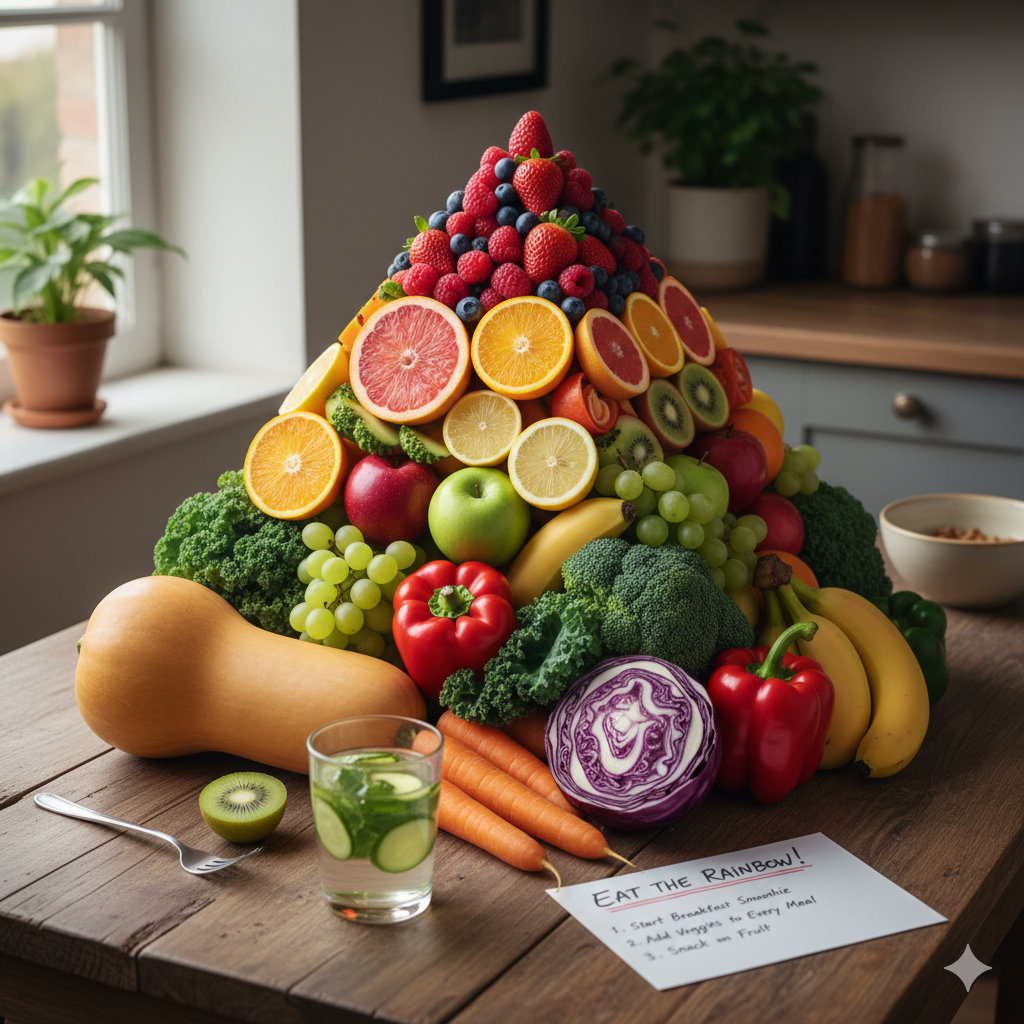
Eating more produce is one of the most reliable ways to improve diet quality without counting calories or following complicated rules. Yet many people struggle with consistency—busy schedules, limited options, picky eaters, and food waste can quickly derail good intentions. The solution is not perfection; it is a repeatable system. This guide explains how to incorporate more fruits and vegetables into your diet with practical meal ideas, enjoyable preparation methods, and smart planning strategies that make higher intake feel natural.
Understanding the Benefits of Eating More Fruits and Vegetables
Why Fruits and Vegetables Are Essential for Overall Health
The benefits of eating fruits and vegetables extend far beyond basic vitamins. Produce supplies dietary fiber for digestive health and satiety, antioxidants that help counter oxidative stress, and a wide spectrum of phytonutrients associated with long-term wellness. Regular intake also supports heart health by contributing potassium and naturally low sodium content, and it can help stabilize energy levels when fruits and vegetables replace highly refined snacks.
Just as important, fruits and vegetables improve dietary “density”—more nutrients per bite. When meals include colorful produce, overall eating patterns tend to shift in a healthier direction: fewer ultra-processed foods, better hydration from water-rich options, and more variety across the week. If your goal is to increase daily fruit and vegetable intake, the most sustainable approach is to anchor every meal and snack around at least one produce component.
Recommended Daily Servings and Portion Size Guidelines
Guidelines vary by age, sex, and activity level, but a practical benchmark is to aim for multiple servings of fruits and vegetables daily, distributed across meals. Instead of chasing an exact number, use portion visuals that fit real life:
- 1 cup of leafy greens (or 2 cups raw leafy greens) as a salad base, side, or sandwich addition.
- 1/2 cup cooked vegetables (roasted, steamed, sautéed) or chopped fruit.
- 1 medium piece of fruit (apple, orange, banana) as a straightforward serving.
If you are learning how to eat more fruits and veggies, start with one upgrade per day: add a fruit at breakfast or a vegetable at lunch. Once that becomes effortless, stack the next habit. Progress compounds quickly.
Practical Strategies to Add Fruits and Vegetables to Every Meal
Simple Breakfast, Lunch, and Dinner Ideas to Boost Produce Intake
The easiest way to incorporate more fruits and vegetables is to make them the default, not an afterthought. Choose meals where produce can be seamlessly integrated rather than “served on the side.”
Breakfast upgrades (fast, repeatable, and satisfying):
- Yogurt or cottage cheese bowl: top with berries, sliced banana, or diced mango; add chopped nuts for texture.
- Oatmeal or overnight oats: stir in grated apple, mashed banana, or frozen berries; finish with cinnamon.
- Smoothie with structure: blend spinach or kale with frozen fruit, Greek yogurt, and milk; keep greens mild and balance sweetness with berries.
- Egg-based meals: fold sautéed peppers, onions, mushrooms, or spinach into omelets, scrambles, or breakfast burritos.
Lunch ideas that naturally raise vegetable volume:
- Salad that eats like a meal: start with greens, then add roasted vegetables, beans or chicken, and a flavorful dressing.
- Soup and stew: choose vegetable-forward options (minestrone, lentil soup, chili with peppers and tomatoes) and add extra frozen vegetables.
- Wraps and sandwiches: layer cucumbers, tomatoes, shredded carrots, greens, or roasted peppers; use hummus or avocado as a produce-based spread.
- Grain bowls: combine brown rice or quinoa with a large portion of roasted vegetables and a protein; finish with lemon and herbs.
Dinner strategies for consistent results:
- Half-plate method: aim for half your plate as vegetables, one quarter protein, one quarter grains or starchy vegetables.
- Sheet-pan meals: roast a mix of vegetables (broccoli, zucchini, carrots, onions) alongside chicken or tofu for minimal cleanup.
- Pasta, improved: add sautéed spinach, mushrooms, cherry tomatoes, or zucchini; try blending cooked cauliflower into sauces for extra body.
- Taco night with volume: pile on cabbage slaw, diced tomatoes, peppers, onions, and avocado; use beans for an additional plant-based boost.
These are healthy meal ideas with fruits and vegetables that do not require advanced cooking skills. The consistent theme is simple: plan meals where produce is built into the recipe, not optional.
Easy Snack and On-the-Go Options Packed with Fruits and Veggies
Snacking is an overlooked opportunity to increase daily fruit and vegetable intake. The key is convenience—washed, cut, and visible. Keep a few reliable options ready to prevent last-minute choices from drifting toward less nutritious foods.
Consider these fruit and vegetable snack ideas:
- Apple or pear with nut butter for fiber and staying power.
- Baby carrots, cucumbers, or bell pepper strips with hummus or yogurt-based dip.
- Grapes or berries portioned into small containers for quick access.
- Roasted chickpeas with paprika plus a piece of fruit for balance.
- Cherry tomatoes and mozzarella with a drizzle of olive oil and a pinch of salt.
- Frozen fruit (like mango or blueberries) eaten as a cold, refreshing snack.
If you commute or travel often, pack produce that tolerates handling—clementines, bananas, snap peas, and small containers of pre-cut vegetables. A stable routine makes it significantly easier to follow through on how to eat more fruits and veggies without relying on willpower.
Creative Ways to Make Fruits and Vegetables More Enjoyable
Flavor-Boosting Techniques: Seasoning, Roasting, and Pairing Ideas
Many people avoid vegetables not because they dislike them, but because they have only experienced them prepared plainly. Flavor is a skill—and it can be learned quickly. When taste improves, it becomes far easier to find easy ways to add vegetables to meals because you actually want them there.
- Roast for caramelization: high heat transforms broccoli, cauliflower, Brussels sprouts, and carrots. Toss with olive oil, salt, pepper, and roast until edges brown.
- Use acid to brighten: finish vegetables with lemon juice, vinegar, or a quick pickle to lift flavors and reduce bitterness.
- Layer herbs and spices: cumin and chili powder for peppers; garlic and oregano for zucchini; curry blends for cauliflower; smoked paprika for almost anything.
- Pair with satisfying textures: crunchy nuts, toasted seeds, or a sprinkle of parmesan can make vegetables feel more substantial.
- Balance bitterness with sweetness: add roasted red onions, a drizzle of balsamic glaze, or fruit like pomegranate seeds in salads.
For fruit, consider pairing strategies that create variety without excess effort: berries with yogurt, citrus with dark chocolate shavings, apples with cheddar, or pineapple with chili-lime seasoning. Small changes in preparation can dramatically increase enjoyment—and consistency follows enjoyment.
Kid-Friendly and Picky-Eater Approved Fruit and Veggie Recipes
Picky eating often responds to predictability, familiar flavors, and appealing textures. Instead of insisting on large portions, use repeated low-pressure exposure and recipes where produce is integrated seamlessly. These options are approachable for families and effective for adults who want more variety.
- Veggie-loaded pasta sauce: sauté onions, carrots, and zucchini; blend into marinara for a smooth sauce that still tastes classic.
- Homemade “rainbow” quesadillas: add finely chopped peppers and spinach to cheese quesadillas; serve with salsa and avocado.
- Sweet potato wedges: roast with a little olive oil and cinnamon or paprika; offer a dip like yogurt ranch.
- Fruit and yogurt pops: blend yogurt with strawberries or mango, then freeze in molds for a dessert-like snack.
- Banana-oat pancakes: mash banana into batter; top with warm berries instead of syrup-heavy toppings.
- “Snack plates”: create a bento-style mix of grapes, cucumber slices, cherry tomatoes, crackers, and a protein option.
These recipes support the goal to incorporate more fruits and vegetables without turning meals into a negotiation. Over time, preferences expand—especially when produce consistently tastes good.
Planning, Shopping, and Prepping for a Produce-Rich Diet
Smart Grocery Shopping Tips for Buying More Fruits and Vegetables
Successful habits start at the store. If your kitchen is stocked with easy options, it becomes dramatically simpler to choose produce daily. Use a short, strategic shopping plan to avoid buying aspirational foods that spoil before you use them.
- Shop with a meal framework: plan 2–3 meals that use overlapping ingredients (for example, spinach for omelets, salads, and pasta).
- Buy a mix of fresh, frozen, and canned: frozen vegetables are ideal for quick sides; canned tomatoes and beans support soups and stews.
- Choose “ready-to-eat” produce: pre-washed greens, baby carrots, or steam-in-bag vegetables can be worth the cost if they increase use.
- Prioritize seasonal selections: they are often more flavorful and more budget-friendly fruits and vegetables.
- Limit variety, increase repetition: selecting fewer types—but using them reliably—reduces waste and builds routines.
A practical rule: buy produce with a clear purpose. If you cannot name the meal or snack it belongs to, it is more likely to be discarded.
Meal Prep, Storage, and Budget Hacks to Reduce Waste and Save Money
Effective meal prep with fruits and vegetables is less about cooking everything ahead and more about removing friction. When produce is washed, cut, and easy to grab, your daily decisions improve automatically.
- Prep once, benefit all week: wash and chop sturdy vegetables (carrots, peppers, broccoli) and store in airtight containers.
- Roast a large tray: roast mixed vegetables and use them in bowls, wraps, salads, or as dinner sides.
- Freeze before it fails: peel and freeze ripe bananas for smoothies; freeze berries or chopped mango; freeze spinach for cooking.
- Store smartly: keep greens dry with a paper towel in the container; store herbs like flowers in a jar with water; keep fruit visible at eye level.
- Use “end-of-week” recipes: stir-fries, frittatas, soups, and curries absorb leftover vegetables efficiently.
- Stretch expensive items: combine fresh berries with less costly fruits; blend spinach into sauces; use frozen vegetables as the default for cooked meals.
To keep costs predictable, build your plan around budget-friendly fruits and vegetables such as bananas, apples, oranges, carrots, cabbage, potatoes, frozen broccoli, and canned tomatoes. Nutrition does not require premium produce; it requires regular intake.
Finally, treat produce like a primary ingredient rather than a garnish. When vegetables are the base of a bowl, soup, or sheet-pan dinner, you naturally adopt more easy ways to add vegetables to meals—and waste declines because items are used in larger quantities.
Incorporating more produce is not a single decision; it is a set of small systems that make nutritious choices the default. When you understand the health value, keep portions realistic, and lean on repeatable meal templates, it becomes much easier to increase daily fruit and vegetable intake without feeling restricted. Start with one meal, then one snack, then build outward. With better shopping, simple prep, and cooking methods that prioritize flavor, you can create a produce-rich diet that is both practical and genuinely enjoyable.
Celestial Stackmaster
Core Loop: Vertical block stacking with slicing physics.
Precision Rewards: “Perfect” drops snap into place with a glow effect.
Dynamic Difficulty: Block speed increases as you climb higher.
Atmospheric Visuals: A cosmic “Zenith” background with color-shifting fog that evolves with your score.
Responsive Controls: Fully playable on desktop (click) and mobile (tap).
Camera System: Dynamic camera that tracks your progress toward the stars.
How to Play
Objective: Stack blocks as high as possible without missing the tower.
Controls: Click or Tap anywhere to drop the moving block onto the stack.
Pro Tip: Align the block perfectly with the one below to keep its full size; otherwise, the overhanging part will be sliced off!