
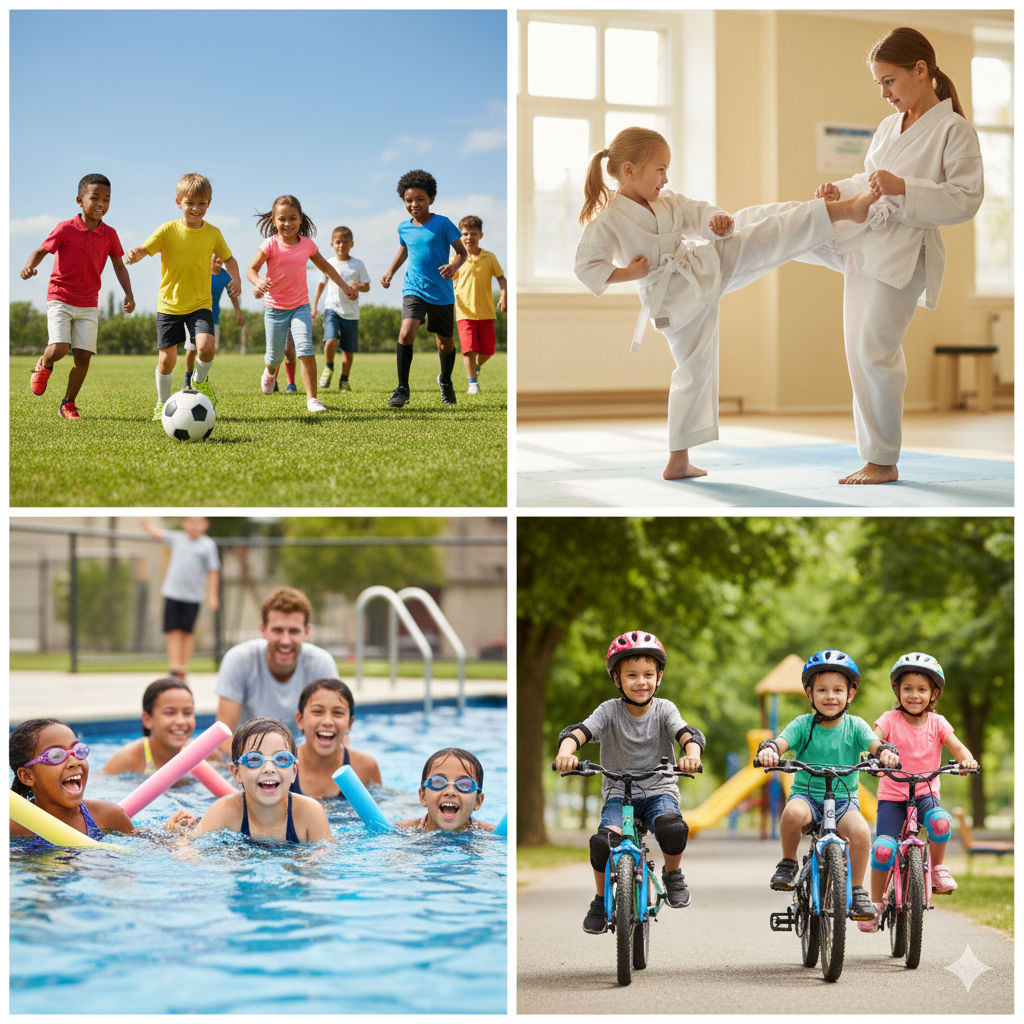
Choosing the best sports for kids is rarely about finding the most popular program in your area. It is about aligning a child’s age, temperament, and readiness with an activity that feels enjoyable, manageable, and safe. When the fit is right, kids sports become more than a weekly pastime—they become a reliable source of confidence, health, and connection. This guide explores how to choose a sport for your child, the core benefits of sports for kids, and practical ways to help them begin and stay engaged.
Understanding the Best Sports for Kids
Why Choosing the Right Sport for Your Child Matters
The “right” sport does not necessarily mean the most competitive or skill-intensive option. It means a sport that matches a child’s developmental stage and motivates them to return willingly. When children feel capable and supported, they build positive associations with movement. Conversely, an ill-fitting program—too advanced, too rigid, or socially uncomfortable—can create stress that discourages participation altogether.
Parents also benefit from a thoughtful choice. The right youth sports activities integrate smoothly into family schedules, fit the household budget, and offer an environment where safety and coaching quality are taken seriously.
Key Benefits of Kids Playing Sports (Physical, Mental, Social)
Physical development is the most visible advantage. Regular sport improves cardiovascular fitness, coordination, balance, agility, and muscular strength. Many sports also refine fundamental movement skills—running, jumping, throwing, catching—which support lifelong activity and reduce injury risk later on.
Mental and emotional gains are just as significant. Sports can strengthen attention, self-regulation, and resilience. Children learn to manage frustration, tolerate setbacks, and stay focused under mild pressure. With the right coaching approach, they also experience competence—an essential ingredient in healthy self-esteem.
Social growth is often the reason children stick with sports. Team sports for children cultivate communication, cooperation, and empathy. Individual sports for kids, while more self-directed, still develop social skills through practice groups, shared routines, and respectful competition. In both settings, children learn how to support peers, accept guidance, and navigate group dynamics.
Factors to Consider Before Picking a Sport for Your Child
Age, Personality, and Skill Level: Matching Kids to Sports
Age matters because children develop motor skills and attention spans at different rates. For sports for toddlers and preschoolers, the ideal programs emphasize play, exploration, and basic coordination. As children grow, they become more capable of following multi-step instructions, practicing specific techniques, and participating in structured games.
Personality is equally important. A child who thrives on social energy may love a team environment. A more introspective child might prefer the clarity and autonomy of an individual sport. Consider how your child responds to instruction, how they handle noise and crowds, and whether they enjoy repeated practice or prefer variety.
Skill level should be interpreted broadly. Early success often depends on maturity and exposure rather than “natural talent.” Seek programs that group children appropriately, teach fundamentals patiently, and avoid premature specialization. A supportive foundation is often the difference between short-lived participation and a sustained, healthy relationship with movement.
Safety, Cost, and Time Commitment for Parents
Safety should be non-negotiable. Look for safe sports for young children that prioritize proper supervision, age-appropriate rules, well-maintained equipment, and qualified coaches. Ask about coach-to-child ratios, concussion protocols, hydration breaks, and how injuries are handled. A culture that values long-term well-being over winning is a strong indicator of quality.
Cost varies significantly. Some sports require minimal equipment and facility fees, while others involve substantial expenses for uniforms, travel, or specialized gear. Before committing, request a clear breakdown of anticipated costs for the season.
Time commitment can be underestimated. Consider practice frequency, weekend games, travel distance, and family logistics. A manageable schedule helps children enjoy the sport without feeling overwhelmed and helps parents sustain support consistently.
Best Sports for Kids by Age and Interest
Top Sports for Young Kids (Ages 3–7)
For younger children, the best approach is variety. Programs should feel playful while quietly building coordination, listening skills, and basic athletic confidence. The following options are commonly well-suited for early childhood:
- Swimming: Excellent for whole-body coordination and water safety. It is low-impact and adaptable to different comfort levels, making it a strong option for many beginners.
- Gymnastics or movement classes: Builds balance, flexibility, spatial awareness, and strength. Many programs are designed specifically for preschool-aged children with an emphasis on safe exploration.
- Soccer (intro programs): Great for developing running, kicking, and simple teamwork. Look for formats that use small groups and minimal downtime.
- Martial arts (beginner-focused): Supports discipline, body control, and respectful behavior. Quality programs for young children keep instruction brief and engaging.
- T-ball or coach-pitch basics: Introduces throwing and catching without excessive pressure. The best early baseball programs focus on skill-building and enjoyment rather than game outcomes.
- Skating (ice or inline) with instruction: Strengthens balance and coordination. Proper protective gear and patient coaching are essential for confidence and safety.
At this age, prioritize programs that celebrate effort, rotate positions, and avoid lengthy competitive games. Children should leave feeling energized rather than evaluated.
Best Team and Individual Sports for Older Kids and Preteens
As children approach middle childhood and preteen years, they can handle more structure, longer practices, and strategic thinking. This is also when interests become clearer, making it a useful stage to explore both team sports for children and individual sports for kids.
Team sports options often suit children who enjoy group goals, fast-paced play, and social belonging:
- Basketball: Develops coordination, agility, and decision-making at speed. It also encourages teamwork and spatial awareness.
- Volleyball: Promotes timing, communication, and quick reactions. Many programs emphasize skill progression and collaboration.
- Soccer: Strong for endurance and teamwork, with accessible entry points in many communities and leagues.
- Baseball or softball: Teaches patience, hand-eye coordination, and situational awareness. It can be a good match for children who prefer bursts of activity rather than constant motion.
- Flag football: Offers strategy and teamwork with less contact than tackle formats, often making it a practical choice for families prioritizing safety.
Individual sports options are ideal for children who enjoy measurable progress, focused practice, or a more self-paced environment:
- Tennis: Builds coordination, footwork, and concentration. It rewards steady practice and can be played across a lifetime.
- Track and field: Offers variety—sprints, distance, jumps, throws—allowing children to find their niche and track improvement objectively.
- Martial arts: Continues to develop self-discipline, strength, and composure, often with clear milestone-based progression.
- Climbing (youth programs): Encourages problem-solving, strength, and focus. Supervised facilities with qualified staff are essential.
- Swimming: Remains an excellent option, particularly for children who enjoy individual competition or simply want a strong fitness base.
For preteens, the best sports for kids are often those that provide both challenge and psychological safety. A constructive coaching environment, balanced competition, and respectful team culture matter as much as the sport itself.
Tips for Getting Kids Started and Keeping Them Active
How to Introduce a New Sport in a Fun, Low-Pressure Way
Begin with exposure rather than commitment. Attend a practice, watch a game, or try a single-session clinic. Many communities offer introductory classes designed to let children sample multiple youth sports activities without the intensity of a full season.
Keep early expectations modest. In the beginning, progress should be measured in comfort and curiosity, not performance. Choose programs that emphasize instruction, play-based drills, and positive reinforcement, especially for younger children who are still learning how to participate in groups.
Practical details can determine whether a child enjoys the first few weeks. Ensure equipment fits properly, clothing is comfortable, and the schedule allows for adequate sleep and unhurried meals. A calm routine makes it easier for children to focus and enjoy learning.
Encouraging Lifelong Healthy Habits Through Youth Sports
Variety helps children stay engaged and reduces burnout. Sampling different sports across seasons can build a broad athletic foundation and prevent overuse injuries. It also lets children discover what genuinely motivates them—competition, mastery, friendship, or simply movement.
Support matters more than pressure. Praise effort, consistency, and sportsmanship. Ask thoughtful questions after practice—what was fun, what felt challenging, what they learned—rather than focusing on outcomes. When children feel emotionally safe, they are more likely to persevere through normal frustrations.
Finally, keep physical activity visible at home. Family walks, casual games, bike rides, or trips to the pool reinforce the idea that movement is a normal and enjoyable part of life, not something reserved for organized sports alone.
Conclusion
The best sports for kids are those that fit a child’s developmental stage, personality, and interests while also respecting family resources and safety priorities. Whether you are exploring sports for toddlers and preschoolers or choosing between team sports for children and individual sports for kids, the most reliable strategy is to start with enjoyable, age-appropriate programs and remain open to change. When sports are introduced with patience and kept in perspective, they can become a powerful foundation for fitness, confidence, and lifelong healthy habits.
Celestial Stackmaster
Core Loop: Vertical block stacking with slicing physics.
Precision Rewards: “Perfect” drops snap into place with a glow effect.
Dynamic Difficulty: Block speed increases as you climb higher.
Atmospheric Visuals: A cosmic “Zenith” background with color-shifting fog that evolves with your score.
Responsive Controls: Fully playable on desktop (click) and mobile (tap).
Camera System: Dynamic camera that tracks your progress toward the stars.
How to Play
Objective: Stack blocks as high as possible without missing the tower.
Controls: Click or Tap anywhere to drop the moving block onto the stack.
Pro Tip: Align the block perfectly with the one below to keep its full size; otherwise, the overhanging part will be sliced off!