
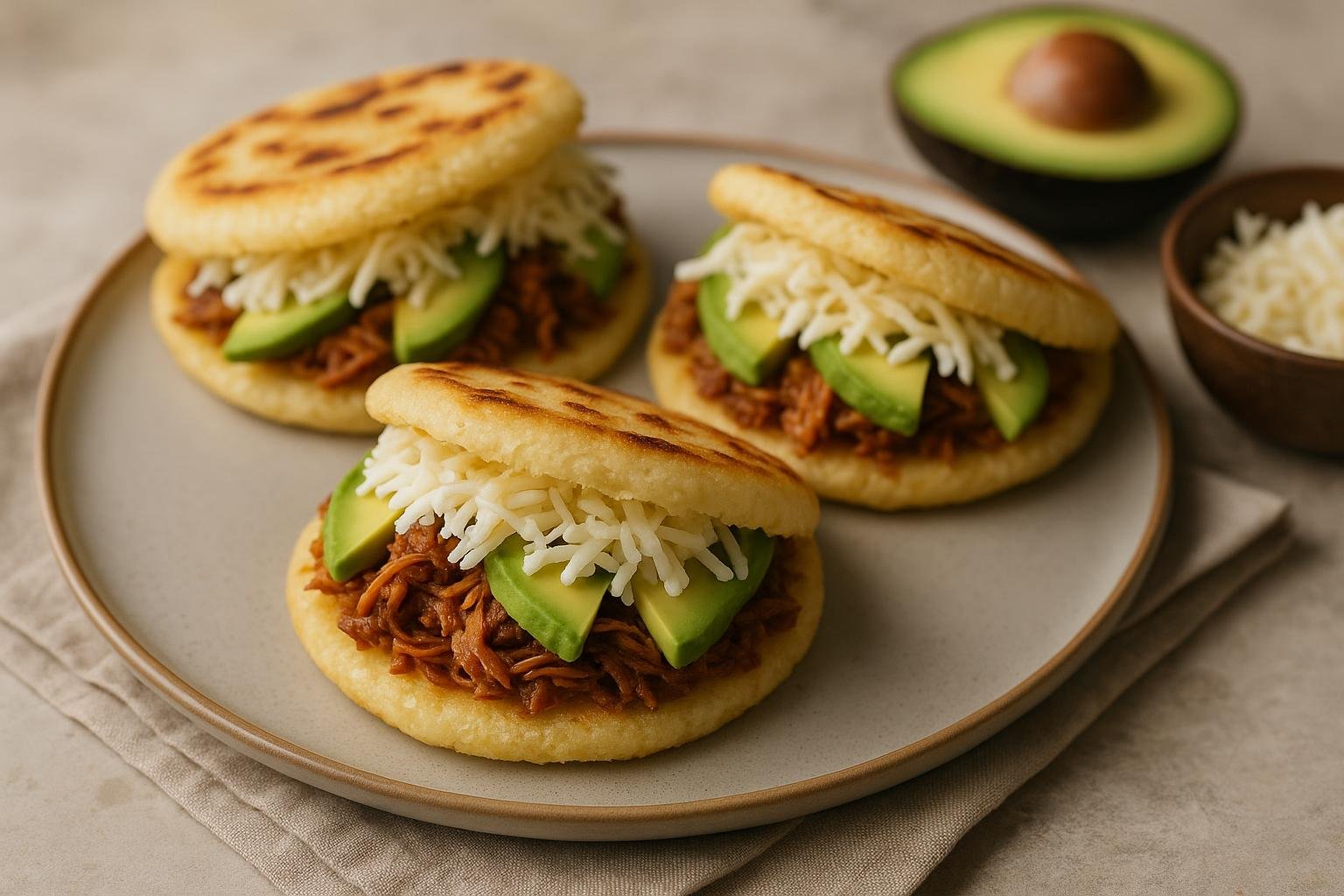
Few foods embody the warmth and diversity of Latin American cuisine as gracefully as arepas. These golden, corn-based cakes are at once humble and endlessly adaptable: breakfast staple, street food, comfort dish, and gourmet canvas. Whether split and stuffed, grilled and buttered, or served alongside hearty stews, arepas offer a delicious introduction to both tradition and creativity in the kitchen.
What Are Arepas?
A Brief History of Arepas
Arepas trace their origins back thousands of years to pre-Columbian civilizations in the northern region of South America, particularly in what is now Venezuela and Colombia. Indigenous communities cultivated maize as a central crop and developed techniques to soak, grind, and cook corn into nourishing flatbreads. These early preparations laid the foundation for what we recognize today as traditional arepas.
The word “arepa” is believed to derive from indigenous languages, reflecting the deep cultural roots of this staple. Originally cooked on clay or stone griddles over open fires, arepas were an efficient way to transform corn into a portable, filling food. Over centuries, Spanish colonial influences, regional agricultural practices, and social changes all contributed to the evolution of arepa recipes, shapes, and serving styles.
With the advent of precooked cornmeal in the 20th century, the preparation process became much simpler. This innovation helped arepas transition from a primarily rural, home-based dish to a widely available, urban favorite sold in bakeries, markets, and street stalls. Today, the story of arepas is inseparable from the history of everyday life in Venezuela and Colombia, where they remain a symbol of comfort and continuity.
Variations Across Latin America
Although most closely associated with Venezuela and Colombia, arepas appear in several countries with distinct regional interpretations. These variations illustrate how a single concept—corn dough shaped into a small cake—can express different cultural identities.
- Venezuelan arepas: Typically thicker and pillowy, Venezuelan arepas are often split like a pocket and filled generously. They can be grilled, baked, fried, or a combination of these methods. Classic street styles such as the reina pepiada or pelúa have become culinary icons.
- Colombian arepas: Colombian versions are remarkably diverse from region to region. Some are thin and crisp with cheese on top, others are slightly sweet, and many are served plain alongside eggs, stews, or grilled meats rather than stuffed.
- Other Latin American variations: In neighboring countries, similar corn preparations appear under different names or forms. While not always called “arepas,” these relatives—such as certain Salvadoran or Panamanian corn cakes—share the same ancestral reliance on maize and griddle cooking.
This spectrum of arepas variations reveals how flexible and resilient this food is. It adapts to local tastes, ingredients, and customs, yet always remains rooted in maize and simple, elemental techniques.
How to Make Arepas at Home
Essential Ingredients for Perfect Arepas
Preparing homemade arepas requires only a handful of ingredients, but quality and proportions matter. The most important component is the type of cornmeal you choose. For authentic results, use white or yellow precooked cornmeal specifically labeled for arepas or masarepa. Regular cornmeal or corn flour used for baking will not hydrate in the same way and will yield poor texture.
The core formula is straightforward:
- Precooked cornmeal: Provides structure and the characteristic flavor. White corn tends to produce a milder taste and softer crumb, while yellow corn gives more pronounced corn notes and a deeper color.
- Water: Hydrates the cornmeal into a pliable dough. Lukewarm water helps create a smoother mixture.
- Salt: Essential for balancing the sweetness of the corn and enhancing aroma.
- Optional fat (oil or butter): A small amount of neutral oil or melted butter in the dough can contribute to a tender interior and light richness.
Some cooks incorporate grated cheese directly into the dough or add a touch of sugar for slightly sweet arepas, but the classic base remains lean and versatile. Master the simple dough first, then adjust and enrich it according to taste.
Step-by-Step Cooking Instructions
Learning how to make arepas at home is less about complexity and more about mastering texture and timing. The following method provides a reliable starting point.
- 1. Measure and season the water.
In a large bowl, combine lukewarm water with salt. Stir until the salt dissolves completely. If using a bit of oil or melted butter, whisk it into the water at this stage. - 2. Add the cornmeal gradually.
Sprinkle the precooked cornmeal into the water in stages, stirring continuously to avoid lumps. The mixture will first look loose, then thicken as the cornmeal absorbs moisture. - 3. Rest and knead the dough.
Let the mixture sit for about 3–5 minutes. This resting period allows full hydration. Then, using your hands, gently knead the dough until smooth and free of dry spots. The ideal dough should be soft, moist, and pliable, similar to modeling clay, without cracking when shaped. If it feels dry or crumbly, add a spoonful of water; if sticky, sprinkle in a bit more cornmeal. - 4. Shape the arepas.
Divide the dough into equal portions, rolling each piece into a ball. Flatten gently between your palms to form disks about 1–2 cm thick, depending on your preference and the style you want to emulate. Aim for smooth edges; repair any cracks by smoothing with slightly damp fingers. - 5. Pre-cook on a griddle or skillet.
Heat a lightly oiled griddle or heavy skillet over medium heat. Place the arepas on the hot surface and cook for several minutes per side until a light golden crust forms. This step seals the exterior and develops flavor. - 6. Finish by baking or extended griddling.
For a classic Venezuelan-style arepa with a soft interior and firm crust, transfer the pre-cooked disks to a preheated oven (around 180–200°C / 350–400°F) and bake for 10–15 minutes, or until they sound slightly hollow when tapped. Alternatively, continue cooking them on the stovetop over lower heat, flipping often, until cooked through. - 7. Rest, open, and serve.
Let the arepas rest a few minutes. For filled arepas, make a horizontal slit along the edge to create a pocket, leaving one side intact. Steam escaping from the interior indicates they are properly cooked. Stuff immediately with your chosen fillings.
Once familiar with this foundational homemade arepas recipe, you can adjust thickness, cooking time, and finishing method to achieve different textures—from crisp and thin to dense and chewy.
Delicious Arepa Fillings and Toppings
Traditional Fillings to Try
The versatility of arepa fillings is one of the reasons these corn cakes are beloved across generations. Classic combinations highlight local ingredients, slow-cooked meats, and simple preparations that allow the corn flavor to shine.
- Shredded beef: Long-simmered, seasoned beef, often prepared with onions, bell peppers, and spices, is a cornerstone of many traditional arepas. When paired with cheese, avocado, or beans, it becomes exceptionally satisfying.
- Reina pepiada: A celebrated Venezuelan filling made from shredded chicken mixed with a creamy avocado-based sauce, lime, and sometimes mayonnaise. The result is rich yet refreshing, with a balance of acidity and silkiness.
- Black beans and cheese: Slow-cooked black beans with aromatic seasonings and a generous layer of fresh or grated cheese create a vegetarian-friendly option that is both hearty and economical.
- Perico (scrambled eggs with vegetables): For breakfast arepas, soft scrambled eggs sautéed with onions, tomatoes, and sometimes bell peppers provide a vibrant, protein-rich start to the day.
- Queso and butter: In many households, the simplest preparation remains a favorite: warm arepas split and filled with fresh cheese and a little butter or cream. This combination showcases the dough’s texture and subtle flavor.
These traditional arepas convey more than taste; they evoke family gatherings, roadside stops, and everyday rituals in their countries of origin.
Creative and Modern Options
Contemporary chefs and home cooks have embraced arepas as a neutral yet characterful base for experimentation. Their gentle corn aroma complements an impressive array of global flavors, encouraging playful combinations.
- Grilled vegetables and goat cheese: Charred zucchini, eggplant, and peppers, drizzled with olive oil and layered with tangy goat cheese, turn arepas into an elegant vegetarian main course.
- Pulled pork with slaw: Slow-cooked, spiced pork topped with crisp cabbage slaw and a bright dressing introduces a fusion of barbecue influences and Latin American cuisine.
- Seafood arepas: Shrimp sautéed with garlic and herbs, or a lightly dressed crab or fish salad, bring coastal flavors to the corn base, emphasizing freshness and lightness.
- Plant-based fillings: Seasoned jackfruit “carnitas,” spiced lentils, or grilled marinated tofu offer modern, plant-forward options that maintain the heartiness of traditional arepas without animal products.
- Breakfast and brunch creations: Arepas can replace bread in many familiar dishes: topped with poached eggs and a light hollandaise, accompanied by smoked salmon and herbs, or served open-faced with avocado and seeds.
The key to successful creative arepa fillings is balance. Combining crunchy and creamy textures, bright acidity, and aromatic herbs transforms a simple corn cake into a complete, memorable dish.
Arepas in Popular Culture
Arepas in Movies and Television
As interest in Latin American cuisine has spread globally, arepas have increasingly appeared on screens, contributing to wider recognition of this traditional food. Documentaries and food-focused series often highlight arepa vendors and small eateries, presenting them as an essential element of local street culture in Caracas, Bogotá, and other cities.
Fictional films and television shows set in Latin America or featuring Latin American families frequently use shared meals to depict intimacy and identity. Arepas, prepared in domestic kitchens or enjoyed in neighborhood cafés, become visual shorthand for belonging, heritage, and daily comfort. In cooking competitions and travel programs, chefs now showcase inventive arepa dishes, introducing audiences to both classic and avant-garde presentations.
This growing visibility helps situate arepas within a broader conversation about how food represents memory, migration, and cultural pride in contemporary media.
Restaurants and Events Celebrating Arepas
Beyond the screen, arepas have secured a distinct place in the international dining scene. Specialized restaurants and food trucks dedicated exclusively to arepas can now be found in major cities around the world. These establishments frequently offer both traditional and modern menus, allowing newcomers to explore the dish in accessible ways.
Many venues highlight regional authenticity by importing specific brands of precooked cornmeal, sourcing cheeses similar to those used in Venezuela or Colombia, and preserving customary cooking methods such as griddle-to-oven preparation. Others adopt a fusion philosophy, pairing arepas with global ingredients—Korean-style meats, Mediterranean spreads, or locally inspired fillings—creating a bridge between cultures.
Food festivals and cultural events also play a crucial role in showcasing arepas in culture. Latin American fairs, heritage celebrations, and street food markets often feature vendors preparing them on-site, filling the air with the aroma of toasted corn. Cooking workshops and demonstrations at these events teach participants how to make arepas, emphasizing both technical skill and historical context.
Through these restaurants, gatherings, and public celebrations, arepas continue to evolve while remaining firmly anchored in the traditions that shaped them.
Conclusion
Arepas embody an exceptional blend of simplicity and sophistication. They begin with just corn, water, and salt, yet they carry centuries of history, regional diversity, and personal stories. From indigenous origins to contemporary variations across Latin America, they illustrate how a single staple can adapt endlessly while still expressing a clear cultural identity.
Learning how to make arepas at home opens the door to a wide range of possibilities, from faithful recreations of traditional arepas to inventive combinations that reflect your own tastes and influences. As they appear in restaurants, festivals, films, and television, arepas are no longer confined to the regions where they were born. They have become a global invitation to appreciate heritage, creativity, and the enduring power of shared food.
Discover More from Didier Lancelot
Amazon Author page: amazon.com/author/didierlancelot
Narmer Store: narmerstore.org
AI and Technology Ebooks
- Creative AI: Animated Drawings, Manga & Illustrations
- Build a Game with AI: The No-Code Guide
- AI Image Generation Made Easy
- Build a Website with AI: The No-Code Guide
- How to Connect AI to Your Blog: The Ultimate Automation Guide
- AI Productivity Habits: Get More Done in Less Time
- AI Avatars Made Easy
- The Book of AI Prompts: 100+ Proven Prompts
- Make Music with AI: Suno, Udio and AI Music Generators
- Click to Cash
- The Automated Edge: Outwork, Outpace, and Outperform with AI
- AI Side Hustle: How to Make Money with ChatGPT and AI Tools
- Work Smarter with AI
Health, Lifestyle and Home Ebooks
- Hidden Superfoods: The World’s Most Powerful Healing Foods
- Spanish Food: The Complete Cookbook for Authentic Home Cooking
- The Science of Happiness Explained
- The Psychology of Success
- The Secret Sauce of Consistency: What the Experts Don’t Tell You About Fitness
- The Complete Home Bartender’s Guide: Link 1 | Link 2
- Natural Beauty, Made Simple: Easy DIY Organic Skincare Recipes
- Garden Made Simple: Easy, Beginner-Friendly Techniques
- The Dog Training Bible