
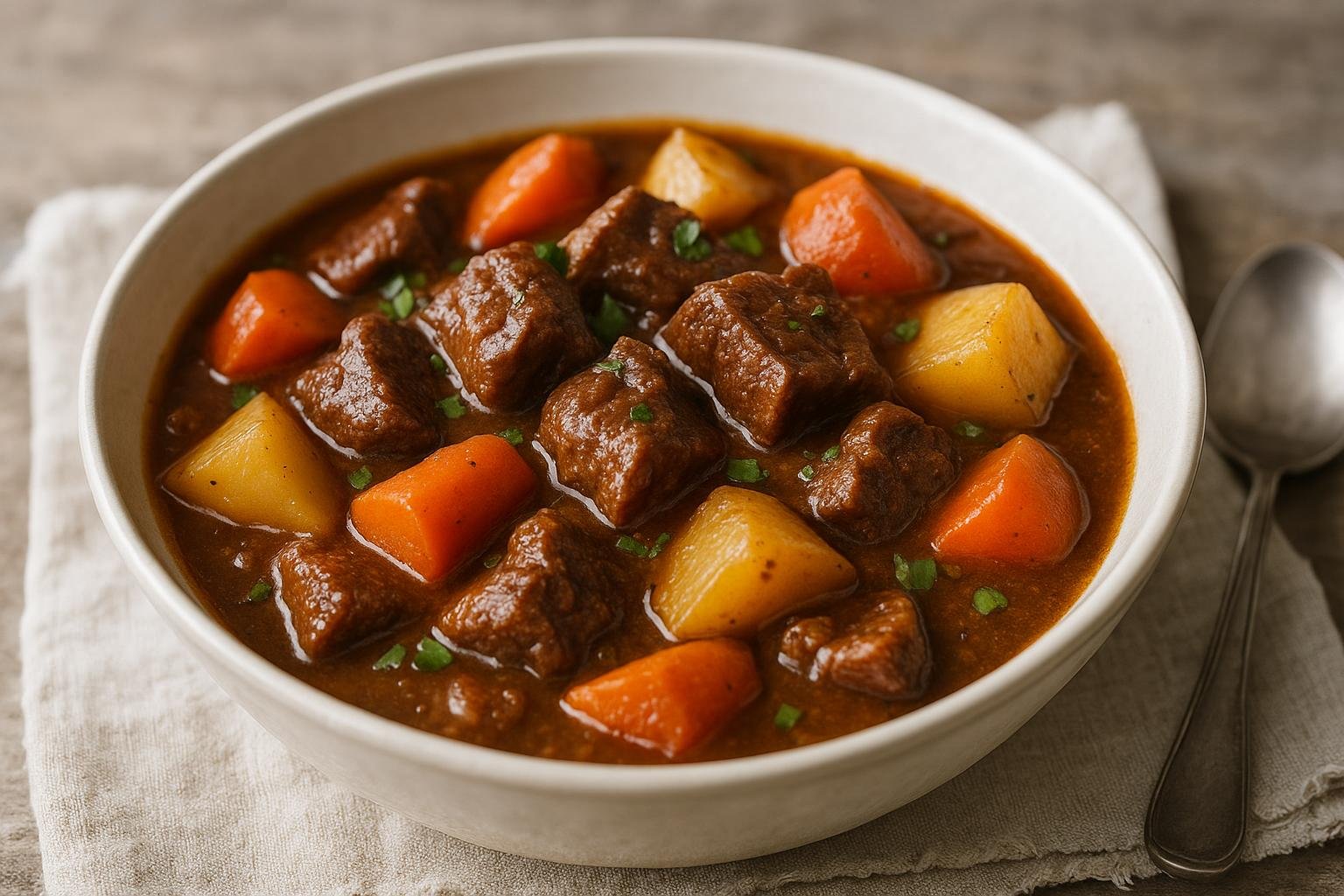
Few dishes are as comforting and universally loved as beef stew. Rich, aromatic, and deeply satisfying, it is the kind of meal that brings warmth to the table on a cold evening and fills the kitchen with inviting aromas. Whether you prefer a rustic homemade beef stew simmered on the stove or a hands-off slow-cooker beef stew, the fundamentals remain the same: good ingredients, proper technique, and patience. This guide explores what beef stew is, how it evolved, the best ingredients to use, and how to prepare a version that is both delicious and nourishing.
What is Beef Stew?
Definition and History
Beef stew is a hearty dish consisting of pieces of beef slowly cooked with vegetables, liquid, and seasonings until the meat becomes tender and the cooking liquid thickens into a flavorful gravy. Unlike quick sautéed dishes, stew relies on time and gentle heat to transform tougher cuts of beef into succulent, melt-in-the-mouth morsels. The result is a complete meal in one pot, perfectly suited to feeding families, entertaining friends, or preparing make-ahead lunches for the week.
The history of beef stew stretches back centuries and crosses many cultures. Stewing is one of the oldest cooking methods, born from the necessity of making the most of less expensive cuts of meat. Early cooks discovered that collagen-rich cuts, unsuitable for quick cooking, became extraordinarily tender when simmered slowly in liquid. Over time, what began as a pragmatic approach turned into a culinary tradition. From medieval European cauldrons hung over open fires to cast-iron pots simmering on modern stovetops, the technique has changed very little, while the flavors have evolved with local ingredients and culinary influences.
Popular Variations Around the World
There is no single “classic beef stew recipe”; rather, there are countless regional interpretations that share a common foundation. In France, boeuf bourguignon pairs beef with red wine, mushrooms, and pearl onions, resulting in an elegant, deeply flavored dish. In Ireland, stout beer and root vegetables form the backbone of Irish beef stew, giving it a robust, slightly bittersweet note.
Hungarian goulash blurs the line between stew and soup, characterized by generous amounts of paprika, caraway, and bell peppers. In Latin America, variations of beef stew often feature tomatoes, cumin, and fresh herbs such as cilantro, sometimes served over rice rather than with potatoes. Asian-inspired versions may incorporate soy sauce, ginger, and star anise for a fragrant, aromatic broth. Despite their differences, these dishes share a core principle: slowly cook beef with aromatics and vegetables until the flavors meld into a cohesive whole.
Ingredients for the Perfect Beef Stew
Essential Ingredients
The best beef stew ingredients are those that stand up well to long cooking and contribute to both flavor and texture. Choosing wisely at this stage lays the groundwork for a superior result.
- Beef: The most important component is the meat itself. Tough, well-marbled cuts are ideal because their connective tissue breaks down during cooking, yielding tender beef stew meat with a silky texture. Look for chuck, shoulder, blade, or similar cuts. Pre-cut “stew meat” can work, but selecting and cubing a whole piece yourself often ensures better quality and uniformity.
- Aromatics: Onion, garlic, and celery provide the foundational flavor base. They mellow and sweeten as they cook, lending depth to the finished stew.
- Root Vegetables: Carrots and potatoes are traditional staples. Carrots bring sweetness; potatoes add substance and help thicken the stew. Waxy or all-purpose potatoes such as Yukon Gold hold their shape better than very starchy varieties.
- Cooking Liquid: A combination of beef stock and water is typical. Dry red wine or dark beer may be added for complexity, but even a simple broth-based stew can be rich and satisfying if well seasoned.
- Tomato Element: Tomato paste, crushed tomatoes, or even a small amount of tomato sauce contributes acidity, color, and umami, helping to round out the flavors.
- Herbs and Seasonings: Bay leaves, thyme, rosemary, and black pepper are common. Salt should be added gradually and adjusted toward the end of cooking to avoid overseasoning as the liquid reduces.
- Fat: Oil or butter is necessary for browning the meat and sautéing the vegetables. This step builds the flavor base upon which the entire stew rests.
Optional Additions for Flavor
Once the essential ingredients are in place, optional components can elevate an easy beef stew recipe into something memorable. These additions allow you to customize the profile, whether you prefer rustic simplicity or complex, layered flavors.
- Mushrooms: Add earthy richness and a meaty texture that complements the beef.
- Parsnips, Turnips, or Rutabaga: Provide subtle sweetness and variety among the root vegetables.
- Peas or Green Beans: Stirred in near the end of cooking, they contribute color and freshness.
- Smoked Ingredients: A small amount of smoked bacon or pancetta, rendered at the beginning, introduces a gentle smokiness and additional savoriness.
- Worcestershire Sauce or Soy Sauce: Used sparingly, these deeply savory condiments add umami, amplifying the overall taste without making the stew taste of the condiment itself.
- Fresh Herbs and Citrus: A handful of chopped parsley or a light grating of lemon zest right before serving brightens what can otherwise be a very rich dish.
- Thickening Agents: Flour or cornstarch can be used to achieve a velvety consistency, although many cooks rely primarily on reduction and starch from the potatoes.
Step-by-Step Guide to Making Beef Stew
Preparing the Ingredients
Preparation plays a crucial role in the success of homemade beef stew. Taking the time to handle each element properly ensures balanced cooking and consistent texture.
- Trim and Cube the Beef: Remove excess surface fat and any large, hard pieces of connective tissue, but do not over-trim; some fat is essential for flavor. Cut the meat into evenly sized cubes, typically 1.5 to 2.5 centimeters, so they cook at the same rate.
- Pat the Meat Dry: Before browning, blot the cubes with paper towels. Dry surfaces brown more efficiently, creating a flavorful crust rather than steaming in their own moisture.
- Season Lightly in Advance: Sprinkle the beef with a modest amount of salt and pepper. This early seasoning penetrates the meat as it cooks.
- Chop Vegetables Uniformly: Dice onions and celery; cut carrots and potatoes into chunks of comparable size. Uniform pieces ensure that vegetables become tender without disintegrating.
- Measure Liquids and Seasonings: Have stock, wine, tomato paste, herbs, and any optional ingredients ready to add. Organized preparation allows you to focus on technique during the cooking process.
Cooking Techniques and Tips
With everything prepared, attention turns to the cooking process itself. Whether you opt for a stovetop method or a slow-cooker beef stew, certain principles remain universal.
- Brown the Beef Thoroughly: Heat a heavy-bottomed pot, such as a Dutch oven, over medium-high heat and add a thin layer of oil. Brown the beef in batches, avoiding overcrowding. Each side should develop a deep, mahogany crust. This browning step generates complex flavors through the Maillard reaction and is vital to a robust stew.
- Deglaze the Pan: Once the meat is browned and set aside, add onions, celery, and carrots to the pot. As they soften, they will help release the flavorful browned bits stuck to the bottom. You can further deglaze with a splash of wine or stock, scraping up all the fond to incorporate into the stew.
- Build the Flavor Base: Stir in garlic and tomato paste, toasting them briefly until fragrant. Add herbs, spices, and any optional smoked ingredients. This step develops a rich, aromatic base before adding the main cooking liquid.
- Add Liquid and Simmer Gently: Return the browned beef and accumulated juices to the pot. Pour in stock, wine, and any additional water as needed, ensuring the ingredients are mostly covered but not swimming. Bring just to a boil, then immediately reduce to a gentle simmer. Vigorous boiling can toughen the meat.
- Cook Low and Slow: For a traditional stove method, cover the pot partially and simmer on low heat for 1.5 to 3 hours, depending on the cut and size of the beef pieces. For a slow-cooker beef stew, transfer everything to the appliance and cook on low for 6 to 8 hours, or on high for 3 to 4, until the meat is very tender.
- Add Delicate Vegetables Later: If using peas, green beans, or leafy herbs, add them toward the end of cooking to preserve color and texture.
- Adjust Thickness: If the stew is too thin, remove the lid for the final 20 to 30 minutes to allow the liquid to reduce. Alternatively, whisk a small amount of flour or cornstarch into cool water, then stir it into the simmering stew and cook a bit longer until the desired consistency is achieved.
- Taste and Finish: Once the beef is tender, taste carefully and adjust salt, pepper, and acidity. A small dash of vinegar, lemon juice, or extra herbs can bring the flavors into balance at the last moment.
Nutritional Information and Health Benefits of Beef Stew
Nutritional Breakdown
Understanding beef stew nutrition helps you tailor the dish to your dietary needs. While exact values depend on the specific recipe and portion size, a typical serving offers a balanced mix of macronutrients along with an array of vitamins and minerals.
- Protein: Beef provides high-quality, complete protein, essential for muscle repair, immune function, and satiety. A moderate bowl of stew often contains 20 to 30 grams or more of protein.
- Fats: The fat content varies with the cut of beef and added oils. Choosing moderately lean cuts and trimming excess visible fat yields a dish with a balanced fat profile. The presence of some fat enhances flavor and aids absorption of fat-soluble vitamins.
- Carbohydrates: Potatoes, carrots, and other root vegetables contribute complex carbohydrates and dietary fiber. These support steady energy release and digestive health.
- Vitamins and Minerals: Beef is a notable source of iron (particularly easily absorbed heme iron), zinc, and B vitamins, including B12. Vegetables add vitamin A, vitamin C (especially if fresh herbs or tomatoes are present), potassium, and additional micronutrients.
- Sodium: Salt and commercial stock are the primary sodium sources. To maintain a healthy beef stew, consider using low-sodium broth and seasoning gradually, tasting as you go.
Health Benefits
When thoughtfully prepared, beef stew can be a nutritious, well-rounded meal that aligns with a wide range of dietary preferences. The combination of protein, vegetables, and broth makes it both filling and nourishing.
The high-quality protein in beef supports muscle mass and satiety, helping to moderate appetite throughout the day. Iron and B vitamins promote energy production and cognitive function, while zinc contributes to immune health. For those with increased nutrient needs, such as growing adolescents or individuals recovering from illness, a robust stew can be a practical and appealing option.
The vegetable content contributes fiber, antioxidants, and phytonutrients. Carrots and other colorful vegetables provide carotenoids that support eye and skin health. Potatoes and root vegetables supply potassium, important for maintaining healthy blood pressure. By increasing the proportion of vegetables relative to meat, you can further enhance the nutrient density and fiber content of the dish.
It is also possible to tailor a classic beef stew recipe for specific health goals. Using leaner cuts of beef, trimming visible fat, skimming surface fat during cooking, and opting for olive or canola oil can help reduce saturated fat. Incorporating additional vegetables—such as mushrooms, parsnips, and green beans—raises the overall vitamin and mineral content while keeping the stew satisfying and substantial.
Conclusion
Beef stew endures because it offers so much in a single pot: deep flavor, comforting warmth, and substantial nourishment. From traditional European renditions enriched with wine or beer to lighter, vegetable-forward versions designed for modern health-conscious kitchens, it adapts easily to personal taste and dietary preferences. By selecting the right cut of beef, assembling the best possible ingredients, and applying careful, patient cooking techniques, anyone can produce a tender, flavorful stew that anchors a memorable meal. Whether prepared on the stovetop or in a slow cooker, this timeless dish rewards both the cook and the diners with every spoonful.
Discover More from Didier Lancelot
Amazon Author page: amazon.com/author/didierlancelot
Narmer Store: narmerstore.org
AI and Technology Ebooks
- Creative AI: Animated Drawings, Manga & Illustrations
- Build a Game with AI: The No-Code Guide
- AI Image Generation Made Easy
- Build a Website with AI: The No-Code Guide
- How to Connect AI to Your Blog: The Ultimate Automation Guide
- AI Productivity Habits: Get More Done in Less Time
- AI Avatars Made Easy
- The Book of AI Prompts: 100+ Proven Prompts
- Make Music with AI: Suno, Udio and AI Music Generators
- Click to Cash
- The Automated Edge: Outwork, Outpace, and Outperform with AI
- AI Side Hustle: How to Make Money with ChatGPT and AI Tools
- Work Smarter with AI
Health, Lifestyle and Home Ebooks
- Hidden Superfoods: The World’s Most Powerful Healing Foods
- Spanish Food: The Complete Cookbook for Authentic Home Cooking
- The Science of Happiness Explained
- The Psychology of Success
- The Secret Sauce of Consistency: What the Experts Don’t Tell You About Fitness
- The Complete Home Bartender’s Guide: Link 1 | Link 2
- Natural Beauty, Made Simple: Easy DIY Organic Skincare Recipes
- Garden Made Simple: Easy, Beginner-Friendly Techniques
- The Dog Training Bible