
For generations, people of Indian origin have lived, worked, and raised families in Mozambique, yet questions about their national identity persist. A recent report from Global Voices examines how history, law, and social perception have shaped the experiences of this community — known colloquially as monhés — and what their story reveals about the nature of belonging in a postcolonial nation.
Roots, independence, and the law
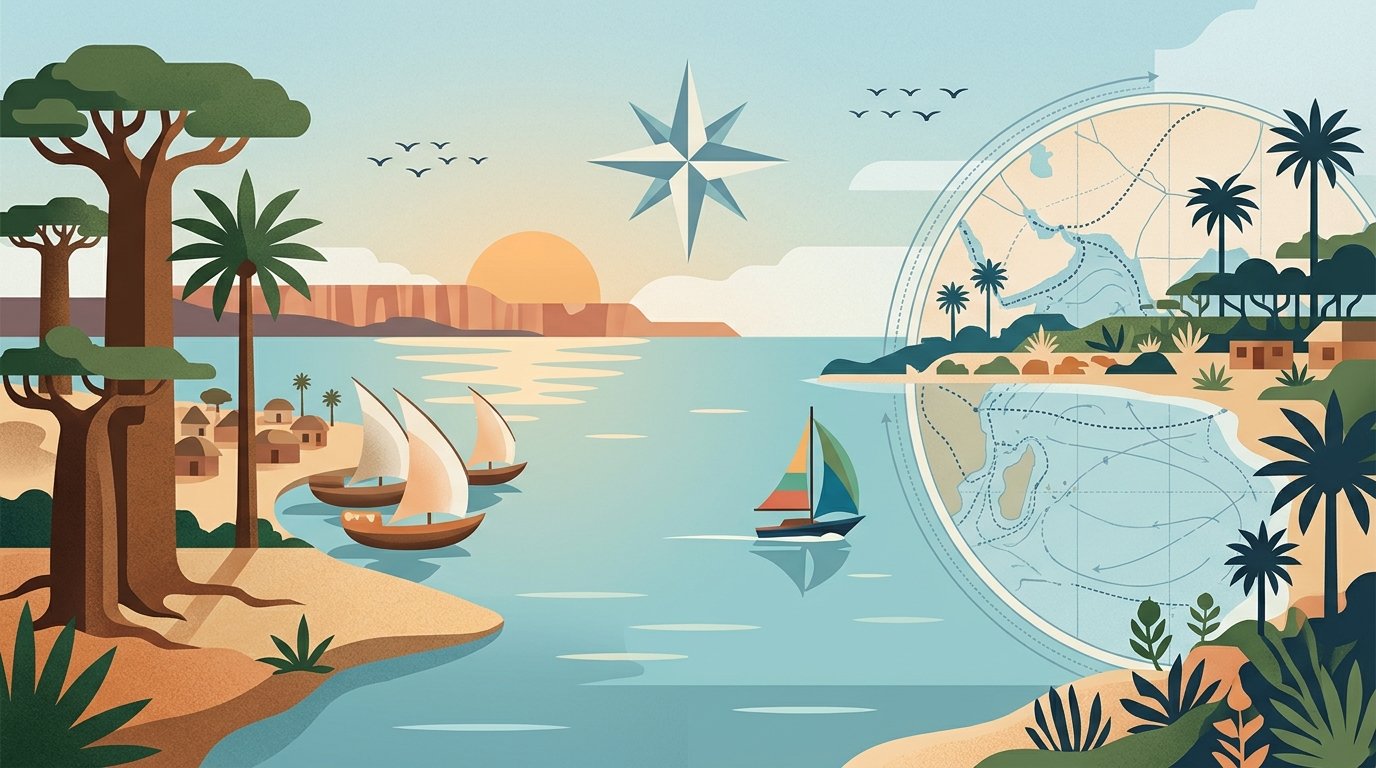
Connections between the East African coast and the Indian subcontinent predate modern borders, sustained for centuries by Indian Ocean trade networks. During the Portuguese colonial period, people of Indian origin settled across the territory now known as Mozambique, acquiring legal statuses determined by imperial rather than national frameworks. When Mozambique gained independence on June 25, 1975, a new nationality law was required to define who would be recognized as a citizen of the newly formed state. That legislation established criteria based on place of birth, family ties, and residence at the time of independence, effectively offering many long-established families of Indian origin a path to Mozambican nationality. However, the transition was not uniform. Across three or more generations, the specifics of each family’s legal situation — including existing documentation, prior nationality holdings, and residency — could produce very different outcomes. In some cases, individuals found themselves without recognized nationality under any state’s laws, a condition known as statelessness.
Identity beyond paperwork
The report draws a clear distinction between three concepts that are frequently conflated:
- Origin — a person’s ancestral or ethnic background
- Identity — a personal and cultural sense of self, which can be multiple
- Nationality — a formal legal relationship between an individual and a state
A person referred to as a monhé may hold full Mozambican citizenship, may never have lived in India, and may speak Portuguese or other Mozambican languages as their first tongue. The term itself carries no legal meaning. At the same time, some individuals of Indian origin legally hold citizenship elsewhere, and others have faced difficulties establishing any nationality at all.
Around half a century after independence, the report concludes that for many families of Indian origin, Mozambique is simply home — the country where they were born, where preceding generations lived, and where they have built their lives. Their history, it argues, is inseparable from the broader story of what Mozambican national identity means.
This article is adapted from “Between two shores: The ‘Monhés,’ nationality, and a sense of belonging in Mozambique” published by Global Voices, licensed under CC BY 3.0. Changes were made. Read the original story at the link above.
Discover More from Didier Lancelot
Amazon Author page: amazon.com/author/didierlancelot
Narmer Store: narmerstore.org
AI and Technology Ebooks
- Creative AI: Animated Drawings, Manga & Illustrations
- Build a Game with AI: The No-Code Guide
- AI Image Generation Made Easy
- Build a Website with AI: The No-Code Guide
- How to Connect AI to Your Blog: The Ultimate Automation Guide
- AI Productivity Habits: Get More Done in Less Time
- AI Avatars Made Easy
- The Book of AI Prompts: 100+ Proven Prompts
- Make Music with AI: Suno, Udio and AI Music Generators
- Click to Cash
- The Automated Edge: Outwork, Outpace, and Outperform with AI
- AI Side Hustle: How to Make Money with ChatGPT and AI Tools
- Work Smarter with AI
Health, Lifestyle and Home Ebooks
- Hidden Superfoods: The World’s Most Powerful Healing Foods
- Spanish Food: The Complete Cookbook for Authentic Home Cooking
- The Science of Happiness Explained
- The Psychology of Success
- The Secret Sauce of Consistency: What the Experts Don’t Tell You About Fitness
- The Complete Home Bartender’s Guide: Link 1 | Link 2
- Natural Beauty, Made Simple: Easy DIY Organic Skincare Recipes
- Garden Made Simple: Easy, Beginner-Friendly Techniques
- The Dog Training Bible