
Bohemian Style Guide: How to Create a Soulful, Layered & Timeless Interior
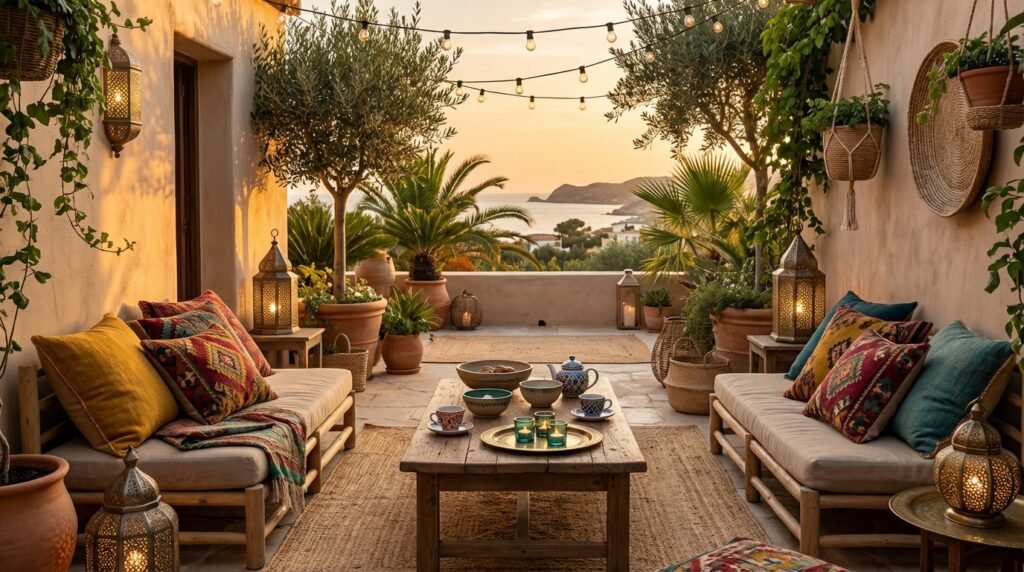
Bohemian (Boho) style has evolved from a niche aesthetic into a globally recognized way of living and decorating. It is expressive, layered, and deeply personal. For homeowners, renters, interior designers, creatives, and lifestyle enthusiasts, understanding Bohemian style is essential to creating spaces that feel soulful, relaxed, and unique.
This Bohemian style guide explains what Boho style is, why it matters, and how to implement it step by step. You will also find practical Bohemian style tips, advanced best practices, and Bohemian style FAQs to help you design meaningful interiors or personal looks with confidence.
Understanding Bohemian (Boho) Style: What It Is and Why It Matters
What Is Bohemian (Boho) Style?
Bohemian style, often shortened to Boho, is an eclectic aesthetic that celebrates freedom, individuality, and artistic expression. Rather than following rigid design rules, Bohemian style embraces a curated mix of colors, textures, patterns, and cultural influences to create an inviting, lived-in atmosphere.
Historically, the term “Bohemian” referred to unconventional artists, writers, and intellectuals who rejected traditional norms. In design and fashion, this spirit translates into layered, collected spaces and outfits that look as though they evolved over time rather than being purchased in a single season.
In interiors, Boho style typically features:
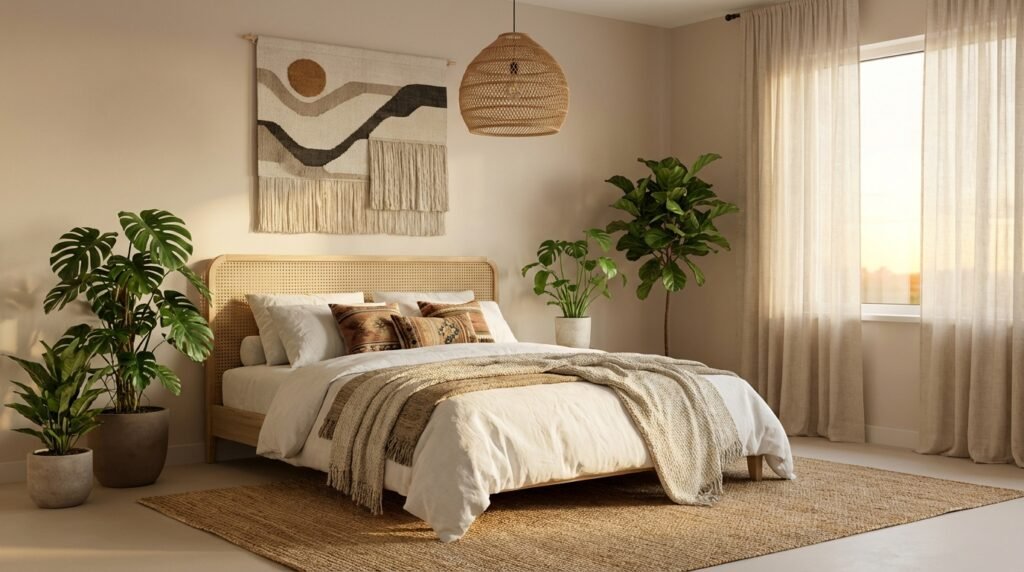
- Rich, warm color palettes with earthy hues, jewel tones, and sun-faded accents
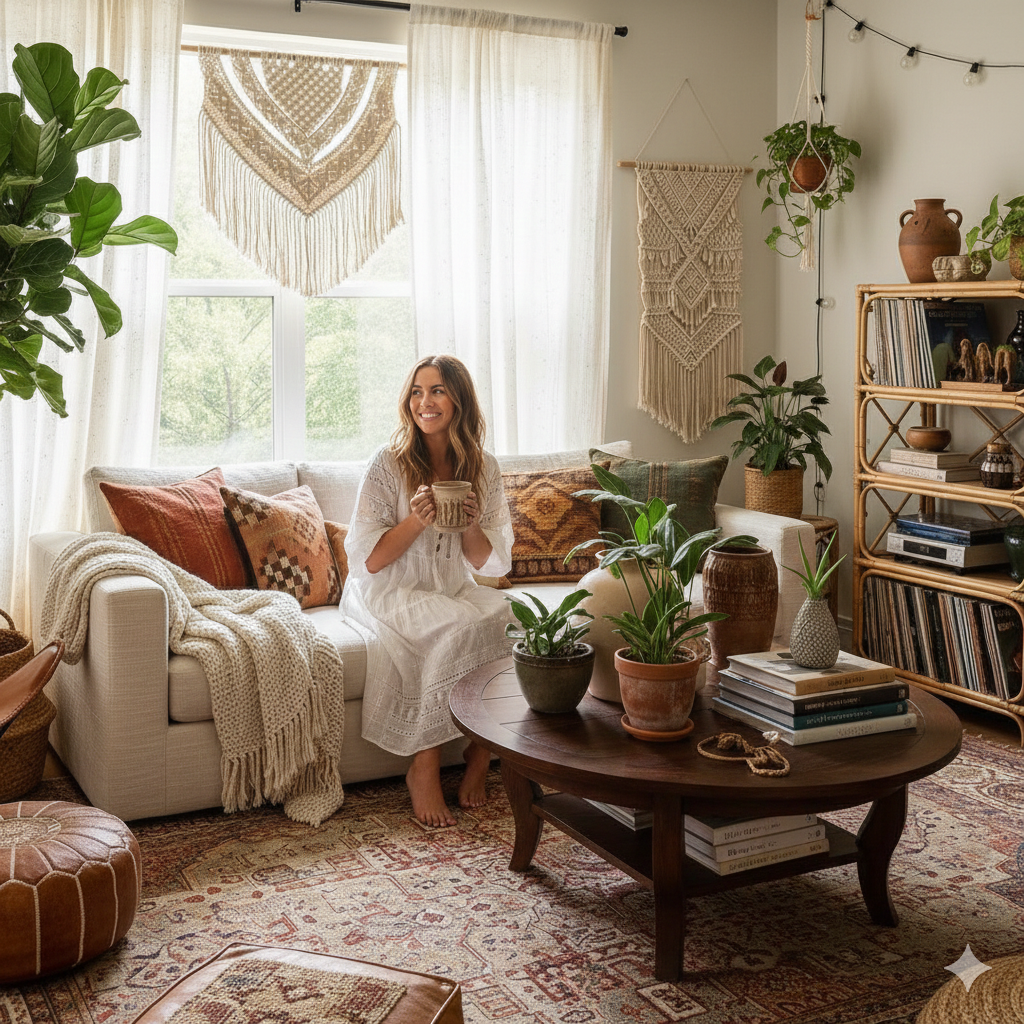
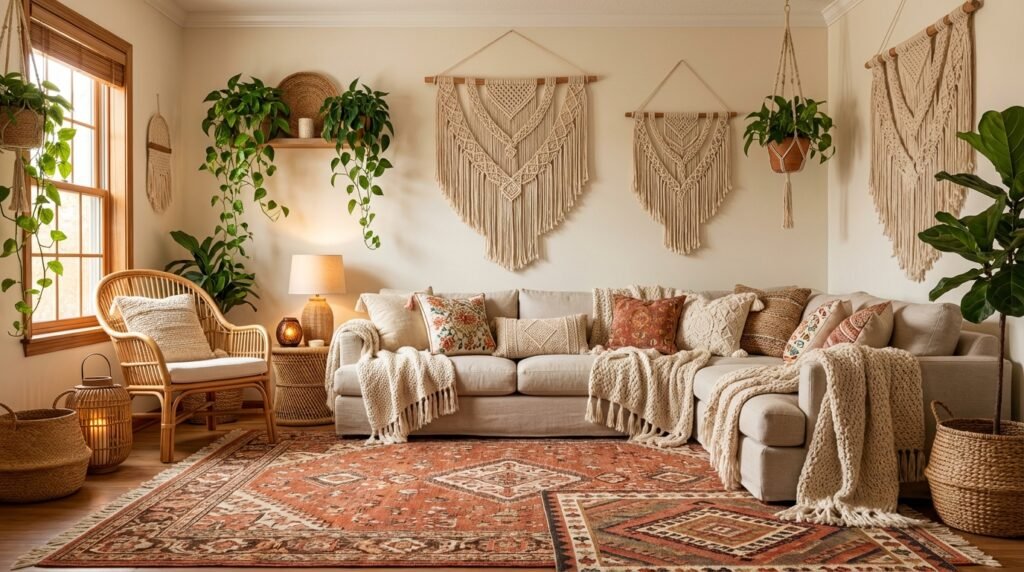
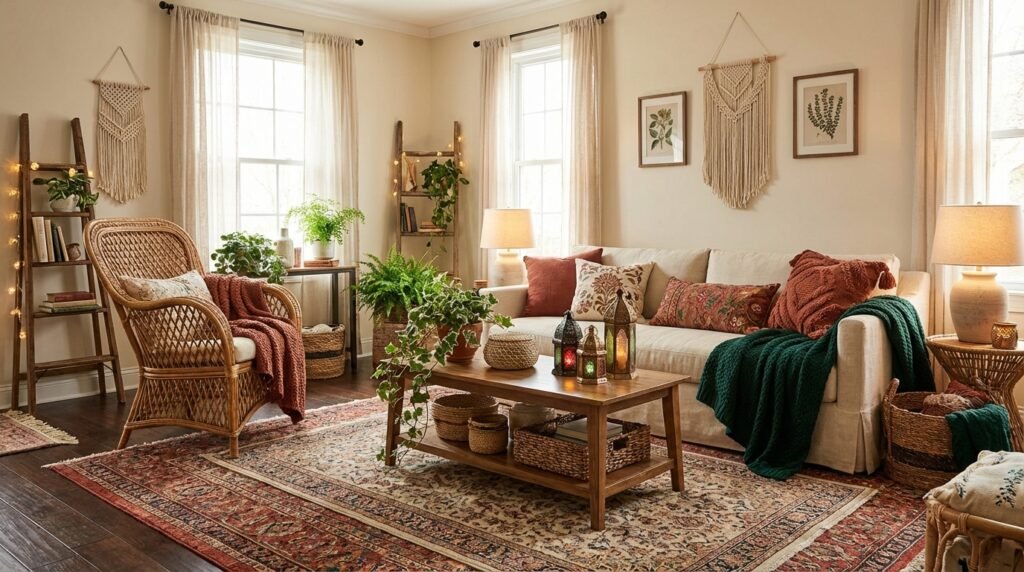
- Layered textiles such as kilim rugs, embroidered cushions, macramé, and throws
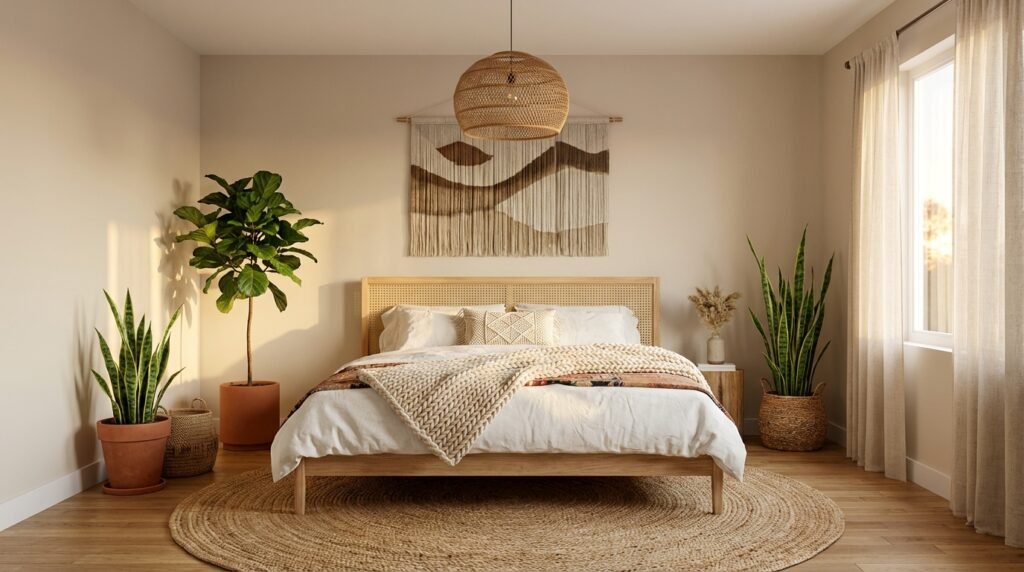
- Natural materials like rattan, cane, wood, jute, linen, and cotton
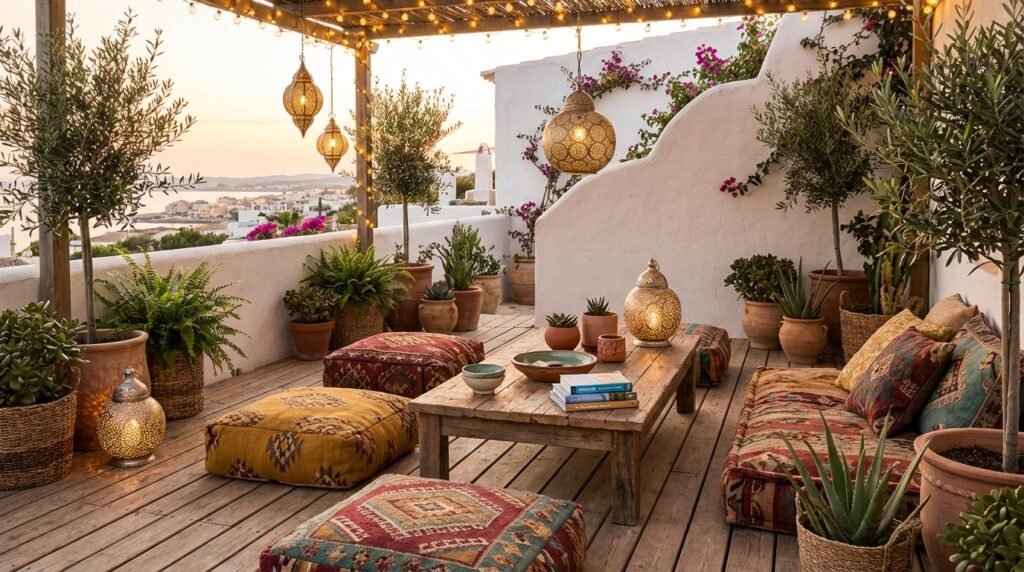
- Global and artisan pieces: Moroccan lanterns, Indian block prints, African baskets, or Turkish rugs
- Plants in abundance, adding life, texture, and softness
- Mismatched yet harmonious furniture and accessories that tell a story
In fashion and lifestyle, Bohemian style favors flowing silhouettes, vintage or handmade pieces, layered jewelry, and a relaxed, unstructured look that reflects a carefree mindset.
When people ask “What is Bohemian style?” the answer is more about feeling than strict elements. It is about comfort, authenticity, and a sense of wanderlust, expressed through objects and aesthetics that feel deeply personal.
Why Bohemian Style Is Important for Homeowners, Renters, and Creatives
Bohemian style matters for today’s homeowners, renters, and creatives because it offers a flexible, accessible way to design spaces that truly reflect who they are. In an era dominated by mass-produced interiors and fast decor trends, Boho style encourages a slower, more intentional approach.
Its importance lies in several dimensions:
- Personal expression: Boho design allows individuals to showcase memories, travels, and stories through decor. Spaces become autobiographical rather than generic.
- Budget-friendly creativity: Because it embraces vintage finds, second-hand furniture, and handmade items, Boho style is ideal for people decorating on a budget who still want a refined, curated look.
- Comfort and wellbeing: Layered textiles, soft lighting, and organic materials foster warmth and relaxation, supporting mental wellbeing and a sense of sanctuary at home.
- Sustainability: By valuing reused, repurposed, and artisan-made objects, Bohemian style often aligns with more sustainable consumption habits.
- Timelessness: Rather than chasing fleeting trends, Boho interiors and outfits are anchored in personal taste, which naturally ages more gracefully.
For interior designers, stylists, and creators, understanding what Bohemian style is and how it functions is crucial. It is one of the most requested looks in modern decor and a foundational aesthetic that easily blends with other styles such as Scandinavian, mid-century, or rustic design.
Key Benefits of Bohemian Style for Modern Interiors and Lifestyles
Core Advantages and Real-World Impact
Exploring the benefits of Bohemian style helps clarify why it has such lasting appeal. While it is visually distinctive, its real value lies in how it affects daily life and long-term enjoyment of a space or wardrobe.
Key advantages include:
- Unmatched individuality: No two Boho spaces are identical. This style celebrates your experiences, cultural interests, and personal history, making your home or outfit unmistakably yours.
- High impact at low cost: Thrifted furniture, flea market finds, hand-me-downs, and DIY pieces are all welcome. This makes it easier to achieve a striking aesthetic without overspending.
- Comfort-first environments: Floor cushions, layered rugs, plush throws, and relaxed seating invite lounging and informal gatherings, transforming rooms into cozy retreats.
- Seamless evolution over time: Boho spaces are designed to evolve. As you travel, collect art, or change tastes, you can integrate new elements without having to redesign everything.
- Enhanced creativity: The eclectic nature of Boho interiors and fashion naturally stimulates creativity. Visual richness encourages experimentation in art, work, and lifestyle choices.
For families, Bohemian style interiors are particularly forgiving. Slight wear, patina, and imperfections contribute to the overall charm, making the environment practical as well as attractive.
Common Challenges and How Bohemian Style Solves Them
Many people struggle with interiors that feel sterile, overly themed, or disconnected from their actual lives. A well-implemented Bohemian style can resolve these issues effectively.
Here are common challenges and how Boho design addresses them:
- Challenge: Spaces feel flat or impersonal.
Boho solution: Layering textiles, mixing patterns, and including personal artifacts (photographs, souvenirs, heirlooms) introduce depth, character, and emotional resonance. - Challenge: Limited budget for decor.
Boho solution: Bohemian style thrives on vintage, upcycled, and handmade items. Creativity replaces high spending, and imperfections become assets. - Challenge: Fear of mixing colors and patterns.
Boho solution: Clear color anchors (such as an earthy base palette) allow adventurous combinations without visual chaos. Pattern mixing becomes purposeful instead of random. - Challenge: Rental restrictions or small spaces.
Boho solution: Portable elements—rugs, textiles, plants, movable furniture, and decorative lighting—create a strong Boho identity without structural changes, ideal for renters and compact homes. - Challenge: Incoherent collection of objects.
Boho solution: A thoughtful Bohemian style guide emphasizes cohesion through repeated hues, consistent materials, or recurring motifs, turning disparate elements into a narrative.
By understanding how Bohemian style solves real-world decor and lifestyle challenges, you can adopt it confidently and adapt it to your specific context.
Step-by-Step Guide to Implementing Bohemian Style
Preparation: Tools, Requirements, and Best Practices
Before transforming a room, wardrobe, or brand with Boho aesthetics, proper preparation is essential. Knowing how to implement Bohemian style strategically ensures that the result looks intentional rather than chaotic.
Start with these foundational steps:
1. Define Your Boho Vision and Purpose
- Clarify which area you are focusing on: a living room, bedroom, studio, outdoor space, or personal style.
- Identify the mood you want to evoke: serene and airy, bold and maximalist, earthy and grounded, or romantic and whimsical.
- Create a simple mood board with images, fabrics, or digital inspiration that visually summarizes your ideal Boho look.
2. Establish a Core Color Palette
- Choose 2–3 base colors (e.g., warm white, sand, terracotta) and 2–3 accent tones (e.g., emerald, ochre, deep blue, rust).
- Use the base colors for larger surfaces and staple pieces; apply accent tones through textiles, art, and decor.
- This approach gives you freedom while preserving visual harmony.
3. Audit What You Already Own
- Inventory furniture, textiles, decor, and accessories you currently have.
- Set aside anything with potential Boho character: wooden furniture, woven baskets, patterned fabrics, vintage or handmade items.
- Decide what can be repurposed with paint, new fabric, or styling.
4. Gather Essential Boho Elements
While Bohemian style is flexible, certain components tend to recur. Consider sourcing:
- Textiles: Persian or kilim-style rugs, embroidered cushions, throws, tapestries, floor pillows
- Natural materials: rattan chairs, wooden stools, jute poufs, cane headboards, linen curtains
- Decorative lighting: string lights, lanterns, woven pendants, warm-toned lamps
- Art and objects: travel photography, handmade ceramics, macramé hangings, woven wall art
- Plants: trailing varieties, large leafy specimens, cacti, or succulents in textured pots
5. Best Practices Before You Begin
- Start gradually rather than overhauling everything at once.
- Prioritize quality over quantity, especially for key items like rugs and larger furniture.
- Preserve negative space; Boho does not require clutter to feel rich.
- Trust your instincts: if an object feels meaningful, it likely belongs in your Boho environment.
Action Steps: How to Apply Bohemian Style Effectively
The following Bohemian style guide walks you through a practical sequence for implementation. Adapt it to your room size, budget, and existing pieces.
Step 1: Create a Neutral or Earthy Base
- Begin with walls, large furniture, and main textiles.
- Use soft whites, beige, cream, or muted earth tones to keep the space grounded.
- If you prefer more drama, choose one accent wall in a deep color but maintain lighter surroundings for balance.
Step 2: Layer Rugs and Textiles
- Introduce one large rug as an anchor, then layer a smaller patterned rug on top for added visual interest.
- Add throws and cushions in varying fabrics—velvet, cotton, linen, wool—combining solids with prints.
- Ensure at least one or two colors repeat across different textiles to unify the composition.
Step 3: Mix Furniture Styles and Heights
- Combine vintage wooden pieces with more contemporary items; avoid entire matching sets.
- Use varying furniture heights (low sofas, floor cushions, taller shelving) to create a dynamic silhouette.
- Opt for comfortable seating with soft edges and relaxed silhouettes rather than sharp, rigid lines.
Step 4: Incorporate Natural Materials and Organic Forms
- Integrate rattan chairs, woven baskets, cane cabinets, or jute poufs.
- Choose side tables or stools made from raw or lightly finished wood.
- Include organic forms—round mirrors, curved furniture, irregular ceramics—to soften the overall effect.
Step 5: Add Plants and Greenery
- Position plants at different levels: floor, shelves, hanging planters, and windowsills.
- Use a mix of leafy varieties and sculptural plants for contrast.
- Choose pots or baskets that echo your color palette and materials.
Step 6: Curate Art and Meaningful Objects
- Hang art in clusters or gallery walls rather than as isolated single pieces.
- Display travel souvenirs, books, photographs, and handmade items prominently.
- Group objects in odd numbers (3 or 5) and vary heights for balanced vignettes.
Step 7: Soften with Lighting and Atmosphere
- Use multiple light sources instead of a single overhead fixture.
- Incorporate warm-toned bulbs, candles (real or LED), lanterns, and string lights.
- Allow the lighting to create pockets of intimacy rather than uniform brightness.
Step 8: Refine, Edit, and Personalize
- Step back and evaluate sight lines from different angles.
- Remove anything that feels forced or disrupts the flow, even if it fits the “Boho” label.
- Continue evolving the space as you find new pieces; Bohemian style is an ongoing process, not a one-time project.
Following these structured steps will show you precisely how to implement Bohemian style without losing control of the aesthetic. The key is balance: enough layers to feel rich, enough breathing room to feel calm.
https://www.teepublic.com/t-shirt/50124192-sumo?store_id=2851997
Advanced Tips, FAQs, and Best Practices for Bohemian Style
Pro Tips to Maximize Results with Bohemian Style
Once the basics are in place, these advanced Bohemian style tips will help you refine your interiors or wardrobe to a more sophisticated level.
- Use repetition as your anchor: Repeat certain colors, motifs (such as botanical patterns), or materials (like rattan or brass) across the room. This subtle repetition creates coherence within eclecticism.
- Pay close attention to scale: Mix large-scale patterns with smaller ones, and balance oversized pieces with delicate accents to avoid visual monotony.
- Combine Boho with other styles thoughtfully: For a modern Boho look, pair clean-lined furniture with Boho textiles. For a rustic Boho space, emphasize raw woods and handmade ceramics.
- Curate rather than collect indiscriminately: Not everything that is colorful or patterned is automatically Boho. Choose items that genuinely resonate with you and support the overall narrative.
- Layer patterns with a structure: Start with one dominant pattern (for example, a rug), then add secondary patterns in smaller areas (cushions, throws) that share at least one color with the dominant piece.
- Invest in key statement pieces: A standout rug, a unique chair, or an oversized artwork can define the room, allowing simpler items to fall into place easily.
- Maintain functionality: Boho should not compromise usability. Ensure pathways are clear, seating is comfortable, and storage meets practical needs.
Frequently Asked Questions About Bohemian Style
Below are Bohemian style FAQs that address common doubts and misconceptions. These concise answers will help you apply best practices and avoid frequent mistakes.
1. Is Bohemian style the same as “maximalist” design?
Not necessarily. While Bohemian style often leans toward visual richness, it does not require extreme maximalism. You can have a light, airy Boho space with minimal clutter, as long as it retains eclectic, layered, and personal qualities.
2. Can Bohemian style work in small apartments or studios?
Yes. In fact, it suits small spaces particularly well. Focus on multifunctional furniture, vertical storage, and carefully layered textiles. Use lighter base colors and reserve bolder accents for smaller items to prevent the space from feeling overwhelmed.
3. How can I adopt Boho style on a limited budget?
Prioritize second-hand shops, flea markets, online marketplaces, and DIY projects. Simple changes—such as new cushion covers, thrifted rugs, and plants—can transform the mood inexpensively. Over time, you can add more substantial pieces as your budget allows.
4. What colors are most typical of Bohemian interiors?
Boho palettes often revolve around warm earth tones (terracotta, rust, camel), neutrals (ivory, beige, taupe), and vivid accents (emerald, mustard, deep blue, magenta). However, the exact scheme is flexible; the crucial factor is harmony among selected hues.
5. How do I prevent my Boho space from looking cluttered?
Use editing as a core Bohemian style best practice. For every new item you add, consider removing or relocating another. Keep floor areas relatively clear, allow empty wall space, and group decor items into focused vignettes rather than scattering them everywhere.
6. Can Bohemian style be “minimal”?
Yes. A minimal Boho approach uses fewer objects but still embraces natural materials, artisanal pieces, and a relaxed mood. Think of a simple room with a neutral palette, a few carefully chosen textiles, plants, and one or two striking handmade items.
7. Is Boho style only about global or “exotic” decor?
No. While Bohemian aesthetics often incorporate global influences, the essence is personal freedom and eclecticism, not a specific geography. You can create a Boho space using local artisan work, vintage family pieces, and contemporary elements if they align with your story.
8. How often should I update a Boho interior?
There is no fixed schedule. Unlike trend-driven designs, Bohemian style evolves organically as you acquire new pieces or as your life changes. Refresh textiles seasonally if you wish, but let your intuition rather than trends dictate updates.
9. Can I use Bohemian style for brand visuals or content creation?
Yes. Boho aesthetics are popular in branding, photography, and social media content, especially for wellness, lifestyle, travel, and artisan brands. Apply similar principles—warm tones, layered textures, natural materials, and curated props—to your sets, flat lays, and visual identity.
10. What is the most important rule of Bohemian style?
The guiding principle is authenticity. If an element has personal meaning, brings joy, and harmonizes with the overall atmosphere, it belongs. Trends and labels are secondary to the genuine expression of who you are.
Conclusion
Bohemian style is more than an aesthetic trend; it is a philosophy of living that values individuality, creativity, and comfort. By understanding what Bohemian style is, recognizing its benefits, and following a structured Bohemian style guide, you can create interiors, wardrobes, and visual identities that feel distinctive and enduring.
From defining your color palette and layering textiles to curating meaningful objects and applying advanced Boho tips, the process is both strategic and intuitive. When approached with intention and care, Bohemian style offers an enduring framework for spaces that inspire, soothe, and tell your story with authenticity.
How Interior Design Influences Mood and Productivity
Top Interior Design Mistakes and How to Avoid Them
Interior Design Styles Explained: From Classic to Contemporary
Crystal Collector
Combat Protocol
WASD – Move
Mouse – Look around
Left Click – Fire Weapon
R – Reload
Eliminate all hostile units in the sector!
(Works better on computer)