
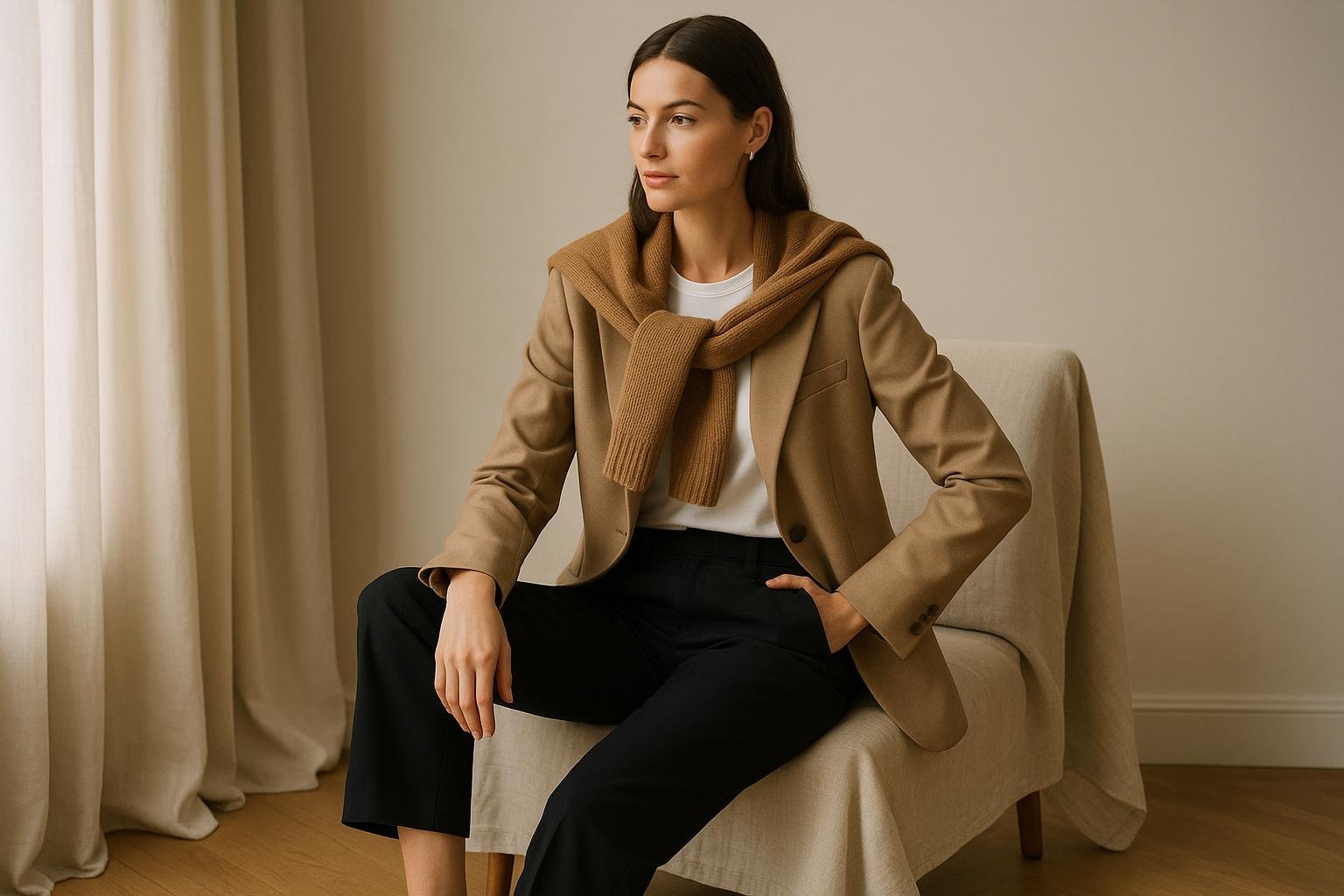
What Is Capsule Wardrobe Design?
Capsule wardrobe design is the strategic art of curating a small, cohesive collection of garments that can be combined in numerous ways. Rather than chasing every trend, you intentionally select versatile clothing pieces that reflect your lifestyle, aesthetic preferences, and practical needs. The result is a minimalist wardrobe that feels considered, polished, and remarkably easy to navigate.
Definition and Core Principles of a Capsule Wardrobe
A capsule wardrobe is a tightly edited selection of clothes and accessories that work harmoniously together. Each item is chosen because it is functional, flattering, and compatible with multiple outfits. Instead of owning large quantities, you invest in pieces that earn their place through frequency of wear and styling potential.
The core principles of capsule wardrobe design are:
- Intentionality: Every piece is selected on purpose, not by impulse. You know why it is in your closet and how you will style it.
- Versatility: Items mix and match seamlessly. Tops pair with most bottoms; outerwear works across outfits; footwear bridges several dress codes.
- Cohesive color palette: A limited range of complementary hues ensures minimal effort when getting dressed and maximizes outfit combinations.
- Quality over quantity: You prioritize well-made garments in good fabrics over a large volume of lower-quality items.
- Functionality: Your clothing suits your real life: your job, climate, and day-to-day activities, not a fantasy version of your schedule.
Ultimately, a capsule wardrobe is not about strict minimalism for its own sake. It is about creating a practical framework that simplifies dressing while elevating personal style.
Benefits: Time-Saving, Budget-Friendly, and Sustainable Style
A carefully designed capsule wardrobe delivers tangible benefits that extend beyond aesthetics.
Time-saving is one of the most immediate advantages. When your wardrobe is streamlined and cohesive, you eliminate decision fatigue. Every morning becomes faster and less stressful because most combinations simply work. With a set of reliable outfit formulas in place, dressing for work, weekends, or events becomes a straightforward process.
Budget-friendliness follows naturally from this approach. By concentrating on capsule wardrobe essentials rather than impulse purchases, you reduce wasteful spending. Investing in a few high-quality staples that you wear repeatedly is far more cost-effective than frequently replacing low-priced, low-quality pieces that do not withstand regular wear. Over time, your cost per wear decreases and your wardrobe feels more luxurious, even if you own fewer items.
Lastly, a capsule wardrobe is inherently aligned with sustainable fashion. You buy less, choose better, and extend the lifespan of each garment. This mindful consumption reduces textile waste, limits excessive production demand, and encourages more ethical wardrobe habits. A sustainable fashion wardrobe does not require perfection; it begins with the conscious decision to own fewer but more meaningful pieces.
How to Start Designing Your Capsule Wardrobe
Building a capsule closet begins with understanding what you already have and clarifying how you want to dress. This preparatory work lays the foundation for a focused, functional collection that genuinely serves you.
Decluttering Your Closet and Identifying Your Personal Style
Before you purchase anything new, you must confront your existing wardrobe. Effective capsule wardrobe design starts with intentional decluttering and careful assessment.
Use these wardrobe organization tips to streamline the process:
- Empty and categorize: Remove everything from your wardrobe and sort items into categories: tops, trousers, skirts, dresses, outerwear, shoes, and accessories.
- Edit ruthlessly: Create four piles: keep, tailor/repair, donate/sell, and recycle. Remove anything that no longer fits, feels uncomfortable, or does not align with how you want to present yourself.
- Assess lifestyle needs: Consider how you spend your week: work, home, social activities, travel, exercise. Your capsule should proportionally reflect these categories.
- Identify repeat patterns: Notice which items you wear most. These often point to your true style preferences and should inform your capsule wardrobe essentials.
Once you have edited your closet, devote time to defining your personal style. Gather inspiration from lookbooks, street style, or saved images and look for recurring themes: silhouettes, color preferences, fabric textures, or an overall mood (such as classic, modern, romantic, or minimalist). Assign a few descriptive words to your desired style; these adjectives will guide future decisions and prevent you from drifting into random purchases.
Step-by-Step Process to Build Your First Capsule Wardrobe
With clarity and space in your closet, you can now construct your first capsule systemically. The steps below will help you understand how to build a capsule wardrobe that is both elegant and practical.
- Step 1: Define your capsule scope. Decide whether you are designing a year-round minimalist wardrobe or a seasonal capsule wardrobe for a specific period (for example, a 30–40 piece autumn collection). Start with one season if the idea of an all-encompassing capsule feels overwhelming.
- Step 2: Choose a base color palette. Select one or two core neutrals such as black, navy, charcoal, camel, beige, or white. Add two to three accent colors that complement your complexion and can be easily integrated with your neutrals.
- Step 3: Anchor your wardrobe with essentials. List the key pieces you need: tailored trousers, a blazer, simple knitwear, everyday denim, a classic coat, and versatile shoes. Evaluate which of these you already own and which require thoughtful investment.
- Step 4: Consider your ratios. A useful structure is a larger number of tops relative to bottoms, plus a curated selection of layers and shoes. For example: 9–12 tops, 4–6 bottoms, 2–3 dresses or jumpsuits, 3–5 layering pieces, and 3–5 pairs of shoes.
- Step 5: Plan before purchasing. Draft a shopping list rather than buying reactively. Prioritize filling functional gaps rather than duplicating items you already own. This simple discipline is the cornerstone of a successful capsule closet.
- Step 6: Test and refine. Wear your capsule for several weeks. Notice which items you reach for and which remain untouched. Adjust accordingly, removing what does not work and noting any missing elements.
This incremental approach allows you to design a capsule wardrobe that evolves with you rather than forcing you into a rigid template.
Essential Pieces for a Functional Capsule Wardrobe
While the exact composition of a capsule wardrobe depends on your lifestyle and climate, several categories of garments consistently prove indispensable. Thoughtful selection within these categories will provide structure and coherence.
Must-Have Basics for Every Season
These core items form the foundation of most capsule wardrobe essentials and can be adapted for differing weather conditions.
- Well-fitting denim: One or two pairs of jeans in timeless cuts (straight, slim, or wide-leg depending on your preference) and classic washes. They seamlessly bridge casual and smart-casual settings.
- Tailored trousers: A pair of structured, neutral trousers instantly elevates any outfit and works with shirts, knitwear, or simple T-shirts.
- Classic shirts and blouses: A crisp white shirt, a soft neutral blouse, and possibly a striped or subtly patterned option provide endless styling possibilities.
- Quality T-shirts and tops: A small rotation of cotton or modal tees in neutral colors functions as the backbone of everyday looks.
- Layering knits: Lightweight sweaters and cardigans in breathable yarns adapt easily across seasons and temperature fluctuations.
- Versatile dress or jumpsuit: A simple, well-cut dress or jumpsuit that can be dressed up or down with shoes and accessories becomes a powerful capsule piece.
- Outerwear for your climate: A tailored coat, a trench, or a minimalist jacket anchors looks and adds polish. In colder regions, a warm yet sleek coat is non-negotiable.
- Foundational footwear: A trio of shoes covers most needs: polished flats or loafers, clean trainers or sneakers, and a dressier option such as ankle boots or heels, depending on your lifestyle.
- Considered accessories: A leather belt, a structured bag, and a refined scarf or minimal jewelry add character without overwhelming the simplicity of your capsule.
For a seasonal capsule wardrobe, you rotate supporting pieces such as heavy knits and boots for winter or linen dresses and sandals for summer, while many core elements remain constant year-round.
Choosing Colors, Fabrics, and Versatile Silhouettes
The strength of capsule wardrobe design lies as much in cohesion as in individual pieces. Your choices in color, fabric, and silhouette determine how easily outfits come together.
Color palette:
- Begin with 2–3 neutrals that form the majority of your garments. These tones should complement one another effortlessly.
- Add 1–3 accent colors that introduce depth and personality without fragmenting the wardrobe. Aim for accents that work with at least two of your chosen neutrals.
- Limit large-scale prints and patterns. A few subtle stripes, checks, or delicate motifs can add interest while remaining easy to style.
Fabrics:
- Prioritize natural or high-quality blended fibers such as cotton, wool, linen, silk, or Tencel for comfort, breathability, and durability.
- Consider fabric performance: crease resistance for workwear, warmth-to-weight ratio for outerwear, and easy care for frequently worn basics.
- Seek consistency in fabric quality. When pieces feel pleasant to wear, you are more likely to reach for them, which is crucial in a minimalist wardrobe.
Silhouettes:
- Opt for clean, timeless lines that transcend fleeting trends. Straight-leg trousers, tailored blazers, A-line skirts, and subtly structured dresses typically age well.
- Balance proportions. If you enjoy voluminous bottoms, pair them with more fitted tops, and vice versa, to maintain a refined silhouette.
- Choose cuts that flatter your natural shape and allow for comfortable movement. A functional capsule must accommodate real life, not just photographs.
Careful decisions in these areas ensure your capsule pieces not only work together visually but also feel good in daily wear, reinforcing the long-term success of your sustainable fashion wardrobe.
Styling and Maintaining Your Capsule Wardrobe
Once you have assembled your collection, the focus shifts to how you use and care for it. Thoughtful styling maximizes outfit possibilities, while diligent maintenance preserves the integrity of your garments over time.
Outfit Formulas: How to Mix and Match Capsule Pieces
Outfit formulas are simple combinations that you can rely on repeatedly without appearing repetitive. They transform your capsule wardrobe design into an efficient daily tool.
Consider integrating these reliable structures:
- Casual uniform: Denim + neutral T-shirt + lightweight knit or jacket + everyday shoes. Rotate colors and textures within this formula to create multiple looks.
- Smart-casual pairing: Tailored trousers + relaxed knit or blouse + loafers or ankle boots. Add a blazer or trench for additional polish.
- Work-ready ensemble: Structured trousers or a skirt + shirt or refined top + blazer + classic shoes. Adjust accessories to signal the level of formality.
- Effortless one-piece look: Dress or jumpsuit + minimal jewelry + season-appropriate outerwear. Switch between flats, boots, or heels to adapt from day to evening.
These formulas act as a framework. By rotating tops, bottoms, and outerwear within the same structure, you generate numerous combinations from a relatively small selection of versatile clothing pieces. This approach can also spark new capsule closet ideas as you discover which pairings you favor most.
Seasonal Updates, Storage Tips, and Long-Term Maintenance
A capsule wardrobe is not static; it evolves with the seasons and your needs. However, change within this system is deliberate rather than impulsive.
Seasonal updates:
- At the start of each season, review your existing pieces and identify what can carry over and what needs to be rotated out.
- Introduce a few season-specific items where necessary, such as heavier knitwear for winter or breathable linen for summer, while keeping your core palette intact.
- Evaluate your lifestyle changes: new job, different commute, travel plans. Adjust your capsule to accommodate these realities.
Storage and organization:
- Store out-of-season clothing in breathable garment bags or clearly labeled boxes to protect them from dust and humidity.
- Use slim, uniform hangers to maximize space and preserve garment shape. Fold knitwear to prevent stretching.
- Arrange your wardrobe by category and color. This simple visual system makes creating outfits intuitive and efficient.
Long-term maintenance:
- Follow care labels carefully, opting for gentle washing methods and air-drying whenever possible to prolong fabric integrity.
- Address minor repairs promptly: replace missing buttons, mend loose hems, and refresh shoes with occasional polishing or resoling.
- Conduct periodic reviews of your capsule. If an item remains unworn despite multiple seasons, reassess whether it truly belongs in your collection.
Through this ongoing attention, your capsule wardrobe remains curated, functional, and aligned with your evolving style, rather than becoming stagnant or cluttered.
Conclusion
Capsule wardrobe design offers a refined alternative to overflowing closets and constant shopping. By deliberately selecting capsule wardrobe essentials that reflect your lifestyle, color preferences, and aesthetic values, you construct a minimalist wardrobe that simplifies your routines while enhancing your appearance.
This approach is not about strict rules, but about clarity and intention. You declutter thoughtfully, invest in versatile clothing pieces, lean on reliable outfit formulas, and maintain your garments with care. Over time, your capsule becomes a quiet yet powerful tool: it saves time, reduces unnecessary spending, and supports a more sustainable relationship with fashion.
Whether you begin with a small seasonal capsule wardrobe or gradually refine your entire closet, the principles remain the same. Fewer, better pieces; cohesive design; and mindful maintenance create a wardrobe that consistently works for you, season after season.
Discover More from Didier Lancelot
Amazon Author page: amazon.com/author/didierlancelot
Narmer Store: narmerstore.org
AI and Technology Ebooks
- Creative AI: Animated Drawings, Manga & Illustrations
- Build a Game with AI: The No-Code Guide
- AI Image Generation Made Easy
- Build a Website with AI: The No-Code Guide
- How to Connect AI to Your Blog: The Ultimate Automation Guide
- AI Productivity Habits: Get More Done in Less Time
- AI Avatars Made Easy
- The Book of AI Prompts: 100+ Proven Prompts
- Make Music with AI: Suno, Udio and AI Music Generators
- Click to Cash
- The Automated Edge: Outwork, Outpace, and Outperform with AI
- AI Side Hustle: How to Make Money with ChatGPT and AI Tools
- Work Smarter with AI
Health, Lifestyle and Home Ebooks
- Hidden Superfoods: The World’s Most Powerful Healing Foods
- Spanish Food: The Complete Cookbook for Authentic Home Cooking
- The Science of Happiness Explained
- The Psychology of Success
- The Secret Sauce of Consistency: What the Experts Don’t Tell You About Fitness
- The Complete Home Bartender’s Guide: Link 1 | Link 2
- Natural Beauty, Made Simple: Easy DIY Organic Skincare Recipes
- Garden Made Simple: Easy, Beginner-Friendly Techniques
- The Dog Training Bible