
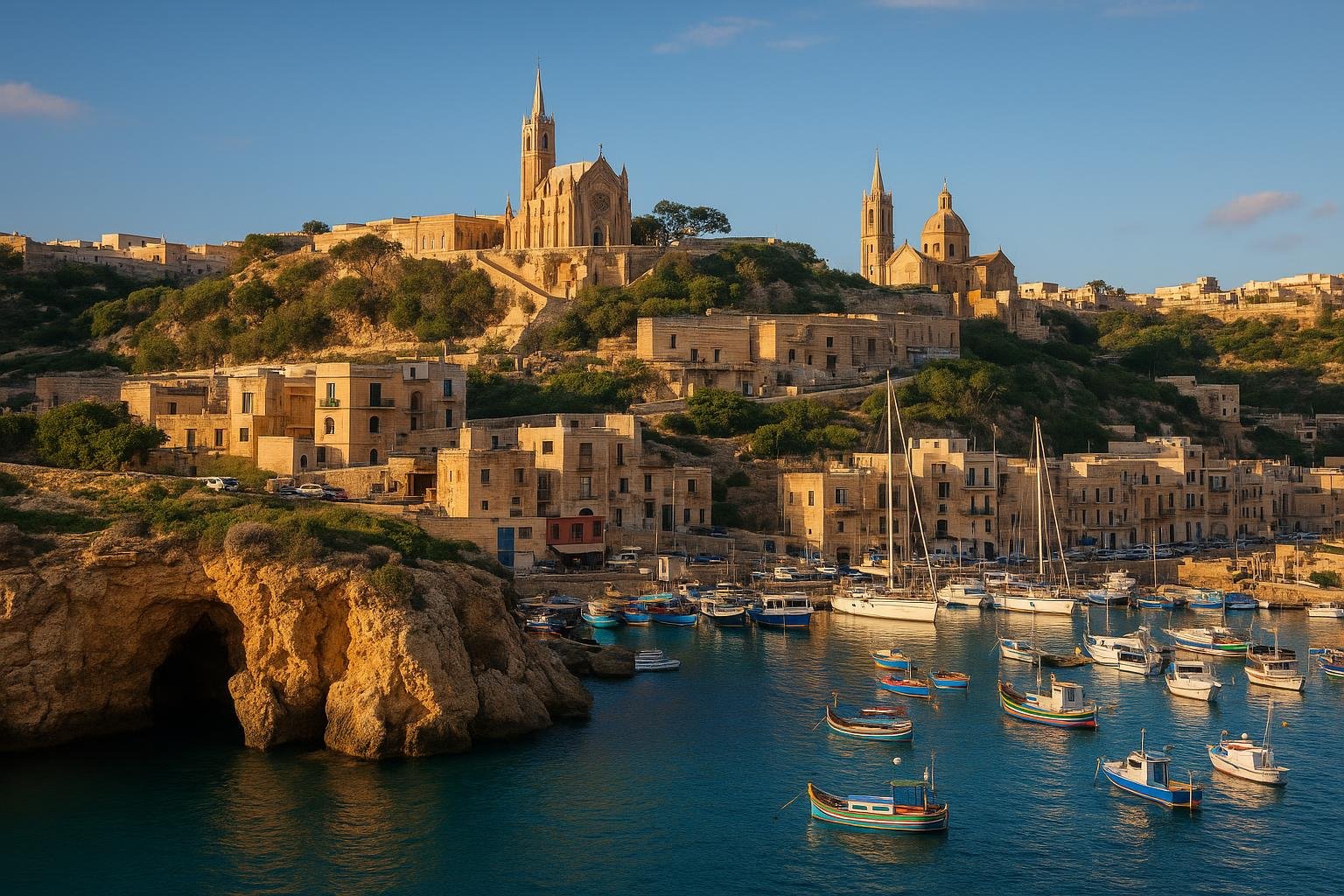
Gozo, Malta’s smaller and quieter sister island, feels like a world apart. Limestone farmhouses scattered across terraced hills, secluded coves washed by translucent water, and an unhurried local rhythm give it a character that is both Mediterranean and entirely its own. Whether you are drawn by its archaeological sites, dramatic coastline, or laid-back rural atmosphere, Gozo rewards those who linger and explore beyond the obvious viewpoints.
Best Time to Visit Gozo
Weather and Climate Overview
Gozo enjoys a classic Mediterranean climate, with long, dry summers and mild, relatively wet winters. From late May to early October, sunshine dominates, with daytime temperatures typically ranging between 24°C and 32°C. Sea temperatures become comfortable for swimming by late May and remain inviting through October, making the island ideal for coastal walks and water-based activities.
Winter, from December to February, is cooler and occasionally blustery, but still far milder than much of Europe. Average daytime temperatures hover between 13°C and 17°C, and while rain does fall, it usually comes in short, heavy showers. These months bring vivid green landscapes and fewer visitors, ideal for hiking and cultural sightseeing.
Spring (March to May) is arguably the island at its most picturesque. Wildflowers blanket the countryside, temperatures are moderate, and the light is crisp. Autumn (late September to November) offers warm seas, softer sunlight, and a more tranquil atmosphere once the summer crowds have thinned.
Peak Tourist Seasons
July and August represent peak season on Gozo. Schools across Europe close for summer, ferry traffic from Malta intensifies, and popular beaches such as Ramla Bay and Ġnejna (via day-trippers) can feel busy. Accommodation prices rise, and reservations for sought-after boutique hotels and farmhouses become essential.
Shoulder seasons—April to June and September to early November—strike a productive balance. The weather is generally excellent, the sea is swimmable for much of this period, and key attractions remain lively without being crowded. These months suit visitors who want both beach time and relaxed sightseeing.
From late November through March, tourism slows considerably. Some seasonal restaurants and beach kiosks close, but core services, including public transport and major cultural sites, continue to operate. This off-peak period appeals to walkers, divers who do not mind cooler conditions, and travelers searching for quiet, lower prices, and a more local rhythm.
Top Attractions in Gozo
Must-Visit Historical Sites
Ġgantija Temples stand at the heart of Gozo’s historical identity. This UNESCO World Heritage site in Xagħra predates Stonehenge and the Egyptian pyramids, making it one of the world’s oldest freestanding stone structures. The massive limestone blocks, some weighing several tonnes, and the well-curated visitor center shed light on Malta’s Neolithic culture and its ritual practices.
In Victoria, Gozo’s compact capital, the Cittadella dominates the skyline. Recently restored fortifications encircle narrow alleys, an imposing cathedral, and several small museums. Walking along the bastion walls provides sweeping views over the entire island, from terraced fields to distant coastal cliffs. Arriving in the late afternoon or just before sunset offers compelling photography conditions and a more atmospheric experience.
The Basilica of Ta’ Pinu, located near Għarb, is another essential stop. This national shrine, set against gently rising countryside, combines Neo-Romanesque architecture with a powerful sense of devotion. Inside, ex-voto offerings—photographs, letters, and mementos—tell personal stories of gratitude and answered prayers. The surrounding footpaths host a series of outdoor chapels marking the Stations of the Cross, ideal for a contemplative walk.
Other notable sites include the parish church of Xagħra, with its elaborate interior; the traditional villages of Għarb and Xewkija, where church domes dominate the skyline; and several small folklore and craft museums that reveal how Gozitans lived before modern tourism.
Natural Wonders and Scenic Spots
Gozo’s coastline is remarkably varied, shifting from red sand bays to sheer limestone cliffs and hidden inlets.
- Ramla Bay: Famous for its distinctive russet sand and backed by low dunes and countryside, Ramla l-Ħamra is the island’s most iconic beach. The shallow entry and generally gentle waves make it suitable for families, while nearby paths climb to viewpoints at Calypso’s Cave and Mixta Cave, perfect for panoramas over the bay.
- Dwejra and the Inland Sea: Although the Azure Window collapsed in 2017, Dwejra remains one of Gozo’s most striking coastal areas. The Inland Sea—a sheltered lagoon connected to the open Mediterranean via a narrow rock tunnel—offers boat trips under towering cliffs, revealing sea caves and dramatic geology. Nearby, the Blue Hole attracts experienced divers and snorkelers.
- Wied il-Għasri: This slender, fjord-like inlet carved into the cliffs on the north coast is particularly photogenic. A narrow staircase descends to a small pebble shore where the water glows in shades of turquoise. It is more of a scenic swim spot than a full-day beach, ideal combined with a coastal hike.
- Marsalforn and Xlendi Bays: These traditional fishing villages turned seaside resorts make convenient bases for exploring Gozo’s marine side. Marsalforn offers a promenade, rock platforms for sunbathing, and easy-access snorkeling, while Xlendi is framed by cliffs and has walking trails leading to viewpoints above the bay.
- Ta’ Ċenċ Cliffs: On Gozo’s southern edge, these dramatic sea cliffs rise sheer from the water. Walking along the clifftops near Sannat affords expansive views and relative solitude, especially outside summer weekends. The area is particularly atmospheric in late afternoon light or during winter swells.
Inland, Gozo’s terraced fields, dry-stone walls, and scattered farmhouses invite slow exploration. Simple country lanes lead to quiet corners where old ways of life remain visible, from farmers tending small plots to traditional windmills and wayside chapels.
Where to Stay in Gozo
Best Neighborhoods for Tourists
Victoria (Rabat) is the island’s practical hub. Staying near the Cittadella or within walking distance of Independence Square places you close to shops, restaurants, and bus routes radiating to every corner of Gozo. It suits travelers who want convenient public transport, local markets, and evening options without needing a car.
Marsalforn and Xlendi appeal to visitors who prioritize the sea. Marsalforn offers a more developed resort feel with numerous eateries, diving centers, and a casual waterfront atmosphere. Xlendi has a smaller, more intimate bay framed by cliffs, ideal for sunset drinks, short coastal walks, and easy swimming.
Xagħra combines village character with proximity to key sites. It is close to Ramla Bay and the Ġgantija Temples, with several restaurants, squares, and guesthouses that give a sense of local life. This is an excellent choice for families and couples seeking a relaxed but active base.
For a more secluded experience, villages such as Għarb, Sannat, and Nadur offer traditional stone houses, panoramic countryside views, and a slower pace. These are particularly appealing for longer stays, remote workers, or anyone planning to rent a car and explore independently.
Recommended Accommodations (Hotels, Hostels, Rentals)
Gozo’s accommodation stock favors smaller-scale properties, characterful guesthouses, and renovated farmhouses. While exact options evolve each season, the following general categories are reliable:
- Boutique hotels in historic buildings: Concentrated in Victoria, Xagħra, and some coastal villages, these often occupy restored townhouses or palazzi with stone arches, internal courtyards, and individually designed rooms. They cater well to couples and discerning travelers who value ambiance, personalized service, and central locations.
- Traditional farmhouses with pools: Scattered across rural villages, these self-catering rentals are one of Gozo’s trademarks. Expect thick limestone walls, wooden beams, private courtyards, and often a small pool. They are ideal for families, groups of friends, and long-stay guests who want space, privacy, and a sense of place.
- Seafront apartments and guesthouses: In Marsalforn, Xlendi, and Qbajjar, apartments and small guesthouses line the water’s edge. These suits travelers prioritizing easy access to swimming spots, dive centers, and restaurants. Many offer balconies with sea views and kitchenettes for self-catering.
- Budget-friendly hostels and B&Bs: A handful of hostels and simple bed-and-breakfasts, mainly in Victoria and coastal areas, provide dorms or modest private rooms. They tend to attract solo travelers, hikers, and divers who value social interaction and cost savings over luxury.
Regardless of category, booking early for stays in July and August is advisable. Outside peak season, you can often secure more competitive rates or consider upgrading to a higher category property for comparatively modest price differences.
Getting Around Gozo
Transportation Options (Public Transport, Rentals)
Reaching Gozo typically involves a ferry from Ċirkewwa in northern Malta to Mġarr Harbour. From there, a compact yet varied network of transport options makes it relatively straightforward to explore.
- Public buses: Gozo’s bus system, operated by Malta Public Transport, radiates mainly from the Victoria bus terminal. Services link Mġarr, Victoria, Marsalforn, Xlendi, and most of the main villages and beaches. Buses are inexpensive and generally reliable, although frequencies drop in the evening and on some rural routes.
- Car rentals: Renting a car provides the greatest freedom, especially if you plan to explore remote bays, rural viewpoints, and scattered villages. Roads are mostly narrow but manageable; driving is on the left, and distances are short, with most journeys taking under 20 minutes. Parking is usually free and relatively easy outside peak season and popular beach areas.
- Scooter and e-bike rentals: For those comfortable on two wheels, scooters and electric bicycles offer a flexible way to navigate Gozo’s hills and tight village streets. E-bikes are particularly efficient for slow travel enthusiasts who want to cover ground without exerting too much effort in the midday heat.
- Taxis and ride services: Traditional taxis and local cab companies operate across the island. While more expensive than buses, they are useful for late-night returns, luggage transfers, or point-to-point trips if you prefer not to drive.
- Walking and hiking: Owing to its small size, Gozo invites exploration on foot. Several marked trails and informal paths connect villages, countryside chapels, and coastal viewpoints. Even if you rely primarily on buses, it is easy to integrate short hikes between stops.
Tips for Navigating the Island
Planning your movements around Gozo’s rhythm helps you make the most of your time. Bus routes typically converge in Victoria, so if you are depending on public transport, expect to pass through the capital when traveling between distant points. Studying the timetable in advance and allowing a buffer for connections will reduce waiting times.
For drivers, village cores often feature narrow, one-way streets and occasional tight corners. Using a navigation app set to avoid the tiniest lanes can reduce unnecessary detours. In high summer, parking near Ramla Bay, Marsalforn, and Xlendi can become scarce by late morning; arriving early or late in the afternoon is often easier.
The island’s climate also shapes how you move around. In the hotter months, aim for outdoor activities such as cliff walks and countryside hikes in the early morning or late afternoon, reserving midday for swimming, shaded cafés, or indoor sites like the Ġgantija visitor center and the Cittadella museums. Always carry water, especially if walking between villages, as stretches of countryside may lack shade and shops.
Finally, Gozo rewards flexibility. Weather changes, village festas, or spontaneous cultural events can alter the mood of an area. Leaving space in your itinerary for unplanned detours—a quiet chapel discovered on a side road, a local bakery, a viewpoint not marked on the map—often becomes the most memorable part of the journey.
Conclusion
Gozo distills many of the Mediterranean’s enduring charms into a compact, approachable island. Ancient temples and fortified citadels reveal layers of human history, while cliffs, coves, and terraced fields shape a landscape best appreciated at an unhurried pace. Choosing the right season, base, and mode of transport ensures you experience not only the famous sights but also the quieter, everyday life that gives Gozo its particular warmth.
Whether you come for a short escape from Malta’s busier mainland or dedicate an entire holiday to exploring its villages and coasts, Gozo offers a rare blend of authenticity, natural beauty, and calm—a destination that encourages you to slow down, look closely, and stay a little longer than planned.
Discover More from Didier Lancelot
Amazon Author page: amazon.com/author/didierlancelot
Narmer Store: narmerstore.org
AI and Technology Ebooks
- Creative AI: Animated Drawings, Manga & Illustrations
- Build a Game with AI: The No-Code Guide
- AI Image Generation Made Easy
- Build a Website with AI: The No-Code Guide
- How to Connect AI to Your Blog: The Ultimate Automation Guide
- AI Productivity Habits: Get More Done in Less Time
- AI Avatars Made Easy
- The Book of AI Prompts: 100+ Proven Prompts
- Make Music with AI: Suno, Udio and AI Music Generators
- Click to Cash
- The Automated Edge: Outwork, Outpace, and Outperform with AI
- AI Side Hustle: How to Make Money with ChatGPT and AI Tools
- Work Smarter with AI
Health, Lifestyle and Home Ebooks
- Hidden Superfoods: The World’s Most Powerful Healing Foods
- Spanish Food: The Complete Cookbook for Authentic Home Cooking
- The Science of Happiness Explained
- The Psychology of Success
- The Secret Sauce of Consistency: What the Experts Don’t Tell You About Fitness
- The Complete Home Bartender’s Guide: Link 1 | Link 2
- Natural Beauty, Made Simple: Easy DIY Organic Skincare Recipes
- Garden Made Simple: Easy, Beginner-Friendly Techniques
- The Dog Training Bible