
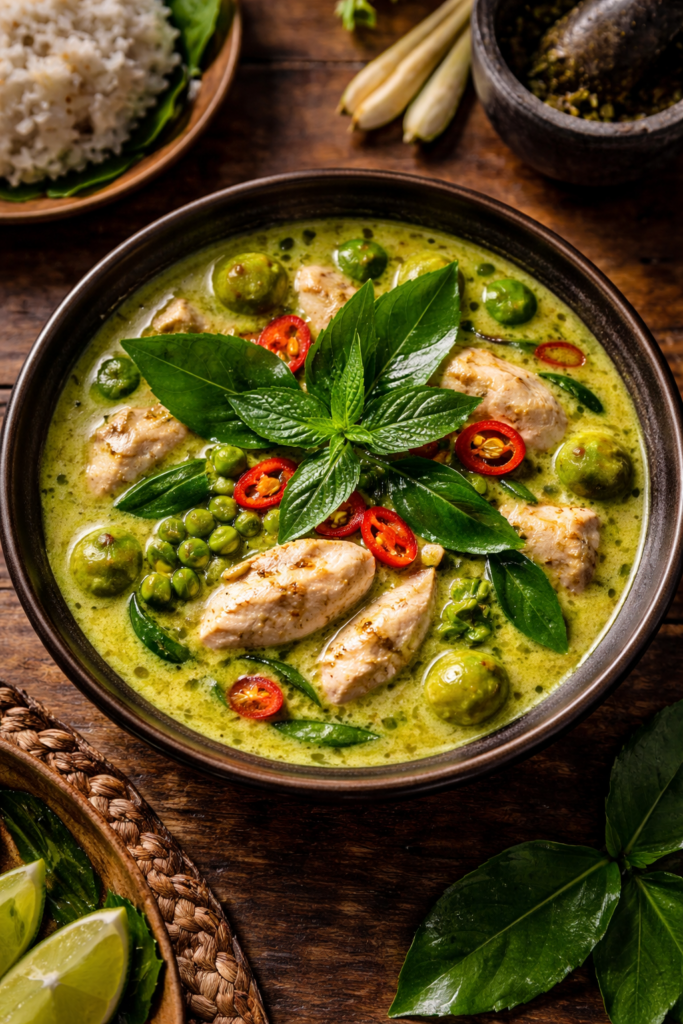
Meta Description: Discover the rich flavors of authentic Green Curry with our comprehensive guide. Learn about its origins, how to make it at home, and its health benefits. Perfect your Thai curry skills today!
Introduction to Green Curry
Green curry is one of the most emblematic dishes of Thai cuisine, renowned for its complex balance of spicy, aromatic, sweet, and savory notes. It captivates with its emerald hue, fragrant herbs, and silky coconut-based sauce that pairs effortlessly with rice or noodles. For home cooks and food enthusiasts alike, mastering a traditional green curry opens the door to a deeper understanding of Thai flavors, techniques, and culinary culture.
What is Green Curry?
Green curry, or gaeng keow wan in Thai, is a coconut milk–based curry infused with a paste made from fresh green chilies, herbs, and spices. Unlike red or yellow variants, its distinctive color comes from green bird’s eye chilies, coriander roots, and other verdant ingredients pounded into a vibrant paste.
This Authentic Thai Curry typically features a protein—often chicken, pork, beef, tofu, or fish balls—simmered with vegetables such as Thai eggplants, pea eggplants, and bamboo shoots. The seasoning is rounded out with fish sauce, palm sugar, and aromatic kaffir lime leaves, yielding a dish that is at once fiery, fragrant, and slightly sweet.
Although restaurant versions can be rich and assertive, a Homemade Green Curry can be tailored to personal taste. You can adjust the heat, balance sweetness and saltiness, and select vegetables according to seasonality and preference, all while preserving the dish’s essential character.
History and Origin
Green curry is a relatively modern addition to the long history of Thai curries. While exact dates are elusive, culinary historians generally place its emergence in the early 20th century in Central Thailand, particularly around Bangkok. It developed alongside red and yellow curries, all of which evolved from older, more minimalist spice-based stews influenced by Indian and Malay traders.
The use of coconut milk reflects Thailand’s tropical geography, where coconuts are abundant, especially in the central and southern regions. Green chilies, introduced from the Americas via Portuguese traders centuries earlier, gradually supplanted older indigenous peppers. Over time, Thai cooks began to favor fresh green chilies and herbs, creating a curry paste that was not only hot but also intensely aromatic and visually striking.
As Thailand modernized and expanded its culinary footprint abroad, Traditional Green Curry became a global ambassador of Thai cuisine. Today, it is on menus worldwide, yet in Thai homes it remains comfort food: served with steamed jasmine rice, rice noodles (khanom jeen), or even bread, and prepared slightly differently from household to household.
Ingredients for Authentic Green Curry
Crafting an Authentic Thai Curry begins with understanding its ingredients. While shortcuts exist, the choice and quality of components determine whether your dish tastes merely pleasant or truly evocative of Thailand.
Key Ingredients
1. Green Curry Paste
The heart of any Thai Curry Recipe is the curry paste. A classic green curry paste typically contains:
- Fresh green bird’s eye chilies: Provide heat and color.
- Shallots: Add sweetness and depth.
- Garlic: Contributes pungency and warmth.
- Lemongrass: Offers citrusy brightness.
- Galangal: A relative of ginger with a sharper, piney aroma.
- Kaffir lime zest or rind: Intensely fragrant and slightly bitter.
- Coriander roots or stems: Earthy and herbal; roots are especially prized in Thai cooking.
- White peppercorns: Gentle heat and complexity.
- Shrimp paste (kapi): Fermented, savory, and essential for authentic depth.
While you can buy pre-made Green Curry paste, pounding your own in a mortar and pestle produces a more vibrant, nuanced result. For an Easy Green Curry on busy days, a high-quality store-bought paste is perfectly acceptable; you can enhance it with extra fresh herbs such as chopped coriander or additional lemongrass.
2. Coconut Milk
Rich, unsweetened coconut milk provides the creamy base of the sauce. Full-fat versions yield the most luxurious texture. In Thai technique, the thick “cream” from the top of the can is often cooked first with the paste to separate the oil and develop flavor before adding the thinner milk.
3. Aromatics and Seasonings
- Fish sauce: The primary salty seasoning, adding umami and complexity.
- Palm sugar: Subtle sweetness that smooths the edges of heat and acidity.
- Kaffir lime leaves: Torn or bruised for their floral, citrus aroma.
- Thai basil (holy basil or sweet basil): Fresh, slightly anise-like fragrance that completes the dish.
4. Proteins
Traditional Green Curry often uses:
- Chicken thighs or breast, thinly sliced
- Pork or beef, cut into bite-sized pieces
- Fish balls or firm white fish
- Firm tofu or tempeh for a vegetarian version
5. Vegetables
- Thai eggplants: Round, green or pale eggplants that hold their shape.
- Pea eggplants: Small, slightly bitter berries providing texture.
- Bamboo shoots: Crunchy and mild, often used from canned or vacuum-packed forms.
- Green beans, zucchini, or bell peppers: Common substitutes where Thai vegetables are unavailable.
Combining these Green Curry Ingredients with care results in a dish that is layered, aromatic, and unmistakably Thai.
Where to Buy Authentic Ingredients
To achieve restaurant-quality or truly Traditional Green Curry at home, sourcing matters. Several options are available depending on where you live.
Asian and Thai Grocery Stores
Specialized Asian supermarkets are the best source for:
- Fresh lemongrass, galangal, kaffir lime leaves, and Thai basil
- Thai eggplants, pea eggplants, and fresh chilies
- Shrimp paste, fish sauce, palm sugar, and quality coconut milk
- Authentic Thai-brand curry pastes, if you are not making your own
Online Retailers
If local access is limited, many online shops import Thai staples directly from Thailand. Look for reputable sellers that specify origin and packaging dates. Shelf-stable items such as fish sauce, shrimp paste, dried kaffir lime leaves, and canned coconut milk travel well and retain flavor.
Conventional Supermarkets
Mainstream supermarkets increasingly carry Green Curry pastes, coconut milk, and fish sauce. While their selection of fresh Thai herbs may be limited, these stores can still support an Easy Green Curry if you are flexible with substitutions—using regular basil in place of Thai basil, or ginger when galangal is unavailable.
When possible, compare labels. Choose coconut milk without added sweeteners or stabilizers, and fish sauce with minimal ingredients (ideally just fish, salt, and water). High-quality inputs significantly improve Green Curry Nutrition and flavor.
How to Make Green Curry at Home
Preparing Homemade Green Curry is less intimidating than it appears. Once you understand the core steps, you can adapt the recipe according to available ingredients and desired spiciness while remaining faithful to its essence.
Step-by-Step Recipe Guide
The following Thai Curry Recipe yields approximately 4 servings.
Ingredients
- 2–3 tbsp green curry paste (homemade or store-bought)
- 400 ml (about 1 can) full-fat coconut milk
- 200–250 ml water or light stock
- 300–400 g chicken thighs, thinly sliced (or tofu for a vegetarian option)
- 1 cup Thai eggplants, quartered (or sliced zucchini/green beans)
- 1/2 cup bamboo shoots, rinsed and drained
- 4–6 kaffir lime leaves, torn
- 2–3 tbsp fish sauce (to taste)
- 1–2 tbsp palm sugar (to taste)
- 1–2 red chilies, sliced (for garnish and extra heat)
- 1 large handful Thai basil leaves
- Steamed jasmine rice or rice noodles, to serve
Method
- Prepare the coconut milk.
Do not shake the can. Open it and spoon out the thick cream from the top (about half the can) into a wok or deep pan. Reserve the remaining thinner liquid. - Fry the curry paste.
Heat the coconut cream over medium heat until it begins to bubble and the oil separates slightly. Add the green curry paste and stir continuously for 2–3 minutes, until fragrant and the paste darkens slightly. This step intensifies flavor. - Add the protein.
Add the sliced chicken or chosen protein to the pan. Stir to coat the pieces in the aromatic paste, cooking until the exterior turns opaque but not fully cooked through. - Incorporate remaining coconut milk and liquid.
Pour in the rest of the coconut milk and enough water or stock to reach your preferred consistency—usually a slightly thick but pourable sauce. Bring gently to a simmer. - Add vegetables and aromatics.
Stir in Thai eggplants (or substitutes), bamboo shoots, and torn kaffir lime leaves. Simmer for 8–10 minutes until the vegetables are just tender and the chicken is fully cooked. - Season the curry.
Add fish sauce and palm sugar gradually, tasting as you go. The flavor should be harmoniously salty-sweet with a pronounced but balanced heat. Adjust with a little more fish sauce for saltiness or palm sugar for sweetness. - Finish with herbs.
Turn off the heat and stir in Thai basil leaves and sliced red chilies. Allow the curry to rest for a couple of minutes so the flavors meld. - Serve.
Ladle the green curry over steamed jasmine rice or serve alongside rice noodles. Garnish with extra basil and chilies if desired.
This method yields an Easy Green Curry that still respects traditional technique. Once comfortable, you can experiment with different proteins, seasonal vegetables, or levels of spiciness.
Tips for Perfecting the Flavor
Subtle adjustments can transform a good curry into an exceptional one. Consider the following professional techniques when refining your Homemade Green Curry:
- Balance the four pillars: In Thai cooking, harmony between saltiness, sweetness, heat, and aroma is paramount. Taste frequently. If the curry feels flat, add a touch more fish sauce. If too sharp or hot, a little extra palm sugar or coconut milk softens the edges.
- Use fresh herbs and chilies. The vibrancy of green curry depends heavily on freshness. Wilted basil or old chilies will yield a muted dish. Buy herbs as close to cooking time as possible.
- Control heat level thoughtfully. For a milder curry, reduce the amount of green curry paste or choose a brand known for moderate spiciness. Alternatively, make your own paste using fewer bird’s eye chilies and more aromatics such as lemongrass and coriander roots.
- Do not overcook the vegetables. Green curry should retain some textural contrast. Add delicate vegetables later in the cooking process to prevent them from turning mushy.
- Allow resting time. After cooking, let the curry sit for 5–10 minutes. This short rest allows flavors to integrate, enhancing both aroma and taste.
- Mind the coconut milk. Avoid vigorous boiling, which can cause the coconut milk to split and become grainy. A gentle simmer preserves a smooth, glossy sauce.
- Adjust for leftovers. Flavors intensify as the curry rests in the refrigerator. When reheating, you may wish to thin the sauce with a splash of water or coconut milk and re-balance the seasoning.
By applying these principles, you move beyond a simple Thai Curry Recipe toward a consistently refined, restaurant-caliber dish.
Health Benefits of Green Curry
Beyond its captivating taste, green curry can fit into a wholesome diet when prepared thoughtfully. Many traditional ingredients contribute valuable nutrients and beneficial plant compounds, making the dish more than just a comfort food.
Nutritional Information
Green Curry Nutrition varies depending on ingredients and portion sizes, but a typical homemade serving (with chicken and vegetables, served without rice) offers a mix of protein, fats, and carbohydrates along with vitamins and minerals.
Macronutrients
- Protein: Chicken, tofu, fish, or other proteins provide essential amino acids needed for muscle maintenance, immune function, and tissue repair.
- Fats: Coconut milk is rich in saturated fat, particularly medium-chain triglycerides (MCTs), which are metabolized somewhat differently from long-chain fats. Moderate intake can be compatible with a balanced diet, though those managing cholesterol should monitor portions.
- Carbohydrates: Vegetables and any added starch (such as bamboo shoots or eggplants) contribute carbohydrates and dietary fiber, which support digestive health.
Micronutrients and Phytochemicals
- Vitamins: Fresh chilies, basil, and other herbs are sources of vitamin C and provitamin A, supporting immune and eye health.
- Minerals: Fish sauce and shrimp paste provide trace minerals, although they also contribute sodium; vegetables add potassium, which can help balance sodium intake.
- Antioxidants: Herbs such as Thai basil, kaffir lime leaves, and coriander contain antioxidants that may help counter oxidative stress.
- Anti-inflammatory compounds: Galangal, lemongrass, and chilies have been studied for potential anti-inflammatory and digestive benefits.
Using ample vegetables increases fiber and micronutrient density, enhancing Green Curry Health Benefits while helping to moderate overall calorie intake.
Green Curry in a Balanced Diet
Integrating green curry into a balanced eating pattern requires attention to portion size, ingredient choices, and accompaniments. With sensible adjustments, it can form part of a nutritious and satisfying meal plan.
1. Managing fat and calories
Coconut milk is energy-dense. To moderate calories without sacrificing flavor, you can:
- Use a combination of full-fat and light coconut milk.
- Increase the proportion of vegetables relative to coconut milk.
- Serve smaller portions of curry with a larger side of steamed vegetables or salad.
2. Controlling sodium
Fish sauce and shrimp paste are naturally salty. To keep sodium in check:
- Season gradually and taste repeatedly rather than adding fish sauce all at once.
- Use low-sodium stock or water instead of salted broths.
- Balance salty flavors with herbs and acidity (a squeeze of lime) instead of relying solely on saltiness for impact.
3. Choosing whole-grain accompaniments
Traditionally, Green Curry is served with jasmine rice. For improved nutritional value, consider:
- Brown jasmine rice or other whole grains such as red rice or quinoa.
- Pairing the curry with a generous side of steamed or stir-fried vegetables.
4. Plant-forward variations
A vegetable-rich, tofu-based green curry can reduce saturated fat and increase fiber. Replace or supplement animal protein with tofu, tempeh, or legumes and load the curry with a variety of green vegetables—broccoli, green beans, zucchini, and leafy greens work well.
5. Frequency and context
As with many flavorful dishes, green curry is best enjoyed as part of an overall dietary pattern that emphasizes variety, whole foods, and moderation. When placed alongside plenty of vegetables, fruit, whole grains, and lean proteins, an occasional rich curry remains compatible with long-term health goals.
Conclusion
Green curry encapsulates the essence of Thai cuisine: a meticulous balance of bold flavors, aromatic herbs, and satisfying textures. From its relatively modern origins in Central Thailand to its status as an international favorite, it has become a culinary icon that invites both respect for tradition and creative interpretation.
By understanding Green Curry Ingredients, selecting quality products, and following sound technique, you can prepare Authentic Thai Curry at home that rivals restaurant offerings. Moreover, with thoughtful adjustments to fat content, sodium levels, and vegetable proportions, green curry can align with contemporary nutritional priorities, offering both pleasure and health-supportive qualities.
Whether you are venturing into your first Easy Green Curry or refining a long-standing Thai Curry Recipe, the dish rewards careful attention and encourages exploration. With each batch, you deepen your appreciation for a classic that is at once comforting, vibrant, and endlessly adaptable.
https://www.teepublic.com/t-shirt/53793384-yoga-wellness?store_id=2851997
Top 5 Superfoods for Brain Power
Sashimi vs. Sushi: Everything You Need to Know About Sashimi
The Ultimate Sushi Guide: History, Popular Types, and Recipes
Pad Thai: The Ultimate Guide to Thailand’s National Noodle Dish
Crystal Collector
Combat Protocol
WASD – Move
Mouse – Look around
Left Click – Fire Weapon
R – Reload
Eliminate all hostile units in the sector!
(Works better on computer)