
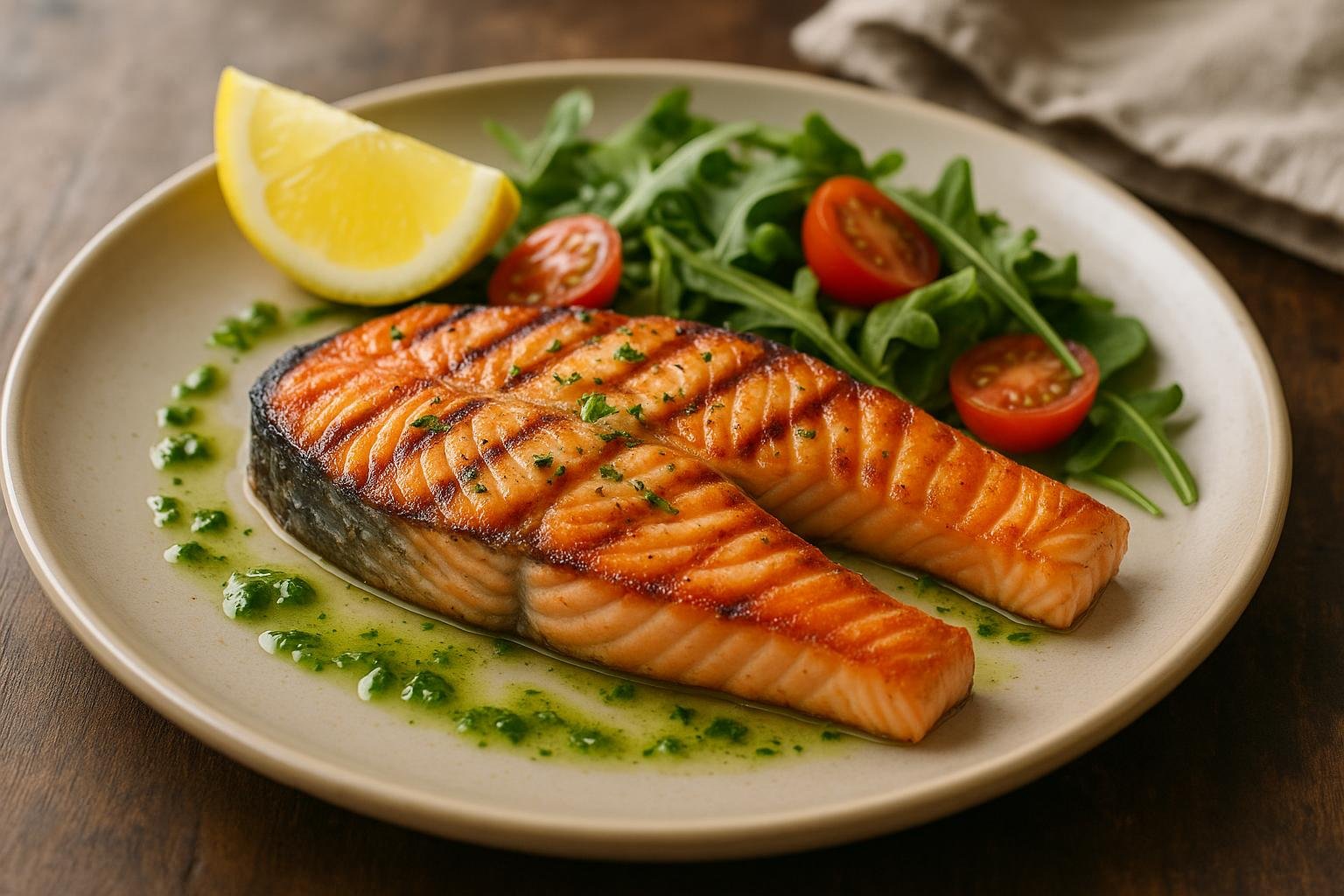
Grilled salmon occupies a rare space in cooking: it is both elegant and approachable, deeply flavorful yet remarkably good for you. Whether prepared for a weekday dinner or a special occasion, it offers an exceptional balance of nutrition, convenience, and taste. With the right ingredients and techniques, you can transform a simple fillet into a restaurant-quality centerpiece that pairs beautifully with a wide range of side dishes.
The Health Benefits of Grilled Salmon
Nutritional Profile of Salmon
Salmon is one of the most nutrient-dense foods available, making it a smart foundation for a health-conscious meal. A typical 100-gram portion of cooked salmon provides high-quality protein, complete with all essential amino acids necessary for muscle repair, immune function, and tissue maintenance. Unlike many red meats, salmon delivers this protein with relatively low levels of saturated fat.
In addition to protein, salmon supplies an impressive array of vitamins and minerals. It is a robust source of B vitamins, particularly B12, niacin (B3), and B6, all of which support energy metabolism and nervous system health. It also contains vitamin D, which plays a crucial role in bone integrity, immune modulation, and hormone regulation. Minerals such as selenium, potassium, and phosphorus further contribute to antioxidant defense, blood pressure control, and skeletal strength.
Grilling salmon, when done properly, preserves most of these valuable nutrients. Unlike heavily processed or deep-fried preparations, grilling uses minimal added fat and allows excess oil to drain away. This method maintains the integrity of the fish while enhancing its natural flavors, making a thoughtfully prepared grilled salmon recipe both nutritionally sound and deeply satisfying.
Omega-3 Fatty Acids and Heart Health
Salmon is renowned for its abundance of omega-3 fatty acids, particularly EPA (eicosapentaenoic acid) and DHA (docosahexaenoic acid). These long-chain fats are essential for optimal cardiovascular function and are not produced efficiently by the human body, which means they must be obtained from food. Regular consumption of salmon has been associated with improvements in blood lipid profiles, including reduced triglycerides and favorable changes in HDL (“good”) cholesterol.
The cardioprotective effects of omega-3 fatty acids extend beyond cholesterol. They help to moderate inflammation, support endothelial function (the health of blood vessel linings), and may assist in regulating blood pressure. Emerging research also points to potential benefits for cognitive health, eye function, and mood regulation, underscoring salmon’s value as a dietary staple.
When you incorporate grilled salmon into your weekly menu, you are doing more than enjoying a flavorful dish; you are investing in long-term wellness. Integrating it with a variety of vegetables, whole grains, and other nutrient-rich foods amplifies these health benefits and promotes a balanced eating pattern.
Essential Ingredients for Perfectly Grilled Salmon
Selecting the Freshest Salmon
The foundation of perfect grilled salmon is impeccable fish selection. Fresh salmon should have a clean, briny aroma reminiscent of the sea rather than a strong “fishy” smell. The flesh needs to appear moist and vibrant, with colors ranging from coral pink to deep orange depending on the species. Avoid fillets that look dull, dry, or discolored, particularly around the edges.
When purchasing at a fish counter, examine the texture and structure. The flesh should be firm and resilient, springing back when gently pressed. If you choose a whole fish, look for clear, bright eyes, shiny skin, and tightly adhering scales. For fillets and steaks, ask the fishmonger to remove any pin bones to simplify preparation.
Frozen salmon can also be an excellent choice when sourced responsibly and handled correctly. Look for individually quick-frozen portions with minimal ice crystals and intact packaging. Whether fresh or frozen, prioritize reputable suppliers who focus on quality and sustainable fishing or aquaculture practices. Careful fresh salmon selection ensures a superior final result before your grill is even preheated.
Marinades and Seasonings
A well-composed salmon marinade enhances flavor and tenderness without masking the fish’s natural character. Acidic components such as lemon juice, lime juice, or mild vinegars help brighten the taste and lightly tenderize the surface, while oils—often olive or avocado oil—prevent sticking and promote even browning. Aromatics like garlic, shallots, and fresh herbs add complexity and depth.
A classic combination for grilled salmon might include olive oil, freshly squeezed lemon, minced garlic, chopped dill or parsley, sea salt, and cracked black pepper. For a more robust profile, soy sauce or tamari, grated ginger, and a hint of honey or maple syrup create an appealing balance of savory and sweet. Smoked paprika, coriander, cumin, or chili flakes can add warmth or gentle heat without overwhelming the fish.
To avoid a mushy texture, limit marinating time to 15–30 minutes for thinner fillets and up to 45 minutes for thicker cuts. Alternatively, a simple seasoning approach—brushing with oil, then sprinkling salt, pepper, and a few herbs—can be just as effective, especially when you want the flavor of the salmon itself to take center stage. Thoughtful use of marinades and seasonings is one of the most reliable ways to transform a simple fillet into juicy grilled salmon with layered, nuanced taste.
Step-by-Step Guide to Grilling Salmon
Prepping Your Grill and Tools
Effective grilling begins with proper preparation of both equipment and ingredients. Whether you use a gas or charcoal grill, preheating is essential. Aim for medium-high heat—generally in the range of 375–425°F (190–220°C). This temperature range is hot enough to produce attractive grill marks and a slight char while preserving moisture inside the fish.
Clean grates are non-negotiable. Use a sturdy grill brush to remove any residue from previous cooking sessions. Once the grates are clean and hot, oil them lightly using tongs and a folded paper towel dipped in a high-smoke-point oil. This step significantly reduces sticking, a common frustration when grilling delicate proteins like fish.
Gather your tools before you start cooking: a thin, wide spatula for turning the salmon, tongs, a basting brush (if you plan to apply extra marinade or glaze), and a digital thermometer to check doneness with precision. Pat the salmon dry with paper towels, then apply your chosen marinade or seasoning just before it reaches the grill. Proper preparation ensures that your grilling techniques can shine without interruption.
Cooking Techniques for Juicy Salmon
Achieving moist, tender salmon on the grill requires attention to both heat control and timing. For fillets with the skin on, place them skin-side down first. The skin acts as a protective barrier, helping to shield the flesh from direct heat and preventing excessive sticking. Close the lid to create an oven-like environment that cooks the fish more evenly.
Depending on thickness, most fillets will require 6–10 minutes of total cooking time. A useful guideline is to allow 8–10 minutes per inch of thickness, flipping only once if necessary. Some chefs prefer not to flip at all when cooking skin-on fillets, allowing the salmon to cook nearly through from the bottom before finishing with a brief exposure on the flesh side for grill marks.
To assess doneness accurately, rely on visual cues and a thermometer rather than guesswork. The flesh should turn opaque and begin to flake easily with a fork, yet retain a slightly translucent, moist center. A target internal temperature of 125–130°F (52–54°C) yields a tender, succulent texture; the temperature will rise slightly as the fish rests. Overcooking is the primary cause of dry salmon, so remove it from the grill just before it appears fully done.
For particularly thick cuts or if you are grilling over very high heat, consider a two-zone fire: one hotter side for searing and a cooler side for gentle finishing. This approach allows you to develop color and flavor on the exterior while maintaining a tender interior. With practice, these grilling techniques will consistently produce perfect grilled salmon that is flavorful, juicy, and visually appealing.
Delicious Side Dishes to Pair with Grilled Salmon
Fresh Salads and Vegetables
Thoughtfully chosen accompaniments elevate grilled salmon from a simple entrée to a complete, well-composed meal. Fresh salads are particularly well-suited to balance the richness of the fish. A crisp green salad with mixed lettuces, cucumber, radishes, and a light vinaigrette offers contrast in both texture and flavor. Adding elements such as fennel, citrus segments, or thinly sliced red onion introduces brightness and complexity.
Roasted or grilled vegetables also complement salmon exceptionally well. Asparagus, zucchini, bell peppers, cherry tomatoes, and green beans develop sweetness and smokiness when exposed to high heat, mirroring the charred notes of the fish. Lightly tossing them with olive oil, salt, pepper, and fresh herbs before cooking keeps preparation streamlined yet refined.
For a more substantial vegetable side, consider a Mediterranean-inspired platter of marinated artichoke hearts, olives, roasted eggplant, and grilled mushrooms. These flavors harmonize beautifully with herb-forward marinades while adding richness without excessive heaviness. Such combinations help create a balanced plate that feels satisfying yet not overpowering.
Grains and Starches for a Balanced Meal
Incorporating whole grains and starches alongside grilled salmon ensures satiety and nutritional balance. Fluffy quinoa, nutty farro, or brown rice all provide fiber, B vitamins, and a pleasant textural counterpoint to tender fish. Tossing these grains with chopped herbs, lemon zest, and a drizzle of olive oil can quickly transform them into refined salmon side dishes suitable for any occasion.
Potato-based options work equally well. Roasted baby potatoes with rosemary and garlic, a simple olive-oil mashed potato, or a warm potato salad with mustard and herbs each bring comfort and substance. These sides absorb the juices of the salmon and any accompanying sauces, making every bite cohesive and flavorful.
For a lighter yet still satisfying starch, consider couscous, bulgur, or barley pilaf studded with toasted nuts and dried fruit. The subtle sweetness of raisins, currants, or dried apricots contrasts nicely with the savory depth of the fish. Paired thoughtfully, these grains and starches help create a complete, nourishing plate anchored by expertly grilled salmon.
When approached with care, grilled salmon becomes far more than a simple protein option. From its impressive nutrient profile and heart-supportive omega-3 fatty acids to the subtle art of fresh fish selection and balanced marinating, each step contributes to the final result. Mastering grill preparation and cooking techniques allows you to consistently achieve moist, delicately flavored fillets. Paired with vibrant vegetables and well-chosen grains, this refined dish fits seamlessly into both everyday meals and special gatherings, offering a combination of taste, elegance, and health benefits that few other recipes can match.
Discover More from Didier Lancelot
Amazon Author page: amazon.com/author/didierlancelot
Narmer Store: narmerstore.org
AI and Technology Ebooks
- Creative AI: Animated Drawings, Manga & Illustrations
- Build a Game with AI: The No-Code Guide
- AI Image Generation Made Easy
- Build a Website with AI: The No-Code Guide
- How to Connect AI to Your Blog: The Ultimate Automation Guide
- AI Productivity Habits: Get More Done in Less Time
- AI Avatars Made Easy
- The Book of AI Prompts: 100+ Proven Prompts
- Make Music with AI: Suno, Udio and AI Music Generators
- Click to Cash
- The Automated Edge: Outwork, Outpace, and Outperform with AI
- AI Side Hustle: How to Make Money with ChatGPT and AI Tools
- Work Smarter with AI
Health, Lifestyle and Home Ebooks
- Hidden Superfoods: The World’s Most Powerful Healing Foods
- Spanish Food: The Complete Cookbook for Authentic Home Cooking
- The Science of Happiness Explained
- The Psychology of Success
- The Secret Sauce of Consistency: What the Experts Don’t Tell You About Fitness
- The Complete Home Bartender’s Guide: Link 1 | Link 2
- Natural Beauty, Made Simple: Easy DIY Organic Skincare Recipes
- Garden Made Simple: Easy, Beginner-Friendly Techniques
- The Dog Training Bible