How Technology is Reshaping the Way We Work and Live
Future of Work, Digital Transformation, Artificial Intelligence 2025, Remote Work Trends, Smart Cities, Work-Life Integration, Automation, Digital Nomad Lifestyle, AI Agents, Hybrid Work
We aren’t just using technology anymore; we are living within it. As we move through 2025, the boundary between our “digital lives” and “real lives” has practically vanished. From the way we earn a living to how we manage our health and households, technology is no longer a tool—it is the very architecture of modern existence.
Here is how the latest technological shifts are fundamentally rewriting the human experience.
1. The Rise of the “Silicon Colleague”: Agentic AI
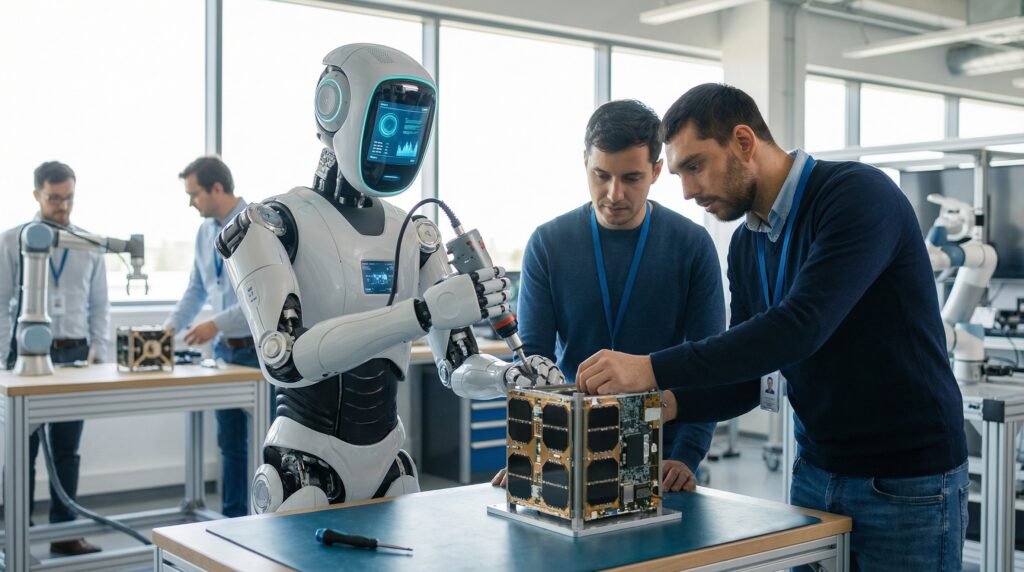
In previous years, AI was a tool we prompted to get an answer. In 2025, we have entered the era of Agentic AI. These are autonomous systems that don’t just suggest text; they execute multi-step workflows.
- In the Office: AI “agents” now handle complex scheduling, cross-departmental project tracking, and data synthesis.
- The Impact: This shifts the human role from execution to orchestration. We are moving away from “busy work” and toward high-level strategic decision-making and creative direction.
2. The Death of the “9-to-5” and the Birth of Work-Life Integration
Remote work was the spark, but hyper-connectivity is the fuel. The traditional office-centric life is being replaced by Work-Life Integration.
- Location Independence: With 5G expansion and satellite internet, the “Digital Nomad” lifestyle has moved from a niche trend to a corporate standard.
- The “Phygital” Workspace: Companies are using spatial computing and AR (Augmented Reality) to create “phygital” offices—where remote workers feel physically present in a 3D digital twin of their office.
3. Hyper-Personalized Living: The Internet of Things (IoT)
Our homes are becoming “living organisms” that anticipate our needs. In 2025, smart cities and IoT devices have matured into seamless ecosystems.
- Predictive Health: Wearables now do more than count steps; they use AI to predict illness days before symptoms appear, automatically syncing with your calendar to suggest a “rest day.”
- Smart Urbanism: In modern smart cities, AI-optimized traffic systems and energy-efficient grids are reducing commute times and carbon footprints, making urban living more sustainable and less stressful.
4. The Human Advantage: Soft Skills in a Hard-Tech World
As automation handles technical tasks, the “human element” has become the ultimate premium. Technology is ironically making us value our non-technological traits more than ever.
| Skill Type | AI Performance | Human Advantage |
| Data Analysis | Superior | Contextual Insight |
| Repetitive Tasks | Perfect | Adaptability |
| Empathy | Simulated | Genuine Connection |
| Ethics/Governance | Rules-based | Moral Judgment |
5. Challenges: The Digital Fatigue and Ethics Gap
It isn’t all progress. The “always-on” nature of 2025 technology has brought new challenges:
- Digital Fatigue: The struggle to disconnect when your office is in your pocket.
- The Ethics Gap: As AI agents gain more autonomy, the need for robust AI governance and “human-in-the-loop” systems is critical to prevent bias and ensure privacy.
Conclusion: Reimagining the Future
Technology is not a wave that hits us; it is a tool we shape. As it reshapes our world, the goal remains the same: using these advancements to buy back our time, enhance our creativity, and foster deeper human connections.
How has technology changed your daily routine this year? Let’s discuss in the comments below!
#futureofwork, #digitaltransformation, #AI, #techtrends, #smartliving, #remotework, #innovation, #wellness