
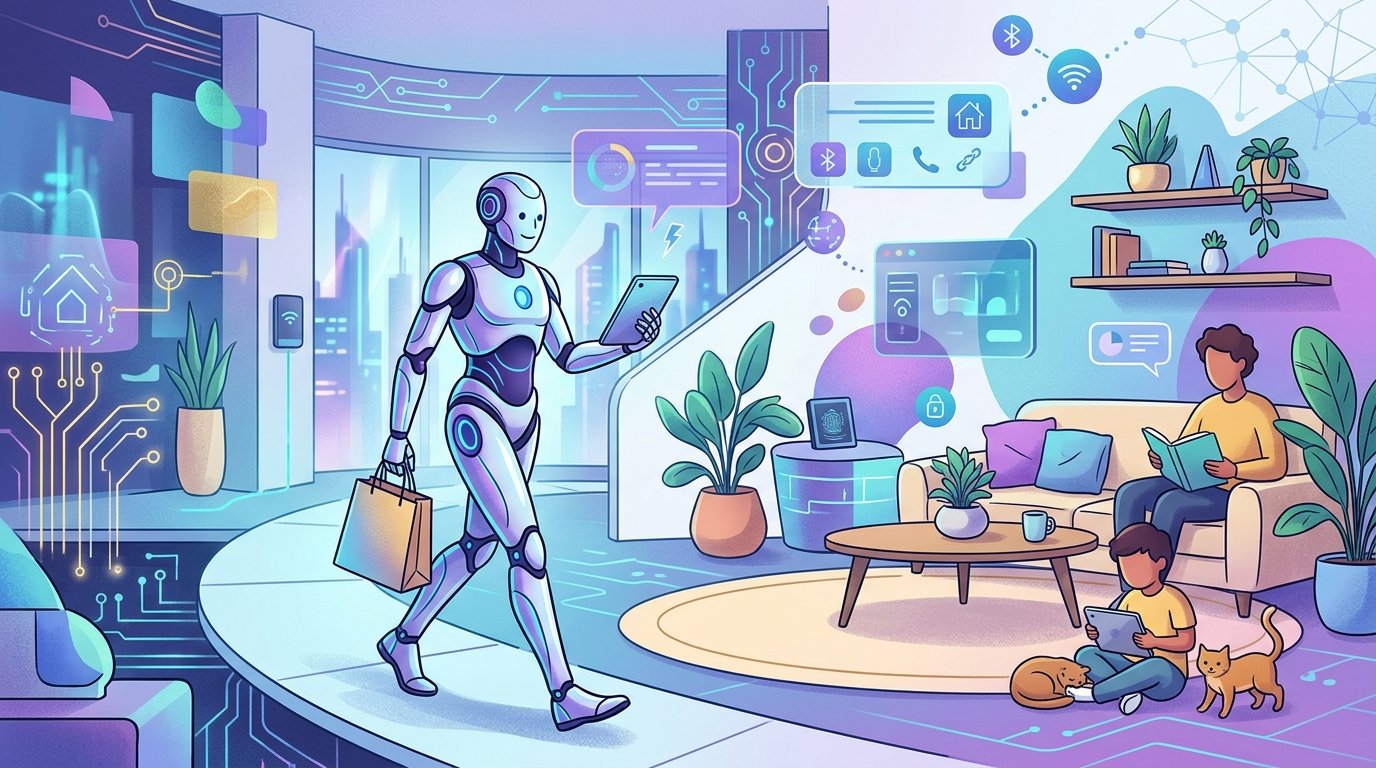
Science fiction has been promising us robot butlers for decades. Now, for the first time, that promise feels less like fantasy and more like a question of timing. Humanoid robots — machines built to look and move like people — are graduating from research labs and landing on factory floors around the world. Companies large and small are racing to build robots that can walk, carry boxes, open doors, and even hold simple conversations. But what does that actually mean for ordinary households? Will a helpful robot be folding your laundry in five years, or are we still a generation away? Let’s break it all down.
What Exactly Is a Humanoid Robot?
A humanoid robot is simply a machine designed to resemble and move like a human being. That means two legs for walking, two arms for manipulating objects, and usually a head with cameras and sensors acting as “eyes” and “ears.” The human shape is deliberate — our homes, offices, and streets were built for human bodies, so a robot with a similar form can, in theory, navigate those spaces without redesigning everything around it.
You may have already seen videos of robots doing backflips or carefully picking up objects. What makes modern humanoid robots different from older industrial robots (the fixed arms you see in car factories) is their ability to operate in unpredictable environments. They use a combination of technologies to do this:
- Computer vision: Cameras and software that help the robot “see” and identify objects in real time.
- AI and machine learning: Algorithms that let the robot learn from experience, similar to how a child gradually learns to pour a glass of water without spilling.
- Advanced actuators: Motors and joints that mimic the flexibility of human muscles, allowing smoother and safer movement.
Where Are Humanoid Robots Working Right Now?
Before they enter your home, humanoid robots are cutting their teeth in controlled, structured environments — and that makes a lot of sense. Warehouses and manufacturing plants are ideal testing grounds because the layout is predictable, the tasks are repetitive, and mistakes can be managed without the safety concerns of a busy family home.
Several well-known technology and automotive companies are already deploying early versions of humanoid robots to handle tasks like moving inventory, sorting packages, and performing quality checks. These aren’t the clumsy, slow machines of the past. Modern prototypes can walk on uneven surfaces, climb stairs, and use their hands to grip a surprisingly wide range of objects.
However, it’s worth being realistic. Even in a structured warehouse setting, these robots still require significant human oversight. They struggle with truly unpredictable situations — imagine a spilled drink, a child’s toy on the floor, or a pet darting across the room. Those are easy for a person to handle and still genuinely hard for a robot.
The Biggest Hurdles Before Robots Come Home
Getting a humanoid robot to work reliably in a home is a far tougher challenge than it sounds. Here are the main obstacles engineers and companies are still working through:
- Dexterity: Human hands are extraordinarily capable. Picking up a raw egg without breaking it, threading a needle, or untangling headphones — these tasks require fine motor control that robots are only beginning to approach.
- Common sense reasoning: A robot might know how to pour water into a cup but not understand that the cup is already full. Teaching machines genuine situational awareness remains one of AI’s hardest problems.
- Safety around people: Robots must be able to detect and respond to humans — especially children and elderly people — in real time, without causing harm. This requires both hardware safety features and very sophisticated software.
- Battery life: Humanoid robots are energy-hungry. A robot that needs recharging every two hours is far less useful in a home setting.
- Cost: Right now, advanced humanoid robots are extremely expensive to produce. For home use to become widespread, that cost needs to drop significantly — something that typically happens as manufacturing scales up, but takes time.
What Tasks Could Home Robots Realistically Handle First?
Experts generally agree that home robots won’t arrive as all-purpose assistants from day one. Instead, they’ll likely start with a narrow set of well-defined jobs and gradually expand their capabilities over time. Think about which tasks in your home are repetitive, physically demanding, or time-consuming — those are the most realistic early targets.
Some tasks that appear within reach in the medium term include:
- Loading and unloading dishwashers
- Carrying groceries and putting items away in consistent locations
- Basic cleaning tasks like vacuuming and mopping (going beyond today’s simple robot vacuums)
- Fetching and delivering items around the home, particularly useful for elderly or mobility-impaired individuals
- Sorting and folding laundry — a task that actually has a huge amount of research focus due to its complexity
How to Prepare for a Robot-Assisted Future
You don’t need to do anything dramatic, but it’s worth starting to think like someone who will eventually share a home with a robot. A few practical habits will help:
- Keep your home organized: Robots work far better in tidy, predictable environments. Good habits now translate directly into a robot-friendly home later.
- Stay curious: Follow developments from major robotics companies. Understanding what’s coming helps you make smarter decisions — about purchases, careers, and even caregiving arrangements for elderly relatives.
- Think about use cases that matter to you: Whether it’s helping an aging parent, managing household chores, or handling accessibility challenges, knowing what you actually need from a robot will help you evaluate options when they arrive.
- Don’t believe the hype entirely: Product demos are often carefully controlled. Real-world performance at launch almost always lags behind what you see in polished videos.
A Realistic Timeline: Patience Is Required
The honest answer to “when will robots enter our homes?” is: sooner than many people think, but later than the boldest headlines suggest. The technology is advancing at a genuinely exciting pace, and the investment pouring into this space is enormous. Early versions of home-capable robots could become available to consumers within this decade, though they’ll likely be expensive, limited in scope, and require a learning period to adapt to your specific home.
Mass adoption — where a home robot is as common as a smartphone — is probably still well over a decade away. A great deal depends on how quickly manufacturing costs fall, how AI capabilities improve, and whether regulators develop clear safety standards for robots sharing spaces with vulnerable people.
Key takeaway: Humanoid robots are no longer science fiction, but they’re not quite ready to move in either. The technology is real and progressing fast — the remaining challenges are about reliability, safety, and cost, not imagination. Stay informed, stay realistic, and start thinking about how a robot helper could genuinely improve your life when the time comes. The future is arriving; it’s just taking the stairs.
Discover More from Didier Lancelot
Amazon Author page: amazon.com/author/didierlancelot
Narmer Store: narmerstore.org
AI and Technology Ebooks
- Creative AI: Animated Drawings, Manga & Illustrations
- Build a Game with AI: The No-Code Guide
- AI Image Generation Made Easy
- Build a Website with AI: The No-Code Guide
- How to Connect AI to Your Blog: The Ultimate Automation Guide
- AI Productivity Habits: Get More Done in Less Time
- AI Avatars Made Easy
- The Book of AI Prompts: 100+ Proven Prompts
- Make Music with AI: Suno, Udio and AI Music Generators
- Click to Cash
- The Automated Edge: Outwork, Outpace, and Outperform with AI
- AI Side Hustle: How to Make Money with ChatGPT and AI Tools
- Work Smarter with AI
Health, Lifestyle and Home Ebooks
- Hidden Superfoods: The World’s Most Powerful Healing Foods
- Spanish Food: The Complete Cookbook for Authentic Home Cooking
- The Science of Happiness Explained
- The Psychology of Success
- The Secret Sauce of Consistency: What the Experts Don’t Tell You About Fitness
- The Complete Home Bartender’s Guide: Link 1 | Link 2
- Natural Beauty, Made Simple: Easy DIY Organic Skincare Recipes
- Garden Made Simple: Easy, Beginner-Friendly Techniques
- The Dog Training Bible