
Interior design is increasingly shaped by a desire for restoration—spaces that feel calmer, healthier, and more enduring. Nature offers a clear blueprint: balanced proportions, tactile richness, and light that changes throughout the day. Today’s nature inspired interior design goes beyond adding a plant or two; it integrates natural patterns, organic finishes, and sensory comfort into the core of a home’s layout. The result is an environment that supports well-being, elevates daily routines, and aligns with sustainable interior design principles.
Biophilic Interior Design: Bringing the Outdoors In
What Is Nature-Inspired Interior Design?
Nature-inspired interiors translate outdoor cues into livable, refined spaces. This approach often includes biophilic elements—such as abundant daylight, living greenery, and natural materials—but it can also appear through subtler decisions: curves that echo river-worn stones, palettes drawn from soil and sky, or layered textures that recall bark, linen, and woven grasses.
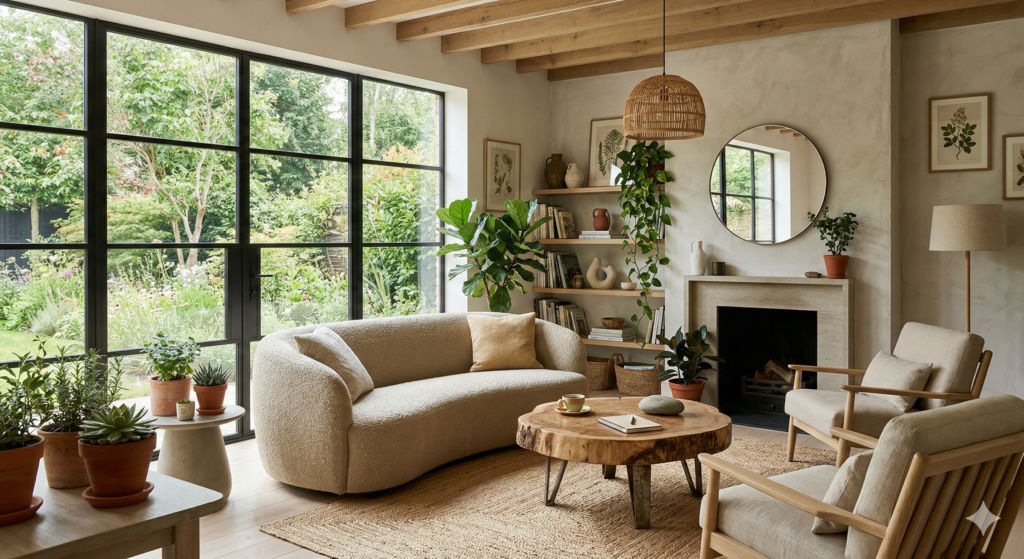
Among current biophilic interior design trends, the emphasis is on integration rather than decoration. Instead of treating nature as an accessory, designers prioritize connected sightlines, breathable layouts, and tactile surfaces that invite touch. Even a modern nature inspired living room can feel sleek and architectural while still reflecting the outdoors through softened edges, organic silhouettes, and honest materials.
Benefits of Biophilic Design for Wellness and Productivity
Biophilic environments are associated with improved comfort and focus because they reduce sensory fatigue. Natural light supports circadian rhythms, while greenery and organic textures can make spaces feel less sterile and more restorative. In practical terms, this can translate to better concentration in a home office, a calmer atmosphere in communal areas, and a more restful bedroom.
From an everyday usability perspective, nature-forward interiors tend to age gracefully. Materials patinate, colors remain timeless, and the overall effect encourages slower, more deliberate living—an essential goal for homeowners seeking lasting value rather than short-lived novelty.
Organic Materials and Textures in Nature-Inspired Interiors
Sustainable Woods, Stone, and Natural Fibers
Authenticity begins with materials. Organic materials in home decor—including responsibly sourced wood, stone, clay, and natural fibers—introduce depth that manufactured finishes often struggle to replicate. Look for woods with visible grain and matte sealants, or consider reclaimed timber for a character-rich alternative that supports eco friendly home design trends.
Stone elements, whether travertine side tables or soapstone countertops, offer visual quiet and durability. Pair them with natural fibers—wool, cotton, hemp, or linen—to create a grounded, breathable foundation. When thoughtfully selected, these choices advance sustainable interior design by prioritizing longevity, repairability, and reduced reliance on petroleum-based products.
Layering Textures: Linen, Jute, Rattan, and Woven Details
Texture is the most immediate way to make a room feel organic. Layering is key: crisp linen drapery, a jute rug with subtle variation, rattan or cane cabinetry, and handwoven baskets provide contrast without visual noise. These surfaces diffuse light, soften acoustics, and create the tactile complexity associated with outdoor environments.
To keep the look elevated, balance rough and refined. Pair a chunky weave with smooth plaster walls, or place a woven pendant above a streamlined dining table. This interplay of finishes allows nature-driven design to feel curated rather than rustic, an approach that works especially well in contemporary homes.
Color Palettes Inspired by Nature
Earthy Neutrals: Sand, Clay, and Warm Taupe Tones
Neutrals derived from the landscape form an adaptable base for almost any interior style. Consider earthy color palette ideas that borrow from sand, clay, limestone, and sun-warmed taupe. These hues feel gentle yet substantial, providing warmth without the heaviness of darker tones.
For walls, soft mineral paints and matte finishes create a subtle, light-absorbing depth. In textiles, slight tonal variation—ecru next to oatmeal, camel beside warm stone—adds dimension without relying on bold contrast. This restrained approach also complements the longevity goals embedded in eco friendly home design trends, since timeless palettes reduce the urge for frequent redecorating.
Forest Greens, Ocean Blues, and Botanical Accent Colors
Nature’s deeper shades bring clarity and sophistication. Forest green works beautifully on cabinetry, built-ins, or a single accent wall, offering a grounding presence that pairs well with pale woods and brushed metal. Ocean blues—ranging from slate to ink—can cool a sunlit room and create a sense of depth, especially when used in upholstery or area rugs.
Botanical accents, such as muted sage, olive, or eucalyptus, are effective for transitional spaces like hallways and entryways. The goal is not to overwhelm but to punctuate: one confident color moment can reinforce the overall narrative of nature inspired interior design while keeping the composition refined.
Indoor Greenery and Natural Light in Home Design
Styling with Houseplants, Green Walls, and Indoor Gardens
Greenery is central to biophilic living, but the most compelling spaces treat plants as part of the architecture. Use indoor plants for home decor to create rhythm and structure: tall floor plants to anchor corners, trailing varieties to soften shelving, and compact planters to bring life to work surfaces.
For a statement, consider a living wall or a compact indoor herb garden in the kitchen. These features can enhance air quality and introduce a dynamic focal point that changes with seasons and care routines. To maintain visual cohesion, choose planters in natural finishes—terracotta, stone, matte ceramic, or woven baskets—and repeat them across the home for continuity.
https://www.teepublic.com/t-shirt/50105160-car?store_id=2851997
Maximizing Natural Light with Windows, Mirrors, and Sheers
Thoughtful light management is one of the most effective ways to enhance comfort. Natural light in interior design shapes mood, reveals texture, and makes rooms feel more expansive. Start by keeping windows as unobstructed as possible and selecting window treatments that filter rather than block. Sheer linen or lightweight woven shades allow daylight to move through the space with softness.
Mirrors can extend brightness when placed opposite or adjacent to windows, reflecting both light and outdoor views. Consider also how furniture placement affects illumination: low-profile seating, open shelving, and glass-front cabinetry reduce visual barriers. Combined, these strategies create a home that feels clearer, calmer, and more connected to its surroundings.
Nature-led interiors are not a single trend; they are a long-term shift toward healthier, more enduring homes. By embracing biophilic layouts, prioritizing organic finishes, selecting landscape-driven colors, and improving greenery and daylight, you can create spaces that feel simultaneously elegant and restorative. When approached with intention, these choices support wellness, elevate daily life, and reflect the principles of sustainable interior design—a design direction that is as practical as it is timeless.
Interior Design Ideas for a Stylish Home Makeover
How Interior Design Influences Mood and Productivity
Interior Design Secrets Professionals Don’t Always Tell You
The Ultimate Guide to Futuristic Fashion Design
Mediterranean Interior Design for Warm, Inviting Spaces
Crystal Collector
Combat Protocol
WASD – Move
Mouse – Look around
Left Click – Fire Weapon
R – Reload
Eliminate all hostile units in the sector!
(Works better on computer)