
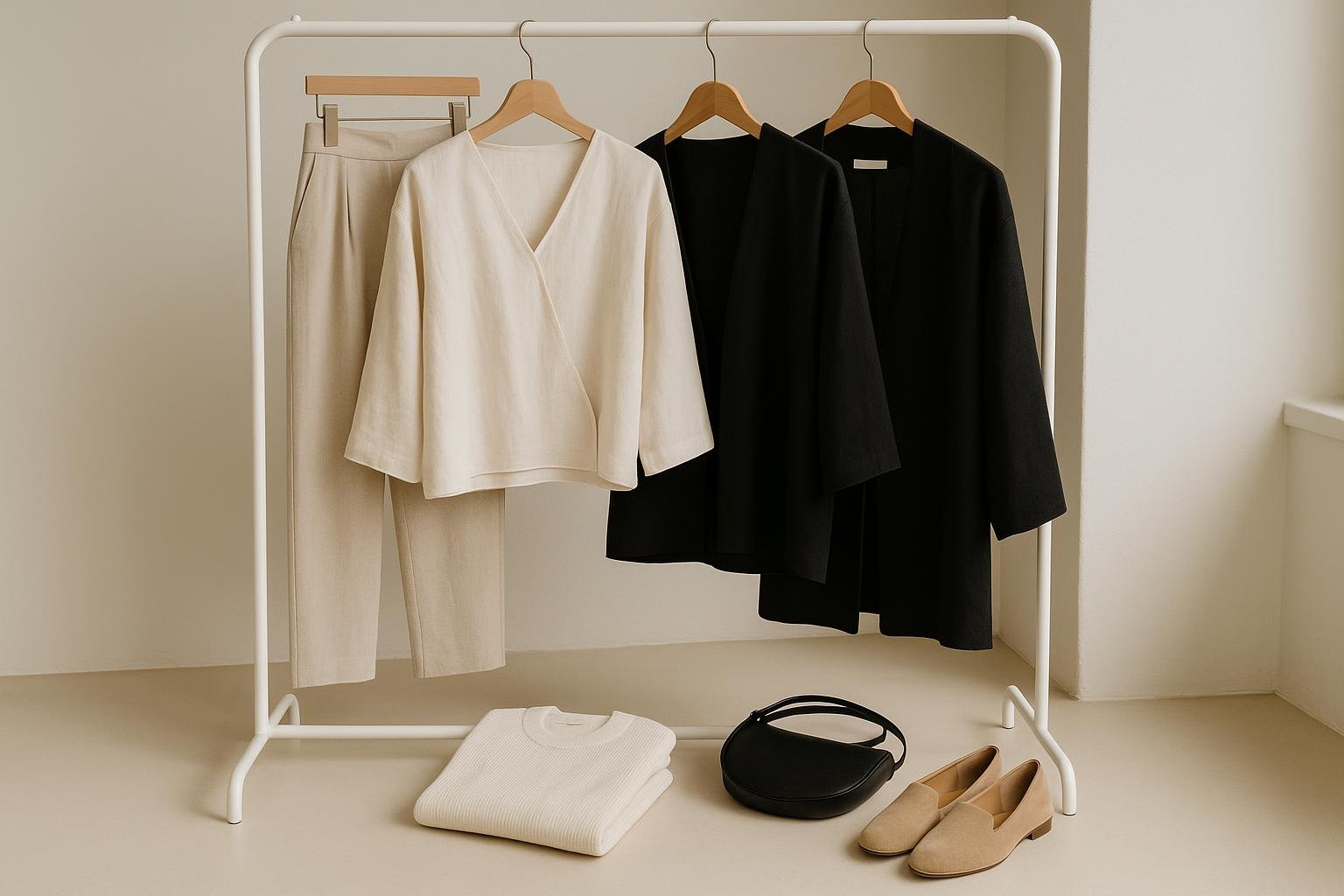
What Is Japanese Minimal Fashion?
Japanese minimal fashion is a refined, quietly expressive style that prioritizes form, function, and feeling over trend-driven excess. Rooted in centuries-old aesthetics and modern urban living, it merges clean silhouettes with thoughtful details, resulting in outfits that look effortless yet meticulously considered.
Unlike purely functional minimalism, Japanese minimalist style balances practicality with poetry. It respects negative space, embraces imperfection, and focuses on how clothing moves with the body throughout the day. The result is a wardrobe that feels calm, intelligent, and deeply personal.
Defining Japanese Minimal Fashion
At its core, Japanese minimal fashion is about reduction with intention. Pieces are stripped of unnecessary decoration, but design is anything but basic. A simple shirt might have an unexpected cut, an asymmetric hem, or a sculptural sleeve. A plain coat might be tailored with origami-like precision.
This approach was shaped by designers such as Yohji Yamamoto, Rei Kawakubo, and Issey Miyake, whose work changed how the world viewed simplicity. Today, Tokyo minimal fashion can be seen in quiet backstreets of neighborhoods such as Daikanyama, Aoyama, and Nakameguro, where understated looks convey sophistication without shouting for attention.
Minimalist Japanese clothing emphasizes:
- Relaxed yet architectural shapes that sit slightly away from the body
- A muted, cohesive color story, often anchored in neutrals
- High-quality, tactile fabrics that age beautifully
- Subtle details: a hidden pleat, unusual seam line, or unexpected volume
Key Philosophies: Wabi-Sabi, Ma, and Less-Is-More
To understand Japanese minimal fashion, it helps to explore the philosophies underpinning it.
Wabi-Sabi celebrates beauty in imperfection and transience. In wardrobe terms, this means accepting creases in linen, soft fading of cotton, or the patina on well-worn leather. Wabi-sabi fashion aesthetic favors garments that look more poetic with time, not less.
Ma refers to negative space or the meaningful gap between things. Applied to clothing, it appears in cropped trousers that reveal the ankle, a generous sleeve exposing the wrist, or a boxy top leaving air between fabric and skin. Proportion and space become part of the design, creating quiet drama without loud prints or logos.
Less-is-more in the Japanese context is not minimalism for its own sake; it is about stripping back to reveal essence. Each piece in a Japanese capsule wardrobe must earn its place by being versatile, comfortable, and aesthetically enduring. The result is a collection of clothes that work together harmoniously and reduce decision fatigue.
Core Elements of a Japanese Minimal Wardrobe
Essential Clothing Pieces and Silhouettes
A Japanese minimal wardrobe rests on a concise set of silhouettes that can be layered, reconfigured, and reinterpreted. While personal taste and climate matter, the following categories form a highly functional base:
- Boxy tops and shirts: Straight-cut or slightly cropped, often with dropped shoulders. These provide clean lines and work as the foundation of Japanese minimalist style.
- Relaxed trousers: Wide-leg, tapered, or balloon-shaped pants with a comfortable waist. The volume creates interesting proportions and allows easy movement.
- Simple knitwear: Fine-gauge turtlenecks, crewnecks, and lightweight cardigans in merino, cashmere, or cotton. They add softness while maintaining a sleek outline.
- Minimal dresses and tunics: Shift dresses, long shirt-dresses, and sleeveless tunics layered over trousers or under coats, allowing flexible styling from workday to weekend.
- Architectural outerwear: Clean overcoats, collarless jackets, and kimono-inspired wraps. Japanese minimal street style often centers the outfit around a striking yet unembellished coat.
- Understated footwear: Loafers, minimalist sneakers, tabi-inspired shoes, and low-heeled ankle boots. Designs are unflashy but sculptural, often in black, white, or tan.
Silhouettes tend to be slightly oversized yet carefully balanced. The aim is not to hide the body, but to create fluid shapes that skim rather than cling, allowing both elegance and comfort.
Color Palette, Fabrics, and Textures
The color palette in Japanese minimal fashion is deliberately restrained. Neutrals dominate, but the nuance lies in subtle tonal shifts and texture contrasts.
- Core colors: Black, off-white, charcoal, navy, and soft grey form the backbone of most wardrobes.
- Supporting tones: Stone, beige, sand, and muted earth shades like clay, olive, or ink blue add depth while remaining understated.
- Occasional accents: A single rust, indigo, or deep forest green piece can introduce quiet interest without breaking the minimalist language.
Fabrics are central to the experience of wearing minimalist Japanese clothing. They are chosen for tactility, longevity, and how they drape:
- Cotton and organic cotton for breathable everyday pieces
- Linen for its natural creases and airy structure, perfectly aligned with wabi-sabi sensibilities
- Wool and merino for warmth and a fine, smooth finish in knitwear and coats
- Silk and cupro for elegant movement in blouses and dresses
- Technical blends used sparingly for weather resistance and durability
Texture is used instead of print: matte cotton next to brushed wool, crisp poplin paired with soft knit, or raw linen under a sleek coat. These combinations elevate even the simplest color scheme, a hallmark of refined Japanese minimalist style.
How to Dress in Japanese Minimal Fashion Every Day
Outfit Formulas for Work, Weekend, and Evening
Adopting Japanese minimal fashion does not require a complete wardrobe overhaul. Begin with a few reliable outfit formulas that simplify daily dressing.
Work: Structured ease
- Boxy white or ecru shirt + tapered black trousers + minimal leather loafers
- Fine knit turtleneck + long, straight-line blazer + ankle-length wide-leg pants
- Shirt-dress layered over slim trousers + understated belt + low-heeled boots
These combinations convey professionalism without rigidity. Keep jewelry subtle, and focus on sharp tailoring and clean lines.
Weekend: Relaxed precision
- Oversized cotton tee + cropped wide-leg jeans + sleek white sneakers
- Linen tunic + soft tapered trousers + simple slide sandals
- Lightweight sweatshirt + pleated skirt + minimal canvas sneakers
For off-duty days, comfort comes first, but the shapes remain intentional. Look for slightly unusual cuts or hemlines that add visual interest to otherwise simple outfits.
Evening: Understated elegance
- Black slip dress + long, tailored coat + sculptural earrings
- Monochrome ensemble (all navy or all black): boxy top + flowing trousers + refined mules
- Silk blouse + high-waisted wide trousers + structured clutch
Instead of bold prints or excessive embellishment, rely on luxurious fabrics, tonal layering, and carefully chosen accessories to create a sense of quiet drama.
Styling Tips: Layering, Proportions, and Accessories
Mastering how to dress in Japanese minimal style involves paying attention to three main aspects: layering, proportion, and accessories.
Layering
- Layer from thin to thick: base layer, mid-layer, then coat or jacket.
- Keep the color palette cohesive. Limit each outfit to three colors within the same tonal family.
- Use long shirts or tunics under shorter jackets to create depth without bulk.
Proportions
- Balance volume: pair wide trousers with a more structured or cropped top, or an oversized top with straight-leg pants.
- Play with length: long coats over cropped trousers, or midi skirts with ankle boots, to emphasize Ma, the space around the body.
- Show small slivers of skin at strategic points—the wrist, ankle, or neck—to lighten heavier silhouettes.
Accessories
- Opt for one statement accessory at a time: a sculptural ring, geometric earrings, or an architectural bag.
- Choose belts, bags, and shoes with minimal branding and streamlined shapes.
- Use texture in accessories—matte leather, canvas, or brushed metal—rather than loud colors or logos.
When looking at Japanese minimal street style, you will notice that outfits rarely feel cluttered. Every element has a purpose, and negative space is valued as much as the garments themselves.
Where to Shop and How to Build a Japanese Minimal Closet
Recommended Japanese Minimalist Brands and Stores
Building a Japanese minimal closet is easier when you know which labels specialize in this aesthetic. Many brands, both Japanese and international, embody the principles of simplicity, thoughtful design, and quality.
- Uniqlo: A widely accessible option, especially for foundational pieces like shirts, knitwear, and outerwear. Look to Uniqlo U and +J collaborations for more architectural cuts.
- MUJI: Known for its pared-back, functional philosophy, MUJI offers relaxed basics in cotton, linen, and wool with an emphasis on comfort and neutrality.
- COMOLI, AURALEE, and nonnative: Contemporary Japanese labels admired for elevated essentials, subtle color palettes, and exceptional fabrics.
- Issey Miyake, Yohji Yamamoto, and Comme des Garçons: Iconic designers who inspired much of modern Japanese minimalist fashion. Their pieces are investment-level and often more avant-garde, ideal for statement items.
- Studio Nicholson, Lemaire, and The Row: Non-Japanese brands that align closely with the aesthetic, offering refined silhouettes and muted palettes.
For discovering Tokyo minimal fashion online, explore curated boutiques that highlight independent designers, as well as vintage and secondhand platforms that stock past collections from Japanese labels.
Slow Fashion, Capsule Wardrobes, and Sustainable Choices
Japanese sustainable fashion is closely intertwined with minimalism. Rather than constantly buying new pieces, the emphasis is on a smaller, long-lasting wardrobe built on mindful consumption.
Create a considered Japanese capsule wardrobe
- Define your palette: choose 2–3 core neutrals and 2 supporting tones you can mix endlessly.
- Select versatile silhouettes: prioritize trousers and tops that pair well with multiple items and span several dress codes.
- Limit seasonal impulse buys: instead, focus on one or two well-researched additions each season that enhance what you already own.
Prioritize quality and longevity
- Inspect fabric weight, stitching, and finishing before purchasing.
- Opt for natural or recycled materials where possible, considering care requirements and durability.
- Choose classic shapes over fleeting trends to ensure many years of wear.
Embrace slow fashion habits
- Repair, tailor, and maintain garments rather than replacing them at the first sign of wear.
- Buy secondhand or vintage pieces from Japanese labels to experience design excellence at a lower environmental cost.
- Support brands with transparent production and ethical sourcing wherever possible.
By integrating these principles, your wardrobe moves closer to the ideals behind Japanese sustainable fashion: fewer items, better quality, and deeper respect for the resources and craftsmanship behind each garment.
Conclusion
Japanese minimal fashion is more than a visual style; it is a philosophy of dressing that values clarity, intention, and quiet beauty. Guided by concepts such as wabi-sabi and Ma, it encourages you to embrace imperfection, honor negative space, and invest in garments that support your life rather than dominate it.
Whether you start with a single boxy shirt, a pair of wide-leg trousers, or a small Japanese capsule wardrobe, the shift towards minimalist Japanese clothing can transform both how you look and how you feel. With each deliberate choice, you create a calmer closet, a more sustainable relationship with fashion, and a personal style that ages as gracefully as the garments themselves.
Discover More from Didier Lancelot
Amazon Author page: amazon.com/author/didierlancelot
Narmer Store: narmerstore.org
AI and Technology Ebooks
- Creative AI: Animated Drawings, Manga & Illustrations
- Build a Game with AI: The No-Code Guide
- AI Image Generation Made Easy
- Build a Website with AI: The No-Code Guide
- How to Connect AI to Your Blog: The Ultimate Automation Guide
- AI Productivity Habits: Get More Done in Less Time
- AI Avatars Made Easy
- The Book of AI Prompts: 100+ Proven Prompts
- Make Music with AI: Suno, Udio and AI Music Generators
- Click to Cash
- The Automated Edge: Outwork, Outpace, and Outperform with AI
- AI Side Hustle: How to Make Money with ChatGPT and AI Tools
- Work Smarter with AI
Health, Lifestyle and Home Ebooks
- Hidden Superfoods: The World’s Most Powerful Healing Foods
- Spanish Food: The Complete Cookbook for Authentic Home Cooking
- The Science of Happiness Explained
- The Psychology of Success
- The Secret Sauce of Consistency: What the Experts Don’t Tell You About Fitness
- The Complete Home Bartender’s Guide: Link 1 | Link 2
- Natural Beauty, Made Simple: Easy DIY Organic Skincare Recipes
- Garden Made Simple: Easy, Beginner-Friendly Techniques
- The Dog Training Bible