
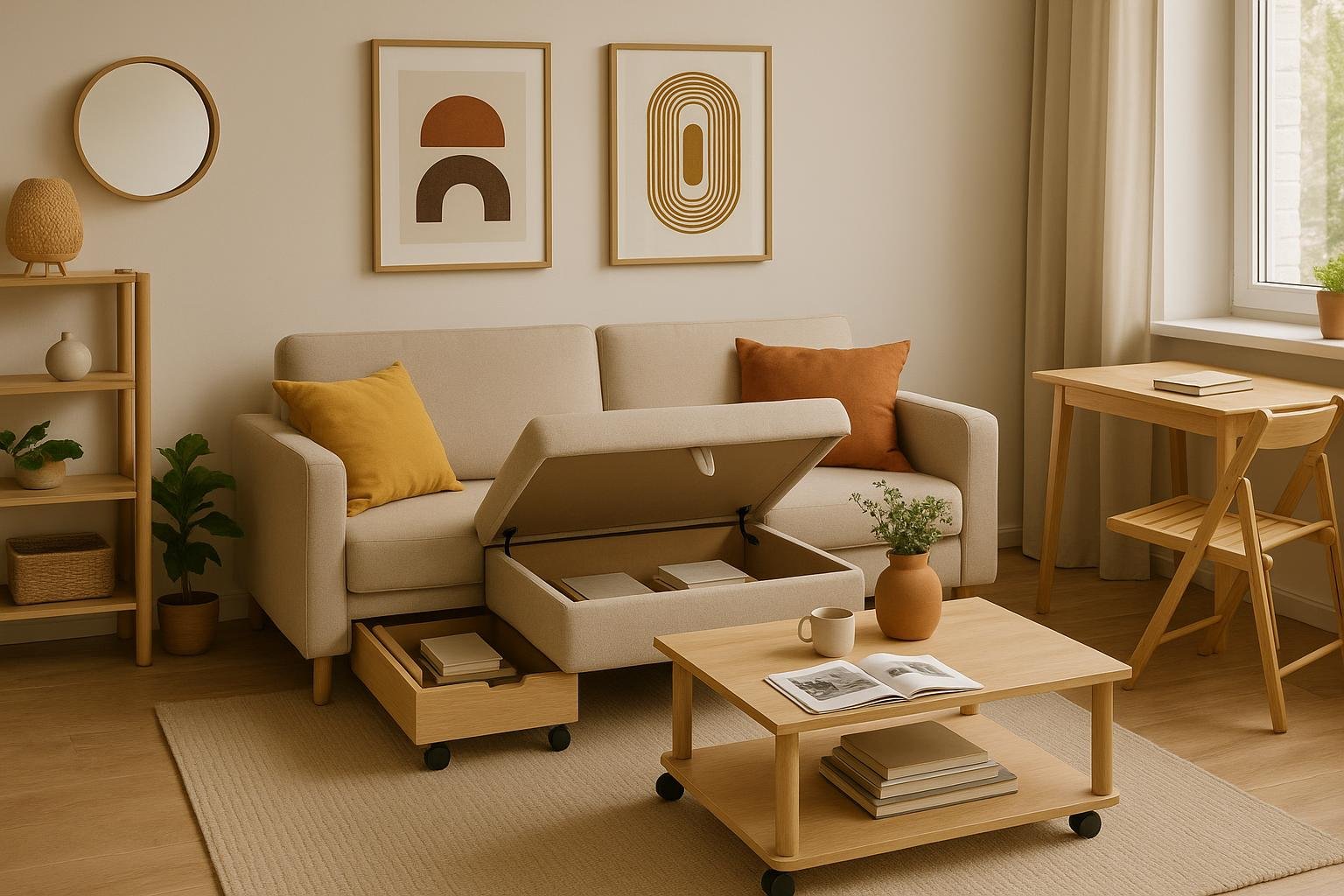
Multi-Functional Furniture Ideas for Modern Interior Design
Modern interiors are no longer about filling rooms with as many pieces as possible. The new luxury is space that adapts—spaces that feel calm, uncluttered, and tailored to how you actually live. Multi-functional furniture is at the heart of this shift. When done well, it lets you buy fewer, better pieces that seamlessly support several daily routines: working, relaxing, hosting, eating, and sleeping.
This guide explores practical, design-forward multi-functional furniture ideas and what to consider when choosing them, so your home works harder without feeling crowded.
Why Multi-Functional Furniture Matters in Modern Interiors
Multi-functional furniture isn’t just about saving space; it’s about making every square meter earn its keep while still looking intentional and cohesive. The most successful pieces:
- Serve at least two real, everyday needs (not just “in theory”).
- Are simple and comfortable to use in every configuration.
- Blend with your interior style instead of screaming “compromise.”
- Reduce clutter by integrating smart, often concealed storage.
The goal is flexibility without visual noise. In a modern home, this often means streamlined shapes, smart mechanisms, and a coherent color palette that ties everything together.
1. Sofa Beds and Wall Beds: Guest-Ready Without Losing Space
Transforming seating into sleeping space is one of the most useful ways to make a room multitask—especially in studios, one-bedroom apartments, or open-plan living areas.
Sofa Beds
A well-designed sofa bed pulls double duty as your main seating and a comfortable guest bed. Beyond occasional use, it can be essential in compact homes where a second bedroom just isn’t an option.
Look for:
- Easy conversion: A mechanism you can operate quickly and quietly—ideally without removing multiple cushions.
- Integrated storage: Some sofa beds include under-seat storage for bedding, pillows, or seasonal linens.
- Supportive mattress: A quality mattress or foam layer makes the difference between “emergency bed” and “comfortable stay.”
- Clean lines: A modern silhouette and neutral upholstery help it feel like a design choice, not a makeshift solution.
Wall Beds (Murphy Beds)
Wall beds fold vertically into a cabinet, turning a bedroom into a home office, studio, or workout space during the day. In a living room, they can turn a flexible zone into a true guest room when needed.
Design tips:
- Integrate with storage: Built-in shelves or wardrobes around the bed create a sleek, unified wall system.
- Mind the clearance: Measure carefully so there’s comfortable room to walk around when the bed is open.
- Choose a calm façade: Simple, handle-less fronts in a tone that matches your walls help the piece “disappear” when closed.
2. Lift-Top Coffee Tables: Work, Dine, and Store in One Piece
Lift-top coffee tables are ideal for modern living rooms that double as workspaces or informal dining zones. The top lifts and moves toward you, creating a raised surface suited to laptops, notebooks, or casual meals.
Key advantages:
- Ergonomic work surface: Keeps your screen and keyboard at a more comfortable height than a traditional low coffee table.
- Built-in storage: The cavity beneath the top is perfect for remotes, chargers, magazines, throws, or board games.
- Flexible layout: Use it as a standard coffee table, then transform it into a compact dining or working zone within seconds.
When choosing one, prioritize a stable mechanism (no wobble when lifted) and a finish that matches your other living room furniture, such as matte wood veneer, lacquer, or metal for a clean modern look.
3. Storage Ottomans and Benches: Discreet Storage, Extra Seating
Ottomans and benches are underused storage heroes. They provide a visually light way to add seating, a footrest, and hidden storage—without introducing bulky cabinets.
Storage Ottomans
Perfect for living rooms, bedrooms, and small lounges, storage ottomans can hold everything from blankets to kids’ toys.
- In the living room: Use as a coffee table with a tray on top and store throws, cushions, or media accessories inside.
- In the bedroom: Place at the foot of the bed for linens, off-season clothes, or spare pillows.
- As flexible seating: Pull into a conversation area when you have guests.
Entry Benches with Storage
In modern hallway design, a storage bench is invaluable. It gives you a place to sit while putting on shoes, and keeps the entry visually tidy.
Consider:
- Shoe compartments or bins: Keep everyday footwear organized and off the floor.
- Hooks or overhead shelves: Combine with wall-mounted storage to corral bags, coats, and accessories.
- Durable upholstery: Wipeable, hardwearing materials that can handle daily use.
4. Modular Sofas: Adapt Your Living Area Over Time
A modular sofa is made up of individual sections that can be rearranged to suit different layouts and occasions. For modern interiors—where open-plan spaces often have to host relaxing, entertaining, and even home-working—this flexibility is invaluable.
Benefits of modular seating:
- Reconfigurable layout: Create a chaise, a U-shape for movie nights, or separate pieces for more conversational seating.
- Zoning open spaces: Use the back of a sofa to define boundaries between living, dining, and working areas without building walls.
- Long-term adaptability: Add or remove modules as your household or space needs change.
Choose modules with simple, timeless lines and neutral upholstery, then layer personality through cushions, throws, and side tables. Reversible or removable sections give you even more freedom to evolve the layout.
5. Fold-Down Desks and Tables: Work When You Need, Hide When You Don’t
With more people working from home, integrating functional workspaces into living areas is a core challenge of modern interior design. Fold-down desks and tables let you add a dedicated surface without permanently sacrificing floor or wall space.
Wall-Mounted Desks
These slim profiles fold out when you need a laptop station and fold back to a shallow panel when you’re done. Some designs include small shelves, cable channels, or a pinboard.
Best uses:
- Living rooms or bedrooms: Create a discreet home office zone without a full desk dominating the room.
- Hallways or under stairs: Turn unused niches into functional micro-workspaces.
Drop-Leaf and Fold-Down Tables
Drop-leaf tables or fold-down dining tables are ideal for small kitchens and compact dining areas.
- Everyday mode: Keep one leaf extended for two people.
- Guest mode: Extend both leaves or fold down a wall-mounted table to accommodate more diners.
- Afterward: Fold it away to regain flow and floor space.
Opt for mechanisms that are light yet sturdy, and finishes that match or complement surrounding cabinetry or wall color to keep the look cohesive.
6. Beds with Built-In Storage: Streamlined, Clutter-Free Bedrooms
In bedrooms, extra furniture like chests and bulky wardrobes quickly make the space feel crowded. Beds with integrated storage offer a cleaner, more modern alternative.
Common options include:
- Drawer bases: Pull-out drawers under the mattress for clothes, shoes, or linens.
- Lift-up bases: Gas-lift mechanisms that raise the mattress to reveal a full storage cavity.
- Storage headboards: Shelves or hidden compartments behind or beside the bed for books, devices, and nighttime essentials.
To keep a modern aesthetic, choose low-profile designs, handle-less drawers, and colors that blend with the floor or walls. This visually reduces bulk and keeps the bedroom calm.
7. Expandable Dining Furniture: Compact Day-to-Day, Big When It Counts
Not every home needs a large dining table every day, but most need the ability to host at least occasionally. Expandable dining furniture gives you that flexibility without permanently dominating the room.
Consider these options:
- Extendable dining tables: Built-in leaves or pull-out sections that expand the surface when guests arrive.
- Pull-out counters: Sliding worktops hidden under kitchen counters that extend for extra prep or serving space.
- Rolling kitchen islands: Mobile islands with lockable wheels that can function as an extra prep zone, buffet surface, or informal dining spot.
Design-wise, match materials to your existing kitchen or dining finishes—think similar wood tones, metal accents, or stone surfaces—so the expanded setup looks intentional and not improvised.
8. Room-Dividing Storage: Define Zones Without Building Walls
Open-plan layouts are a hallmark of modern interior design, but without smart zoning they can feel undefined and messy. Room-dividing storage pieces solve two problems at once: they organize belongings and subtly separate functions.
Bookcase Room Dividers
A double-sided bookcase or open shelving unit can delineate areas while maintaining light and sight lines.
- Between living and dining: Use shelving to create a visual boundary while displaying books, plants, and decor.
- Between bedroom and workspace: In studio apartments, a tall bookcase can provide privacy without knocking out natural light.
- Integrated desk or table: Some systems include a built-in desk or drop-down table, turning the divider into a multi-functional workstation.
Choose open or semi-open designs for an airy feel, and keep styling curated—too much visual clutter will counteract the spacious effect.
How to Choose the Right Multi-Functional Pieces
The strongest way to approach multi-functional furniture is not to ask “what can this piece do?” but “what do we actually need it to do?” Start from your real routines, not from clever gimmicks.
1. Identify Your Core Needs
Ask yourself:
- Do we host overnight guests often?
- Do one or more people work from home regularly?
- Is our biggest issue lack of storage, lack of seating, or lack of surfaces?
- Which room constantly feels cluttered or overused?
Then choose pieces that directly respond to those problems—for example, a sofa bed for frequent guests, a fold-down desk for remote work, or a storage bench to tame an unruly entryway.
2. Measure Furniture and Its Operating Space
Multi-functional furniture almost always needs extra clearance when in use. Before buying, measure:
- Closed dimensions: Will it fit in your current layout without blocking doors, windows, or pathways?
- Open dimensions: Can the bed unfold fully, the table extend, the drawers pull out, or the top lift without hitting walls or other furniture?
- Comfort space: Is there room for people to walk around and use the piece comfortably once it’s open?
Sketching the room with both configurations can prevent expensive mistakes.
3. Prioritize Ease of Use
If it’s a hassle to transform, you won’t use it often—and the multi-function value is lost.
- Test mechanisms if possible: they should feel smooth, solid, and safe.
- Aim for one-person operation with a few simple moves.
- Check weight: lift-up bases, wall beds, and heavy tabletops should be assisted by quality hardware.
The transformation should feel like a natural part of your daily routine, not a complex setup reserved for rare occasions.
4. Choose Durable, Low-Maintenance Fin
Discover More from Didier Lancelot
Amazon Author page: amazon.com/author/didierlancelot
Narmer Store: narmerstore.org
AI and Technology Ebooks
- Creative AI: Animated Drawings, Manga & Illustrations
- Build a Game with AI: The No-Code Guide
- AI Image Generation Made Easy
- Build a Website with AI: The No-Code Guide
- How to Connect AI to Your Blog: The Ultimate Automation Guide
- AI Productivity Habits: Get More Done in Less Time
- AI Avatars Made Easy
- The Book of AI Prompts: 100+ Proven Prompts
- Make Music with AI: Suno, Udio and AI Music Generators
- Click to Cash
- The Automated Edge: Outwork, Outpace, and Outperform with AI
- AI Side Hustle: How to Make Money with ChatGPT and AI Tools
- Work Smarter with AI
Health, Lifestyle and Home Ebooks
- Hidden Superfoods: The World’s Most Powerful Healing Foods
- Spanish Food: The Complete Cookbook for Authentic Home Cooking
- The Science of Happiness Explained
- The Psychology of Success
- The Secret Sauce of Consistency: What the Experts Don’t Tell You About Fitness
- The Complete Home Bartender’s Guide: Link 1 | Link 2
- Natural Beauty, Made Simple: Easy DIY Organic Skincare Recipes
- Garden Made Simple: Easy, Beginner-Friendly Techniques
- The Dog Training Bible