
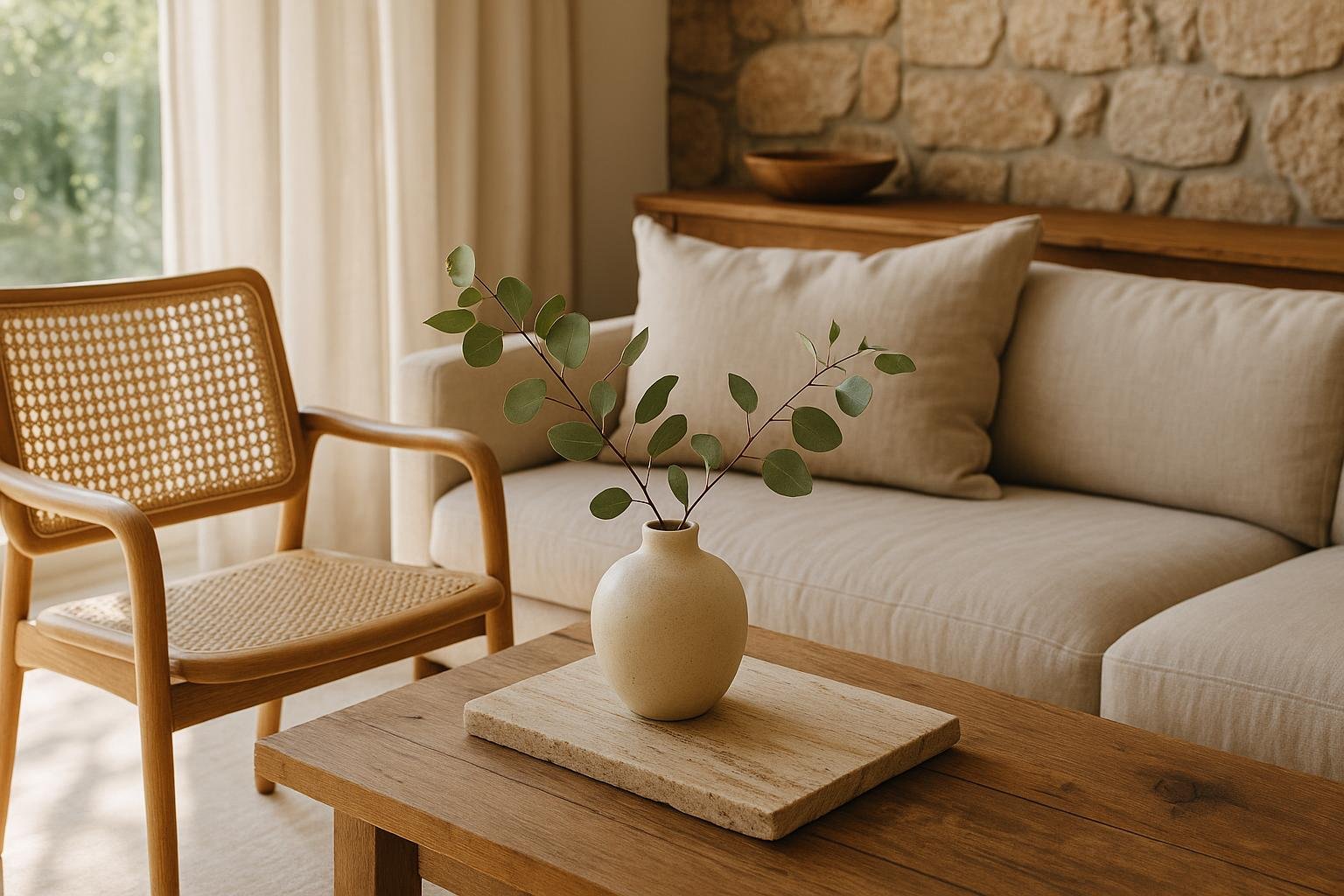
Natural materials have a quiet way of transforming a space. They add depth you can see and texture you want to touch. Used thoughtfully, wood, stone, fibers, and clay don’t just decorate a room—they ground it, soften it, and make it feel more human.
This guide walks through the natural materials that truly elevate interior design, where they work best, and how to combine them for a balanced, livable home.
Why Natural Materials Make Interiors Feel So Good
Natural materials do more than check a “sustainable design” box. They change how a room looks, feels, and even sounds. The right mix brings:
- Texture that catches the light and breaks up flat, monotonous surfaces.
- Warmth—visually and physically—especially from wood and natural fibers.
- Visual depth through subtle variation in grain, veining, and weave.
- A tactile connection to nature that supports calm, biophilic interiors.
Today’s most compelling natural interiors don’t pile on every material available. Instead, they start with one or two strong, permanent elements—often wood or stone—and then layer in softer, more flexible textures for balance.
Wood: The Anchor of Warm, Timeless Rooms
Wood is one of the most versatile natural materials in interior design. It instantly warms a space, and its visible grain adds quiet interest without shouting for attention.
Where Wood Works Best
- Floors: Wide-plank boards or classic parquet create a warm foundation for nearly any style, from minimal to traditional.
- Furniture: Dining tables, sideboards, and coffee tables gain character from knots, grain, and patina.
- Cabinetry: Kitchens and built-ins in oak, walnut, ash, or elm feel substantial and inviting.
- Wall paneling: Slatted or flat panels add depth to feature walls and help with acoustics.
Sourcing and Finishing Wood Responsibly
“Natural” doesn’t automatically mean responsible. When choosing wood:
- Prioritize reclaimed timber for a rich, lived-in look and lower demand for new harvesting.
- Look for certified sources (e.g., FSC or similar local programs) that support better forest management.
- Consider finish: matte oils and low-sheen lacquers show the grain and feel more tactile than glossy varnish.
In design terms, one substantial wood element—like a floor or a large table—is usually enough to anchor a room. Layering more wood is fine, but keep the tones related so the space feels curated, not chaotic.
Stone: Quiet Luxury and Lasting Presence
Stone brings a sense of permanence that few other materials can match. Subtle veining, speckling, and color shifts add natural pattern that never looks printed or artificial.
Key Stone Options and Uses
- Marble: Ideal for bathroom vanities and statement kitchen islands; use honed finishes for a softer, less glossy look.
- Limestone and travertine: Beautiful on floors and feature walls for a warm, earthy elegance.
- Granite: Durable for high-traffic countertops where you need resilience.
- Slate: Strong character for entries, fireplaces, and accent floors.
Practical Considerations for Stone
Many natural stones are porous and need a bit of care:
- Use sealers recommended for the specific stone and application (especially in kitchens and baths).
- Clean with gentle, pH-appropriate products to avoid etching or dulling the surface.
- Balance stone’s coolness with warmer, softer textures—wool rugs, linen upholstery, or woven pieces.
One generous stone surface—such as a fireplace surround or kitchen worktop—can become the “quiet hero” of a room, especially when the rest of the palette is kept calm and cohesive.
Natural Fibers: Linen, Wool, and Cotton for Softness
Hard materials need softness for a room to feel comfortable. Linen, wool, and cotton wrap spaces in a more approachable, tactile layer.
Where to Use Natural Textiles
- Curtains and blinds: Linen and cotton filter light beautifully and add movement with even the slightest breeze.
- Upholstery: Wool blends and tightly woven cottons wear well on sofas and chairs.
- Bedding: Linen and cotton sheets, duvets, and throws add relaxed, lived-in comfort.
- Rugs: Wool rugs warm up stone or timber floors and help zone open-plan spaces.
Choosing Fibers That Suit Real Life
Consider how you use each room:
- Wool is naturally resilient and great for rugs in living spaces and bedrooms.
- Linen offers beautiful texture and breathability, but expect natural creasing—that’s part of its charm.
- Cotton can be easier to clean and suits family spaces and everyday upholstery.
Introduce these fibers where people touch and interact with the space: places you sit, walk, sleep, and draw curtains. That’s where natural materials truly register.
Woven Textures: Rattan, Cane, Jute, and Seagrass
Woven elements bring a crafted, human quality to interiors. They read as casual but can be styled to feel refined.
How to Use Woven Natural Materials
- Seating: Rattan lounge chairs, cane-backed dining chairs, or woven bar stools add lightness and air.
- Lighting: Rattan or seagrass pendants create gentle patterns of light and shadow.
- Baskets and storage: Jute and seagrass baskets offer practical storage that doubles as decor.
- Rugs and runners: Jute and seagrass work well in entries, dining areas, and casual living rooms.
Balancing Woven Pieces
Because these textures are visually distinctive, you rarely need many of them. A pair of woven pendants or one large jute rug is often enough to introduce that natural, relaxed character. Mix them with smoother surfaces—painted walls, metal, glass—so the room doesn’t feel overly rustic.
Clay, Terracotta, and Textured Plaster: Earthy, Handcrafted Layers
Clay-based materials bring subtle depth and an undeniably earthy character. They’re especially effective when you want natural color without bold patterns.
Ways to Introduce Clay and Plaster
- Wall finishes: Limewash, clay paint, and textured plaster add movement and soften sharp corners.
- Terracotta tiles: Perfect for kitchen floors, sunrooms, and outdoor–indoor thresholds.
- Decorative objects: Clay vessels, planters, and sculptural pieces add handmade charm.
These finishes often look best in matte or low-sheen applications, where light grazes the surface and highlights subtle variations in tone and texture.
Cork and Bamboo: Light, Flexible Alternatives
Cork and bamboo offer a lighter, more contemporary take on natural materials. Both can be strong options for sustainable interior design when sourced and finished responsibly.
Design Uses for Cork
- Flooring: Comfortable underfoot and slightly sound-absorbing—ideal for home offices and bedrooms.
- Wall panels: Add warmth, pattern, and also serve as pin boards or acoustic panels.
- Accessories: Trays, coasters, and small objects lend subtle texture.
Where Bamboo Works Well
- Flooring and stair treads: Offers a clean, modern look with fine grain.
- Cabinetry and furniture: Especially in streamlined, contemporary spaces.
- Blinds and screens: Filter light while adding a linear texture.
When assessing sustainability claims, look at origin, manufacturing process, finishes, and transport distance. Locally available or regionally appropriate products typically have a lower impact.
How to Mix Natural Materials Without Overdoing It
The most successful spaces use natural materials with intention. It’s about editing as much as adding.
1. Start with One Dominant Material
Begin with a primary, permanent material that anchors the room, such as:
- Wood flooring
- A stone fireplace or countertop
- A textured plaster feature wall
Let this be your foundation. Everything else should support, not compete with, this main element.
2. Layer a Few Contrasting Textures
Next, add no more than two or three additional natural materials that contrast in feel:
- Pair stone floors with wool rugs and linen upholstery.
- Combine timber cabinets with rattan pendants and cotton window treatments.
- Offset textured plaster walls with smooth wood furniture and a woven jute rug.
The goal is balance: heavy with light, cool with warm, smooth with tactile.
3. Keep the Palette Cohesive
Natural doesn’t mean random. Choose a clear direction:
- Warmer woods with cream, oatmeal, and terracotta tones.
- Cooler woods and stones with soft greys, chalky whites, and muted blues.
Repeat colors and materials throughout the space in different ways—a stone used on a kitchen countertop reappears as a small side table; a linen curtain fabric echoes in cushions.
4. Prioritize Matte and Subtle Variation
Matte and honed finishes feel closer to how materials appear in nature. They also reduce glare and help create calm, biophilic interiors. Look for:
- Softly honed stone instead of high gloss.
- Matte paint or limewash instead of shiny finishes.
- Oiled or low-sheen timber rather than strong varnishes.
This approach lets the natural variation—veining, grain, and weave—do the visual work instead of busy artificial patterns.
Natural Materials and Biophilic Design
Biophilic design is about strengthening the connection to nature inside our homes. Plants help, but they’re just one piece. Materials, light, color, texture, and pattern all contribute.
Natural materials support biophilic interiors when you:
- Maximize daylight so textures and materials can be fully appreciated.
- Echo natural colors—stone greys, sand, clay, wood tones, foliage greens.
- Introduce organic patterns through grain, veining, woven fibers, and hand-applied finishes.
Remember: a product being “natural” doesn’t guarantee it’s healthier or low-impact. Always check for:
- Emissions and certifications (e.g., low-VOC finishes, third-party environmental labels).
- Durability and maintenance so replacements and harsh cleaning products are minimized.
- Local or regional availability to cut down on transport impact.
Bringing It All Together: Designing Natural, Layered Interiors
The most compelling natural interiors feel grounded yet soft. They balance the weight and permanence of wood and stone with the comfort of textiles and the character of handcrafted details.
As you plan
Discover More from Didier Lancelot
Amazon Author page: amazon.com/author/didierlancelot
Narmer Store: narmerstore.org
AI and Technology Ebooks
- Creative AI: Animated Drawings, Manga & Illustrations
- Build a Game with AI: The No-Code Guide
- AI Image Generation Made Easy
- Build a Website with AI: The No-Code Guide
- How to Connect AI to Your Blog: The Ultimate Automation Guide
- AI Productivity Habits: Get More Done in Less Time
- AI Avatars Made Easy
- The Book of AI Prompts: 100+ Proven Prompts
- Make Music with AI: Suno, Udio and AI Music Generators
- Click to Cash
- The Automated Edge: Outwork, Outpace, and Outperform with AI
- AI Side Hustle: How to Make Money with ChatGPT and AI Tools
- Work Smarter with AI
Health, Lifestyle and Home Ebooks
- Hidden Superfoods: The World’s Most Powerful Healing Foods
- Spanish Food: The Complete Cookbook for Authentic Home Cooking
- The Science of Happiness Explained
- The Psychology of Success
- The Secret Sauce of Consistency: What the Experts Don’t Tell You About Fitness
- The Complete Home Bartender’s Guide: Link 1 | Link 2
- Natural Beauty, Made Simple: Easy DIY Organic Skincare Recipes
- Garden Made Simple: Easy, Beginner-Friendly Techniques
- The Dog Training Bible