
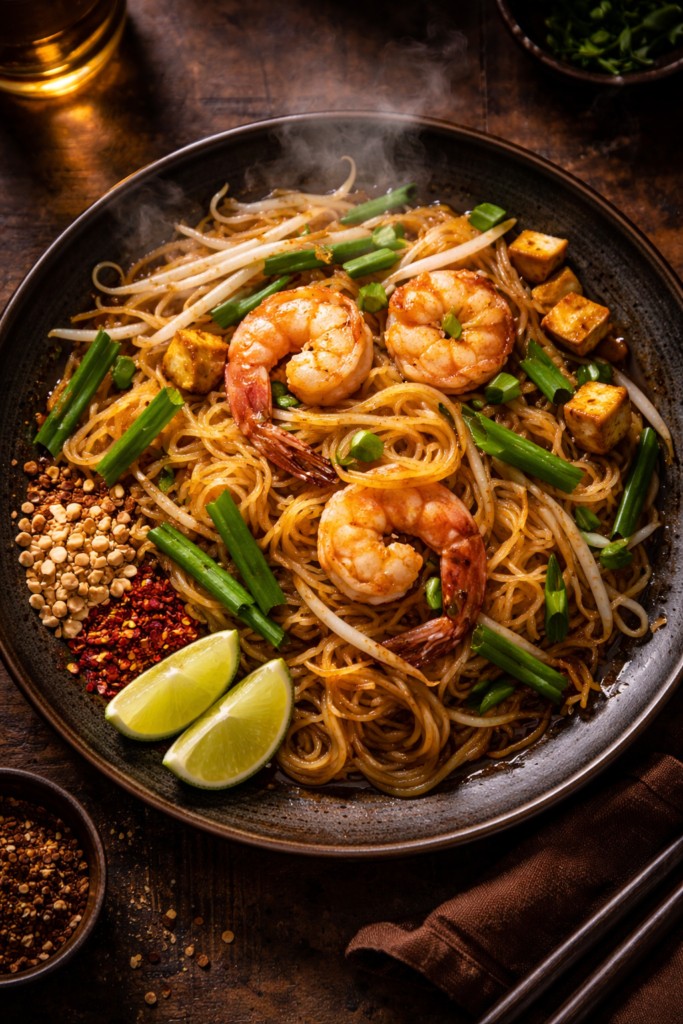
Pad Thai is one of the most recognizable Thai dishes worldwide, yet it is often misunderstood or heavily adapted outside of Thailand. Behind its vibrant flavors lies a fascinating history, a precise balance of taste, and specific techniques that transform simple Thai noodles into something remarkable. This guide explores the origins of Pad Thai, its traditional components, and offers a detailed, authentic Pad Thai recipe you can master at home, along with variations and expert Pad Thai cooking tips.
What is Pad Thai?
Pad Thai is a stir-fried rice noodle dish that harmonizes sweet, sour, salty, and umami flavors in a single plate. It typically features thin rice noodles, tamarind-based sauce, eggs, tofu, dried shrimp, and a finishing flourish of peanuts, fresh herbs, and lime. While it is often categorized simply as “Thai street food,” Pad Thai is also a carefully constructed dish rooted in national identity, regional produce, and cultural adaptation.
Origins of Pad Thai
The Pad Thai history is relatively modern compared to many classic Asian dishes. It gained prominence in the mid-20th century during the reign of Prime Minister Plaek Phibunsongkhram. In the 1930s and 1940s, Thailand (then Siam) was undergoing a national identity campaign. Rice shortages and economic pressures pushed the government to encourage citizens to consume rice noodles instead of plain rice. Pad Thai—then a newly promoted noodle dish—became a symbol of modern Thai cuisine.
Food stalls were encouraged to sell this particular noodle stir-fry, which incorporated Chinese stir-frying techniques with distinctly Thai seasonings such as tamarind, palm sugar, fish sauce, and local herbs. Over time, Pad Thai evolved from a political project and economical street dish into a national culinary icon. Today, it serves as an introduction to Thai flavors for many visitors, encapsulating the country’s culinary philosophy: balance, complexity, and freshness.
Traditional Ingredients
Authentic Pad Thai is defined by the interplay of specific elements. While there is room for creativity, certain Pad Thai ingredients form the backbone of the dish:
- Rice noodles: Thin, flat rice noodles (sen lek), usually 3–5 mm wide. They should be dry noodles soaked before cooking, not fresh.
- Tamarind paste: The primary source of sourness. It lends a deep, fruity tang that cannot be mimicked by lime alone.
- Palm sugar: In block or paste form, it adds a gentle, rounded sweetness and mild caramel notes.
- Fish sauce: Aged fish sauce supplies saltiness and umami, anchoring the dish’s savory backbone.
- Protein: Common choices include prawns (shrimp), chicken, or firm tofu. Dried shrimp are also traditional for added depth.
- Aromatics: Garlic and shallots, sometimes with preserved radish, create the foundational fragrance.
- Eggs: Lightly scrambled into the noodles, adding richness and texture.
- Bean sprouts and garlic chives: Added at the end to preserve their crunch and freshness.
- Roasted peanuts: Coarsely crushed and scattered on top for a nutty, toasty element.
- Lime wedges and chili flakes: Served on the side, allowing each diner to adjust acidity and heat.
When these components are balanced in the pan, the result is a dish that is sweet but not cloying, sour yet not harsh, salty without being overwhelming, and always texturally engaging.
How to Make Authentic Pad Thai at Home
Cooking homemade Pad Thai is less about complexity and more about preparation, timing, and heat control. With the correct mise en place, the actual stir-frying is fast and highly rewarding.
Essential Ingredients and Substitutes
To prepare an authentic Pad Thai recipe at home, start with the essentials, then consider acceptable substitutes where necessary.
Core Ingredients (for 2 servings)
- 150–180 g dried rice noodles (flat, medium width)
- 150 g prawns (peeled) or thinly sliced chicken, or a mix
- 80–100 g firm tofu, cut into small cubes or strips
- 2 eggs
- 2–3 tbsp neutral oil (e.g., peanut, rice bran, or canola)
- 2 cloves garlic, finely chopped
- 1 small shallot, finely sliced
- 1–2 tbsp chopped salted preserved radish (optional but traditional)
- 1 small handful dried shrimp, rinsed (optional but classic)
- 1–1.5 cups bean sprouts
- 1/2 cup garlic chives or Chinese chives, cut into 3–4 cm pieces
- 1/4 cup roasted peanuts, coarsely crushed
- Lime wedges, fresh chili or chili flakes for serving
Classic Pad Thai Sauce
- 3 tbsp tamarind paste (from tamarind pulp, not sweetened concentrate)
- 3 tbsp fish sauce
- 2–3 tbsp palm sugar, finely chopped or grated
- 1–2 tsp light soy sauce (optional, for extra depth)
Combine these in a small pot over low heat and stir until the sugar dissolves. Adjust to taste: you should notice an immediate balance of sweet, salty, and tangy. This concentrated sauce is the heart of easy, repeatable Pad Thai at home.
Substitutes for Hard-to-Find Ingredients
- Tamarind: If pure tamarind paste is unavailable, mix 2 tbsp lime juice with 1–2 tbsp rice vinegar. This will not fully replicate authentic flavor, but it provides acidity. Use slightly less and adjust to taste.
- Palm sugar: Substitute with light brown sugar or a mix of white sugar and a little honey. The flavor profile changes slightly but remains acceptable.
- Fish sauce: For those avoiding fish, see the Vegan Pad Thai suggestions below. Otherwise, high-quality fish sauce is irreplaceable for true depth.
- Garlic chives: Use spring onions (scallions) in a pinch, ideally the green parts, added at the end for freshness.
- Dried shrimp and preserved radish: These are optional. Skip them if unavailable; compensate with a touch more fish sauce and perhaps a hint of finely chopped pickled vegetables for complexity.
Step-by-Step Cooking Instructions
For consistently easy Pad Thai at home, organize your ingredients before turning on the heat. The actual stir-fry should take no more than 5–7 minutes.
1. Prepare the Noodles
- Place dried rice noodles in a large bowl and cover with room-temperature or lukewarm water.
- Soak until pliable but still slightly firm in the center (usually 30–45 minutes, depending on brand and thickness).
- Drain and set aside. The noodles will finish cooking in the pan, absorbing sauce as they soften.
2. Make the Sauce
- In a small saucepan, combine tamarind paste, fish sauce, and palm sugar.
- Warm gently over low heat, stirring until the sugar fully dissolves.
- Taste and adjust: add more tamarind if you want sharper tang, more sugar for extra sweetness, or a splash of fish sauce for saltiness.
- Set aside. The sauce should be intense, as it will be diluted by noodles and vegetables.
3. Prep the Toppings and Aromatics
- Chop the garlic and slice the shallot.
- Rinse bean sprouts and pat dry.
- Slice garlic chives or scallions.
- Crush roasted peanuts with a mortar and pestle or the flat of a knife.
- Pat dry your protein to avoid steaming in the pan.
4. Stir-Fry the Pad Thai
Use a wok or a wide, heavy skillet. High heat and space help achieve the right texture.
- Heat 1–2 tbsp oil over medium-high to high heat.
- Add tofu and sear until golden on most sides. Remove and reserve.
- If using prawns or chicken, add a bit more oil, then stir-fry the protein quickly until just cooked through. Remove and set aside with the tofu.
- Reduce heat slightly. Add garlic, shallot, preserved radish, and dried shrimp (if using). Stir-fry for 30–45 seconds until fragrant but not burnt.
- Add drained noodles. Toss to coat in oil and aromatics, then pour in 3–4 tbsp of the prepared sauce (per 2 servings).
- Use tongs or chopsticks to gently lift and turn the noodles, ensuring even distribution of sauce. If they are too dry or stiff, sprinkle in 1–2 tbsp water and continue tossing.
- Push noodles to one side of the pan. Crack in the eggs on the empty side, scramble lightly until they begin to set, then fold them into the noodles.
- Return tofu and cooked protein to the pan. Toss briefly to combine.
- Add most of the bean sprouts and garlic chives, reserving a small handful for garnish. Toss for 20–30 seconds only; they should remain crisp.
- Taste and adjust seasoning with a little extra sauce if needed. Remove from heat immediately to avoid overcooking.
5. Plate and Garnish
- Transfer Pad Thai to individual plates.
- Top with crushed peanuts, fresh bean sprouts, and remaining garlic chives.
- Serve with lime wedges, chili flakes, and optionally a small mound of sugar, as is common in Thailand for personal seasoning.
This approach yields a vibrant, balanced, and truly homemade Pad Thai that rivals reputable restaurants when done with care.
Variations of Pad Thai
While the classic shrimp-and-tofu version remains dominant, Pad Thai adapts well to dietary preferences and regional influences. By understanding the flavor foundation, you can create versions that are still faithful to the spirit of the dish.
Vegetarian and Vegan Options
Vegetarian Pad Thai and Vegan Pad Thai are not only possible, but they can be deeply satisfying if thoughtfully composed. The key is to retain the full spectrum of flavor without relying on fish-based seasonings.
Vegetarian Pad Thai
- Protein: Emphasize firm tofu, possibly adding extra-firm tofu or tempeh for variety.
- Eggs: These may remain in a vegetarian version; they provide richness and texture.
- Sauce adjustments: Replace fish sauce with high-quality light soy sauce or mushroom soy sauce. Add a small amount of miso paste or mushroom powder to enhance umami.
- Aromatics: Keep garlic, shallots, and preserved radish if it is free of animal products.
Vegan Pad Thai
- Omit all animal products: No fish sauce, dried shrimp, or eggs.
- Umami replacements: Use a blend of light soy sauce, tamari, or coconut aminos with a spoonful of miso paste or fermented bean paste. A small amount of seaweed (such as kombu powder) can also impart depth.
- Plant-based “egg” element: While optional, crumbled firm tofu briefly sautéed with turmeric and black salt (kala namak) can mimic the texture and slight sulfuric note of egg.
- Texture boosters: Incorporate extra vegetables like julienned carrots, snap peas, or baby corn, while keeping the dish centered on noodles.
In both vegetarian and vegan versions, maintaining the triad of sweet–sour–salty is crucial. Tamarind, sugar, and soy-based seasonings must be carefully balanced to preserve the essence of Pad Thai.
Regional Twists and Flavors
Outside central Thailand, Pad Thai often takes on regional accents. These variations can be a source of inspiration for home cooks.
- Pad Thai with local seafood: In coastal areas, cooks may emphasize fresh crab, squid, or a mix of seafood instead of standard prawns.
- Spicier versions: Some vendors incorporate prik pao (Thai roasted chili paste) for a smoky heat, or stir in fresh bird’s eye chilies for more intensity.
- Herb-forward adaptations: In some regions, extra herbs such as coriander, Thai basil, or sawtooth coriander appear as garnishes, amplifying freshness.
- Alternative noodles: While not traditional, variations using slightly wider rice noodles or mixed-grain rice noodles have emerged in modern, health-conscious restaurants.
- Street-style customization: In Thailand, many stalls offer a selection of condiments—vinegar with chilies, sugar, ground chili, fish sauce—allowing diners to fine-tune their bowls on the spot. Replicating this customizable style at home can be a pleasant way to serve guests with different preferences.
These variations demonstrate that Pad Thai is a flexible canvas, provided the fundamental seasoning structure and quick stir-fry technique remain intact.
Tips for Perfecting Your Pad Thai
Mastering Pad Thai involves more than following a recipe. Attention to detail, heat management, and understanding common pitfalls will elevate your dish from merely acceptable to genuinely impressive.
Common Mistakes to Avoid
- Over-soaking the noodles: If the noodles are fully soft before they enter the pan, they will break apart and become mushy. Aim for pliable but still slightly firm noodles.
- Overcrowding the pan: Cooking too many servings at once lowers the heat and causes steaming rather than stir-frying. Prepare two portions at a time for best results.
- Insufficient heat: Pad Thai benefits from strong, consistent heat. Low temperature leads to soggy noodles and dull flavors.
- Adding sauce too early or too late: Sauce must be added once the noodles are in the pan and starting to soften, not at the very end. This allows the noodles to absorb flavor while finishing cooking.
- Skipping tamarind: Relying solely on lime for sourness produces a one-dimensional acidity. Tamarind is central to authentic character; use it whenever possible.
- Overcooking the vegetables: Bean sprouts and chives should remain crisp. Add them at the final stage and keep the cooking time short.
- Neglecting final seasoning: Always taste before plating. A few drops of fish sauce or a squeeze of lime can transform the dish at the last moment.
Serving Suggestions and Pairings
While Pad Thai is a complete meal, thoughtful accompaniments can enhance the dining experience and underscore the flavors of the dish.
Traditional Garnishes and Condiments
- Lime wedges: Encourage diners to add lime at the table. The fresh acidity brightens the sauce.
- Chili flakes or fresh chilies: Allow each person to control the heat level.
- Extra roasted peanuts: Serve on the side for those who enjoy pronounced crunch and nuttiness.
- Fresh bean sprouts and herbs: Place a small side dish of fresh sprouts, chives, and coriander leaves for topping as desired.
Beverage Pairings
- Iced tea or herbal infusions: Light, unsweetened teas (jasmine, oolong) complement the richness without clashing.
- Citrusy drinks: Sparkling water with lime or a light citrus soda echoes the dish’s bright notes.
- Wine and beer: A dry Riesling, off-dry Gewürztraminer, or light lager balances the spice and sweetness without overpowering the noodles.
Complementary Dishes
- Light soups: Clear Thai soups with vegetables or tofu provide a gentle, warming counterpoint.
- Simple salads: Green papaya salad, cucumber salad, or herb-forward greens add freshness and crunch alongside the noodles.
By considering presentation, accompaniments, and palate balance, you transform Pad Thai from a single dish to the centerpiece of a refined, cohesive meal.
Conclusion
Pad Thai embodies the principles that define Thai cuisine: equilibrium of taste, reverence for fresh ingredients, and deft cooking technique. Understanding its origins reveals a dish shaped by history and national identity, not merely a generic plate of stir-fried noodles. Learning the traditional Pad Thai ingredients, mastering the authentic Pad Thai recipe, and exploring vegetarian, vegan, and regional variations allow you to appreciate its versatility and depth.
With careful preparation, proper heat, and respect for the balance of sweet, sour, and salty, homemade Pad Thai becomes accessible to any dedicated home cook. The guidelines and Pad Thai cooking tips provided here are designed to help you refine your technique, avoid common mistakes, and confidently recreate this beloved Thai classic in your own kitchen—delivering a plate that is as authentic, vibrant, and satisfying as those enjoyed on the streets of Bangkok.
Top 5 Superfoods for Brain Power
Sashimi vs. Sushi: Everything You Need to Know About Sashimi
The Ultimate Sushi Guide: History, Popular Types, and Recipes
Tempura: Authentic Japanese Recipe, Ingredients & Serving Ideas
https://www.teepublic.com/t-shirt/50159849-hot-dog?store_id=2851997
Crystal Collector
Combat Protocol
WASD – Move
Mouse – Look around
Left Click – Fire Weapon
R – Reload
Eliminate all hostile units in the sector!
(Works better on computer)