
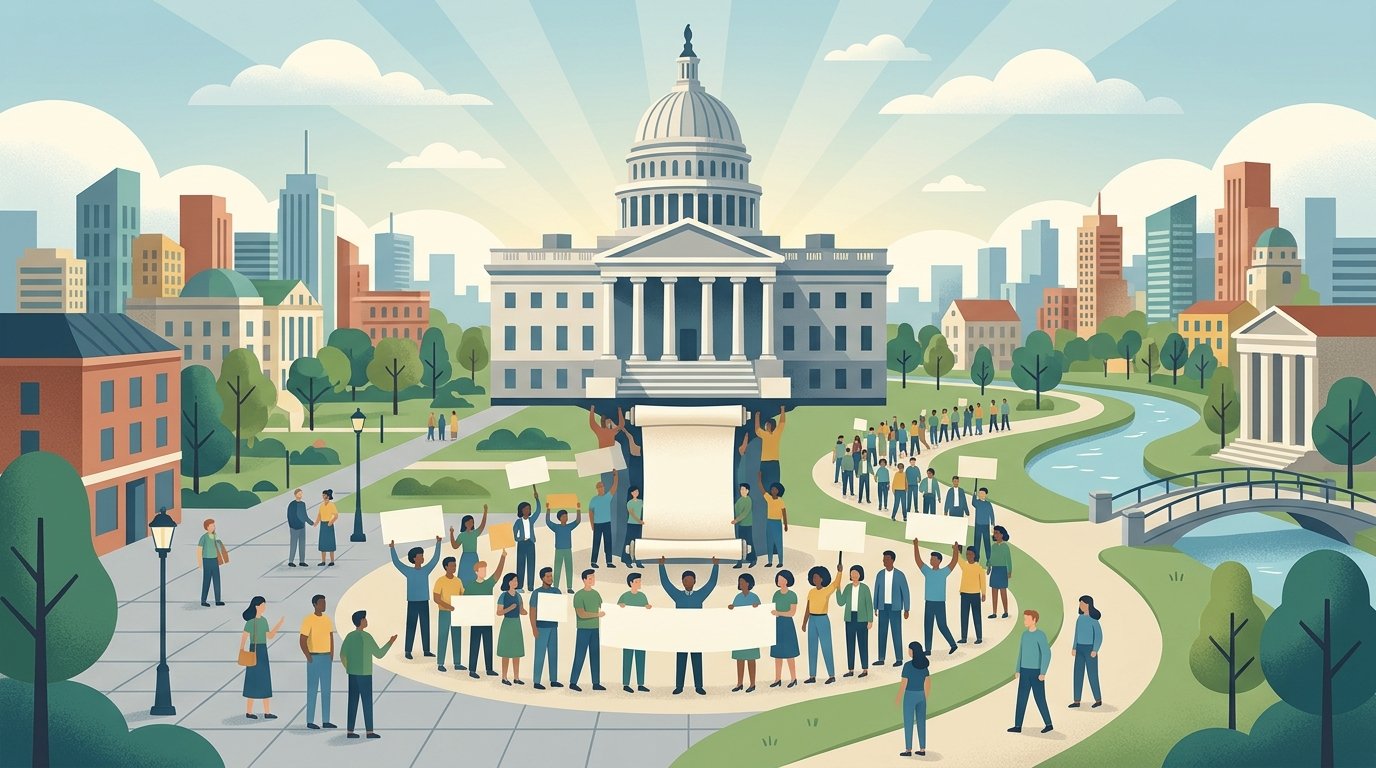
Global Voices has published a series of articles examining the role of protest within democratic systems, released as part of its September 2026 Spotlight series. The collection brings together reporting and analysis from contributors and partner organisations around the world, exploring how citizens use protest to engage with governments and hold them accountable beyond the boundaries of formal electoral processes.
Protest as democratic participation
The series argues that in many countries commonly described as democracies, citizens have limited opportunities to shape political outcomes, with voting often restricted or offering little scope for expressing views on particular issues. Protest is presented as one mechanism through which people can fill that gap, allowing for a wider range of civic expression than a standardised vote typically permits. The articles gathered in the series document a broad variety of protest forms, including:
- Music and artistic expression used as tools for advocacy across different countries and cultural contexts
- Meme-based and online mobilisation, as seen with a youth movement in India
- Street art in Russia, where severe restrictions have pushed creative expression into more indirect forms
- Young people in Japan finding new entry points into activism through small-scale, tangible actions
Digital tools, repression and long-term consequences
Several articles in the series address the relationship between digital technology and protest. While online platforms have opened up new forms of civic engagement, the series also documents cases where technology has been used to suppress dissent. Contributions from partner organisations cover telecommunications companies implicated in internet shutdowns during protests in Africa, surveillance software deployed against protesters in Georgia, and tactics used to undermine protest movements through online manipulation. The series also looks beyond the immediate moment of protest to consider longer-term outcomes, including an examination of whether the change of government following protests in Bangladesh two years ago translated into greater democratic accountability, and a follow-up with participants in protests in Nepal tracking the lasting effects of injuries and trauma.
The series concludes by framing the act of documenting and publishing these accounts as itself a form of advocacy, asserting that protest is a legitimate and widespread feature of democratic life across many different national contexts.
This article is adapted from “Protest as a pillar of democracy” published by Global Voices, licensed under CC BY 3.0. Changes were made. Read the original story at the link above.
Discover More from Didier Lancelot
Amazon Author page: amazon.com/author/didierlancelot
Narmer Store: narmerstore.org
AI and Technology Ebooks
- Creative AI: Animated Drawings, Manga & Illustrations
- Build a Game with AI: The No-Code Guide
- AI Image Generation Made Easy
- Build a Website with AI: The No-Code Guide
- How to Connect AI to Your Blog: The Ultimate Automation Guide
- AI Productivity Habits: Get More Done in Less Time
- AI Avatars Made Easy
- The Book of AI Prompts: 100+ Proven Prompts
- Make Music with AI: Suno, Udio and AI Music Generators
- Click to Cash
- The Automated Edge: Outwork, Outpace, and Outperform with AI
- AI Side Hustle: How to Make Money with ChatGPT and AI Tools
- Work Smarter with AI
Health, Lifestyle and Home Ebooks
- Hidden Superfoods: The World’s Most Powerful Healing Foods
- Spanish Food: The Complete Cookbook for Authentic Home Cooking
- The Science of Happiness Explained
- The Psychology of Success
- The Secret Sauce of Consistency: What the Experts Don’t Tell You About Fitness
- The Complete Home Bartender’s Guide: Link 1 | Link 2
- Natural Beauty, Made Simple: Easy DIY Organic Skincare Recipes
- Garden Made Simple: Easy, Beginner-Friendly Techniques
- The Dog Training Bible