
Things to Do in Santorini: Complete Guide to Oia, Caldera Views & Wine Tours
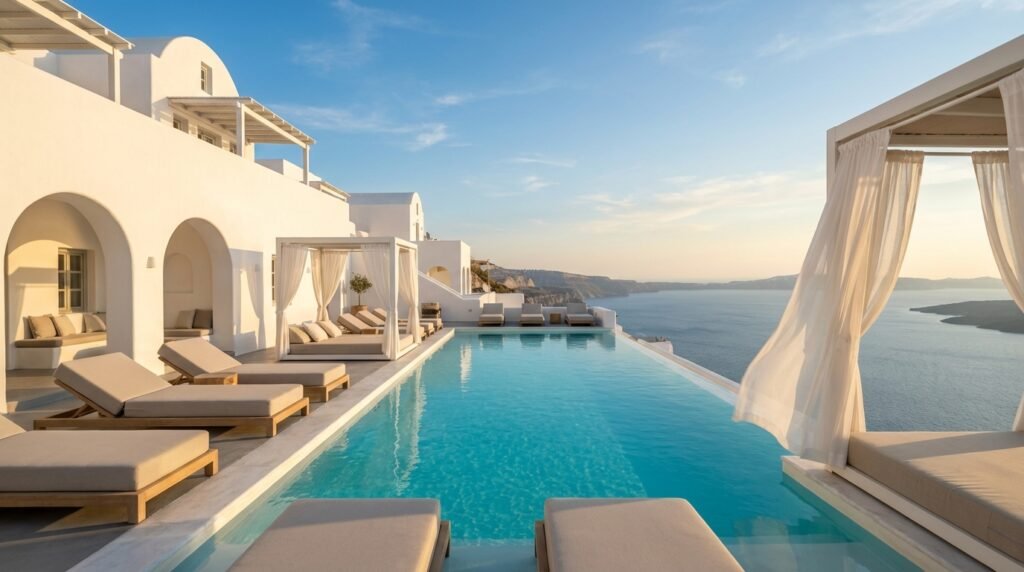
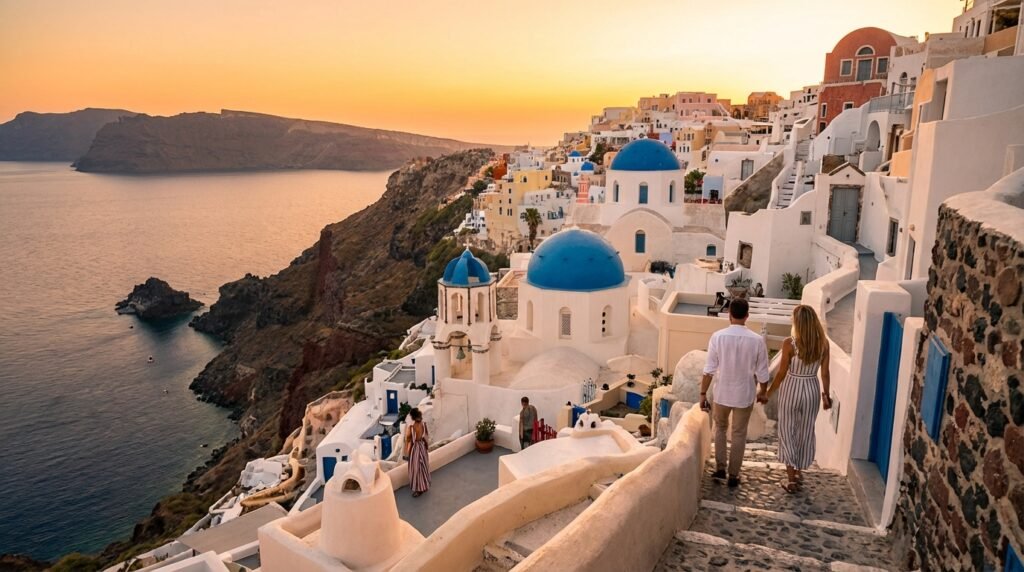
Santorini, the volcanic jewel of the Aegean Sea, captivates travelers with its dramatic cliffs, immaculate whitewashed villages, and ethereal sunsets. Beyond its postcard-perfect scenery lies a destination rich in history, culture, and culinary sophistication. This guide provides a structured overview of Santorini’s essence, from its geography and climate to its most memorable attractions, activities, and practical travel tips.
Overview of Santorini
Introduction to Santorini
Santorini, part of the Cyclades island group in Greece, is renowned as one of the world’s most visually striking islands. Its distinctive crescent shape encircles a submerged volcanic caldera, creating vertical cliffs that plunge into deep blue waters. White cubic houses, blue-domed churches, and labyrinthine lanes cling to these cliffs, forming the emblematic landscape that has made Santorini a global icon.
The island’s identity is inextricably linked to its volcanic origins. Ancient eruptions shaped not only its terrain but also its culture and economy. Unique soil composition nurtures vineyards and produces distinctive agricultural products, while the caldera provides a natural amphitheater for spectacular views. Modern Santorini harmoniously blends traditional Cycladic architecture with refined hospitality, welcoming visitors in search of both relaxation and exploration.
Geographic Location and Climate
Santorini is located in the southern Aegean Sea, approximately 200 kilometers southeast of mainland Greece and Athens. The main island, officially named Thira, is accompanied by smaller islets such as Thirassia, Nea Kameni, and Palea Kameni. Together, they form the remnants of a massive volcanic crater submerged in the sea, giving Santorini its unique horseshoe-like configuration.
The island enjoys a typical Mediterranean climate, characterized by hot, dry summers and mild, relatively wet winters. From June to September, daytime temperatures commonly range between 26°C and 32°C, with abundant sunshine and cooling sea breezes. The meltemi winds, which sweep across the Cyclades in summer, help moderate heat and provide clear skies ideal for photography.
Shoulder seasons—April to early June and late September to October—offer more temperate conditions, with slightly cooler temperatures and fewer crowds. Winters are mild, with temperatures rarely dropping below 10°C, but some tourism services operate on a reduced schedule. Understanding Santorini’s climate is essential for planning outdoor activities, from caldera hikes to sunset cruises.
Top Attractions in Santorini
The Iconic Blue Domes of Oia
The village of Oia, perched on the northern tip of the island, is perhaps Santorini’s most recognizable destination. Its narrow alleys, carved into the cliffside, lead to terraced viewpoints overlooking the caldera, where whitewashed façades contrast sharply with deep azure seas. Among these structures, the blue-domed churches of Oia have become emblematic of Greek island beauty, frequently featured on travel brochures and magazine covers worldwide.
These domes are not merely visual symbols; they are part of active Greek Orthodox churches that have served local communities for generations. Their domed design reflects both aesthetic and practical considerations, helping distribute structural weight and providing resilience to seismic activity. Visitors often seek out vantage points above the churches, where the combination of domes, bell towers, and cascading houses forms a harmonious composition.
Oia is more than a backdrop for photographs. The village offers elegant boutiques, art galleries showcasing Cycladic-inspired works, and refined restaurants with panoramic terraces. Strolling through its pedestrian lanes at different times of day reveals shifting moods, from quiet dawns with soft light over the caldera to vibrant evenings alive with visitors awaiting the famed Oia sunset.
Ancient Akrotiri and its Archaeological Significance
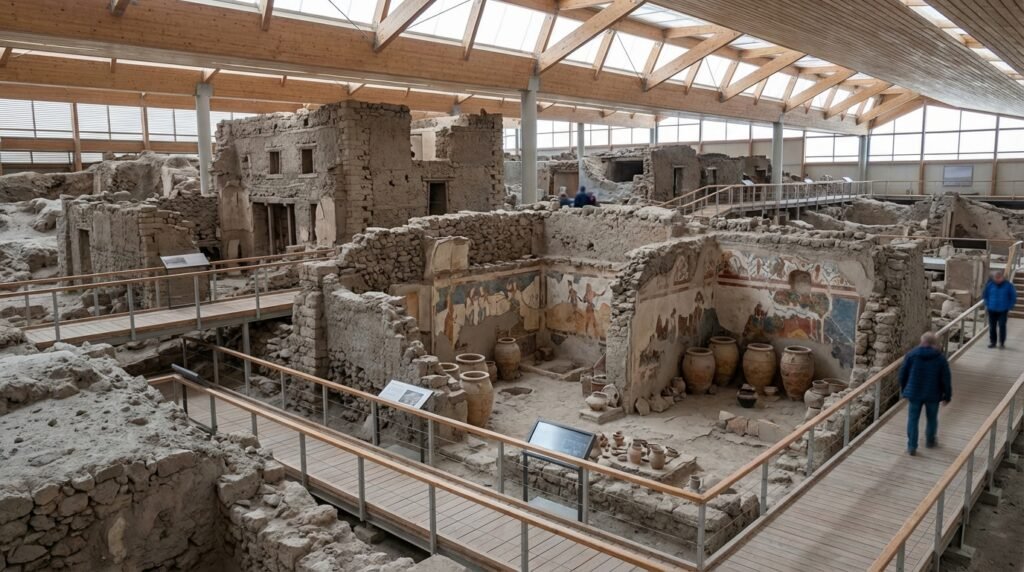
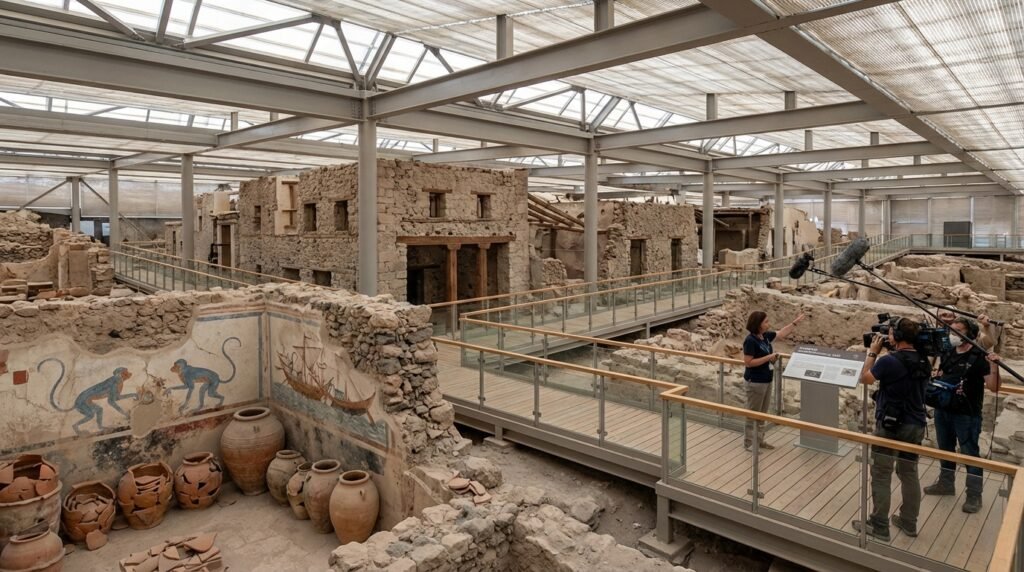
On the southern part of the island, the archaeological site of Akrotiri offers a window into a sophisticated Bronze Age civilization. Often referred to as the “Pompeii of the Aegean,” Ancient Akrotiri was a flourishing Minoan settlement that was buried under volcanic ash following a massive eruption around the 17th century BCE. This natural cataclysm preserved buildings, frescoes, and everyday objects with remarkable clarity.
The site, now covered by a protective bioclimatic roof, allows visitors to walk along raised walkways through the remains of multi-story houses, storerooms, and public spaces. Archaeologists have uncovered sophisticated drainage systems, advanced urban planning, and finely crafted pottery, highlighting the settlement’s wealth and technological progress. Vibrant frescoes—depicting maritime scenes, flora, and daily life—reveal a refined aesthetic sensibility and close connection to the sea.
Akrotiri’s importance extends beyond Santorini. The eruption that buried the city had far-reaching impacts on the Aegean and possibly influenced myths such as the legend of Atlantis. Visiting the site provides crucial context for understanding the island’s volcanic history and the enduring interplay between natural forces and human settlement in the region.
Best Activities to Experience in Santorini
Sunset Views and Photography Spots
Santorini’s sunsets are internationally celebrated, and witnessing the sun descend behind the caldera is often the highlight of a visit. The island’s topography creates a natural stage where the sky shifts from gold to crimson, reflected in the waters below and contrasted by the stark white architecture clinging to the cliffs.
Oia remains the most popular location for sunset viewing, particularly around the ruins of the old Venetian castle. From this elevated spot, you can capture the entire village cascading towards the water, with windmills and domes silhouetted against the sky. However, the crowds in high season can be intense, so arriving early is advisable.
For a more tranquil experience, consider Fira, Firostefani, or Imerovigli. These caldera villages provide excellent vantage points with fewer onlookers and numerous terraces ideal for long-exposure photography. The Skaros Rock area near Imerovigli is especially prized by photographers for its unobstructed perspectives of the caldera and the interplay of natural and man-made forms.
Another compelling option is viewing the sunset from the sea. Caldera cruises, often on traditional wooden boats or catamarans, allow you to photograph the island’s cliffs from below as the light softens. These excursions frequently combine swimming stops, visits to the hot springs, and onboard dining with the sunset as the final spectacle.
Wine Tours and Tastings
Santorini’s wine culture is deeply intertwined with its volcanic landscape. The island’s porous ash- and pumice-rich soil, combined with minimal rainfall and persistent winds, creates challenging conditions that have led to distinctive viticultural practices. Vines are trained in low, basket-shaped formations known as kouloura, which protect grapes from harsh winds and conserve precious moisture.
The flagship variety of the island is Assyrtiko, a white grape that thrives in these conditions. Santorini Assyrtiko wines are renowned for their pronounced minerality, crisp acidity, and capacity to age. Other local varieties, such as Athiri and Aidani, contribute to blends and lend aromatic complexity. On the red side, Mavrotragano and Mandilaria offer characterful options with strong regional identity.
Wine tours typically include visits to several wineries, each offering guided tastings and insights into the production process. Many estates combine contemporary architecture with traditional techniques, incorporating underground cellars and caldera views. Tasting experiences often pair local wines with regional cheeses, sun-dried tomatoes, olives, and other products of Santorini’s unique terroir.
For visitors with a particular interest in oenology, specialized tours can focus on the island’s viticultural history, from ancient methods to modern innovations. Learning about the resilient vines that have survived for decades in volcanic soil adds depth to every glass, transforming wine tasting into an exploration of geography, climate, and culture.
Travel Tips for Visiting Santorini
Best Time to Visit Santorini
Choosing the right time to visit Santorini significantly influences the overall experience. From late June through August, the island reaches peak season. During these months, visitors enjoy long, sun-drenched days, warm seas, and a vibrant atmosphere. However, accommodation prices, restaurant reservations, and crowd levels are at their highest.
For many travelers, the shoulder seasons—April to early June and late September to October—strike the ideal balance. The weather is generally pleasant, with milder temperatures and sufficient warmth for outdoor dining, hikes, and boating excursions. Sea temperatures in late summer and early autumn are particularly appealing, making September and early October excellent for swimming.
Visiting in winter offers a more contemplative perspective. While some hotels and restaurants close, those that remain open cater primarily to a quieter, more local clientele. Airfares and room rates often decline, and the island’s archaeological sites and villages can be explored in relative solitude. This period suits travelers who prioritize cultural exploration and tranquility over beach activities and nightlife.
Transportation Options on the Island
Navigating Santorini efficiently requires an understanding of the island’s transport options. The main transportation hub is Fira, where the central bus station connects most major villages and beaches. The public bus system is economical and reasonably frequent, especially in high season, with routes linking Fira to Oia, Kamari, Perissa, Akrotiri, and other key destinations.
For greater flexibility, many visitors choose to rent a car, quad bike, or scooter. Car rentals offer comfort, storage, and safety on winding roads, making them ideal for families or groups. Quad bikes and scooters provide easier parking and a sense of freedom; however, they require caution due to traffic and sometimes uneven surfaces. In all cases, careful driving and adherence to local regulations are important for safety.
Taxi services and private transfers are available but can be limited in number, especially at peak arrival times from the airport or ferry port. Pre-booking transfers is advisable for seamless access to accommodation, particularly when arriving late or carrying substantial luggage. Some hotels also arrange shuttle services for guests.
Within the caldera villages themselves, movement is predominantly on foot. Narrow alleys, steps, and pedestrian lanes are not suited to vehicles, preserving the charm of traditional architecture but requiring comfortable footwear and a willingness to navigate steps. Walking allows for spontaneous discovery of viewpoints, chapels, and cafés that might otherwise go unnoticed.
Whether drawn by the allure of its blue domes, the depth of its ancient history, or the refinement of its wines, Santorini offers a multifaceted experience that rewards both casual visitors and discerning travelers. Its volcanic landscapes, cliffside villages, and cultural heritage form a compelling narrative of resilience and beauty. With thoughtful planning—choosing the right season, exploring beyond the most famous viewpoints, and engaging with local traditions—you can experience Santorini as more than a backdrop for photographs. It becomes a place of lasting impressions, where the interplay of sea, sky, and stone lingers long after the journey ends.
https://www.teepublic.com/t-shirt/50082230-hedgehog?store_id=2851997
How Interior Design Influences Mood and Productivity
Athens Travel Guide: Top Attractions, Acropolis, & Best Time to Visit
Venice Travel Guide: Top Attractions and Hidden Gems
The Ultimate Florence Travel Guide: Art, History, and Dining
Top Attractions” and “Best Time to Visit
zoo doku