
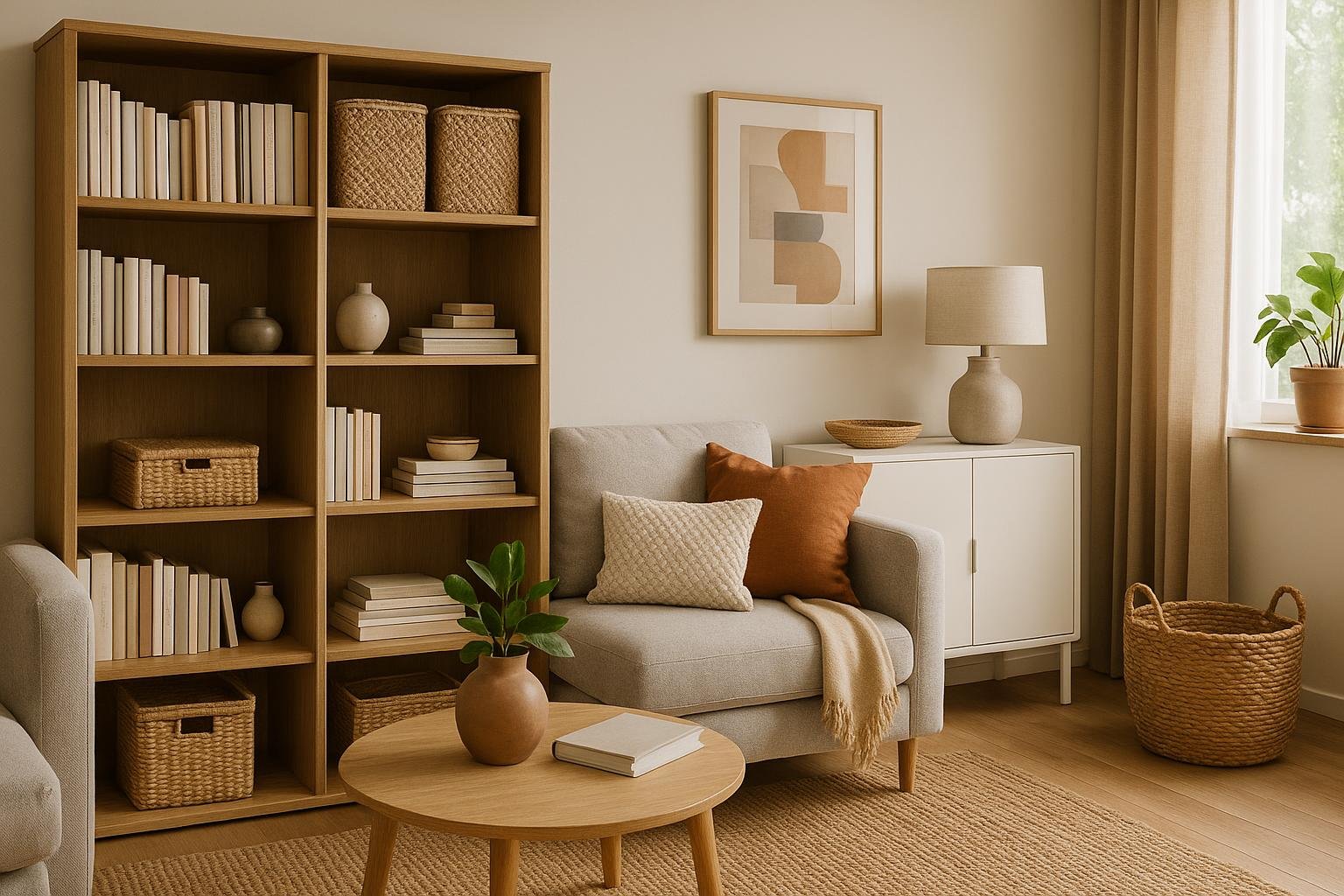
Smart Storage Ideas Every Interior Design Lover Should Know
Smart storage in 2026 isn’t about squeezing in more cupboards. It’s about designing storage that fits the way you actually live: what you own, how often you use it, and how you move through your home. When you get that balance right, rooms feel calmer, more spacious and more intentional—without sacrificing personality or style.
Below, you’ll find practical, design-forward storage ideas that work in real homes, plus the guiding principles that keep them functional for the long term.
Design First: How to Plan Smart Storage That Actually Works
Before buying baskets or commissioning built-ins, step back and treat storage like any other part of interior design: it needs a brief, a plan and measurements.
Edit and Measure Before You Design
The most beautiful cabinetry will fail if it’s filled with things you don’t need.
- Edit what you own: Quickly sort by keep, donate, store elsewhere. Be honest about duplicates and “just in case” items.
- Group by type and frequency: Everyday items, weekly use, seasonal or sentimental. You’ll use this later to decide what goes where.
- Measure key items: Cookware height, file boxes, small appliances, tall bottles, shoe depth, baskets you love. Design shelves and drawers around these, not the other way around.
This approach avoids the common trap of installing big cupboards that are deep, dark and awkward to use.
Organize Around How Often You Use Things
Smart storage is fundamentally about access. Let frequency of use dictate placement:
- Prime positions: Eye-level shelves, the front of drawers, the first 60–90 cm of any cupboard for daily items: dishes, everyday glassware, go-to skincare, frequently worn shoes.
- Secondary spots: Slightly higher, lower or deeper areas for weekly-use items: serving dishes, bulk pantry items, hair tools, extra towels.
- Out-of-the-way zones: Top shelves, under-bed drawers, the back of deep cupboards for seasonal décor, luggage, spare bedding, archive files.
If something is hard to reach, you’ll either stop using it or start leaving it out. Both work against a visually calm, well-designed space.
Balance Accessibility, Concealment and Visual Calm
The best storage designs sit at the intersection of three goals:
- Accessibility: You can see and reach what you need without unpacking half the cupboard.
- Concealment: Clutter, utilitarian objects and visual “noise” can disappear behind doors or into drawers.
- Visual calm: The room still feels open, with breathing space on walls and surfaces.
Keep this triad in mind as you explore the ideas below.
Take Storage to the Ceiling (Without Feeling Boxed In)
Full-height cabinetry is one of the smartest ways to add storage in 2026. It dramatically increases capacity without expanding the footprint of the room, making it ideal for small apartments and compact family homes.
Design Tall Storage That Feels Light
- Use upper sections for rarely used items: Out-of-season clothing, special-occasion tableware, holiday décor and keepsakes can all live above eye level.
- Introduce glass fronts: Ribbed, reeded or clear glass doors for some upper cabinets break up a solid wall of doors and let light pass through.
- Add discreet interior lighting: Slim LED strips inside tall cabinets make it easier to see the top shelves and add a soft, ambient glow in the evening.
- Vary the visual weight: Combine a solid lower portion (for hidden clutter) with lighter upper sections—glass, open shelves, or narrower doors—to avoid a heavy, built-in “block.”
In living rooms and dining spaces, full-height cabinets can double as a “storage wall”: closed sections for media equipment and paperwork, open niches for art, books and ceramics.
Make Awkward Spaces Surprisingly Useful
Every home has those frustrating zones: deep corners, under stairs, strange alcoves. Thoughtful interior design turns them into some of the hardest-working storage areas.
Lean Into Corners and Tight Spots
- Corner pull-outs in kitchens: Swap dead corners for pull-out trays or carousel systems. These bring pots, pans and pantry items right to the front.
- Under-stair cabinets or drawers: Create pull-out drawers for shoes, cleaning products or seasonal gear, or shallow cabinets for books and décor.
- Slim vertical towers: Slide-out spice racks beside the oven, pull-out towel towers in a bathroom, or a narrow broom cupboard in a hallway make the most of 15–20 cm gaps.
- Recessed bathroom niches: Built into stud walls, they offer storage for toiletries and shower products without jutting into the room.
Across the home, think in planes: under, over, between, inside. Any “odd” space is a candidate for custom storage.
Choose Furniture That Does Double Duty
Multifunctional furniture is one of the most powerful smart storage strategies, especially in compact interiors or open-plan spaces where traditional cupboards can feel intrusive.
Hidden Storage in Everyday Pieces
- Storage ottomans: Ideal in living rooms and bedrooms. Use them for blankets, guest bedding, games or kids’ toys. Upholstery and shape can echo your design style—bouclé for a soft, sculptural look, leather for something more tailored.
- Lift-up beds: A gas-lift base turns the entire bed footprint into storage for off-season clothing, luggage or spare duvets. Pair with shallow under-bed drawers for items you need a little more often.
- Coffee tables with drawers or shelves: Tuck away remotes, magazines and chargers. Open lower shelves can hold design books and woven baskets for extra storage.
- Benches with built-in storage: In entryways, dining nooks or at the end of a bed, benches with lift-up seats or drawers can store shoes, bags or linens.
When choosing these pieces, treat storage as a design feature: look for clean lines, quality hardware and finishes that complement your existing palette.
Use Flexible, Room-Specific Organizers
Even the best cabinetry falls short without the right internal organization. Inserts and pull-outs turn empty boxes into tailored, easy-to-use storage.
Smart Kitchen Storage Ideas
- Pull-out pantry shelves: Full-extension shelves or drawers in pantries and tall cabinets make every item visible from the front, reducing waste and visual chaos.
- Drawer inserts: Deep drawers with dividers for dishes, pans and lids, plus cutlery and utensil trays, keep everything ordered and easy to access.
- Dedicated zones: Create specific drawers for baking tools, tea and coffee, lunchboxes or snack stations. Designing with these categories in mind stops random clutter buildup.
Smarter Bathroom Storage
- Longer vanities with a mix of storage types: Combine cabinets for bulkier items (towels, hairdryers) with drawers for skincare, makeup and daily tools.
- Drawer organizers: Use adjustable trays and compartments so every product has a place. This keeps counters clear and speeds up morning routines.
- Tall, narrow cabinets: Integrate a slim, vertical cabinet for toilet paper, cleaning products and backup toiletries.
In both rooms, prioritize flexibility. Choose organizers that can be reconfigured as your belongings change rather than highly specific layouts you might outgrow.
Mix Open and Concealed Storage for a Curated Look
Entire walls of closed cupboards can feel heavy; all-open shelving can look chaotic. The most visually balanced interiors combine both.
Curate What You See, Hide What You Don’t
- Open shelves for beautiful or frequently used items: Display ceramics, cookbooks, design objects and glassware that matches your palette. In kitchens, keep the things you reach for daily within arm’s reach.
- Closed storage for visual noise: Plastic containers, paperwork, mismatched mugs, kids’ toys and cords are best behind doors or in drawers.
- Coordinated baskets and boxes: On open shelves, use a limited palette of baskets and lidded boxes to hide smaller items while maintaining a calm, ordered look.
Switch Between Open Access and a Clean Look
Newer cabinet solutions offer the best of both worlds:
- Bifold fronts: Doors that fold back on themselves provide wide, open access to a cabinet or appliance when in use, then close to present a clean façade.
- Retractable or pocket doors: Doors that slide back into the sides of a cabinet work well for “cloffice” nooks, appliance garages or media areas, making them disappear when not in use.
This flexibility is ideal in open-plan spaces, where you may want quick access during the day and a calmer, more minimal look in the evening.
Use Walls, Doors and Under-Furniture Space
When floor and cabinet space are maxed out, vertical and hidden planes become essential. The goal is to free surfaces and circulation paths while still keeping essentials close by.
Think Vertically: Walls and Doors
- Floating shelves: Use them for books, art and decorative storage in living rooms, bathrooms, kitchens and even bedrooms. Leaving some negative space between objects maintains a sophisticated look.
- Hooks and peg rails: In entryways and bedrooms, these provide a home for bags, coats, robes and hats without needing extra furniture.
- Over-door organizers: Behind wardrobe, pantry or utility doors, slim organizers can hold shoes, cleaning products, spices or accessories.
Hidden Storage Under Furniture
- Under-bed drawers: Use low, smooth-gliding drawers for off-season clothing, spare sheets or rarely used items. Coordinate front panels with your bed frame for a built-in look.
- Low rolling bins: For kids’ rooms or craft spaces, shallow bins on castors can slide under sofas, daybeds or benches to hide toys and supplies.
The more you can lift everyday storage off the floor and off countertops, the more spacious and refined your rooms will feel.
Bringing It All Together: Smart Storage as a Design Strategy
Smart storage isn’t an afterthought. It’s a core part of interior design that shapes how your home looks, feels and functions day to day.
To recap the key principles:
- Edit first, then design: Declutter and measure before you buy a single organizer.
- Let usage dictate placement: Everyday items deserve the easiest access; seasonal pieces can live higher, deeper or under beds.
- Design from the inside out: Plan shelves, drawers and inserts around the specific objects they will hold.
- Balance open and closed: Display what you love, conceal what creates visual noise.
- Exploit every plane: Walls, doors, corners, awkward gaps and under-furniture spaces can all become discreet storage.
When you blend these ideas with your personal style—whether that’s minimalist, eclectic, classic or contemporary—you end up with rooms that are not just beautifully styled for a photoshoot, but deeply livable every day. Storage becomes invisible support for the life you want your home to hold.
Discover More from Didier Lancelot
Amazon Author page: amazon.com/author/didierlancelot
Narmer Store: narmerstore.org
AI and Technology Ebooks
- Creative AI: Animated Drawings, Manga & Illustrations
- Build a Game with AI: The No-Code Guide
- AI Image Generation Made Easy
- Build a Website with AI: The No-Code Guide
- How to Connect AI to Your Blog: The Ultimate Automation Guide
- AI Productivity Habits: Get More Done in Less Time
- AI Avatars Made Easy
- The Book of AI Prompts: 100+ Proven Prompts
- Make Music with AI: Suno, Udio and AI Music Generators
- Click to Cash
- The Automated Edge: Outwork, Outpace, and Outperform with AI
- AI Side Hustle: How to Make Money with ChatGPT and AI Tools
- Work Smarter with AI
Health, Lifestyle and Home Ebooks
- Hidden Superfoods: The World’s Most Powerful Healing Foods
- Spanish Food: The Complete Cookbook for Authentic Home Cooking
- The Science of Happiness Explained
- The Psychology of Success
- The Secret Sauce of Consistency: What the Experts Don’t Tell You About Fitness
- The Complete Home Bartender’s Guide: Link 1 | Link 2
- Natural Beauty, Made Simple: Easy DIY Organic Skincare Recipes
- Garden Made Simple: Easy, Beginner-Friendly Techniques
- The Dog Training Bible