
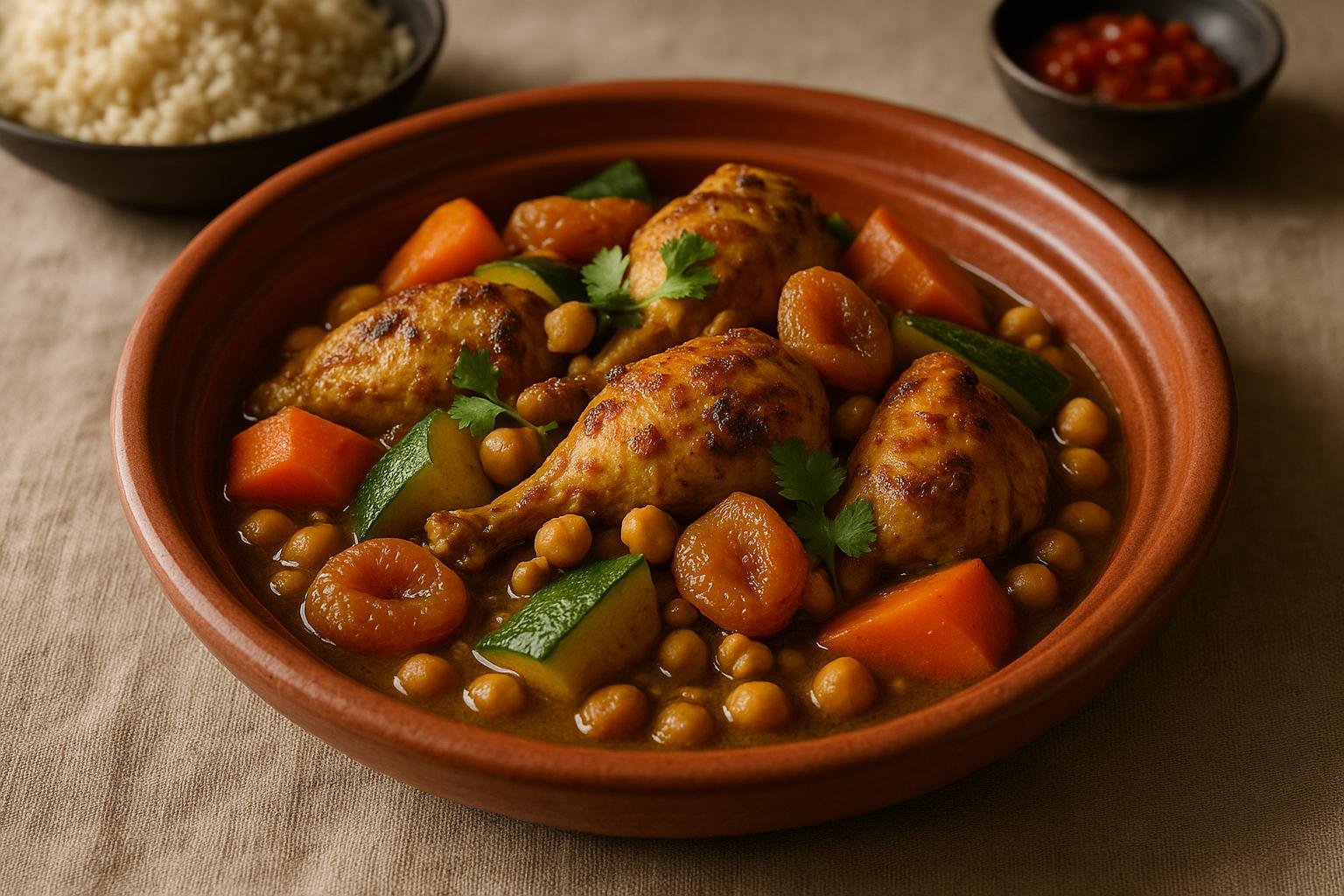
Few dishes capture the essence of Moroccan cuisine as completely as tagine. At once a cooking vessel and a dish, tagine represents slow-cooked comfort, layered aromas, and a deep respect for simple ingredients transformed through time and technique. Whether enriched with lamb and prunes, or composed entirely of seasonal vegetables, a well-made tagine is fragrant, nuanced, and deeply satisfying.
What is a Tagine?
Origin and History of Tagine
The word “tagine” refers both to the earthenware pot and to the stew prepared within it. Its origins lie in the Maghreb, particularly Morocco, where nomadic and rural communities needed a practical method for cooking tough cuts of meat and hardy vegetables with minimal fuel. The conical lid of the tagine pot made this possible by trapping steam and continuously basting the contents.
Historically, tagine evolved at the crossroads of trade routes linking North Africa, the Middle East, and Europe. As merchants carried spices, dried fruits, and preserved ingredients across the Sahara and the Mediterranean, these new elements found their way into local cooking. Over centuries, the tagine became a symbol of hospitality, served at family gatherings, religious celebrations, and everyday communal meals. Today, it stands as one of the most recognisable ambassadors of traditional Moroccan cooking around the world.
Traditional Tagine Ingredients and Cooking Methods
Traditional tagine recipes rely on a balance of aromatics, spices, and slow cooking. The typical foundation includes onions, garlic, and a generous drizzle of olive oil. To this base, cooks add a carefully chosen blend of Moroccan spices such as cumin, ginger, paprika, turmeric, saffron, and sometimes ras el hanout, a complex mix that can include upward of a dozen components.
Salt-preserved lemons, olives, dried apricots, prunes, figs, almonds, and fresh herbs such as cilantro and parsley are used to create both complexity and contrast. Savoury elements are often offset by subtle sweetness or briny sharpness. Traditionally, the food is arranged in the tagine pot in layers, with the protein at the bottom and vegetables arranged above in a decorative conical shape. The dish is then cooked slowly over charcoal, a low flame, or hot embers. The conical lid captures steam, which condenses and drips back down, resulting in exceptionally tender ingredients bathed in a concentrated sauce.
Different Types of Tagine Dishes
Popular Meat-Based Tagines
Meat tagine preparations showcase the depth of flavour achievable with slow cooking and judicious seasoning. Lamb or mutton is particularly favoured due to its richness and ability to become meltingly tender when braised gently. A classic example is lamb with prunes and almonds: the meat is simmered with onions, ginger, cinnamon, and saffron, before prunes and toasted nuts are added for a luxurious balance of sweet and savoury.
Chicken tagines are equally celebrated. A widely cherished variant combines chicken with preserved lemons and green olives. The acidity of the lemons pierces the richness of the poultry, while olives contribute salinity and body to the sauce. Beef or veal may be prepared with root vegetables, tomatoes, or peas, often seasoned with cumin and paprika. Fish and seafood tagines, though less internationally known, are also common in coastal regions, where fillets are marinated with chermoula—a pungent blend of herbs, garlic, lemon, and spices—before being layered with tomatoes and peppers.
Vegetarian and Vegan Tagine Options
Although many people associate tagine with meat, there is a long-standing tradition of vegetable-only and legume-based versions. A well-crafted vegetarian tagine can be just as robust as its meat-based counterpart. Seasonal produce—such as carrots, potatoes, zucchini, tomatoes, pumpkin, and peas—is arranged in the pot, spiced with cumin, turmeric, ginger, and coriander, and slowly cooked until tender yet structured.
For added substance, chickpeas, lentils, or white beans are often included. Dried fruits like apricots or raisins can introduce a gentle sweetness that contrasts beautifully with warming spices. Nuts such as almonds or walnuts provide texture and richness, particularly in vegan tagines where no animal fat is used. These plant-based versions are not mere adaptations; they are part of the culinary tradition, frequently served during days of lighter eating or when produce is abundant and meat is scarce or intentionally omitted.
How to Cook a Tagine at Home
Essential Tools and Equipment
The traditional vessel for cooking a tagine is, of course, the tagine pot. Typically made from clay or ceramic, it consists of a shallow base and a tall, conical lid. Unglazed clay models impart a subtle earthy character and are ideal for gentle, even heat. Glazed versions are easier to clean and more forgiving for beginners.
When cooking on a modern stovetop, it is advisable to use a heat diffuser beneath the tagine to prevent cracking and distribute heat evenly. If you do not have a tagine pot, a heavy, lidded Dutch oven can be used as a practical substitute, though the self-basting effect of the conical lid will be slightly diminished. Beyond the pot itself, you will need a sharp knife, a sturdy cutting board, measuring spoons for spices, and wooden utensils for stirring. Simple, reliable equipment is sufficient; what matters most is patience and careful attention to layering flavours.
Step-by-Step Cooking Instructions
The following method outlines a general approach that you can adapt to many tagine recipes, whether you choose meat or vegetables as the main component.
- 1. Prepare and season your main ingredient. If using meat, pat it dry and season lightly with salt and pepper. If working with vegetables, cut them into even pieces to ensure uniform cooking. Rinse and drain any legumes you plan to include.
- 2. Build the aromatic base. Place the tagine base over low heat (with a diffuser if needed). Add olive oil, followed by sliced or finely chopped onions and minced garlic. Cook gently until the onions soften and turn translucent, taking care not to brown them too quickly.
- 3. Add spices and develop flavour. Sprinkle in your chosen Moroccan spices—commonly cumin, ginger, paprika, turmeric, black pepper, and perhaps a pinch of saffron. Stir to coat the onions in the spice-infused oil. This step blooms the spices, releasing their aroma and depth.
- 4. Arrange the main ingredients. Place the seasoned meat or legumes over the aromatic base. Then arrange the vegetables on top, often in a pyramid shape to echo the form of the lid. This layering allows steam to circulate and flavours to mingle gradually.
- 5. Add liquid judiciously. Pour in a small amount of water or stock—just enough to create steam but not so much that the dish becomes a soup. The goal is a rich, concentrated sauce that forms naturally as the ingredients release their juices.
- 6. Cover and cook slowly. Place the lid on the tagine and maintain a low, steady heat. Avoid lifting the lid frequently; keeping it closed allows the self-basting environment to work. Cooking time can range from 45 minutes for delicate vegetables or fish to 2 hours or more for tougher cuts of meat.
- 7. Add finishing touches. Toward the end of cooking, incorporate ingredients that require less time, such as olives, preserved lemons, fresh herbs, or dried fruits. Taste and adjust seasoning with salt, pepper, or a touch of acidity from lemon juice if needed.
- 8. Rest and serve. Once the meat is tender or the vegetables are cooked through yet intact, remove the tagine from the heat and let it rest briefly. This pause allows flavours to settle. Serve directly from the pot at the table, removing the lid just before eating to release the aromatic steam.
Tips for Serving and Enjoying Tagine
Pairing Tagine with Side Dishes
The pleasure of eating tagine lies not only in the dish itself but also in how it is enjoyed. Traditionally, the pot is placed at the centre of the table, and diners gather around to share from a common vessel. Freshly baked bread, such as Moroccan khobz, is the most customary accompaniment. Its firm crumb makes it ideal for scooping up pieces of meat or vegetables and absorbing the sauce.
For a more elaborate meal, pair your tagine with steamed or buttered couscous, which catches the fragrant juices, or with fluffy rice for a simpler option. Light salads—tomato and onion with herbs, grated carrot with orange and cinnamon, or mixed greens with a citrus dressing—offer brightness that cuts through the richness of the stew. To drink, consider mint tea for an authentic touch, or a crisp white wine for those who consume alcohol, as it complements the spices without overshadowing them.
Storing and Reheating Leftover Tagine
Tagine often tastes even better the next day, as the flavours continue to meld. Allow leftovers to cool to room temperature before transferring them to an airtight container. Store in the refrigerator for up to three days, or freeze for longer keeping. Clay tagine pots themselves are not ideal for long-term refrigeration, so decanting into glass or food-safe plastic containers is advisable.
When reheating, the key is gentle heat to preserve texture. If using a stovetop, place the tagine or a heavy pan over low to medium-low heat, adding a splash of water or stock if the sauce has thickened excessively. Cover and warm slowly, stirring occasionally to prevent sticking. In an oven, reheat in a covered dish at a moderate temperature until thoroughly hot. Avoid rapid boiling or microwaving on high power, as this can toughen meat and cause vegetables to break down. With proper storage and careful reheating, leftover tagine becomes an effortless, flavourful meal for another day.
In essence, tagine is more than a recipe; it is a method and a tradition that celebrates time, patience, and the alchemy of humble ingredients. By understanding its roots, exploring both meat-based and plant-forward interpretations, and mastering the fundamental technique, you can bring the warmth and complexity of Moroccan cooking into your own kitchen, one slow-simmered pot at a time.
Discover More from Didier Lancelot
Amazon Author page: amazon.com/author/didierlancelot
Narmer Store: narmerstore.org
AI and Technology Ebooks
- Creative AI: Animated Drawings, Manga & Illustrations
- Build a Game with AI: The No-Code Guide
- AI Image Generation Made Easy
- Build a Website with AI: The No-Code Guide
- How to Connect AI to Your Blog: The Ultimate Automation Guide
- AI Productivity Habits: Get More Done in Less Time
- AI Avatars Made Easy
- The Book of AI Prompts: 100+ Proven Prompts
- Make Music with AI: Suno, Udio and AI Music Generators
- Click to Cash
- The Automated Edge: Outwork, Outpace, and Outperform with AI
- AI Side Hustle: How to Make Money with ChatGPT and AI Tools
- Work Smarter with AI
Health, Lifestyle and Home Ebooks
- Hidden Superfoods: The World’s Most Powerful Healing Foods
- Spanish Food: The Complete Cookbook for Authentic Home Cooking
- The Science of Happiness Explained
- The Psychology of Success
- The Secret Sauce of Consistency: What the Experts Don’t Tell You About Fitness
- The Complete Home Bartender’s Guide: Link 1 | Link 2
- Natural Beauty, Made Simple: Easy DIY Organic Skincare Recipes
- Garden Made Simple: Easy, Beginner-Friendly Techniques
- The Dog Training Bible