

Few dishes are as comforting, aromatic, and universally loved as Chili Con Carne. This robust, slow-simmered stew of meat, chilies, tomatoes, and spices has evolved into a global favorite while retaining its deeply rooted identity. Whether you seek an easy Chili Con Carne for a weeknight dinner or an authentic chili dish worthy of a weekend gathering, understanding its origins, components, and techniques is the key to mastering it.
What is Chili Con Carne?
Chili Con Carne, literally “chili with meat,” is a hearty meat-and-chili stew most closely associated with the American Southwest, particularly Texas. At its core, it combines beef, dried or fresh chilies, aromatics, and spices, cooked slowly until the flavors meld into a rich, complex sauce. While many modern versions include beans and a variety of vegetables, traditional Chili Con Carne remains strikingly simple and decidedly meat-centric.
History of Chili Con Carne
The history of Chili Con Carne is as layered as the dish itself. Its origins trace back to the 18th and 19th centuries, in the borderlands of what is now Texas and northern Mexico. Spanish, Indigenous, and later Anglo influences all contributed to its development. Early written accounts describe a preparation of dried beef, suet, dried chilies, and salt, pounded into a compact “brick” that could be boiled on the trail—an early, portable version of what would become a classic stew.
By the late 1800s, San Antonio’s famous “chili queens” were selling steaming bowls of chili in the city’s plazas, turning the dish into a culinary emblem of Texan identity. The rise of chili parlors in the early 20th century spread Chili Con Carne throughout the United States, with each region adapting it to local tastes. Cincinnati added spices reminiscent of Mediterranean cuisine; others introduced beans, vegetables, and even pasta. Yet, the traditional Chili Con Carne recipe from Texas generally excludes beans and emphasizes beef and chilies as the defining elements.
Key Ingredients in Traditional Recipes
At its most classic, Traditional Chili Con Carne relies on a few key ingredients, each playing a crucial role in building depth of flavor:
- Beef: Coarsely chopped or cubed beef chuck is preferred over ground beef for texture and richness. The higher fat content supports slow simmering and results in a succulent stew.
- Chilies: Dried chilies such as ancho, guajillo, and pasilla are often rehydrated and blended into a paste. They provide smokiness, color, and nuanced heat. Ground chili powder is a modern convenience, but whole chilies deliver a more authentic chili dish.
- Aromatics: Onions and garlic form the flavor base. They are usually sautéed until soft and lightly caramelized to add sweetness and complexity.
- Spices: Cumin, oregano (often Mexican oregano), and sometimes coriander or smoked paprika underpin the earthy character of the stew.
- Tomatoes or stock: Some traditionalists omit tomato entirely, relying on beef stock and chilies to create the sauce. Others add crushed tomatoes or tomato paste to enhance body and acidity.
- Fat: Beef tallow or neutral oil assists with sautéing and carrying flavor. In older recipes, rendered beef suet was common.
Beans, while popular in many Homemade Chili Con Carne adaptations, are generally absent from strict Texas-style formulations. Their inclusion or exclusion has become a defining stylistic choice, giving rise to numerous Chili Con Carne variations around the world.
How to Make the Best Chili Con Carne
The best Chili Con Carne balances heat, savoriness, and a subtle sweetness from long-cooked onions and tomatoes. Technique matters as much as ingredients. With attention to browning, layering of flavors, and gentle simmering, you can produce a Chili Con Carne recipe that rivals any restaurant rendition.
Step-by-Step Cooking Instructions
The following method yields a deeply flavored, relatively classic Chili Con Carne, adaptable to your preferences.
- Prepare the chilies.
If using dried chilies, remove stems and seeds. Toast them lightly in a dry skillet over medium heat until fragrant, being careful not to burn them. Soak in hot water for about 20 minutes, then blend with a little soaking liquid into a smooth paste. This paste will form the flavor backbone of your chili.
- Brown the beef.
Cut beef chuck into bite-sized cubes and pat them dry. Season lightly with salt. Heat oil or beef tallow in a heavy pot (such as a Dutch oven) over medium-high heat. Brown the meat in batches to avoid overcrowding, developing a dark, flavorful crust. Remove the browned beef and set aside.
- Sauté the aromatics.
In the same pot, reduce the heat to medium. Add chopped onions and cook until softened and starting to brown, deglazing the browned bits from the bottom of the pan. Stir in minced garlic and cook briefly until fragrant.
- Add spices and chili paste.
Incorporate ground cumin, oregano, and any additional spices. Toast them for a minute to release essential oils. Stir in the chili paste (or high-quality chili powder if using) and cook briefly to integrate flavors.
- Build the sauce.
Return the browned beef to the pot. Add beef stock and, if desired, crushed tomatoes or tomato paste. The liquid should just cover the meat. Bring the mixture to a gentle simmer.
- Slow simmer.
Reduce the heat to low, cover partially, and simmer for 1.5 to 2.5 hours, stirring occasionally. The beef should become tender, and the sauce should thicken and darken. If the chili becomes too thick, add a splash of stock or water. If it is too thin near the end, allow it to simmer uncovered.
- Adjust seasoning.
Taste and refine with salt, black pepper, and a touch of acidity—such as a squeeze of lime juice or a splash of cider vinegar—to brighten the flavors. If more heat is desired, incorporate a pinch of cayenne or finely chopped fresh chili.
- Rest and serve.
For the Best Chili Con Carne, let the pot rest off the heat for at least 15–20 minutes before serving. Resting allows flavors to meld further. Many cooks find it tastes even better the next day.
Tips for Perfecting Your Chili
Several professional techniques can elevate an Easy Chili Con Carne into something exceptional:
- Prioritize browning: Deep caramelization of the meat and onions is fundamental. Avoid rushing this step; properly browned ingredients develop a richer flavor base.
- Control the heat level: Combine mild and moderately hot chilies to create complexity without overwhelming intensity. Heat can always be increased later but is difficult to tame once excessive.
- Resist overloading ingredients: Too many components can muddy the flavor. Focus on a few high-quality ingredients and clear, defined spices.
- Consider texture: Use cubed beef for a traditional mouthfeel. If you prefer ground beef, avoid overworking it; gently break it apart to retain some structure.
- Use time as an ingredient: Low, slow simmering transforms both meat and sauce. Rushing the process tends to yield tough beef and flat flavors.
- Skim excess fat: Some surface fat carries flavor, but too much can feel heavy. Skim gently near the end of cooking, or refrigerate and remove the solidified fat the next day.
- Balance with acidity and sweetness: A small amount of tomato, a splash of vinegar, or a hint of unsweetened cocoa can round out the bitterness of chilies and deepen the overall profile.
Variations and Serving Suggestions
Once the fundamentals are mastered, Chili Con Carne becomes an ideal canvas for creativity. From family-friendly versions with beans and vegetables to bold, smoky renditions, the possibilities are extensive.
Creative Chili Con Carne Recipes
Several Chili Con Carne variations demonstrate how adaptable this stew can be:
- Bean-enriched chili: Add cooked kidney beans, pinto beans, or black beans during the last 30–40 minutes of simmering. This approach stretches the dish economically and improves fiber content, yielding a more filling Homemade Chili Con Carne.
- Smoky chipotle chili: Incorporate chipotle peppers in adobo sauce for a deep, smoky heat and a slightly tangy character. This variation pairs well with cornbread and sharp cheddar.
- Mixed-meat chili: Blend beef with pork shoulder or ground chorizo for a richer, more complex flavor. Adjust seasoning to accommodate the saltiness and spices of the additional meats.
- Vegetable-forward chili: While not strictly traditional, adding bell peppers, corn, or roasted squash can introduce sweetness and texture. This option can appeal to those seeking a lighter interpretation without sacrificing depth.
- High-intensity chili: For enthusiasts of fiery food, layer different hot chilies—such as serrano, habanero, or extra-hot dried varieties—while maintaining the base of milder chilies for balance. Exercise caution and taste as you go.
Each of these creative approaches retains the soul of an authentic chili dish while tailoring it to personal preferences and dietary needs.
Best Side Dishes and Pairings
How you serve Chili Con Carne can transform it from a simple bowl of stew into a complete, satisfying meal. Thoughtful accompaniments enhance both flavor and texture.
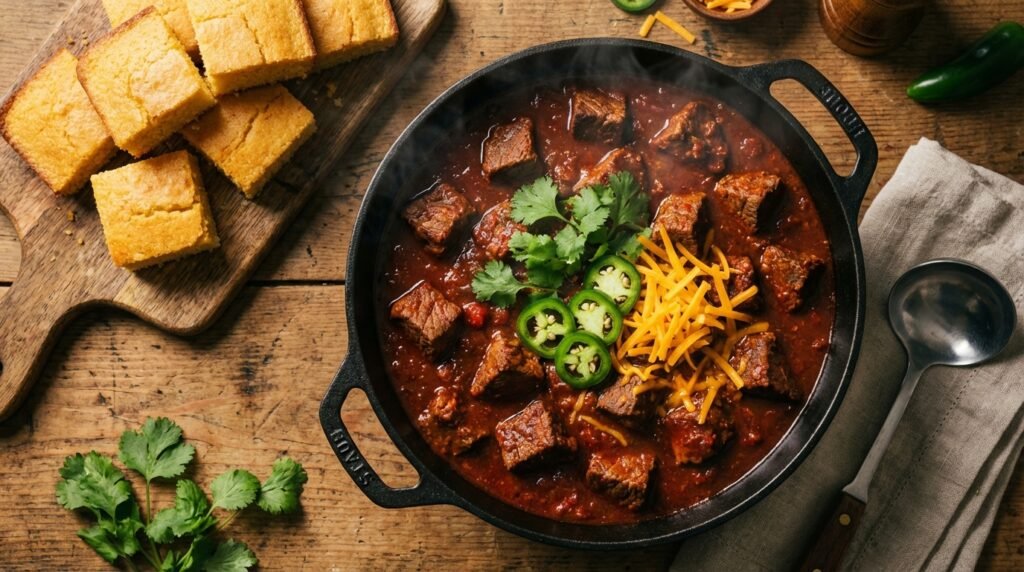
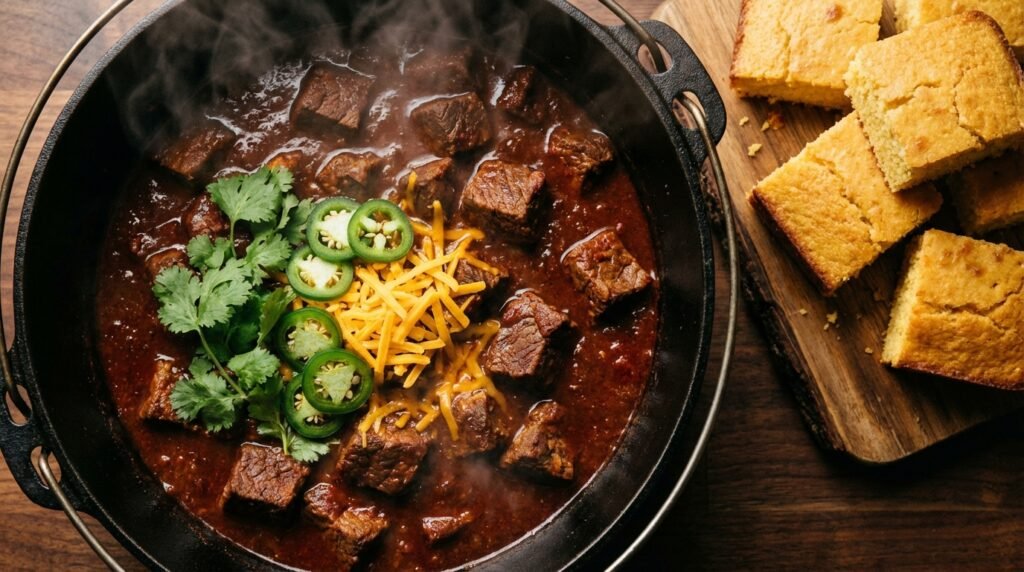
- Cornbread: Classic, slightly sweet cornbread provides a pleasant contrast to the robust, spicy chili. Its crumbly texture is perfect for soaking up the sauce.
- Rice: Serving chili over steamed white or brown rice stretches portions and moderates the heat, making it suitable for a wide range of palates.
- Baked potatoes: Ladle hot Chili Con Carne over a fluffy baked potato and finish with cheese, sour cream, and scallions for a hearty, single-dish meal.
- Tortilla chips or corn tortillas: Crunchy tortilla chips add texture, while warm tortillas are ideal for scooping or wrapping saucy bites.
- Fresh garnishes: Diced red onion, cilantro, lime wedges, sliced jalapeños, grated cheese, and a dollop of sour cream or Greek yogurt brighten the dish visually and provide refreshing contrast.
- Beverage pairings: To Serve Chili Con Carne with drinks, consider crisp lagers, amber ales, or medium-bodied red wines such as Zinfandel or Malbec. Sparkling water with citrus also cuts the richness effectively.
With the right pairings, even a straightforward Easy Chili Con Carne becomes a memorable centerpiece for casual dinners or larger gatherings.
Health Benefits and Nutritional Information
Chili Con Carne is more than a comfort food. When prepared thoughtfully, it offers a notable range of nutrients from quality protein, fiber-rich additions, and antioxidant-packed chilies and spices. Understanding the nutritional profile supports more informed choices about how often and in what form to enjoy it.
Nutritional Breakdown
Nutritional values vary depending on the specific recipe, but a typical serving of traditional Chili Con Carne (prepared with beef, chilies, tomatoes, and limited added fat) provides:
- Protein: Beef is an excellent source of complete protein, supporting muscle maintenance, satiety, and overall metabolic health.
- Fats: The dish includes saturated fat from beef as well as some monounsaturated fat. Choosing leaner cuts or trimming excess visible fat can moderate total fat content.
- Carbohydrates: Without beans or added starches, carbohydrate levels remain relatively modest and mainly derive from tomatoes, onions, and chilies.
- Fiber: Traditional versions are modest in fiber. However, adding beans and vegetables significantly increases fiber, supporting digestive health and more stable blood sugar levels.
- Vitamins and minerals: Chili Con Carne offers B vitamins (particularly B12 and niacin) from beef, along with iron, zinc, and selenium. Tomatoes and chilies contribute vitamin C, vitamin A (in the form of carotenoids), and potassium.
For those monitoring calorie intake, portion size and toppings matter. Generous additions of cheese, sour cream, and rich sides can substantially raise energy content, while leaner meat choices, beans, and lighter garnishes maintain a more balanced profile.
https://www.teepublic.com/t-shirt/50452998-penguin-otter?store_id=2851997
Health Benefits of Key Ingredients
The health benefits of Chili Con Carne stem from several of its core components:
- Beef: High-quality beef provides easily absorbed heme iron, crucial for preventing anemia, as well as zinc for immune function and B12 for nervous system health. Selecting lean cuts helps align the dish with heart-healthy eating patterns.
- Chilies: Chilies contain capsaicin, associated in research with modest metabolism support and potential anti-inflammatory effects. They are also high in antioxidants, which help protect cells from oxidative damage.
- Tomatoes: Tomatoes supply lycopene, an antioxidant linked to cardiovascular and prostate health, especially when tomatoes are cooked, as in Chili Con Carne.
- Beans (in variations): When included, beans add plant-based protein, soluble and insoluble fiber, and a variety of micronutrients. This combination can support heart health, promote fullness, and contribute to stable energy levels.
- Spices: Cumin, oregano, and garlic offer their own polyphenols and bioactive compounds. These have been studied for their potential anti-inflammatory, antimicrobial, and antioxidant properties.
When integrating Chili Con Carne into a balanced diet, moderation and composition are essential. A version rich in vegetables, beans, and lean meat, paired with wholesome sides, aligns well with contemporary dietary recommendations while still delivering the full, satisfying character of a traditional Chili Con Carne recipe.
Chili Con Carne’s enduring appeal lies in its balance of simplicity and depth. From its storied origins in the borderlands of Texas and Mexico to its modern incarnations in kitchens worldwide, it remains a canvas for both heritage and innovation. By understanding the history, appreciating the key ingredients, and applying careful technique, you can consistently produce the Best Chili Con Carne your table has seen. Whether you favor a stripped-down, authentic chili dish or a more elaborate, vegetable-rich version, this stew offers warmth, nourishment, and remarkable versatility—making it a worthy staple in every home cook’s repertoire.

Slither Arcade
Features
- Classic Gameplay: Grow your snake by eating apples while avoiding self-collision.
- Dynamic Difficulty: The game speed increases as you eat more food.
- Juicy Polish: Screen shakes on eating, pulsing food animations, and high-score tracking.
- Responsive Controls: Use Arrow keys, WASD, or swipe on touch devices/mouse.
- Visuals: Custom-generated stylized assets and a minimalist neon background.
How to play:
- Controls: Use Arrow Keys or WASD to change direction. On mobile, Swipe in the direction you want to turn.
- Objective: Eat the glowing red apples to grow and increase your score. The game ends if you collide with your own tail.
The snake wraps around the screen edges, allowing for strategic maneuvers! Enjoy your game.Controls Reminder: The golden apple slows time for 5 seconds