Discover the rich history and diverse types of tacos, learn how to make authentic recipes, and explore tacos’ influence in modern culture. Perfect for taco enthusiasts!
Tacos have evolved from humble street fare to a global culinary symbol, celebrated for their versatility, bold flavors, and cultural significance. More than just a quick meal, they represent centuries of tradition, regional identity, and creative reinvention. Understanding tacos means delving into their origins, exploring their many forms, and appreciating how they have shaped – and been shaped by – contemporary food culture worldwide.
History of Tacos
Origins of Tacos in Mexico
The history of tacos begins long before modern Mexico existed as a nation. Pre-Hispanic civilizations, including the Aztecs, already relied heavily on corn as a dietary cornerstone. Nixtamalized maize, ground and transformed into tortillas, served as both plate and utensil. In this context, the ancestor of the taco emerged naturally: a pliable flatbread used to wrap cooked fillings for portability and convenience.

Early tacos were likely filled with ingredients readily available to indigenous communities: beans, squash, insects, small game, and local herbs. There is evidence that Moctezuma, the Aztec emperor, used tortillas as edible spoons to scoop various dishes. When the Spanish arrived in the 16th century, they introduced new animals such as pigs, cows, and sheep, expanding the range of fillings to include pork, beef, and offal. This fusion of indigenous maize culture with European livestock shaped what we now recognize as Traditional Mexican Tacos.
The first written references to something resembling the taco appear in colonial chronicles, often describing miners and laborers who carried tortillas folded around fillings as a practical, portable meal. The mining regions of Mexico, particularly in the silver belt, played a key role in standardizing the form of the taco as a folded tortilla surrounding a savory component. From these working-class roots, tacos spread into markets, plazas, and eventually into urban nightlife, establishing the street-food culture that still defines much of Tacos History today.
Evolution of Tacos in Global Cuisine
As Mexican migration increased in the 19th and 20th centuries, tacos traveled beyond their birthplace. In the United States, they first took hold in border states such as Texas and California, where mobile street vendors—often women known as “chili queens”—sold tacos and other dishes to workers and passersby. Over time, tacos adapted to local tastes, ingredients, and regulations, giving rise to distinct regional interpretations.
The industrialization of food further transformed the taco. Hard-shell tacos, mass-produced tortillas, and pre-shredded cheese gained popularity in mid-20th-century America, shaping the perception of “Modern Tacos” for several generations. These adaptations sometimes diverged significantly from Authentic Tacos found in Mexico, yet they helped introduce millions to the basic concept of a folded tortilla with diverse fillings.
Global cuisine later embraced tacos as a flexible framework rather than a fixed recipe. Chefs worldwide began integrating Korean, Japanese, Middle Eastern, and Mediterranean influences, experimenting with new fillings, sauces, and tortillas. As a result, tacos became a canvas for culinary creativity, carrying flavors from diverse cultures while still honoring their Mexican roots. This process of adaptation and reinvention continues to define the evolution of tacos in today’s interconnected food landscape.
Types of Tacos
Traditional Mexican Tacos
Traditional Mexican tacos are deeply regional, each style reflecting local history, climate, and available ingredients. While there is considerable variation, a few classic forms are frequently cited as benchmarks of authenticity.
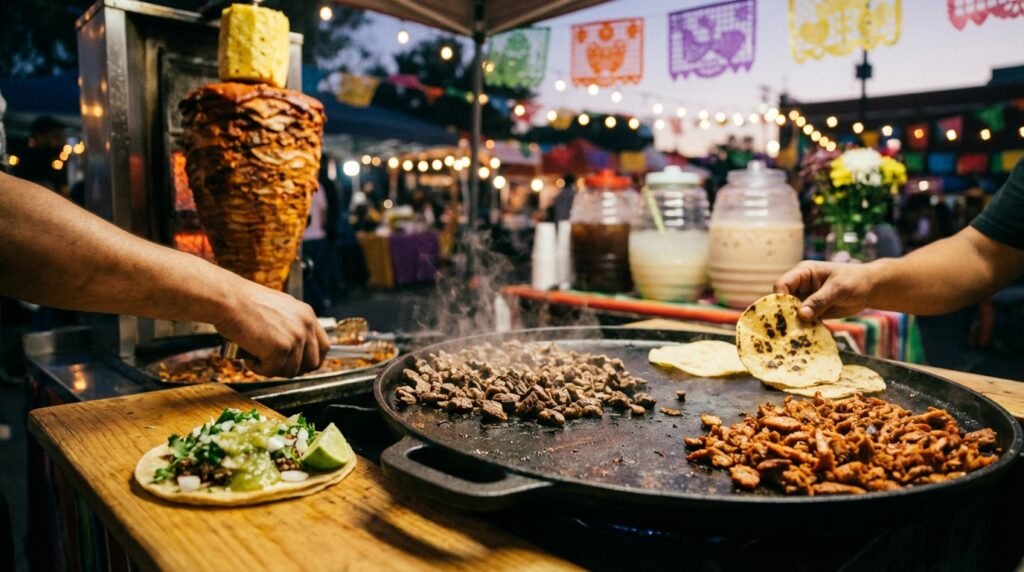
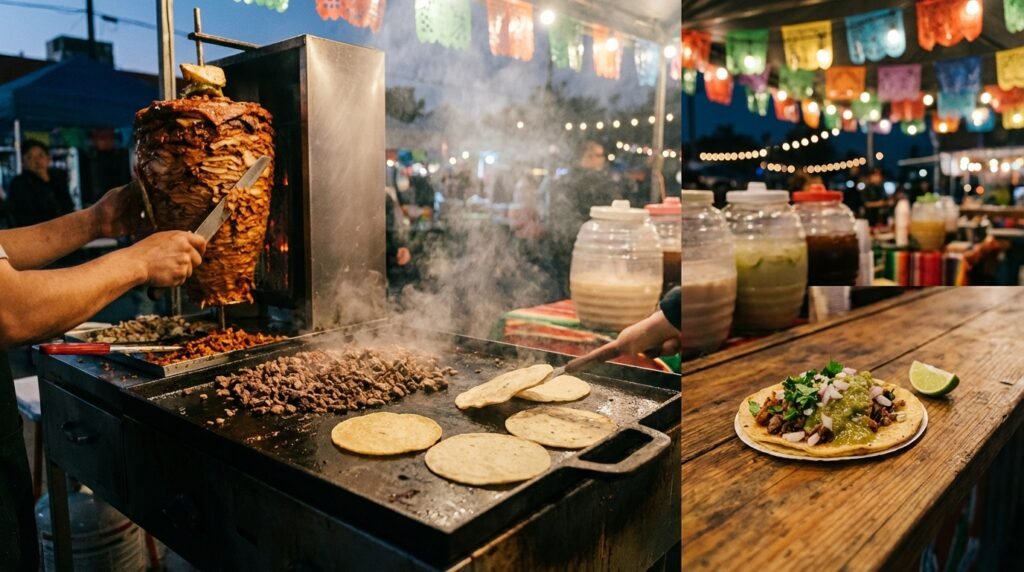
Tacos al Pastor originated from the influence of Lebanese immigrants who brought shawarma-style spit-roasting techniques to Mexico. Thin slices of marinated pork, layered on a vertical spit and slow-roasted, are shaved and served on small corn tortillas, typically with pineapple, onion, and cilantro. The marinade—often a blend of dried chiles, achiote, vinegar, and spices—imparts their signature color and flavor.
Tacos de Carnitas, associated primarily with the state of Michoacán, feature pork slowly simmered or confited in its own fat until tender and then crisped before serving. Typically garnished with onion, cilantro, and salsa, carnitas showcase the richness of pork and the subtle complexity that can be achieved with a relatively simple preparation.
Tacos de Barbacoa trace their origins to pre-Hispanic cooking methods, where meat was slow-cooked in an underground pit. Traditionally made with lamb or goat, barbacoa develops a deep, smoky flavor and silky texture. In many regions, it is a weekend specialty, often enjoyed in the morning with consommé made from the cooking juices.
Tacos de Asada highlight grilled beef, usually marinated and seared over high heat, then sliced or chopped for serving. This style emphasizes the interplay between charred meat, fresh garnishes, and bright salsas. In northern Mexico, where cattle ranching is prominent, tacos de asada are especially emblematic.
These and many other styles—such as tacos de pescado (fish tacos), tacos de suadero, and tacos de lengua (beef tongue)—share a common philosophy: high-quality taco ingredients, simple yet precise preparation, and balance between protein, tortilla, and condiments.
Modern Variations and Fusion Tacos
As tacos have expanded globally, a new category of Fusion Tacos and contemporary adaptations has emerged. These Modern Tacos often honor the basic structure of the taco—tortilla, filling, garnish—while reimagining every component.
One prominent example is the Korean-Mexican fusion taco, which marries marinated Korean barbecue meats such as bulgogi or kalbi with corn or flour tortillas, topped with kimchi, pickled vegetables, and spicy sauces. This style reflects the cultural intersections found in cities like Los Angeles, where diverse culinary traditions coexist and converge.
Seafood-focused tacos have also diversified. Beyond the classic Baja fish taco—featuring battered and fried white fish with cabbage slaw and crema—chefs now experiment with grilled octopus, seared tuna, or ceviche-style fillings. These variations maintain the essence of a taco while leveraging local seafood and contemporary flavor profiles.
Plant-based interpretations have grown in prominence, propelled by interest in sustainability and health. Vegetables, legumes, and plant-based proteins are now central to many Fusion Tacos, with fillings like roasted cauliflower, jackfruit “carnitas,” or marinated mushrooms. When executed thoughtfully, these versions preserve the structural and sensory integrity of Authentic Tacos while broadening their appeal.
Even the tortilla itself becomes a medium for innovation. Chefs may incorporate ingredients such as blue corn, beets, spinach, or chia seeds, or substitute lettuce wraps or nori sheets in more radical interpretations. The result is a dynamic field of experimentation that continually reshapes how tacos are perceived and enjoyed across the globe.
How to Make Authentic Tacos
Essential Ingredients for Tacos
Crafting Authentic Tacos begins with a careful selection of ingredients. Each component—tortilla, filling, salsa, and garnishes—plays a distinct role in the final flavor and texture. While there is room for creativity, certain elements remain fundamental.
Tortillas: For Traditional Mexican Tacos, fresh corn tortillas are preferred. They should be pliable yet sturdy enough to hold the filling without tearing. Nixtamalized corn, ground into masa and pressed into tortillas, provides a characteristic aroma and subtle nuttiness. In some regions and styles, flour tortillas are appropriate, particularly for northern Mexican and certain border varieties.
Proteins: Common choices include pork (for al pastor or carnitas), beef (for asada or barbacoa), chicken, and various cuts of offal for those who appreciate more traditional nose-to-tail cooking. For modern variations, seafood, vegetables, and plant-based proteins can be substituted, provided they are seasoned and cooked thoughtfully.
Salsas: Salsa is not an afterthought; it is a structural element of the taco. Puréed red or green salsas, chunky pico de gallo, smoky chipotle sauces, and fresh tomatillo blends each bring a different balance of heat, acidity, and aromatics. A well-designed taco recipe typically offers at least one bright, acidic salsa to cut through rich fillings.
Garnishes: Onion, cilantro, lime wedges, and radishes are classic. These fresh additions provide crunch, herbal notes, and a final layer of brightness. Optional elements—such as crumbled queso fresco, crema, pickled onions, or sliced cabbage—can be added depending on the style of taco being prepared.
Seasonings and Fats: Salt, dried chiles, cumin, garlic, oregano, and citrus are frequently used to develop depth and complexity in marinades and braises. Fat, whether pork lard, beef tallow, or high-quality vegetable oil, influences mouthfeel and flavor. In Authentic Tacos, the quality and balance of these seasonings are critical.
Step-by-Step Taco Recipe
The following step-by-step taco recipe illustrates a classic approach to tacos de carne asada, adaptable to a home kitchen. While there are countless variations, this method captures the fundamental techniques behind many Traditional Mexican Tacos.
Ingredients:
- 500 g (about 1 lb) flank steak or skirt steak
- 12 small corn tortillas
- 2 limes (juice for marinade, plus wedges for serving)
- 2 tbsp neutral oil (such as canola or grapeseed)
- 2 cloves garlic, finely minced
- 1 tsp ground cumin
- 1 tsp dried oregano (preferably Mexican oregano)
- 1 tsp smoked paprika or mild chili powder
- Salt and freshly ground black pepper, to taste
- 1 small white onion, finely chopped
- 1 small bunch fresh cilantro, chopped
- Your preferred salsa (red or green)
- Optional: sliced radishes, crumbled queso fresco
1. Marinate the steak.
In a bowl, combine lime juice, oil, minced garlic, cumin, oregano, smoked paprika, salt, and pepper. Place the steak in a shallow dish or resealable bag, coat thoroughly with the marinade, and refrigerate for at least 30 minutes, preferably 2–4 hours. This step enhances flavor and tenderizes the meat.
2. Prepare the garnishes.
While the steak marinates, finely chop the onion and cilantro. Arrange them in small bowls alongside lime wedges, radishes, salsa, and cheese if using. Having these elements ready allows for immediate assembly once the meat is cooked.
3. Preheat the cooking surface.
Heat a grill, grill pan, or heavy cast-iron skillet over high heat until very hot. A properly heated surface is essential to achieving a good sear and developing the characteristic smoky notes associated with carne asada.
4. Cook the steak.
Remove the steak from the marinade, letting any excess drip off. Cook over high heat for approximately 3–5 minutes per side, depending on thickness and desired doneness. Aim for a well-seared exterior and a juicy interior. Once cooked, transfer the steak to a cutting board and let it rest for 5–10 minutes to redistribute juices.
5. Warm the tortillas.
While the steak rests, heat the corn tortillas. Place them on a hot, dry skillet or directly on a low gas flame for a few seconds per side until pliable and slightly charred in spots. Keep them wrapped in a clean cloth or tortilla warmer to maintain heat and flexibility.
6. Slice the meat.
Cut the rested steak against the grain into thin strips or small cubes. This technique maximizes tenderness and ensures that each bite is easy to chew, a critical consideration for any successful taco recipe.
7. Assemble the tacos.
Place a portion of steak onto each warm tortilla. Top with chopped onion and cilantro, spoon over a modest amount of salsa, and finish with a squeeze of lime. Add radishes or queso fresco if desired. Serve immediately while the tortillas are hot and the meat is still juicy.
This foundational method can be adapted with different proteins, marinades, and salsas to create an array of Authentic Tacos at home. The key lies in respecting the balance among tortilla, filling, and garnish, and in using fresh, high-quality ingredients.
Tacos in Popular Culture
Tacos in Movies and Media
Over the past few decades, tacos have shifted from a primarily regional specialty to a widely recognized cultural icon. They appear regularly in films, television series, social media content, and advertising as shorthand for casual dining, urban nightlife, and culinary adventure.
In cinema and television, scenes set at taco trucks or late-night taquerías often depict a sense of community and authenticity. Characters gather around folding tables or eat standing at a counter, emphasizing informality and shared experience. This recurring imagery reinforces the role of tacos as democratic food: accessible, unpretentious, and suitable for many social contexts.
Digital media has further amplified the prominence of tacos in popular culture. Food bloggers, culinary influencers, and restaurant critics frequently highlight taco tastings, regional tours, and innovative Fusion Tacos on social platforms. Eye-catching images of colorful fillings, charred tortillas, and artful garnishes have turned tacos into highly shareable content, reinforcing their status as both a culinary and visual phenomenon.
Brands and organizations also leverage tacos in marketing campaigns, using them to convey relatability, fun, and cross-cultural appeal. From themed promotions to “Taco Tuesday” events, the taco has become a versatile symbol that resonates broadly with audiences seeking both familiarity and excitement in their dining choices. As a result, Tacos in Popular Culture now occupy a unique space where tradition, identity, and contemporary media intersect.
Tacos Festivals and Events
The growing enthusiasm for tacos has led to a proliferation of dedicated festivals and public events around the world. These gatherings celebrate tacos not only as food but as expressions of history, craftsmanship, and community. Attendees can sample Traditional Mexican Tacos alongside Modern Tacos, compare regional styles, and discover new interpretations from emerging chefs.
Typical tacos festivals convene a wide spectrum of participants: street vendors, established restaurants, independent food trucks, and artisanal producers of tortillas, salsas, and beverages. Competitions—such as best al pastor, most creative Fusion Tacos, or best vegetarian taco—encourage innovation while honoring classic techniques. Live music, cultural performances, and educational workshops on topics like nixtamalization or salsa-making further enrich these events.
In many cities, annual tacos festivals have become anticipated fixtures in the culinary calendar, drawing visitors from beyond the local region. These gatherings create opportunities for dialogue between tradition and modernity, allowing attendees to appreciate how a seemingly simple dish encapsulates complex stories of migration, adaptation, and regional pride. They also serve as platforms for small businesses and cooks to gain visibility and contribute to the evolving narrative of Tacos History.
Beyond large-scale festivals, smaller community events and themed restaurant weeks highlight tacos as vehicles for cultural exchange. Collaborative dinners featuring chefs from different backgrounds, for example, may present menus where each course interprets the taco through a distinct culinary lens. In this way, Tacos Festivals and related events not only celebrate a beloved food but also foster understanding, creativity, and shared appreciation across cultures.
Conclusion
From their origins in pre-Hispanic maize culture to their current status as global culinary icons, tacos embody a remarkable blend of continuity and change. They began as practical, portable nourishment and developed into an intricate gastronomic tradition, rich with regional variations and deep cultural meaning. Today, Authentic Tacos coexist with inventive Fusion Tacos, each adding new layers to a long and evolving story.
Understanding tacos involves more than learning a single taco recipe or sampling a few popular styles. It requires attention to elements such as nixtamalization, thoughtful selection of taco ingredients, and respect for the communities that have preserved and transformed these dishes. At the same time, the dynamism of tacos in popular culture—through media, festivals, and cross-cultural collaborations—illustrates how a traditional food can thrive in modern contexts without losing its essence.
Whether enjoyed from a street vendor in Mexico City, a neighborhood taquería, a cutting-edge restaurant, or a home kitchen, tacos continue to offer an engaging intersection of flavor, history, and identity. Their enduring appeal lies in their capacity to be both deeply rooted and endlessly adaptable, inviting each generation to rediscover and reinterpret what a taco can be.
Top 5 Superfoods for Brain Power
Exploring Coffee in 2026: From Coffee Origine to Wall Street Commodities
Top 10 Foods for Muscle Building